Chemistry of Life; Basis of Life (1;1)

0.0(0)
Studied by 0 people
call kaiCall Kai
learnLearn
examPractice Test
spaced repetitionSpaced Repetition
heart puzzleMatch
flashcardsFlashcards
GameKnowt Play
Card Sorting

1/103

encourage image

There's no tags or description

Looks like no tags are added yet.

104 Terms

1
New cards
Aldose
A sugar containing an aldehyde group
2
New cards
Aliphatic
A molecule where the atoms are joined in straight or branched chains
3
New cards
Amphipathic
A molecule containing both hydrophobic and hydrophilic regions (e.g. phospholipids, cholesterol)
4
New cards
Anion
An ion carrying a negative charge
5
New cards
Anomer
Sugar molecules in ring form that differ at C1 in aldoses or C2 in ketoses; can exist as α or β forms
6
New cards
Aromatic
A molecule containing an unsaturated ring structure stabilized by delocalised electrons
7
New cards
Carbonyl group
A carbon atom double-bonded to oxygen; forms an aldehyde if bonded to hydrogen, or a ketone if bonded to carbon
8
New cards
Cation
An ion carrying a positive charge
9
New cards
Chiral
A molecule containing one or more carbon atoms bonded to four different groups (see optical isomers)
10
New cards
Cis bond
A double bond with groups on the same side
11
New cards
Condensation reaction
A reaction that joins two molecules together and releases water
12
New cards
Covalent bond
A strong bond involving the sharing of one or more pairs of electrons between atoms
13
New cards
Dipole
A covalent bond with uneven electron distribution, causing partial charges; may be permanent or induced
14
New cards
Enantiomers
Mirror-image forms of a molecule; another term for optical isomers
15
New cards
Epimer
Stereoisomers differing at only one chiral carbon (e.g. D-glucose and D-galactose)
16
New cards
Ester bond
A bond formed between an acid group and a hydroxyl group
17
New cards
Phosphoester bond
A bond formed between a phosphate group and a hydroxyl group
18
New cards
Phosphodiester bond
A phosphate group bonded to two hydroxyl groups on different molecules (e.g. DNA backbone)
19
New cards
Heterocyclic
A ring structure containing atoms other than carbon
20
New cards
Hexose
A sugar containing six carbon atoms (e.g. glucose)
21
New cards
Pentose
A sugar containing five carbon atoms (e.g. ribose)
22
New cards
Tetrose
A sugar containing four carbon atoms
23
New cards
Triose
A sugar containing three carbon atoms
24
New cards
Hydrolysis
A reaction that breaks a bond using water
25
New cards
Hydrophilic
'Water-loving'; able to interact with or dissolve in water
26
New cards
Hydrophobic
'Water-hating'; non-polar and unable to interact with or dissolve in water
27
New cards
Ion
An atom or molecule carrying an electrical charge
28
New cards
Ionisation
The formation of ions by gaining or losing electrons
29
New cards
Ionic bond
A strong bond formed by electron transfer, creating positive and negative ions
30
New cards
Ketose
A sugar containing a ketone group
31
New cards
Phosphoanhydride bond
A bond between two phosphate groups (e.g. ATP phosphates)
32
New cards
Anhydride bond
A covalent bond formed between two acid groups
33
New cards
Trans bond
A double bond with groups on opposite sides
34
New cards
Optical isomers
Mirror-image molecules containing one or more chiral carbons; also called enantiomers
35
New cards
pKa
The pH at which a weak acid or base is 50% ionised and 50% unionised
36
New cards
pI
The pH at which a molecule has no overall charge
37
New cards
Pyranose
A six-membered sugar ring containing 5 carbons and 1 oxygen (e.g. glucopyranose)
38
New cards
Furanose
A five-membered sugar ring containing 4 carbons and 1 oxygen (e.g. fructofuranose)
39
New cards
Saturated
A molecule containing no double bonds
40
New cards
Unsaturated
A molecule containing one or more double bonds
41
New cards
Stereoisomers
Molecules with the same atoms but different 3D arrangements
42
New cards
Zwitterion
A molecule with equal positive and negative charges and no overall charge
43
New cards

Ionic bonding

The loss or gain of an electron (transfer) (one metal/ one none metal) 

—>Electrostatic forces of attraction hold ions of opposing 

charges together within a compound.  

44
New cards

Covalent bonding

The sharing of an electron between two non-metal atoms 

Single; Allows rotation (H2) 

Double; Shorter, Stronger and more rigid than single bond. No rotation

45
New cards

Inter molecular bonds

Forces of attraction between molecules that affect their physical properties.

  • Electrostatic forces of attraction 

  • Van Der Waals 

  • Polar bonds / Perm.  Dipole Dipole 

  • Induced / Temp. Dipole Dipole 

  • Hydrogen bonds 


46
New cards

Electrostatic forces of attraction; IMF

-Oppositely charged ions 

-Stabilizing proteins groups; 3+ 4 

-Ion pair / Salt Bridge 

47
New cards

Induced / Temporary dipoles; IMF 

-Electron density is variable surrounding the atom,  as electrons are consistently moving around the nucleus 

--> Can occur by chance or are INDUCED via close proximity to another atom 

48
New cards

Polar bonds; IMF 

-Permanent dipole forces 

-Difference in electronegativity between two atoms within a covalent bond

—> Cause an uneven distribution of electron density across a covalent bond 

--> Causes atoms in a covalent bond to have slight charges 

--> Allow molecules to interact through electrical forces 

49
New cards

Van Der Waals; IMF

-Weak forces in neutrally charged compounds 

-Strength of force dissipates with distance 

-Important in determining  macro structure 

--> More packing, Higher strength 

50
New cards

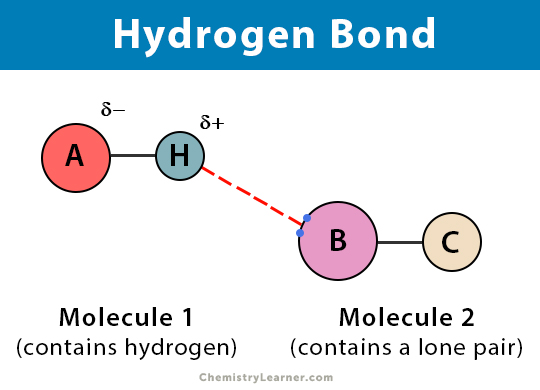
Hydrogen bonds; IMF MORE 

-Formed due to dipoles between O-H, N-H bonds 

--> Justify many of waters properties 

-O is very EN and has a greater pull on electrons, and is therefore  more negative than slightly positive hydrogen atoms
 

<p><span style="background-color: inherit; line-height: 25.3px; color: windowtext;">-Formed due to dipoles between O-H, N-H bonds</span><span style="line-height: 25.3px; color: windowtext;">&nbsp;</span></p><p class="Paragraph SCXO97141859 BCX0" style="text-align: left;"><span style="background-color: inherit; line-height: 25.3px; color: windowtext;">--&gt; Justify many of waters properties</span><span style="line-height: 25.3px; color: windowtext;">&nbsp;</span></p><p class="Paragraph SCXO97141859 BCX0" style="text-align: left;"><span style="background-color: inherit; line-height: 25.3px; color: windowtext;">-O is very EN and has a greater pull on electrons, and is therefore</span><span style="line-height: 25.3px; color: windowtext;">&nbsp; </span><span style="background-color: inherit; line-height: 25.3px; color: windowtext;">more negative than slightly positive hydrogen atoms</span></p><p class="Paragraph SCXO97141859 BCX0" style="text-align: left;"><span style="line-height: 25.3px; color: windowtext;">&nbsp;</span></p>
51
New cards

Properties of water, H2O 

-Cells are 70% water, Aqueous env. 

--> Oxygen is highly electronegative, and so pulls a greater 

proportion of electrons within the O-H bond, creating a slight charge on each atom (H+, O-). 

--> This allows for hydrogen bonds to form between H2O molecules, explaining cohesion... 

52
New cards

Water forming a Lattice

-Form Hydrogen bonds with surrounding molecules  

Forming lattice arrangements 

--> These are kept close together 

--> This clumping is a process called cohesion 

53
New cards

Cohesion VS. Hydrophobic interaction... 


Cohesion; Attraction that allows formation of lattices. "Clumping" of water. 

--> Driven by IMF Hydrogen bonding 

Hydrophobic Inter.; "Clumping" of Non-polar substances (oil) in water 

--> Driven by water molecules minimizing contact with non-polar substances 

--> This aggregation of non-polar molecules (miscible) disrupts less H. bonding  

      --> Therefore energetically favorable 

Hydrophobic; Non-polar substances 

Hydrophilic; Polar substances 

54
New cards

Functional groups in molecules

—> These make compounds chemically active

—> Some functional groups can be ionized and become charged

<p>—&gt; These make compounds chemically active</p><p>—&gt; Some functional groups can be ionized and become charged</p>
55
New cards

Isomerism

Same molecular formulae, with atoms arranged in a different form of space

—>Glucose is an Aldehyde + Fructose is a Ketone 

--> Both are isomers of each other 

56
New cards

Polymers

Large molecules made up of monomers (or repeating units)

Monomer —> Oligomer —> Polymer

—> (MGP)

57
New cards

Oligomers

Polymers made up of a small number of repeating units (2-30 ish)

58
New cards

Examples of a MGP Composite

Monosaccharides (Fructose) --> Disaccharide (Sucrose) --> Polysaccharide (Starch) 


Fatty Acids --> Triglycerides, Phospholipid, Membranes 


Amino acids --> Dipeptides -->  Polypeptides 


Nucleotides --> Dinucleotide --> Polynucleotide 

59
New cards

What are the two reactions that make / break polymers?

Condensation reactions

Hydrolysis reactions

60
New cards

Hydrolysis reactions

-Polymer / Oligomer --> Monomer + Monomer 

--> Uses water 

-Breaks Covalent Bonds including... 

  • Glycosidic Bonds (-O-) 

  • Peptide Bonds (-C=O-NH-) 

  • Ester Bond (seen in Trigl) 


61
New cards

Condensation reactions

-Monomer + Monomer --> Polymer /Oligomer 

--> Produces water 

-Forms Covalent Bonds including... 

  • Glycosidic Bonds (-O-) 

  • Peptide Bonds (-C=O-NH-) 

  • Ester Bond (seen in Trigl) 


62
New cards

Restrictions within Polymers

-Most singular covalent bonds allows for rotation, giving  polymers flexibility 

--> Double bonds restrict this 

--> Reduced flexibility is also a result of non-covalent bonds 

Including ionic bonds and multiple IMFs 

--> Polymers prefer one singular conformation 

63
New cards

Amino acid structure

--> 20 unique AA, distinct by their R group 

--> Found in proteins... 


<p><span style="background-color: inherit; line-height: 26.45px; color: windowtext;">--&gt; 20 unique AA, distinct by their R group</span><span style="line-height: 26.45px; color: windowtext;">&nbsp;</span></p><p class="Paragraph SCXO20477411 BCX0" style="text-align: left;"><span style="background-color: inherit; line-height: 26.45px; color: windowtext;">--&gt; Found in proteins...</span><span style="line-height: 26.45px; color: windowtext;">&nbsp;</span></p><p class="Paragraph SCXO20477411 BCX0" style="text-align: left;"></p>
64
New cards

How are amino acids categorized?

-Categorised based on size, shape, charge, hydrophobicity, sulphur-containing, imino (Proline is not AA)

--Aliphatic – Straight sidechains 

-Aromatic – Ring containing sidechains 

Methionine (met); sulphur containing, aliphatic and non-polar 

Phenylalanine (phe); aromatic and non-polar  

65
New cards

optical isomerism in AA

-Only L-AA are found in proteins 

--> Most AA possess optical activity as they have 4 different groups, a chiral carbon 

--> Also known as enantiomers 

66
New cards

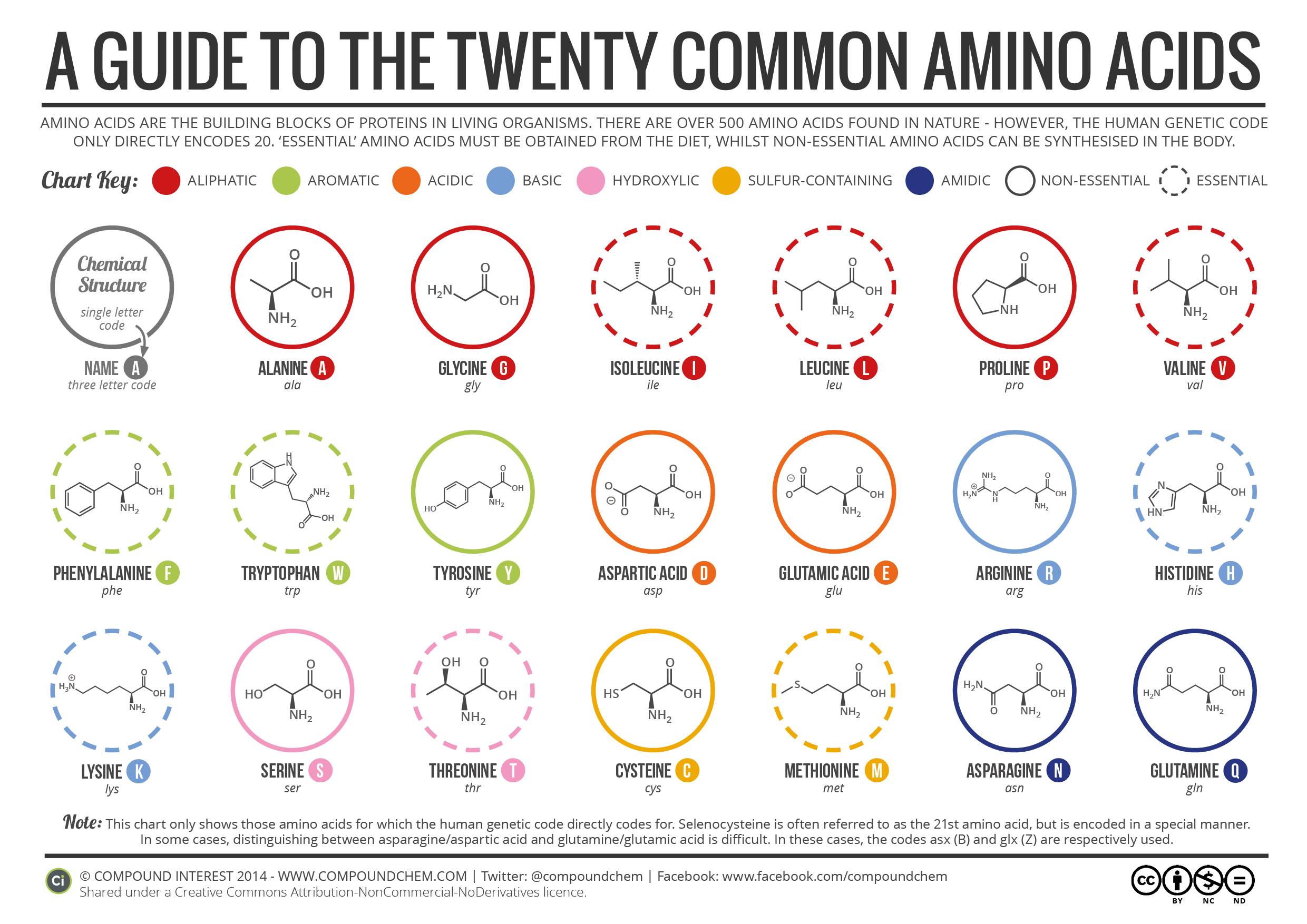
List all 20 amino acids, and their groupings…

Non-Polar side chains; Glycine, Alanine, Valine, Leunine, Isoleunine, Mehtionine, Phenylalanine, Proline, Tryptophan


Polar-side chains; Serine, Threonine, Cysteine, Tyrosine, Asparganine, Glutamine


Ionisable side chains;

Acidic Aspartate + Glutamate

Basic Lysine, Arginine, Histidine
<p>Non-Polar side chains; Glycine, Alanine, Valine, Leunine, Isoleunine, Mehtionine, Phenylalanine, Proline, Tryptophan</p><p></p><p>Polar-side chains; Serine, Threonine, Cysteine, Tyrosine, Asparganine, Glutamine</p><p></p><p>Ionisable side chains; </p><p><strong>Acidic</strong> Aspartate + Glutamate </p><p><strong>Basic</strong> Lysine, Arginine, Histidine </p>
67
New cards

Why are amino acids ionisable?

Amine and COOH group can be ionized depending on the pH of the amino acid

—> Low pH; NH3+, COOH (+1)

—> Intermediate pH; NH3+, COO- (0)

—> High pH; NH2, COO- (-1)

—> These form zwitter ions

-R groups can also be ionized in some AA

68
New cards

pH

PH is a measure of the concentration of H+ in a solution 

--> Log scale is used as it is more manageable 

--> pH = −Log10 [H+] 

--> As [H+] increases, pH decreases 

--> Acids donate H+ 

--> Bases accept H+ 

69
New cards

Strong Acid / Base

-Fully dissociates in water

—> Protons lost or gained easily

—> H2SO4 (diprotic), NaOH

HCl —> H+ + Cl- (pH decreases)

NaOH —> Na+ + OH- (pH increases)

70
New cards

Weak Acid / Base

-Only partially dissociates in water

—> Forms an equilibrium in water

[HA] —> [A-] + [H+]

71
New cards

Maintaing pH…

-Protonation (gaining and removing) of protons within the acidic and basic groups in AA influence charge and their behaviour 

--> pH of environment depicts AA behaviour 

--> Buffers are used to maintain pH 

72
New cards

Use of Weak Acids and Bases; Buffers 

-Mixture of AH and A- in equilibrium 

--> Equilibrium is pH sensitive 

--> Species can accept and release protons, to oppose the change in pH 

[AH]→←[H+] + [A-]

AH = Weak acid (COOH) 

H+ = Protons released 

A- =Conjugate base (COO-) 

73
New cards

How do buffers resist change in pH?

A buffer is a mixture of a weak acid (AH) and its conjugate base (A⁻) in equilibrium:

[AH] ⇌ [H+] + [A-]

At low pH, the equilibrium lies mainly to the left, so there is lots of [AH] present.

When OH⁻ is added:

  • OH⁻ removes H⁺ (forms water), decreasing [H⁺].

  • The equilibrium shifts right to replace the lost H⁺.

  • More AH dissociates, releasing H⁺.

  • This opposes the rise in pH.


74
New cards

Buffer Limitations

-Equilibrium can be depleted when concentrations of AH and A- run out

E.g If all the AH has dissociated, no more H⁺ can be released.

—> pH no longer controlled

75
New cards

what is the henderson-hasselbach equation?


pH = pKa + log([Conjugate Base]/[Conjugate Acid]) 

76
New cards

pKa

-Negative base-10 log Acid dissociation constant

—> When pH and pKa are the same, exactly 50% of the species has dissociated completely

—> Effectively how weak the acid, and how willing it is to donate / receive a H+


Below pKa; AH greater than A- 

--> More protonated acid than conjugate base (More CH3COOH) 

--> Greater H+, Lower pH 


Above pKa; A- greater than AH 

--> More Conjugate base than acid 

--> Fewer H+, Greater pH 


Buffers work best within +1 pH of pKa 

--> Enough AH and A- in present amounts 

--> Low pH, too much AH 

--> High pH, too much A- 

77
New cards

Relationship between pKa and ionisable groups of an AA

-Ionisable groups of an AA (R group, NH3+, COOH) all have their own pKa, charge of these groups depend on pH of AA


When pH < pKa (Acidic Environment): 

- Groups are protonated (they hold onto or grab an H+). 

 --> Acidic groups (like carboxylic acids) stay neutral (-COOH), while basic groups (like amines) become positively charged (-NH3+). 


When pH = pKa (The Equilibrium Point): 

-Exactly 50% of the groups are protonated and 50% are deprotonated. 


 When pH > pKa (Basic Environment): 

-Groups are deprotonated (they lose their H^+ due to a lack of protons in the solution). 

--> Acidic groups become negatively charged (-COO^-), while basic groups become neutral (-NH_2). 


78
New cards

Isoelectric point; pI

-pI is the pH at which the molecule has no overall charge 

--> Only applicable to molecules with multiple ionisable groups 

--> pI calculated for simple molecules from pKa values of ionisable 

Groups 

-AA can have charged R groups that can also be ionised


79
New cards

How do you calculate the isoelectric point?

-R groups can also be ionised…

—> Identify the two pKas where the overall charge of the amino acid is 0; then divide by 2

80
New cards

Relationship between pH and pI

pH = pI molecule by definition will have no charge 

--> if pH is below pI the molecule will be positively charged 

--> if pH is above pI molecules will be negatively charged 

81
New cards

What is percentage ionization??

-The fraction of a weak acid or base that breaks apart into ions when dissolved in a solution

<p>-The fraction of a weak acid or base that breaks apart into ions when dissolved in a solution</p>
82
New cards

Describe the structure of a nucleotide

-Aldopentose sugar; (either Ribose or Deoxyribose sugar)

-Nitrogenous base (ATCG)

-Phosphate group


Bonds

-Nitrogenous base covalently bonded to ribose/deoxyribose

-Initial Phosphate group linked to sugar phosphate ring via phosphoester bonds

-Phosphodiester bonds form between two nucleotides

-Hydrogen bonds between complementary base pairs


<p>-Aldopentose sugar; (either Ribose or Deoxyribose sugar)</p><p>-Nitrogenous base (ATCG)</p><p>-Phosphate group</p><p></p><p><strong>Bonds</strong></p><p>-Nitrogenous base covalently bonded to ribose/deoxyribose</p><p>-Initial Phosphate group linked to sugar phosphate ring via phosphoester bonds</p><p>-Phosphodiester bonds form between two nucleotides</p><p>-Hydrogen bonds between complementary base pairs</p><p></p>
83
New cards

Nucleotide sugars

-Both are 5 carbon Aldopentose sugars 

--> Ribose and 2'-deoxyribose 

<p><span style="background-color: inherit; line-height: 26.45px; color: windowtext;">-Both are 5 carbon Aldopentose sugars</span><span style="line-height: 26.45px; color: windowtext;">&nbsp;</span></p><p class="Paragraph SCXO78824740 BCX0" style="text-align: left;"><span style="background-color: inherit; line-height: 26.45px; color: windowtext;">--&gt; Ribose and 2'-deoxyribose</span><span style="line-height: 26.45px; color: windowtext;">&nbsp;</span></p>
84
New cards

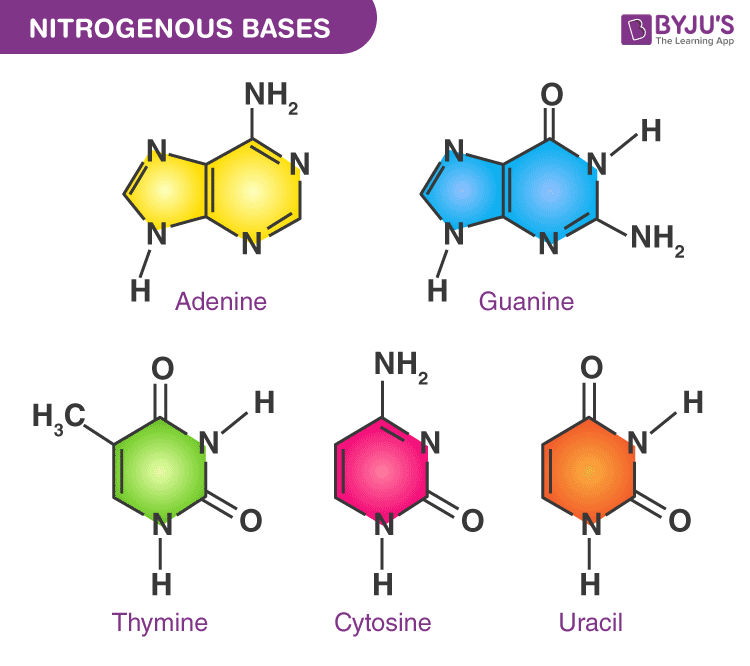
Nitrogenous bases; Structure and Characterstics

-Planar 

-Aromatic 

-Heterocyclic (rings +1 element) 

Purines; 9-membered double ring structure 

 --> Adenine, Guanine 

Pyrimidines; 6 membered single ring structure 

--> Cytosine, Thymine, Uracil 
<p><span style="background-color: inherit; line-height: 26.45px; color: windowtext;">-Planar</span><span style="line-height: 26.45px; color: windowtext;">&nbsp;</span></p><p class="Paragraph SCXO151683419 BCX0" style="text-align: left;"><span style="background-color: inherit; line-height: 26.45px; color: windowtext;">-Aromatic</span><span style="line-height: 26.45px; color: windowtext;">&nbsp;</span></p><p class="Paragraph SCXO151683419 BCX0" style="text-align: left;"><span style="background-color: inherit; line-height: 26.45px; color: windowtext;">-Heterocyclic (rings +1 element)</span><span style="line-height: 26.45px; color: windowtext;">&nbsp;</span></p><p class="Paragraph SCXO151683419 BCX0" style="text-align: left;"><span style="background-color: inherit; line-height: 26.45px; color: windowtext;"><strong>Purines; </strong>9-membered double ring structure</span><span style="line-height: 26.45px; color: windowtext;">&nbsp;</span></p><p class="Paragraph SCXO151683419 BCX0" style="text-align: left;"><span style="background-color: inherit; line-height: 26.45px; color: windowtext;">&nbsp;--&gt; Adenine, Guanine</span><span style="line-height: 26.45px; color: windowtext;">&nbsp;</span></p><p class="Paragraph SCXO151683419 BCX0" style="text-align: left;"><span style="background-color: inherit; line-height: 26.45px; color: windowtext;"><strong>Pyrimidines</strong>; 6 membered single ring structure</span><span style="line-height: 26.45px; color: windowtext;">&nbsp;</span></p><p class="Paragraph SCXO151683419 BCX0" style="text-align: left;"><span style="background-color: inherit; line-height: 26.45px; color: windowtext;">--&gt; Cytosine, Thymine, Uracil</span><span style="line-height: 26.45px; color: windowtext;">&nbsp;</span></p>
85
New cards

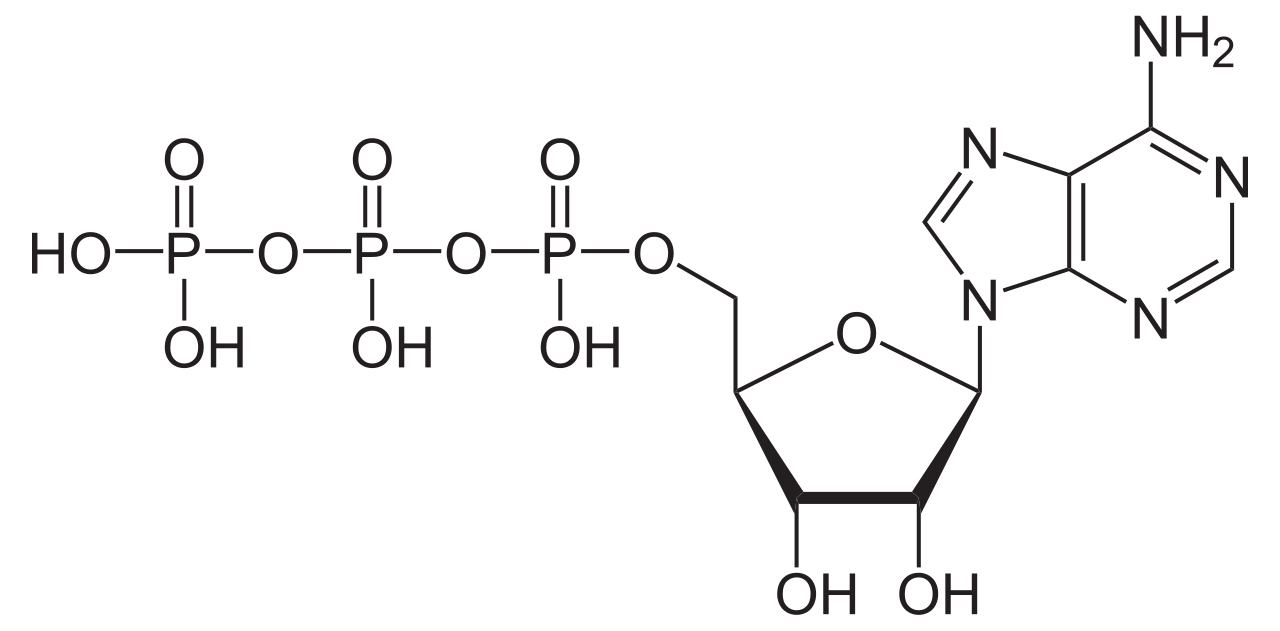
ATP; Adenosine Tri-Phosphate

-Phosphoanhydride bonds between phosphate groups

-Adenine base

-Ribose sugar
<p>-Phosphoanhydride bonds between phosphate groups</p><p>-Adenine base</p><p>-Ribose sugar</p>
86
New cards

Nucleosides

-Base covalently bound to a sugar 

--> Glycosidic (covalent) bond 

Adenine --> Adenosine 

Cytosine --> Cytidine 

Uracil --> Uridine  

Thymine —> thymidine

<p><span style="background-color: inherit; line-height: 26.45px; color: windowtext;">-Base covalently bound to a sugar</span><span style="line-height: 26.45px; color: windowtext;">&nbsp;</span></p><p class="Paragraph SCXO15759879 BCX0" style="text-align: left;"><span style="background-color: inherit; line-height: 26.45px; color: windowtext;">--&gt; Glycosidic (covalent) bond</span><span style="line-height: 26.45px; color: windowtext;">&nbsp;</span></p><p class="Paragraph SCXO15759879 BCX0" style="text-align: left;"><span style="background-color: inherit; line-height: 26.45px; color: windowtext;">Adenine --&gt; Adenosine</span><span style="line-height: 26.45px; color: windowtext;">&nbsp;</span></p><p class="Paragraph SCXO15759879 BCX0" style="text-align: left;"><span style="background-color: inherit; line-height: 26.45px; color: windowtext;">Cytosine --&gt; Cytidine</span><span style="line-height: 26.45px; color: windowtext;">&nbsp;</span></p><p class="Paragraph SCXO15759879 BCX0" style="text-align: left;"><span style="background-color: inherit; line-height: 26.45px; color: windowtext;">Uracil --&gt; Uridine&nbsp;</span><span style="line-height: 26.45px; color: windowtext;">&nbsp;</span></p><p class="Paragraph SCXO15759879 BCX0" style="text-align: left;"><span style="line-height: 26.45px; color: windowtext;">Thymine —&gt; thymidine </span></p>
87
New cards

Roles of Nucleotides in Cells

Hydrolysis of adenosine triphosphate 

--> Forms ADP and phosphate which is highly exergonic (energy producing) 

-->  Often linked to other less favourable reactions 

-3',5' Cyclic AMP 

 --> Is an intracellular messenger which activates cellular  proteins in response to hormone signalling causing changes within the cell 

--> Formed in cells from ATP by enzyme Adenylate Cyclase 

--> Secondary messenger model 


88
New cards

DNA + RNA differences

DNA: Contains adenine, guanine, cytosine, and thymine; has a deoxyribose sugar; is double-stranded and forms a double helix; stores genetic information.

RNA: Contains adenine, guanine, cytosine, and uracil; has a ribose sugar; is usually single-stranded; functions in gene expression and protein synthesis.
—> mRNA carries genetic information from DNA.
—> rRNA is a structural component of ribosomes.
—> tRNA translates the genetic code into protein.

89
New cards

Lipid; Monomers

– Fatty acids; Fuel molecules, Long chains form "Waxes" 

90
New cards

Lipids; Polymers

Triacylglycerols (Triglycerides) – storage of lipids in Plants and animals 

--> Can vary in state depending on composition (n of = bonds) 

Phospholipids – Structural components of membranes 

Cell Signalling – Long chain PolyUnsaturated Fatty Acids (PUFAS) can 

be converted into signalling molecules  

--> Prostaglandins in animals 

--> Brassinosteroids in plants 

<p><span style="background-color: inherit; line-height: 26.45px; color: windowtext;">Triacylglycerols (Triglycerides) – storage of lipids in Plants and animals</span><span style="line-height: 26.45px; color: windowtext;">&nbsp;</span></p><p class="Paragraph SCXO491657 BCX0" style="text-align: left;"><span style="background-color: inherit; line-height: 26.45px; color: windowtext;">--&gt; Can vary in state depending on composition (n of = bonds)</span><span style="line-height: 26.45px; color: windowtext;">&nbsp;</span></p><p class="Paragraph SCXO491657 BCX0" style="text-align: left;"><span style="background-color: inherit; line-height: 26.45px; color: windowtext;">Phospholipids – Structural components of membranes</span><span style="line-height: 26.45px; color: windowtext;">&nbsp;</span></p><p class="Paragraph SCXO491657 BCX0" style="text-align: left;"><span style="background-color: inherit; line-height: 26.45px; color: windowtext;">Cell Signalling – Long chain PolyUnsaturated Fatty Acids (PUFAS) can</span><span style="line-height: 26.45px; color: windowtext;">&nbsp;</span></p><p class="Paragraph SCXO491657 BCX0" style="text-align: left;"><span style="background-color: inherit; line-height: 26.45px; color: windowtext;">be converted into signalling molecules&nbsp;</span><span style="line-height: 26.45px; color: windowtext;">&nbsp;</span></p><p class="Paragraph SCXO491657 BCX0" style="text-align: left;"><span style="background-color: inherit; line-height: 26.45px; color: windowtext;">--&gt; Prostaglandins in animals</span><span style="line-height: 26.45px; color: windowtext;">&nbsp;</span></p><p class="Paragraph SCXO491657 BCX0" style="text-align: left;"><span style="background-color: inherit; line-height: 26.45px; color: windowtext;">--&gt; Brassinosteroids in plants</span><span style="line-height: 26.45px; color: windowtext;">&nbsp;</span></p>
91
New cards

Lipids; Fatty Acids

-Long aliphatic (straight) carbon chains with a terminal COOH 

-Form esters via the acid group to give more complex lipids 

-Unbranched chains 

-Even number of CH2 

-Vary in length 

-Can be saturated (single) or unsaturated (double bonds) 

-Molecule is hydrophobic as It is non-polar 

92
New cards

Sterol

-Based on 4 fused non-planar rings 

-Cholesterol and Ergosterol (Fungal) produce one major sterol 

-Cholesterol;  

-->maintains fluidity,  

--> Precursor of steroid hormones, bile salts, Vit. D 

--> High Cholesterol Can lead to CHD. 

<p><span style="background-color: inherit; line-height: 26.45px; color: windowtext;">-Based on 4 fused non-planar rings</span><span style="line-height: 26.45px; color: windowtext;">&nbsp;</span></p><p class="Paragraph SCXO123261126 BCX0" style="text-align: left;"><span style="background-color: inherit; line-height: 26.45px; color: windowtext;">-Cholesterol and Ergosterol (Fungal) produce one</span><span style="line-height: 26.45px; color: windowtext;">&nbsp;</span><span style="background-color: inherit; line-height: 26.45px; color: windowtext;">major sterol</span><span style="line-height: 26.45px; color: windowtext;">&nbsp;</span></p><p class="Paragraph SCXO123261126 BCX0" style="text-align: left;"><span style="background-color: inherit; line-height: 26.45px; color: windowtext;">-Cholesterol;&nbsp;</span><span style="line-height: 26.45px; color: windowtext;">&nbsp;</span></p><p class="Paragraph SCXO123261126 BCX0" style="text-align: left;"><span style="background-color: inherit; line-height: 26.45px; color: windowtext;">--&gt;maintains fluidity,&nbsp;</span><span style="line-height: 26.45px; color: windowtext;">&nbsp;</span></p><p class="Paragraph SCXO123261126 BCX0" style="text-align: left;"><span style="background-color: inherit; line-height: 26.45px; color: windowtext;">--&gt; Precursor of steroid hormones, bile salts, Vit. D</span><span style="line-height: 26.45px; color: windowtext;">&nbsp;</span></p><p class="Paragraph SCXO123261126 BCX0" style="text-align: left;"><span style="background-color: inherit; line-height: 26.45px; color: windowtext;">--&gt; High Cholesterol Can lead to CHD.</span><span style="line-height: 26.45px; color: windowtext;">&nbsp;</span></p>
93
New cards

Lipids; Glycerophospholipids

-Major component of cell membranes 

--> Phosphatidyl choline's 

--> Phosphatidyl inositol's 

--> Sphingolipids; in myelin (insulating nerve axons) 

-Amphipathic; both hydrophilic and hydrophobic 

--> allows formation of bilayers with hydrophilic heads and hydrophobic tails 


94
New cards

Carbo-Hydrates

Carbon-Hydrate; CnH2nO  

Functions and importance include... 

  • Pathogen infection, HIV 

  • Blood; Plasma biomarkers 

  • Energy storage; Glycogen, Cellulose 

  • Disease; Diabetes 

  • Cellular processes; Cell signalling 

  • Drug development; Vaccines 

  • Nutrition; Milk,   


<p><span style="background-color: inherit; line-height: 26.45px; color: windowtext;">Carbon-Hydrate; CnH2nO</span><span style="line-height: 26.45px; color: windowtext;">&nbsp;&nbsp;</span></p><p class="Paragraph SCXO197888541 BCX0" style="text-align: left;"><span style="background-color: inherit; line-height: 26.45px; color: windowtext;"><u>Functions and importance include...</u></span><span style="line-height: 26.45px; color: windowtext;">&nbsp;</span></p><ul><li><p class="Paragraph SCXO197888541 BCX0" style="text-align: left;"><span style="background-color: inherit; line-height: 26.45px; color: windowtext;">Pathogen infection, HIV</span><span style="line-height: 26.45px; color: windowtext;">&nbsp;</span></p></li><li><p class="Paragraph SCXO197888541 BCX0" style="text-align: left;"><span style="background-color: inherit; line-height: 26.45px; color: windowtext;">Blood; Plasma biomarkers</span><span style="line-height: 26.45px; color: windowtext;">&nbsp;</span></p></li><li><p class="Paragraph SCXO197888541 BCX0" style="text-align: left;"><span style="background-color: inherit; line-height: 26.45px; color: windowtext;">Energy storage; Glycogen, Cellulose</span><span style="line-height: 26.45px; color: windowtext;">&nbsp;</span></p></li><li><p class="Paragraph SCXO197888541 BCX0" style="text-align: left;"><span style="background-color: inherit; line-height: 26.45px; color: windowtext;">Disease; Diabetes</span><span style="line-height: 26.45px; color: windowtext;">&nbsp;</span></p></li><li><p class="Paragraph SCXO197888541 BCX0" style="text-align: left;"><span style="background-color: inherit; line-height: 26.45px; color: windowtext;">Cellular processes; Cell signalling</span><span style="line-height: 26.45px; color: windowtext;">&nbsp;</span></p></li><li><p class="Paragraph SCXO197888541 BCX0" style="text-align: left;"><span style="background-color: inherit; line-height: 26.45px; color: windowtext;">Drug development; Vaccines</span><span style="line-height: 26.45px; color: windowtext;">&nbsp;</span></p></li><li><p class="Paragraph SCXO197888541 BCX0" style="text-align: left;"><span style="background-color: inherit; line-height: 26.45px; color: windowtext;">Nutrition; Milk,&nbsp;&nbsp;</span><span style="line-height: 26.45px; color: windowtext;">&nbsp;</span></p></li></ul><p></p>
95
New cards

Fischer Convention 

-Spatial arrangement of groups around an asymmetric 

is related to glyceraldehyde 

--> Because it is the simplest monosaccharide 

--> Vertical bonds point into plane of paper 

--> Horizontal bonds point out of the plane of the paper 

-Wedge and dotted line...  

--> -OH on right (d), -OH on left (l) 

<p><span style="background-color: inherit; line-height: 26.45px; color: windowtext;">-Spatial arrangement of groups around an asymmetric</span><span style="line-height: 26.45px; color: windowtext;">&nbsp;</span></p><p class="Paragraph SCXO126006159 BCX0" style="text-align: left;"><span style="background-color: inherit; line-height: 26.45px; color: windowtext;">is related to glyceraldehyde</span><span style="line-height: 26.45px; color: windowtext;">&nbsp;</span></p><p class="Paragraph SCXO126006159 BCX0" style="text-align: left;"><span style="background-color: inherit; line-height: 26.45px; color: windowtext;">--&gt; Because it is the simplest monosaccharide</span><span style="line-height: 26.45px; color: windowtext;">&nbsp;</span></p><p class="Paragraph SCXO126006159 BCX0" style="text-align: left;"><span style="background-color: inherit; line-height: 26.45px; color: windowtext;">--&gt; Vertical bonds point into plane of paper</span><span style="line-height: 26.45px; color: windowtext;">&nbsp;</span></p><p class="Paragraph SCXO126006159 BCX0" style="text-align: left;"><span style="background-color: inherit; line-height: 26.45px; color: windowtext;">--&gt; Horizontal bonds point out of the plane of the paper</span><span style="line-height: 26.45px; color: windowtext;">&nbsp;</span></p><p class="Paragraph SCXO126006159 BCX0" style="text-align: left;"><span style="background-color: inherit; line-height: 26.45px; color: windowtext;">-Wedge and dotted line...&nbsp;</span><span style="line-height: 26.45px; color: windowtext;">&nbsp;</span></p><p class="Paragraph SCXO126006159 BCX0" style="text-align: left;"><span style="background-color: inherit; line-height: 26.45px; color: windowtext;">--&gt; -OH on right (d), -OH on left (l)</span><span style="line-height: 26.45px; color: windowtext;">&nbsp;</span></p>
96
New cards

Disaccharides

Galactose + Glucose --> Lactose 

Glucose + Fructose --> Sucrose 

--> Connected via a covalent glycosidic bond, formed by a Condensation reaction 

97
New cards

Structural and storage polysaccharides 

Cellulose; 
-Linear polymer up of up to 15k D-glucose residues 

linked by Beta (1-->4) glycosidic bonds 

-Cellulose fibres are chains of flat ribbons in which successive  

Glucose rings are flipped 180 to the previous ring 

-->  held by a hydrogen bond network  across cellulose chains 

--> Very strong; withstand 20 atmospheres 


Glycogen; 

-Glycogen is the main storage form of glucose 

--> Comprises of alpha (1-4) linked glucose units with a 1-->6 branch 

Points every 10 units 

--> Increased SA for synthesis and broken down quickly 

--> High conc. Of glucose stores without high osmotic pressure 

-Analogous polysaccharide in plants , mix of amylose and amylopectin 

98
New cards

Stereoisomerism

-Glyceraldehyde is the model molecule, D- Right, L-Left

--> Assignment of D- or L- optical isomerism is dependent 

on the  configuration of the groups attached to the chiral C.  

Furthest away from the carbonyl group (C-O) 

--> If it is similar to D-Glyceraldehyde then the sugar is D- 

<p>-Glyceraldehyde is the model molecule, D- Right, L-Left</p><p><span style="background-color: inherit; line-height: 26.45px; color: windowtext;">--&gt; Assignment of D- or L- optical isomerism is dependent</span><span style="line-height: 26.45px; color: windowtext;">&nbsp;</span></p><p class="Paragraph SCXO38685582 BCX0" style="text-align: left;"><span style="background-color: inherit; line-height: 26.45px; color: windowtext;">on the&nbsp; configuration of the groups attached to the chiral C.&nbsp;</span><span style="line-height: 26.45px; color: windowtext;">&nbsp;</span></p><p class="Paragraph SCXO38685582 BCX0" style="text-align: left;"><span style="background-color: inherit; line-height: 26.45px; color: windowtext;">Furthest away from the carbonyl group (C-O)</span><span style="line-height: 26.45px; color: windowtext;">&nbsp;</span></p><p class="Paragraph SCXO38685582 BCX0" style="text-align: left;"><span style="background-color: inherit; line-height: 26.45px; color: windowtext;">--&gt; If it is similar to D-Glyceraldehyde then the sugar is D-</span><span style="line-height: 26.45px; color: windowtext;">&nbsp;</span></p>
99
New cards

Classification and naming of molecules

-Classified based on chemical nature of C. n. and the carbonyl group 

D-glucose; Aldose and Hexose; 4  chiral carbons and so 16 possible isomers (2^4) 

D-fructose; Ketose and Hexose; 3 chiral carbons and so 8 possible stereoisomers (2^3) 


100
New cards

Epimers

Molecules which differ only at one chiral carbon



