Animal tissues and feedback
 Call Kai
 Learn
 Practice Test
 Spaced Repetition
 Match
 Flashcards
 Knowt Play
1/70

There's no tags or description
Looks like no tags are added yet.
71 Terms
Anatomy is _____; physiology is ____
form; function
T/F all 4 tissues are found in every animal, but not everywhere.
True
____ is a group of different organs that carry out a function for the organism
organ system
______ covers and lines organs; the external part of body; only tissue that is found everywhere
epithelial tissue
Naming epithelial tissue is based on _____ and ____ of cells
layers and shapes
Epithelial tissue has 3 shapes and 2 layers. What is “long, column with multiple layers” called?
stratified columnar
List 3 shapes of epithelial tissue
cuboidal, columnar, squamous
List 2 layers of epithelial tissue
simple, stratified
An epithelial tissue shaped as a cube is called ______
cuboidal
An epithelial tissue shaped as a long column is called ______
columnar
An epithelial tissue shaped as flat and thin is called ______
squamous
A simple layer has ____ layer
one
A stratified epithelial tissue has _____ layers
multiple
_____ tissue makes sure organs stay in place.
connective
T/F blood is a type of muscle tissue
false; connective tissue
muscle tissue helps with _______ and how we move
contractions
This muscle type is heterogeneously distinct with involuntary contractions
smooth
This muscle type has voluntary contractions and it is due to actin and myelin filaments. Therefore, you can flex your biceps.
skeletal (striated)
What makes cardiac muscle different from striated muscle?
intercalated discs
This muscle type has branching with more white space
cardiac
What is the function of intercalated discs?
To ensure cardiac muscle contracts together
_____ _____ responds to stimuli
nerve tissue
How do cells communicate with each other in animals and all living things?
cell signaling: endocrine and synaptic signaling
In cell signaling, one cell does the talking while the other receives and responds. What is the second cell called?
target cell
A signal is usually referred to as ______, which is a protein and sometimes a lipid.
ligand
How do signal cells make a signal?
Transcription and translation
The target cell’s job is to ____ and ____ to stimuli. They receive a message by a ______ ______ ______.
receive and respond; signal specific receptor
A signal cell enters the ____________ and sends a message to a distant _______
bloodstream; target cell
T/F if there is no receptor, the target cell still accepts the message
false
A signal specific receptor functions in a ____ and ____ fashion
lock and key
Signaling cells are found in 2 different places, _____ glands and _____ glands.
endocrine; exocrine
T/F the endocrine gland has ducts
false; no ducts
This gland has ducts; a tunnel for molecules to go exactly where it needs to go (target location, such as mammary glands or salivary glands)
exocrine glands
T/F synaptic signaling involves neurons
true
T/F neurons have different looks, therefore function differently from other cells.
true

Label parts of the neuron (nucleus, cell body, myelin sheath, dendrites, terminal dendrites, axon)
The axon is protected by lipid-base structure called ______ _____
myelin sheath
How do neurons communicate quickly?
electrical impulses
T/F neurons talk to regular cells via synaptic signaling
true
Neurons make signals called ________
neurotransmitters
A neurotransmitter that makes you sleepy and releases neurons based on a 24-hr circadian rhythm
melotonin
What neurotransmitter makes you feel like you’re gonna have a good day, but could cause a physiological condition if not regulated (ex. clinical depression)?
serotonin
maintains homeostasis
negative feedback
When blood glucose is too high, it signals the pancreas and makes _____, targeting the liver which takes up ______ and converts to ______, eventually decreasing blood glucose levels.
insulin; glucose; glycogen
When blood glucose is too low, it signals the pancreas to make _____, targeting the liver which breaks down _____ and releases ______; increasing blood glucose levels
glucagon; glycogen; glucose
When blood glucose is too high, the ______ are targeted and it takes up glucose and converts to ATP by _______ _______; decreasing blood glucose levels.
body/tissue cells; cellular respiration
If there are problems with insulin, you may have ____ or ____.
DM 1; DM2
______ diabetes means the pancreas cannot make insulin (genetic)
Type 1
______ diabetes means there is insulin resistance
Type 2
What are the four animal tissue types?
epithelial, connective, muscle, and nervous tissue
What are the three types of muscle tissue?
skeletal, cardiac, and smooth
T/F skeletal muscle tissue is involuntary
false, voluntary
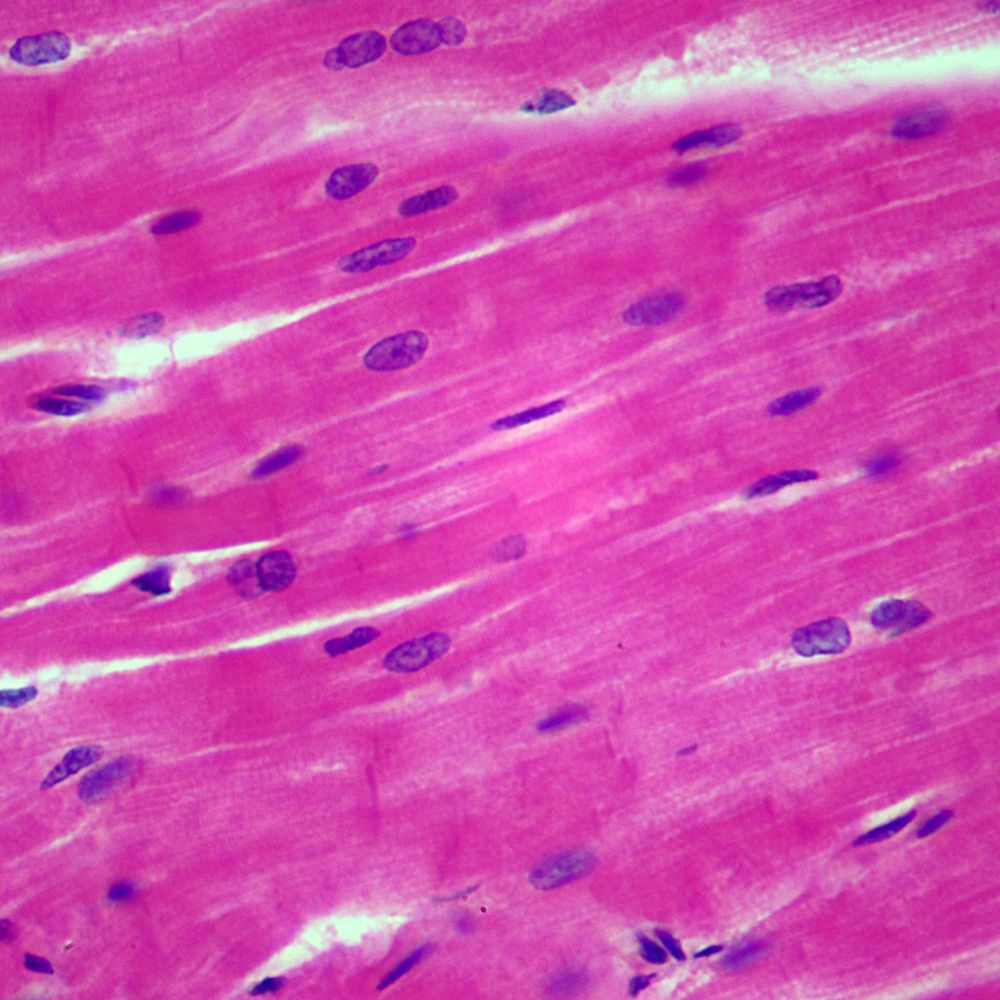
Name this muscle tissue
cardiac muscle

Name this muscle tissue
skeletal muscle
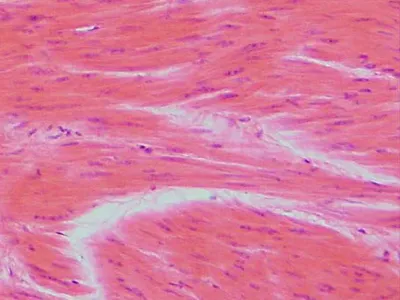
Name this muscle tissue
smooth muscle
A _____ feedback means there’s no maintaining a set point. It reinforces the stimulant to an end point. Give a few examples.
positive
childbirth, blood clotting
What is the purpose of neurotransmitters? Give an example.
Send signals across a synapse from one neuron to another
melatonin or serotonin
What are the three shapes of epithelial cells?
squamous, cuboidal, and columnar
Give the main examples of negative feedback from this lecture.
blood glucose levels, flight/fight response, and body temperature regulation
When in danger, the ______ gland releases ______ and targets the liver cells and blood vessels around the muscle cells + digestive system. As a response, there is a release and _____ in blood flow to muscles, and ____ blood flow to digestive system.
adrenal; epinephrine
increase; decrease
When danger is over, the adrenal gland releases ______ and targets the liver cells and blood vessels in muscles and the digestive system. The liver ______ releasing glucose, muscle _____ blood flow, and digestive _____ blood flow. This is an example of a negative feedback, but you may feel nauseous afterward.
norepinephrine
stops; decreases; increases
In decreasing body temperature, the hypothalamus tells blood vessels to _______ and act on ______ ______ muscles and have them to involuntary contract, which is called _____.
constrict/conserve heat; voluntary skeletal; shivering
What is the by-product of metabolism?
Heat
Does the hypothalamus have a signal molecule?
No, the hypothalamus is in the CNS - brain. The stimulant is received by the brain directly and can produce what is needed without a signal.

Name this connective tissue
adipose tissue

Name this connective tissue
blood tissue

Name this connective tissue
bone (ground) tissue
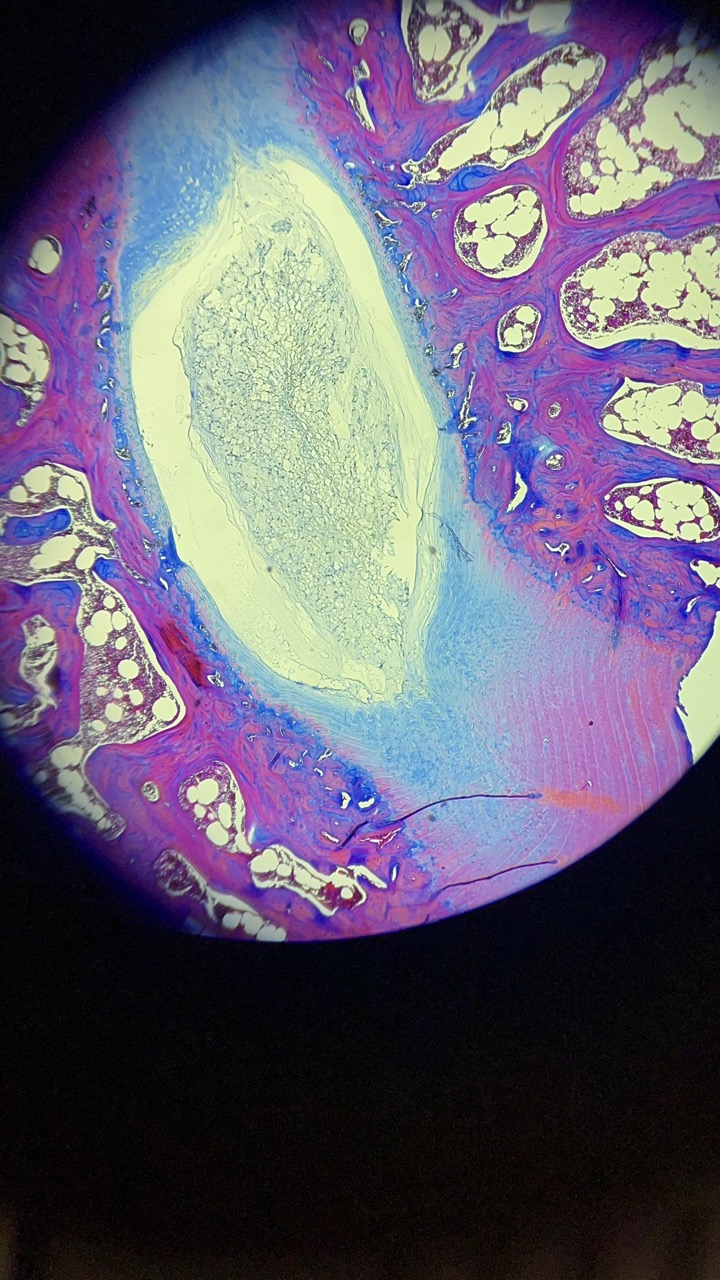
Name this connective tissue
cartilage tissue

How do you know it’s columnar?
The elongated shape in purple

What makes this simple squamous?
The single layer of flat, scale-like cells

How can you tell it is transitional?
The specialized stratified epithelial tissue has small cuboidal cells at the basal layer and dome shaped surface cells