ASCI 243 Midterm
 Call Kai
 Learn
 Practice Test
 Spaced Repetition
 Match
 Flashcards
 Knowt Play
1/95

There's no tags or description
Looks like no tags are added yet.
96 Terms
dendrites
recieve signals
soma (cell body)
metabolic center
axon hillock
decision point for action potential initiation
axon
conducts impulse away from the soma
myelin sheath (Schwann cells)
increases conduction speed
axon terminal
released neurotransmitter into synaptic cleft
sensory neurons
neurons that carry incoming information from the sensory receptors to the brain and spinal cord
motor neurons
neurons that carry outgoing information from the brain and spinal cord to the muscles and glands
interneurons
neurons within the brain and spinal cord that communicate internally and intervene between the sensory inputs and motor outputs
Central Nervous System (CNS)
brain and spinal cord
peripheral nervous system (PNS)
connects the brain and spinal cord to the muscles, organs and senses in the periphery of the body
sensory (afferent)
transmit impulses toward the CNS
motor (efferent)
carry impulses away from the CNS
somatic nervous system
the division of the peripheral nervous system that controls the body's skeletal muscles
autonomic nervous system
the part of the peripheral nervous system that controls the glands and the muscles of the internal organs (such as the heart)
sympathetic nervous system
fight or flight
parasympathetic nervous system
rest and digest
frontal lobe

parietal lobe

occipital lobe

temporal lobe

thalamus

hypothalamus

hippocampus

basal ganglia

smelling pathway to the brain
→ Olfactory receptor neurons (nasal epithelium)→ Olfactory bulb→ Olfactory tract→ Piriform cortex→ Amygdala→ Hippocampus→ Orbitofrontal cortex
taste pathway to the brain
→ Taste receptor cells (taste buds)→ CN VII (facial), CN IX (glossopharyngeal), CN X (vagus)→ Nucleus of the solitary tract→ Thalamus (VPM)→ Gustatory cortex
vision pathway to the brain
→ Retina (rods & cones)→ Bipolar cells→ Ganglion cells→ Optic nerve→ Optic chiasm→ Optic tract→ Lateral geniculate nucleus→ Optic radiations→ Primary visual cortex
hearing pathway to the brain
→ Tympanic membrane→ Ossicles→ Cochlea→ CN VIII (vestibulocochlear)→ Cochlear nuclei→ Superior olivary complex→ Inferior colliculus→ Medial geniculate nucleus→ Primary auditory cortex
dorsal

ventral

rostral

cranial
toward head
caudal
away from head
medial
toward midline
lateral
away from midline
proximal
closer to point of attachment
distal
farther from point of attachment
superficial
closer to the surface
deep
farther from the surface
median plane

sagittal plane

transverse plane

dorsal (frontal) plane

what are the four types of tissue?
epithelial, connective, muscle, nervous
functions of muscle tissue
1. movement, respiration, digestion, reproduction, vision, communication
2. converts chemical energy to mechanical energy via ATP hydrolysis (not very effective)
three muscle types?
skeletal, cardiac, smooth
main function of connective tissue?
maintains the body's structure and function
tendons connect
muscles to bone
ligaments connect
bone to bone
fibroblast
a cell in connective tissue that produces collagen, reticular, and elastin
collagen
strongest of fibers, provides tensile strength, restists stretching
reticular
delicate structural scaffolds, supports cellular organization in soft tissues
elastin
capable of stretch/recoil, provides flexibility
two structural types of bone
compact and cancellous (spongy)
epiphysis

metaphysis

diaphysis

epiphyseal plate
growth plate

four primary depots
visceral fat, subcutaneous fat, intermuscular fat, intramuscular fat
order of fat depots to form
visceral --> subcutaneous --> intermuscular --> intramuscular
what is myosin made of?
2 heavy chains and 4 light chains
What is actin made of?
375-376 amino acid polypeptide chain
z disc on sarcomere

A band on sarcomere
7

I band on sarcomere
6
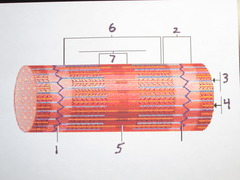
M line of sarcomere

three types of muscle tissue
skeletal, cardiac, smooth
skeletal appearance
striated, multi-nucleated, fibers parallel
cardiac appearance
one nucleus, striated, and intercalated discs
smooth muscle appearance
single, fusiform, uninucleate; no striations
muscle components from smallest to largest
sarcomere → myofilament → myofibril → muscle bundle → whole skeletal muscle
primary function of respiratory system?
gas exchange, provides O2 and eliminates CO2
Secondary functions of the respiratory system
regulate blood pH, olfaction, sound production, and heat elimination via expired air
ventilation passage
nose or mouth to pharynx to larynx to trachea to bronchi to bronchioles to terminal bronchioles
gas exchange components
respiratory bronchioles to alveolar ducts to alveolar sacs to alveoli
three components of pharynx
nasopharynx, oropharynx, laryngopharynx
nasopharynx

oropharynx

laryngopharynx

key function of nose and sinuses
condition inhaled air by warming, humidifying, and filtering it using mucus and cilia
key function of pharynx
allowing for both the passage of food/liquids to the digestive system and air to the respiratory system
key function of larynx
protect the lower airway by preventing swallowed food and liquids from entering the trachea and lungs
key function of trachea
serve as a vital, open passageway for air to move between the larynx and the bronchi in the lungs during breathing
key function of bronchial tree
transports air to and from the lungs, filters and humidifies incoming air, and regulates airflow resistance.
pleural membrane
membrane that encloses the lungs within the rib cage
external gas exchange
the exchange of specific gases between the alveoli and the blood
internal gas exchange
occurs between blood and tissues
four components of blood
plasma, red blood cells, white blood cells, platelets
pericardium
Membrane surrounding the heart
two layers of pericardium
fibrous and serous
atrioventricular valves
tricuspid and bicuspid
semilunar valve
pulmonary and aortic
systemic blood flow sequence
left atrium --> left ventricle --> body
pulmonary blood flow sequence
right atrium --> right ventricle --> lungs
order of valves?
tricuspid valve, pulmonary valve, bicuspid valve, aortic valve