Unit 4 - DNA Replication & Genetic Engineering
 Call Kai
 Learn
 Practice Test
 Spaced Repetition
 Match
 Flashcards
 Knowt Play
1/15

There's no tags or description
Looks like no tags are added yet.
16 Terms
DNA helicase
separates strands of parental double helix by breaking h-bonds holding base pairs together
replication fork
where parental strands of DNA separate, and where DNA replication begins
semiconservative replication
after replication, each DNA molecule consists of a strand that was originally part of the DNA molecule and one newly synthesized strand
single-strand binding protein
stabilizes single strands of DNA by preventing the template strands from coming back together
DNA topoisomerase
works upstream from replication fork to relieve stress that results from unwinding the double helix
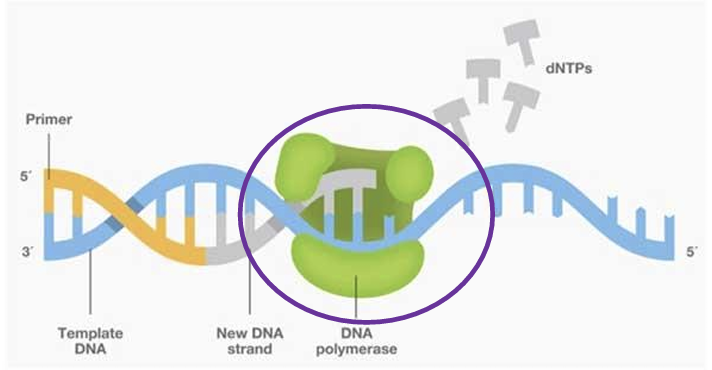
DNA polymerase
synthesize a new DNA strand from an existing template
RNA primer
each DNA strand must start with an RNA primer
made by an enzyme called RNA primase
leading strand
daughter strand of DNA that is synthesized continuously
lagging strand
daughter strand of DNA that is synthesized in short, discontinuous pieces
short pieces in the lagging strand are called okazaki fragments
DNA ligase
joins okazaki fragments together
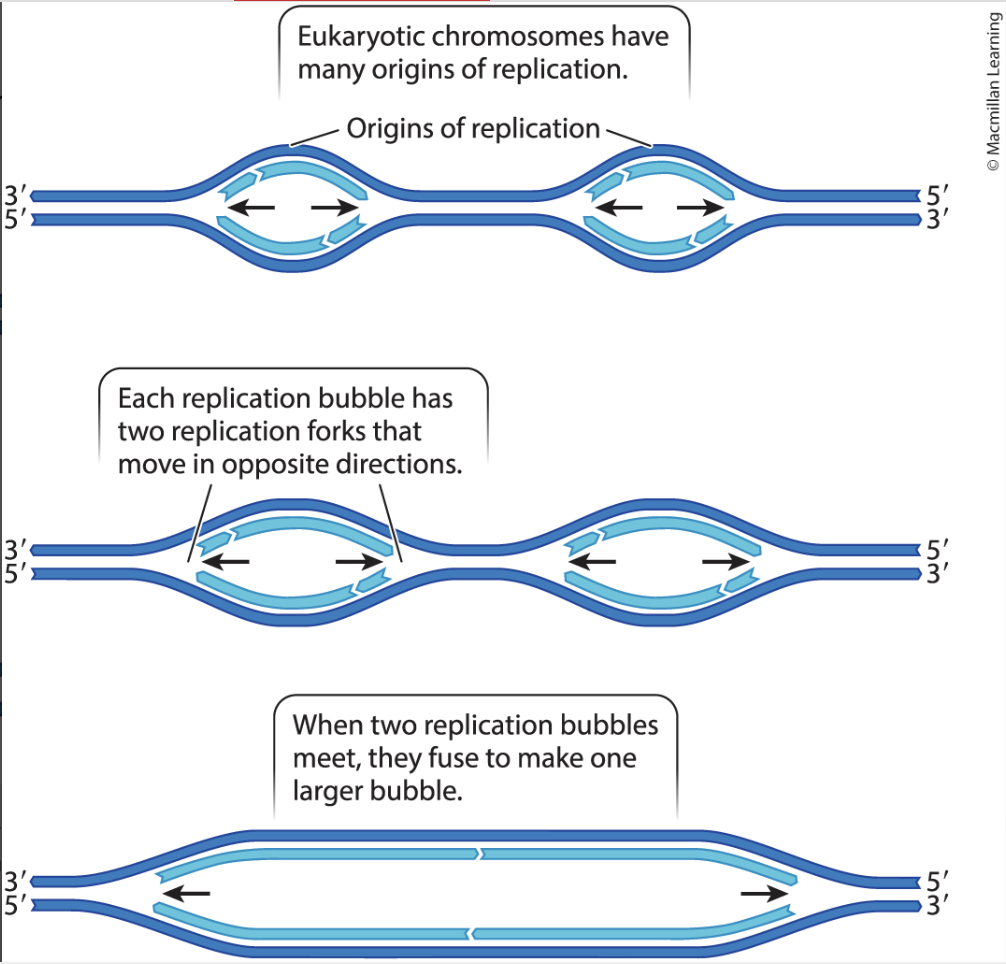
DNA synthesis eukaryotes
DNA replication begins simultaneously at many places
replication bubble: has two replication forks that move in opposite directions. can fuse with other replication bubbles
DNA synthesis prokaryotes
only one origin of replication
replication forks proceed in different directions around the circle until they meet and fuse at the opposite side

replication bubble
two replication forks
one origin of replication
add image from slides
polymerase chain reaction (PCR)
DNA replication in a test tube
a specific region of DNA is amplified (replicated) many times
4 key things needed for PCR
DNA template
primers
dNTP’s
DNA polymerase (taq polymerase)
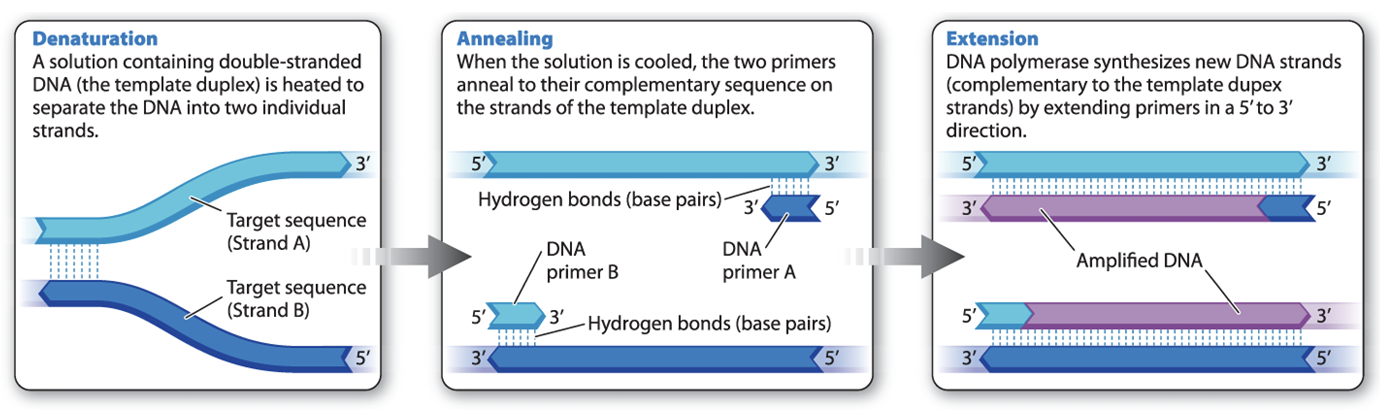
PCR amplification cycle
denaturation
solution containing DNA is heated to separate the DNA into two individual strands
annealing
solution is cooled and the two primers anneal to their complementary sequence
extension
DNA polymerase syntheszies new DNA strands by extending primers in a 5’ to 3’ direction