Diagnosing Inborn Errors of Metabolism: Mass Spectrometry & Newborn Screening
 Call Kai
 Learn
 Practice Test
 Spaced Repetition
 Match
 Flashcards
 Knowt Play
1/37

There's no tags or description
Looks like no tags are added yet.
38 Terms
What is the main focus of the module on diagnosing inborn errors of metabolism?
To gain insight into how diseases caused by rare gene mutations are diagnosed and managed.
What are the three key knowledge areas students will learn in this module?
1. Designing gene-based therapies for inherited genetic disorders. 2. Understanding how metabolism reflects the manifestation, diagnosis, and treatment of diseases. 3. The application of mass spectrometry in disease diagnosis.
What is mass spectrometry used for in disease diagnosis?
It is applied in the diagnosis of fatty acid oxidation disorders and evaluates contexts for disease diagnosis.
What are some examples of disorders screened in newborn screening?
Amino acid disorders, fatty acid oxidation disorders, endocrine disorders, organic acid disorders, cystic fibrosis, spinal muscular atrophy, severe combined immunodeficiency (SCID), and galactosemia.
What is MCADD?
Medium Chain Acyl-CoA Dehydrogenase Deficiency, an inherited mutation in the ACADM gene.
What is the incidence rate of MCADD in Australia?
5.2 per 100,000 births.
What are the symptoms of MCADD during a crisis?
Vomiting, lethargy, coma, and liver disease, often triggered by intercurrent illness or prolonged fasting.
What is the significance of diagnosing MCADD early?
About 1 in 4 children with MCAD deficiency will die from their first crisis.
What is the physiological purpose of β-oxidation?
To break down fatty acids for energy production.

What happens when β-oxidation is impaired?
It leads to hypoketotic hypoglycemia and accumulation of fatty acyl-CoA.
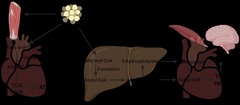
How are fatty acid oxidation disorders measured?
By measuring the accumulation of specific acylcarnitines in blood.

What do specific acylcarnitines indicate?
They are indicative of different enzyme defects related to fatty acid oxidation disorders.

What methods can confirm the diagnosis of fatty acid oxidation disorders?
Gene sequencing, urine organic acid analysis, and enzyme assays.
What is Carnitine acylcarnitine translocase deficiency (CACT)?
A type of fatty acid oxidation disorder.
What is Carnitine palmitoyltransferase I deficiency (CPT I)?
A type of fatty acid oxidation disorder affecting fatty acid metabolism.
What is Carnitine palmitoyltransferase II deficiency (CPT II)?
A type of fatty acid oxidation disorder that impacts the transport of fatty acids into mitochondria.
What is Long-chain 3-hydroxyacyl-CoA dehydrogenase (LCHAD) deficiency?
A fatty acid oxidation disorder that affects the metabolism of long-chain fatty acids.
What does a mass spectrometer measure?
The mass-to-charge ratio (m/z) of positive or negative ions.
What are ions in the context of mass spectrometry?
Charged molecules in the gaseous phase.
What is the function of an ion source in mass spectrometry?
It converts liquid flow into charged ions that enter the mass spectrometer.
What are the common types of mass analyzers?
Triple quadrupole, time-of-flight, ion trap, and Orbitrap.
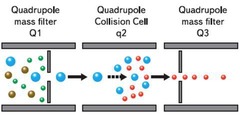
What is a characteristic of the triple quadrupole mass spectrometer?
It is very selective and has a large dynamic range for quantification.
What is electrospray ionization?
A 'soft' ionization method that converts liquid into charged ions.

What ions are commonly produced during electrospray ionization?
+H, -H, +NH4, +CHOO, +Na, +K (adducts).
What is a precursor ion scan used for?
It is used for analyzing acylcarnitines.
What is a neutral loss scan used for?
It is used for amino acid analysis.
What does multiple reaction monitoring involve?
A user-defined list of precursor and product ions.

What is LC-MS/MS?
A method that combines liquid chromatography with tandem mass spectrometry.

What is the significance of serum 25-hydroxyvitamin D?
It is a reliable indicator of vitamin D levels.
What are some applications of mass spectrometry in clinical diagnostics?
Newborn screening, therapeutic drug monitoring, toxicology, and steroid hormone analysis.
What is the advantage of using mass spectrometry for small molecules?
It is highly specific for the metabolites of interest.
What is a disadvantage of mass spectrometry in diagnostic assays?
It has lower throughput than immunoassays, processing one sample at a time.
What is the role of mass spectrometry in newborn screening?
It is used to diagnose metabolic disorders in amino acid and fatty acid metabolism.
What are some metabolic disorders diagnosed by mass spectrometry?
Phenylketonuria, argininosuccinic aciduria, citrullinemia, and maple syrup urine disease.
What is the importance of specific training in mass spectrometry?
It requires skilled operators for accurate and effective use.
What is one of the main advantages of mass spectrometry?
Reagents are inexpensive and adaptable for various assays.
How does mass spectrometry achieve high specificity?
Through tandem mass spectrometry, often coupled to HPLC.
What is the main use of mass spectrometry in clinical practice?
To quantify levels of small molecules and proteins for diagnostics.