5_Microbial Symbioses Slides
 Call Kai
 Learn
Learn Practice Test
 Spaced Repetition
 Match
Match Flashcards
 Knowt Play
1/48

There's no tags or description
Looks like no tags are added yet.
Name | Mastery | Learn | Test | Matching | Spaced | Call with Kai | Chat |
|---|
No analytics yet
Send a link to your students to track their progress
49 Terms
Symbiosis
A close and long-term biological interaction between two organisms of different species
Mutualism
Both living things help each other and benefit from the relationship
Coevolution
Two or more species shape each other's evolution through close ecological contact
Lichen
Mutualistic association of a fungus and an alga or cyanobacterium
Consortia
A community of 2 or more microbial organisms living
together and cooperating that is mutualistic and found in freshwater environments
Consortia example
Epibionts-green sulfur bacteria

Epibionts-green sulfur bacteria
Surround and attach to a central flagellated, colorless rod-shaped bacterium

Examples of Plants as microbial habitats
• Root nodules
• Mycorrhizae
• Crown gall disease
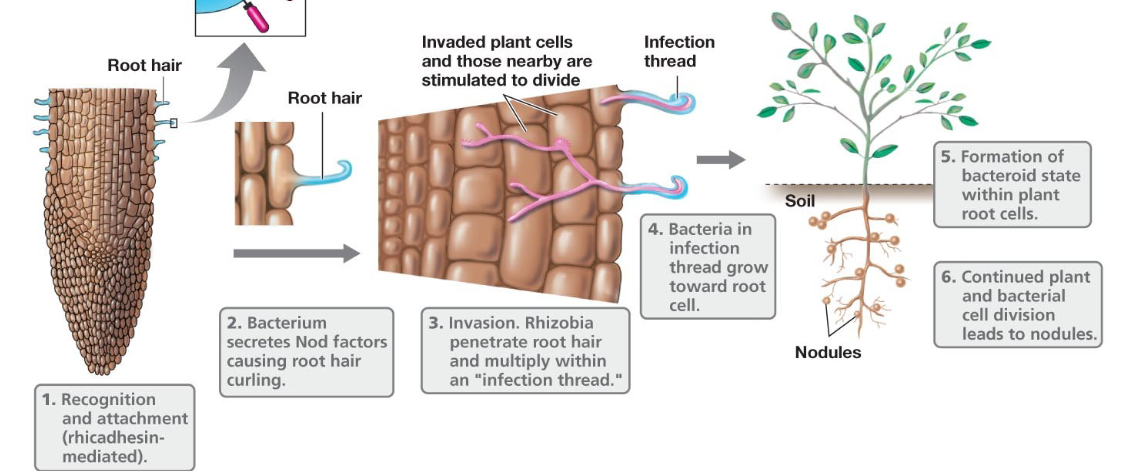
Root nodules
Leguminous plants and nitrogen fixing bacteria

Rhizobium
Mutualistic relationship, legumes obtain fixed nitrogen, bacteria receive carbon compounds and protected niche
a cornerstone process in sustainable agriculture and the global nitrogen cycle
Crown gall disease
Agrobacterium parasite infect the plants causing tumor-like swelling (galls) near roots, branches and stems.
The galls become so large the plant cannot properly uptake water and nutrients from the soil.
Ti plasmid
used in the genetic engineering of plants

Mycorrhizae
Mutualistic relationship, plant provides sugars, and fungus has long thread like protrusions in the soil to bring water and nutrients to the plant.
Ectomycorrhiza
symbiotic partnership between fungi and the roots of woody plants where the fungus forms a protective sheath around the outside of the roots rather than entering the plant cells
Conifers, beech, oak trees
Endomycorrhiza
beneficial fungi that penetrate the cell walls of plant roots to form a shared, cooperative network
Arbuscular mycorrhizae (AM), 70-90% all terrestrial plants
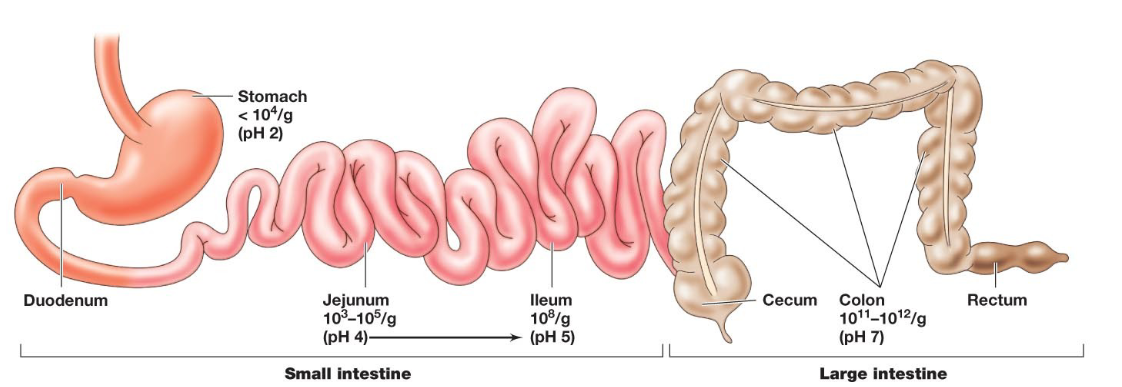
Human microbiome
• Eat food
• 1-4 hours
• Large intestine
• Increase in bacterial numbers
Heritable Symbionts of Insects
• Secondary symbionts. Not required for reproduction, Not always present in every individual, Can invade different cells and live extracellularly, Must provide a benefit (nutritional, protection from environment, protection from pathogens)
• Some parasitic symbionts manipulate host's reproductive tissue
Termites
decompose cellulose and hemicellulose with assistance from symbiotic bacteria

Hawaiian Bobtail Squid
A mutualistic symbiosis between the marine bacterium Aliivibrio fischeri and the _________
The _________ harbors large populations of the bioluminescent A.
fischeri in a specialized structure (light organ)Light emitted from bacteria camouflages the ________ from predators
Mucous Membranes
Colonization's frequently begin at sites in the animal's _____________

Microflora of the Skin
Based on microenvironments
Environmental and host factors can also influence
skin microflora

Microflora of the Oral Cavity
• Complex microbial community
– Most microorganisms are facultatively aerobic
– Some are obligately anaerobic (Bacteroides)
– Some are obligately aerobic (Neisseria, Acinetobacter)
• Most abundant - Streptococci, Veillonella parvula
Microflora of the Gastrointestinal Tract

Microflora of Mucosal Tissues: Respiratory
Upper Respiratory Tract Flora - Staphlyococci, Streptococci, diphtheroid bacilli, and gram negative cocci

Microflora of Mucosal Tissues: Urogenital Tract
• Kidneys and bladder (low level to no bacteria
present)
• Urethra - Facultative aerobic, gram negative
Lactobacillus acidophilus
helps maintain an acidic environment in vagina
The presence of microbes can lead to
• Infection
• Disease
Microbial Pathogenesis

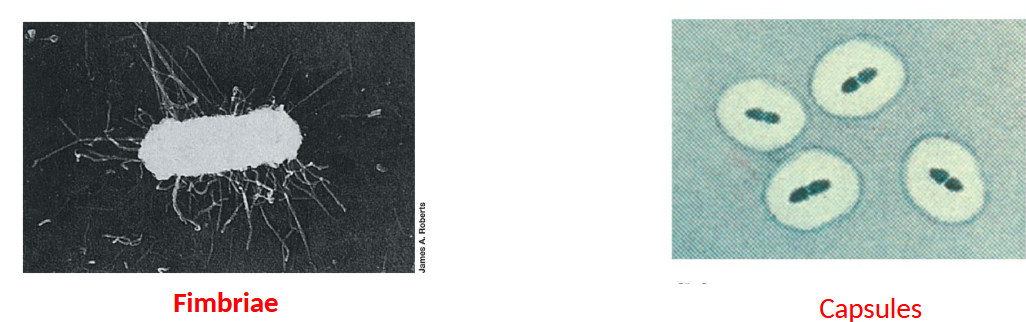
Factors Affecting Adherence/Attachment
Capsule/ slime layer
Adherence proteins
Lipoteichoic acid
Fimbriae (pill)
LD50
The amount of agent that kills 50% of the animals in a test group
Toxicity
Organism causes disease by means of a toxin that inhibits host cell function or kills host cells
Exotoxins
Proteins released from the pathogen cell as it grows
Exotoxin categories
Cytotoxins (hemolysins), AB toxins (botulism, tetanus, cholera), Superantigen toxins
Cytotoxins (cytolytic toxins)
Cause cell lysis and death
Hemolysins
Toxins that lyse red blood cells
A Subunit of AB Toxin
The enzyme component that enters the host cell cytoplasm and causes direct cellular damage or death by altering key metabolic or protein synthesis processes
B Subunit of AB Toxin
The portion that recognizes and attaches to specific receptor molecules on the surface of the host cell, controlling which cell types the toxin targets and helping the A subunit get inside.
AB Toxin Process Illustration

AB Toxin Binding
The B subunit binds to a specific receptor on the target host cell membrane.
AB Toxin Entry
The cell takes in the toxin through endocytosis.
AB Toxin Separation
Inside the cell, changes in acid levels or chemical cleavage cause the A and B subunits to separate.
AB Toxin Action
The active A subunit moves into the cytoplasm to disable vital cell machinery, such as blocking protein synthesis or stopping nerve signals.
Botulinum Toxin (Clostridium botulinum)
Causes flaccid paralysis
Tetanus Toxin (Clostridium tetani)
Causes spastic paralysis
Cholera Toxin
Rice Water Stool
Superantigen toxins
powerful microbial proteins that cause extreme, non-specific immune system activation
Endotoxins
The lipopolysaccharide portion of the cell envelope of certain gram-negative Bacteria, which is a toxin when solubilized
Release of LPS (Lipid A) when Gram negative bacteria die
Lipid A causes inflammation, fever, shock
Innate Resistance to Infection

Risk Factors for Infection
Compromised host: Age, Stress, Diet, Certain genetic conditions