Mesopotamia 3D (this is a reference to the third step up movie)
 Call Kai
 Learn
 Practice Test
 Spaced Repetition
 Match
 Flashcards
 Knowt Play
1/43

There's no tags or description
Looks like no tags are added yet.
44 Terms

Getrude Bell
Father was a wealthy industrialist
Well-educated
Studied history at Oxford, but was not allowed to graduate (likely a decision by her family)
Went on to a career in scholarship
Fluent in eight languages, traveled West Asia in the 1890s under Ottoman rule
Fascinated with history, geography, and contemporary politics in West Asia
Became an expert
Recruited into the British intelligence service
1921 - invited to join a committee to carve out the borders of West Asia
The Cairo Conference
Only woman out of 39 people
Also did archaeology
Created a photo archive that’s now at Newcastle University
Published in English, French, and German
Became a close advisor to Faisal I in Iraq
Honorary head of antiquities in Iraq - wrote the first antiquities laws, founded the Iraq museum of antiquities
Ur was the first permit given under the new laws - she was instrumental in getting archaeology off the ground there
Died in 1926
Leonard Woolley wrote her obituary
Known as the “Uncrowned Queen of Iraq”
But was an agent of colonial power in the Cairo Conference

Katharine Woolley background
Born Katherine Menke
Very outgoing and well-educated
Attended Oxford
Worked as a nurse in WWI
Married Betram Keeling (a diplomat in Cairo who died 1922)
Ended up traveling West Asia
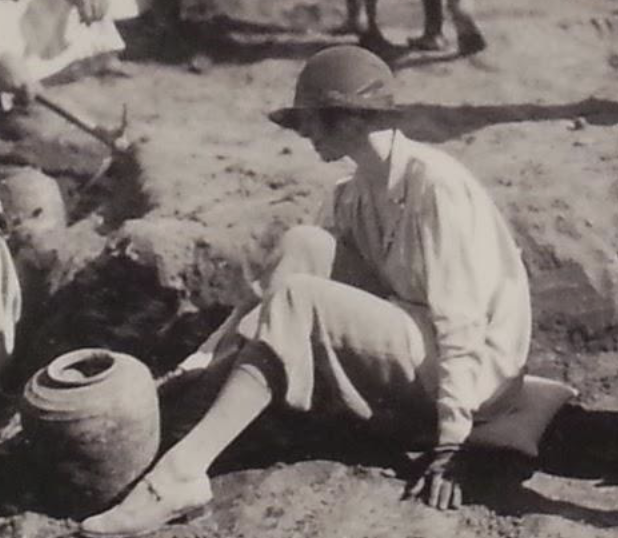
Katharine Wooley at Ur
Visited Ur in 1924
Became an illustrator on Woolley’s project - at first for free, but then a paid position
When her presence was noted by the University of Pennsylvania, this “single” woman was viewed as a scandal
Museum directors considered her presence a distraction
Married Leonard Woolley in 1926 for convenience
Excavated, did restoration and reconstruction
Most of the jewels were reconstructed and illustrated by her
By the 1930s, she was managing the whole project
Emblematic of many uncredited women in the field at the time

Leonard Woolley and Sheik Hamoudi Ibn Ibrahim
Lifelong friendship
Hamoudi Ibn Ibrahim’s community provided labourers/ excavators and protected the cemetary site from looting
From all accounts, a good collaboration
Woolley’s excavations
The Temenos
The cemetery
Some excavated residential areas
2 ports
3 test trenches
The Temenos
Monumental area of the temples and administrative palaces
Off-center (unusual for typical organization)
Walled area inside the central city

Temenos structures
E-Temen-Ni-Gur
Temple dedicated to Moon god Nanna and his wife Sin/ Nigal (the Great Lady)
Includes the Ziggurat
E-gi-par
“Cloistered house”
Home of the high priestess (important political role for women)
E-Hur-Sag
Ur-Nammu’s palace
Temenos construction
Baked mud-brick
Massive (4+ meter) walls
Core and veneer walls - filled with rubble
Bitumen as mortar to protect from the elements
Gipsum or lime plaster (non-local materials)
Painted

The Ziggurat at Ur
3- tiered
Temple on top
Intended to evoke a mountain
Huge structure on what is otherwise a flat plain
Now, only one layer remains
Dedicated to Nanna (the patron of Ur) and his wife
More recently restored by Saddam Hussein
The concept was relatively late in the 3rd millennium BCE
Tiered temples existed, but not massive mountain-like ones
Became more popular after Ur-Nammu’s time
One of the largest known ziggurats
Iconography on seals and sculptures identify Ur-Nammu as the builder king
Surrounded by buildings and courtyards
Later, the city rose up above it (tells)
The Ziggurat at Ur - dimensions
64m x 45 m
30 m high (the remaining layer)
The Ziggurat at Ur - symbolic meaning
Temple to the patron deity
Express the glory of the city and the god
Also monuments to kings and evidence of their efficacy
McMahon - symbol of collective labour
Access was likely highly restricted
Mesopotamian deities - voibes
Characterized by shared concepts and beliefs across the region
Not a single organized religion, no central human leader
Consistent, but not centralized
Apart from homage to Enlil/ Nippur
Gods represented as anthropomorphic, have families
Some are more important (politics)
The place and importance of each god varies over time and space
Enlil (again) (more info) (because we love him almost as much as Tlaloc does)
Associated with Nippur
God of water, forces of nature, flooding
“Father of the Gods”
Ianna
Associated with Uruk
Goddess of sexual reproduction
Temples at Ur and Nippur as well
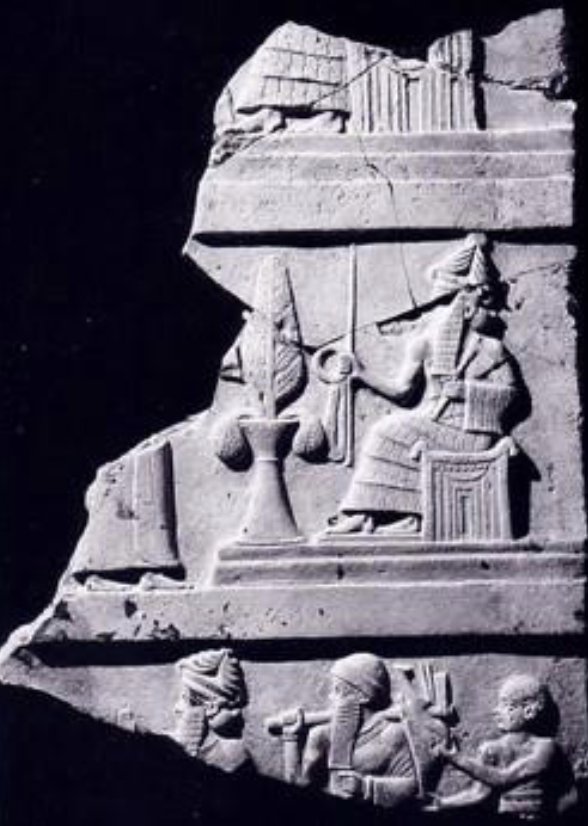
Nanna
Associated with Ur
God of the moon, wisdom
Son of Enlil
Beard of lapis lazuli
Depicted riding a winged bull
An/ Anu
God of heaven
Father of Ianna
Gods and cities
Each city is a gift from the patron god
But might have temples to other gods (maybe because its citizens came from elsewhere)
By Uruk times, gods were firmly associated with the urban sphere
Lived in temples
Referred to as urban city-dwellers
Temples were the largest owners of agriculture in Mesopotamia (reason for so much cuneiform)
Public ceremonial space (the Temenos)
Temples, quarters of priests and priestesses, residences of royalty
Enclosed and open spaces
Lots of courtyards - people would have been let in for ceremonies
Feasting, music, and dancing were important
Employed the craft industry
Egipar translation
“Cloistered house” or “Priestly residence”
Egipar location
South of the Ziggurat, separated by a street
Who constructed the Egipar?
Ur-Nammu
Who lived at the Egipar?
Priestesses who acted as Nigal/ Sin (wife of Nanna)
Entu
“Princess”
A priestess of Nanna revealed to the country through omens
“Chosen” by Nanna
Omens may have been engineered to install certain women in the position
The first Entu
Enheduanna, daughter of Sargon
Effectively appointed by her father
Egipar structure/ construction
Two halves, surrounded by a wall
Floors made of baked brick
Kitchen
Food and drink for feasting was likely prepared here (a political practice)
Had archives/ a library as well!
Repository for texts
Poetry, economics, politics
Leonard Woolley found a cache of unbaked tablet (fired for posterity)
The Royal Cemetery at Ur location
The Southeast corner of the Temenos
The Royal Cemetery at Ur time period
ED period
Graves at Ur - vibes (rough numbers and such)
~2000 burials excavated
16 of which were royal (contained gold, silver, semi-precious stones)
4000 graves were not recorded because they were considered too disturbed or of lesser importance (everyday people)
Destroyed
Royal tombs at Ur
3rd millenium BCE
Total of 16
Belowground stone vaults with multiple chambers
Some court attendants/ sacrifices
Cut into early period garbage pits
Midden used at the same time
Most looted pre-Woolleys
Difficult stratigraphy, some graves cut into each other
High-value belongings
Instruments, seals, important precious metals, stone, personal items (i.e. cosmetic kits)
Only 4 had skeletons that could be definitively decided by sex

“Queen” Puabi’s tomb
Undisturbed!
Best guess = an elite woman
A lot of belongings
Name comes from a seal in the tomb - two other seals give other names, so it’s unclear
Puabi grave goods
Headdress of golden leaves, silver, lapis lazuli
Gold, carnelian, lapis lazuli beads
Stone beads from the IVC
Gold plates
Non-local, highly skilled craft
Also a lyre

Other people in Puabi’s tomb
52 sacrificed attendants - also with headdresses
Woolley thought they were poisoned
Recent CT scans suggest blunt force trauma for at least some
But most skeletons were thrown away (bad bad bad)
Tomb 1237 “Death pit”
Largest of the “chamberless death pits”
Shaft tombs with sacrificed retainers thought to be sunk in front of more elaborate grave chamber tombs of elites
Woolley believed the associated chamber tomb had been looted and destroyed
Still a lot of goods, believed by some to be the grave of the 26th king of Ur
A lot of jewelry, lyres, etc
Armed men and a chariot
Most victims were considered to be women because of particular types of jewelry, but this is not based on skeletal analysis, so it remains unclear
Another theory: skeleton 61 (wearing headdress and jewelry similar to Puabi) is the central figure of the tomb
But may have just been a sacrificial elite retainer
Narrative that the victims went willingly (by Woolley)
Further analysis is not possible because the skeletons were disposed of
And also skeletal analysis of the time was very eugenics
Pollock’s theory: offerings to more elite dead
Or related to administrators in the cemetery
Cemetery demographics
Mostly adults in their prime
Most children were believed to be buried in houses or other cemeteries
Residential architecture excavations by Woolley
East of the Temenos
Larger area to the south
Dated to a later period (after Ur III)
The study of households/ everyday practices was not common in the 1920s/30s
Often ignored even if excavated
Residential architecture - vibes
Packed, shared walls, tight living quarters
Houses built along tight alleys
Rubbish was thrown into the streets, increasing the street level (Woolley)
Elizabeth Stone
Mesopotamian Cities and Countryside
Based part of her PhD on residential life at Nippur
Uses a wide range of sources
Recovered texts, excavation data, survey data, analogies with later Ottoman architecture
Ethnographic analogy
Using analogies with later architecture in the same region to surmise things about ancient life
Used by Elizabeth Stone

Excavations at Nippur - Elizabeth Stone
Patchy approach at times, uses available data
Distinguishes between inter- and intra-site survey
Intramural survey
Survey between walls
City organizations - Elizabeth Stone
Walled sectors, divided by canals
Ziggurats on the outskirts - residential areas at the heart of the city
Ur is an outlier there
Both rich and poor in some neighbourhoods
More variation within neighbourhoods than between them
Not a lot of house size variation due to common walls
Most residents were both home- and landowners
Some neighbourhoods/ streets may be associated with a particular profession
I.e. copper production at Nippur
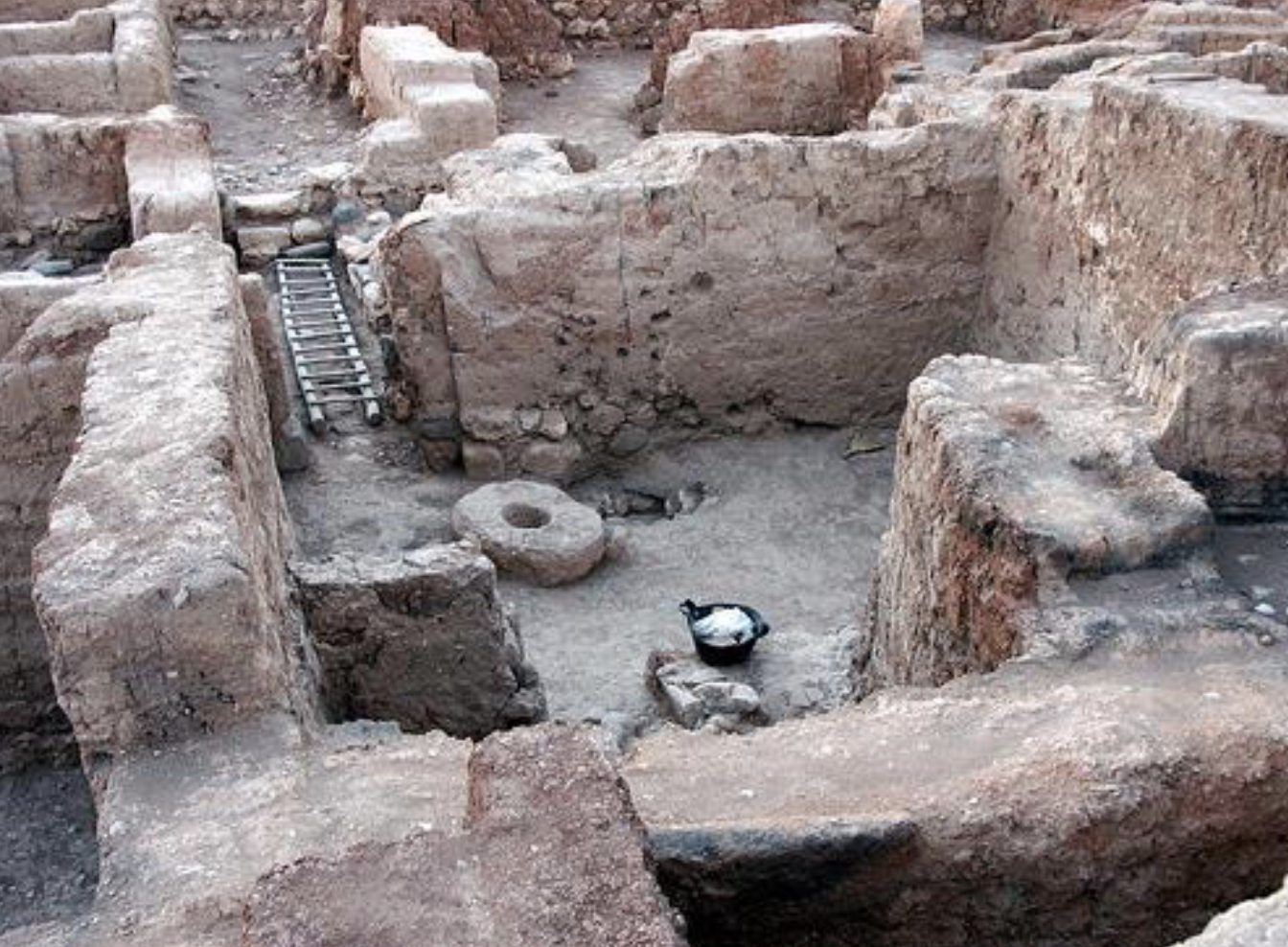
Household excavations at Nippur
Basic unit of social organization
Patrilineal (as seen in legal documents)
Most think the houses were not extended families, but there were still strong family ties
Cycles of households
Sun-dried brick is relatively cheap to renovate
The House
Great uniformity across sites and time
From the ED period to early Islamic time
1-2 stories built around a courtyard
Flat rooftops are important, used as work spaces
Focus on the inside
Exteriors are unadorned
No activity-specific rooms
Sub-floor burials, but not enough to say everyone in the family was buried there
Family space was sacred
Isin-Larsa
Period after Ur III