France: Notable Musicians and Musical Developments
 Call Kai
 Learn
 Practice Test
 Spaced Repetition
 Match
 Flashcards
 Knowt Play
1/22

There's no tags or description
Looks like no tags are added yet.
23 Terms
1071 - 1348 - Troubadour / Troubadours (All Facts)
Term used to refer to the namesake genre and composer and performer of the genre
It consisted of the namesake performer singing to their own accompaniment
It consisted of stanzas of poems set to music, producing complete compositions, it was a form of lyric poetry
The texts of its songs deal mainly with themes of chivalry and courtly love and most were metaphysical, intellectual, and formulaic or humorous, vulgar, and satirical
Its poets sung short, pithy songs of elevated, courtly love with accompanying moods expressed universal emotion despite being aristocratic and feudal in the imagery they evoked
They were often addressed to local women, which may explain why they were written in the langue d’oc (old French) and not in Latin
Form of music which began as a means of entertaining the wealthy and idle courtiers
Term which meant “inventor of poetry” in old French
Its first known composer and performer was William, Duke of Aquitaine
It died out as a popular music form during the onset of the Black Death
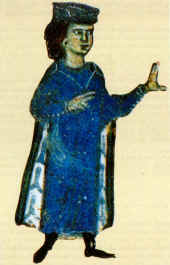
1071 - 1126 - William, Duke of Aquitaine (All Facts)
He is the earliest known (French) troubadour
He was a vernacular lyric poet who spoke in the Occitan language
Some of his work still survives
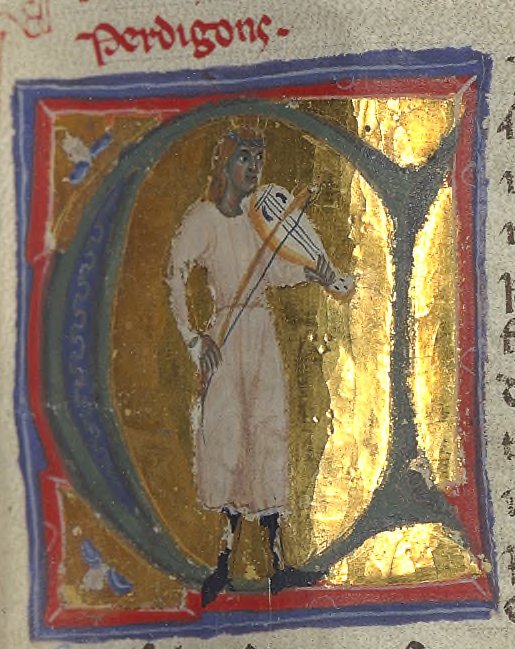
1190 - 1220 - Perdigon (All Facts)
Popular (French) troubadour
14 of his works survives
He played on a rebec, an ancestor of the violin
1050s - 1500s - Chanson de Geste (All Facts)
Earliest genre / form of French literature
Epic poems consisting of a series of stanzas using a single rhyme
They typically celebrated the history of the Age of Charlemagne and the Carolingian Renaissance
They were typically sung by travelling musicians
The earliest and most famous example of it was / is “The Song of Roland”
Jongleurs (All Facts)
Minstrels that recited poetry of medieval southern France
They wandered from court to court to sing or pass on the latest news
1150s - Trouveres (All Facts)
Developed in northern France by the namesake date
They developed on similar lines to their predecessor genre, producing formes fixes
Formes Fixes (All Facts)
Term used to refer to set structures of contrasting phrases among them the ballade, virelai, and rondeau
1163 - 1190 - Leonin (All Facts)
French Composer
First known significant composer of polyphonic organum
He allowed the choir schools of Notre Dame Cathedral in Paris to flourish
1200s - Perotin (All Facts)
French composer
He was associated with the Notre Dame school of polyphony in Paris
He is credited with developing the polyphonic practices of his predecessor, with the introduction of three and four-part harmonies
1291 - 1361 - Philippe de Vitry (All Facts)
French Composer and Music Theorist
Coined the term “Ars Nova” to describe newer and freer forms of music and the term “Ars Antiqua” to describe earlier forms of music

1300 - 1377 - Guillaume de Machaut (All Facts)
French Composer
Chief Figure of the “Ars Nova” Movement
He employed complex forms which involved
Modulation
Intricate cross-rhythms
Great independence of line
Dissonance (All Facts)
Great musical development and embellishment in music, which were part of the general concern with richness and diversity seen in European art and heard in European music at the time, especially in Paris, which produced its best examples
1400s - 1500s - Franco-Flemish School (All Facts)
Group of composers who worked in a style of polyphonic vocal music composition that were from France and from the Burgundian Netherlands
The spread of their technique, especially after the revolutionary development of printing, produced the first true international style since the unification of Gregorian chant in the 800s
School of composers including
Guillaume Dufay
Johannes Ockegham
Josquin des Pres (he used popular tunes in his work)
1650s - Minuet (All Facts)
Dance form in ¾ time
It was all the rage amongst French aristocrats by this time
1628 - 1677 - Robert Cambert (All Facts)
French Composer of Opera
1659 / 1671 - Robert Cambert: Pomone (All Facts)
First Opera written in the French language (by librettist Abbe Pierre Perrin)
Its performance marked the opening of the Royal Academy of Music in Paris

1668 - 1733 - François Couperin (All Facts)
French Baroque Composer and Organist
He was famous in his day as a keyboard instrumentalist
He came from a family of musicians
He was organist in King Louis XIV’s and King Louis XV’s Chapel

1714 / 1724 - Francois Couperin: The Tastes Reunited (All Facts)
Collection of chamber music suites published by the namesake composer / Collection of chamber music concerts performed by the namesake organist

1716 - Francois Couperin: The Art of Playing the Harpsichord (All Facts)
Work which is a treatise on keyboard technique for the namesake instrument

1722: Francois Couperin: Royal Concerts (All Facts)

1683 - 1764 - Jean-Baptiste Rameau (All Facts)
French Baroque Composer and Music Theorist
He mostly composed operas, to which he brought a wide range of moods and expressiveness together with richly colored orchestration

1735 - Jean-Baptiste Rameau: Les Indes Galantes (All Facts)