Cambell Biology Chapter 3
 Call Kai
 Learn
Learn Practice Test
 Spaced Repetition
 Match
Match Flashcards
 Knowt Play
1/98

There's no tags or description
Looks like no tags are added yet.
Name | Mastery | Learn | Test | Matching | Spaced | Call with Kai | Chat |
|---|
No analytics yet
Send a link to your students to track their progress
99 Terms
Most molecules cells make are composed of...
carbon.
Why are most organic molecules made of carbon?
Because carbon has the ability to form large and complex molecules, which build structures and carry out the structures of life.
Organic compounds
- Compounds that contain carbon and usually contain hydrogen atoms.
Isomers
Compounds with the same formula but different structures.

Hydrocarbons
Compounds composed of only carbon and hydrogen
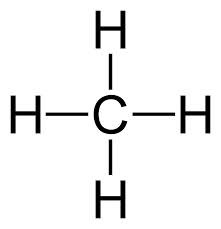
- EX. Methane
- provide energy and are major components of petroleum.
- rare in living organisms
- found in fats
Functional Groups
- A specific configuration of atoms commonly attached to the carbon skeletons of organic molecules and involved in chemical reactions.
- most are hydrophylic
Hydrophilic
water loving
Hydrophobic
water hating
hydroxyl group
A chemical group consisting of an oxygen atom bonded to a hydrogen atom.
- alcohols

carboxyl group
A functional group present in organic acids and consisting of a single carbon atom double-bonded to an oxygen atom and also bonded to a hydroxyl group.
- carboxylic acids
- amino acids

carbonyl group
a chemical group consisting of a carbon atom linked by a double bond to an oxygen atom
- [+hydroxyl] simple sugars
![<p>a chemical group consisting of a carbon atom linked by a double bond to an oxygen atom</p><p>- [+hydroxyl] simple sugars</p>](https://assets.knowt.com/user-attachments/86981d46-4214-405d-b2db-e0df3b559df9.png)
amino group
a chemical group consisting of a nitrogen atom bonded to two hydrogen atoms
- amines
- [+carboxyl] amino acids (building blocks of protein)
![<p>a chemical group consisting of a nitrogen atom bonded to two hydrogen atoms</p><p>- amines</p><p>- [+carboxyl] amino acids (building blocks of protein)</p>](https://assets.knowt.com/user-attachments/5530dfc9-638c-4142-9d76-ce262ca01ec9.jpg)
phosphate group
A functional group consisting of a phosphorus atom covalently bonded to four oxygen atoms
- ATP (energy)

methyl group
A chemical group consisting of a carbon atom bonded to three hydrogen atoms.
- hydrophobic
- component of DNA
- found in lipids

Methane
CH4
- one of the simplest organic compounds
- flatulence
Identify the chemical groups that do not contain carbon.
The hydroxyl, amino, and phosphate groups
Macromolecules
A very large organic molecule composed of many smaller molecules
- carbohydrates
- lipids
- proteins
- nucleic acids
Polymer
A long molecule consisting of many similar or identical monomers linked together.

Monomers
building blocks of polymers

dehydration reaction
A chemical reaction in which molecules combine by removing water

Hydrolysis
Breaking down complex molecules by the chemical addition of water

Enzymes
Proteins that speed up chemical reactions
Nucleotides
Basic units of DNA molecule, composed of a sugar, a phosphate, and one of 4 DNA bases
Polynucleotide
A polymer consisting of many nucleotide monomers in a chain; nucleotides can be those of DNA or RNA.
What holds polynucleotides together?
hydrogen bonds
DNA bases
Adenine, Thymine, Guanine, Cytosine
Monosaccharides
simple sugars, monomers of carbohydrates
- main fuels for cellular work
- form rings
polysacharides
large macromolecule formed from manosaccharides, starch, cellulose, glyxogen
Carbohydrates
the starches and sugars present in foods
- main source of energy
- 4kcal/g
- clean energy
Glucose
the form of sugar that circulates in the blood and provides the major source of energy for body tissues. When its level is low, we feel hunger.
- C6H12O6

Fructose
- fruit sugar
- C6H12O6

glucose and fructose are...
isomers

in aqueous solutions, most five- and six- carbon sugars form...
rings

formula of a monosaccharide that has three carbons
C3H6O3
Disaccharide
A double sugar, consisting of two monosaccharides joined by dehydration synthesis.

Sucrose
- glucose + fructose
- most common disaccharide
___% of U.S. adults get more than the FDA-recommended ___% of their daily calories from added sugars in foods and drinks.
71.4% and 10%
Polysaccharide
A polymer of thousands of simple sugars formed by dehydration synthesis.
Starch
A storage polysaccharide in plants consisting entirely of glucose for energy storage.
Glycogen
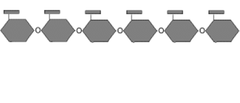
An extensively branched glucose storage polysaccharide found in the liver and muscle of animals; the animal equivalent of starch.

Cellulose
polysaccharide consisting of glucose monomers that reinforces plant-cell walls
- insoluble fiber

Chitin
A structural polysaccharide, consisting of amino sugar monomers, found in many fungal cell walls and in the exoskeletons of all arthropods.
- hydrophilic

Lipids
Energy-rich organic compounds, such as fats, oils, and waxes, that are made of carbon, hydrogen, and oxygen.
- major source of energy
- 9kcal/g
- no clean energy
- hydrophobic
- smaller molecules

Fats
large lipids made of glycerol and three fatty acids
- triglycerides
- energy storage
Glycerol
A three-carbon alcohol to which fatty acids are covalently bonded to make fats and oils.

How do fats form?
dehydration reactions
Unsaturated Fatty Acids
Fatty acids with one or more double bonds.
- most plant and fish fats

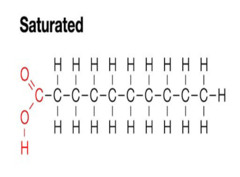
Saturated fatty acids
no double bonds
- most animal fats

Trans fats
An unsaturated fat, formed artificially during hydrogenation of oils, containing one or more trans double bonds.
Why are fats hydrophobic?
The three fatty acid tails of a fat molecule contain only nonpolar (C—H) bonds, which do not mix well with polar water molecules.
retrospective study
data are collected from the past by going back in time
prospective study
data are collected in the future from groups sharing common factors
Phospholipids
a lipid consisting of a glycerol bound to two fatty acids and a phosphate group.
- major component of cell membranes

Are phospholipids hydrophilic or hydrophobic?
Phospholipids possess regions that are both hydrophilic (head) and hydrophobic (tail), which govern the way they aggregate

Triglycerides
an energy-rich compound made up of a single molecule of glycerol and three molecules of fatty acid.
Steroids
lipids characterized by a carbon skeleton consisting of four fused rings
- Ex. Cholesterol

anabolic steroids
synthetic substances that are similar to the male hormone testosterone
- mood swings
- depression
- liver damage
- cancer
- shrunken testicles
- reduced sex drive
- infertility
- breast enlargement in men
Why are fats and steroids both characterized as lipids?
They are both hydrophobic molecules, the key characteristic of lipids.
Proteins
Nutrients the body uses to build and maintain its cells and tissues
- polymer of amino acids
- enzymes
- 4kcal/g
Van der Waals
a slight attraction that develops between the oppositely charged regions of nearby molecules
bisulfide bonds
when two alsurfides(?) bond
Denaturation
loss of normal shape of a protein due to heat or other factor
- Ex. hair or eggs
Amino Acids
monomers of proteins
- amino + carboxyl group (covalently bound to central carbon atom)

How many amino acids are there?
20
Are amino acids hydrophobic or hydrophilic?
Either, depending of the characteristics of the R group
- hydrophobic= non-polar R groups
- hydrophilic= polar or charged R groups

Is DNA hydrophobic or hydrophilic?
hydrophilic
What determines the uniqueness of our DNA
the sequence of bases (billions)
RNA
single-stranded nucleic acid that contains the sugar ribose
-assembles polypeptides according to the instructions of DNA
RNA bases
Adenine, Uracil, Cytosine, Guanine
lactose
glucose and galactose
- disacharide
- enzyme
How many protein structures are there?
4; primary, secondary, tertiary, quaternary

ketone and aldehydes
simple sugars
- carbonyl group
peptide bonds
Bonds between amino acids
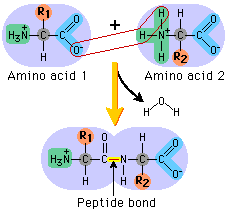
Polypeptide
A polymer (chain) of many amino acids linked together by peptide bonds.

How is it possible to make thousands of different kinds of proteins from just 20 amino acids?
Each different polypeptide has a unique sequence of amino acids.
What are the stitches that coil and fold a polypeptide chain into its unique three-dimensional shape?
Hydrophobic amino acids may cluster together in the center of a globular protein, while hydrophilic amino acids face the outside, helping proteins dissolve in the aqueous solution of a cell. Hydrogen bonds and ionic bonds between hydrophilic R groups also help determine a protein's shape, as do covalent bonds called disulfide bridges between sulfur atoms in some R groups.
By what process do you digest the proteins you eat into their individual amino acids?
By hydrolysis, adding a molecule of water back to break each peptide bond
If a genetic mutation changes the primary structure of a protein, how might this destroy the protein's function?
Primary structure determines the secondary and tertiary structure due to the chemical nature of the R groups of the amino acids in the chain. Even a slight change may affect a protein's shape and thus its function.
transport proteins
A transmembrane protein that helps a certain substance or class of closely related substances to cross the cell membrane.
signal and receptor proteins
bind to protein receptors and help coordinate your bodies activities.
contractile proteins
Proteins responsible for muscle contraction.
primary structure
The first level of protein structure; the specific sequence of amino acids making up a polypeptide chain.
- sequence determined by instructions written in the cell's DNA
secondary structures
alpha helix and beta pleated sheet
tertiary structure
The third level of protein structure; the overall, three-dimensional shape of a polypeptide due to interactions of the R groups of the amino acids making up the chain.
Are proteins affected by physical and chemical changes or properties?
Yes, physical or chemical changes may disrupt the chemical interactions responsible for secondary and tertiary structures, resulting in their loss of shape and function.
quaternary structure
The fourth level of protein structure; the shape resulting from the association of two or more polypeptide chains.
- Combined tertiary structures
DNA
A complex molecule containing the genetic information that makes up the chromosomes.
-deoxyribose
Double Helix
two strands of nucleotides wound about each other; structure of DNA
nucleic acids
A polymer consisting of many nucleotide monomers; serves as a blueprint for proteins
-DNA and RNA
Because of the base-pairing rules, the two strands of the double helix are said to be...
complementary

DNA resides in a cell as...
one or more very long fibers called chromosomes

Every time a cell divides...
it first makes two identical copies of each of its chromosomes
Gene Expression
process by which a gene produces its product and the product carries out its function
What roles do complementary base pairing play in the functioning of DNA?
Complementary base pairing makes possible the precise replication of DNA, ensuring that genetic information is faithfully transmitted every time a cell divides. It also ensures that RNA molecules carry accurate instructions from DNA for the synthesis of proteins.
Genome
all of an organism's genetic material
Chromosomes
threadlike structures made of DNA molecules that contain the genes
-46
genes
DNA segments that serve as the key functional units in hereditary transmission.
DNA gene -> mRNA -> protein
carbon skeleton
the chain of carbon atoms in an organic molecule
estradiol
estrogen secreted by the ovaries