A&P Lesson 2 - Cellular Form and Function
 Call Kai
 Learn
Learn Practice Test
 Spaced Repetition
 Match
Match Flashcards
 Knowt Play
1/75

There's no tags or description
Looks like no tags are added yet.
Name | Mastery | Learn | Test | Matching | Spaced | Call with Kai | Chat |
|---|
No analytics yet
Send a link to your students to track their progress
76 Terms
Robert Hooke
made improvements to compound microscope
first to see and name cells
published first comprehensive book of microscopy
Robert Hooke Cell Theory
cells are the building blocks of all plants and animals
all cells come from the division of pre-existing cells
cells are the smallest units that perform all vital physiological functions
each cell maintains homeostasis at the cellular level
How big are most human cells?
10 to 15 um in diameter
How big are egg cells?
100 um diameter
how big are nerve cells
some are over 1 m long
can large cells support themselves?
no - risk for rupture
what happens when a cells increase in diameter?
the volume increases more than the surface area
Formula for volume proportional to cube of the cell’s radius
V = (4/3)(π r3)
Formula for surface area proportional to square of the cell’s radius
SA = (4)(π r2)
What are the 2 main classes of cells in the human body?
somatic cells and sex cells
Somatic Cells
All cells in the body except the ones created by meiosis (sex cells)
includes neurons, osteocytes, muscle cells, epithelial cells, and more
Sex Cells
aka germ cells; the reproductive cells in the body
male sperm cells
female oocyte (egg)
Representative Cell

What are the major components of a cell?
plasma/cell membrane
cytoplasm
extracellular fluid (ECF)
Plasma/Cell membrane
defines cell boundaries (separates the outside from inside)
made of proteins and lipids

Cytoplasm
located inside the cell
region between the plasma membrane and nucleus
contains organelles, cytoskeleton, inclusions, and cytosol/intracellular fluid
Extracellular Fluid (ECF)
located outside of cell
includes any fluid outside the cells including tissue (interstitial) fluid, blood plasma, lymph, and cerebrospinal fluid
Cytosol vs Cytoplasm
Cytoplasm- everything withing the cell membrane; contains organelles cytosol and other substances
Cytosol- the fluid portion of the cytoplasm
Functions of the Plasma membrane
physical barrier
regulates entry/exit of materials into and out of the cell
responds to changes in the extracellular fluid
provides support to the cell
What is the plasma membranes composition?
~98% lipids (75% phospholipids, 20% cholesterol, 5% glycolipids)
Phospholipids
75% of membrane lipids
amphipathic molecules arranged in a bilayer
hydrophilic phosphate heads and hydrophobic tails
drift laterally keeping membrane fluid
Cholesterol
20% of the membrane lipids
holds phospholipids still and can stiffen or loosen the membrane
Glycolipids
5% of the membrane lipids
phospholipids with short carbohydrate chains on extracellular face
contribute to the glycocalyx
Glycocalyx
carbohydrate component on glycoproteins and glycolipids located external to plasma membrane
Functions of the glycocalyx
protection from physical and chemical injury
immunity to infection
defense against cancer
transplant compatibility
cell adhesion
fertilization
embryonic development
Transmembrane proteins
pass completely through membrane
most are glycoproteins
hydrophilic regions contact the cytoplasm on the inside and extracellular fluid on the outside
hydrophobic regions pass through lipid region of the membrane
some drift in membrane and some are anchored to cytoskeleton

Peripheral proteins
adhere to one face of the membrane
those on inner face usually tethered to the transmembrane protein and cytoskeleton

Membrane proteins
constitute 2% of the molecules but 50% of the weight of the membrane
What are the functions of membrane proteins?
receptors
enzymes
channel proteins
carriers
cell-identity markers
cell-adhesion molecules (CAMs)
Receptors
bind to chemical signals to trigger internal changes; may cause production of a second messenger

Enzymes
catalyze reactions including digestion of molecules and production of second messengers

Channel proteins
allow hydrophilic solutes and water to pass through membrane
leak channels and gated channels

leak channels
channel proteins that are always open
gates (gated channels)
channel proteins that open only when triggered
ligand-gated channels
voltage-gated channels
mechanically gated channels

ligand-gated channels
gated channels that respond to chemical messengers
voltage-gated channels
gated channels that respond to charge changes
mechanically-gated channels
respond to physical stress on a cell
Carriers
bind solutes and transfer them across membrane
pumps
pumps
carriers that consume ATP to move substances across the membrane AGAINST its concentration gradient
cell-identity markers
glycoproteins acting as identification tags

cell-adhesion molecules (CAMs)
mechanically link cell to another cell and to extracellular material

Simple diffusion
net movement of particles from place of high concentration to place of lower concentration without the need for energy input
substances diffuse down their concentration gradient
due to constant, spontaneous molecular motion
What factors affect diffusion rate through a membrane?
temperature - ↑ temp. causes ↑ motion of particles
molecular weight - smaller molecules move faster
steepness of concentration gradient - ↑ gradient causes ↑ rate
membrane surface area - ↑ surface area causes ↑ rate
membrane permeability - ↑ permeability causes ↑ rate
osmosis
net flow of water through a selectively permeable membrane
enhanced by aquaporins

aquaporins
channel proteins in the membrane that are specialized for water passage
how does water move in osmosis?
from an area of higher water (lower solute) concentration to an area of lower water (higher solute) concentration
What do osmotic imbalances cause?
diarrhea, constipation, edema
osmotic pressure
hydrostatic pressure required to stop osmosis
hydrostatic pressure
fluid pressure on the membrane
reverse osmosis
process of applying mechanical pressure to override osmotic pressure
allows purification of water
osmolarity
osmotic concentration of all solutes; quantity of non-permeating solutes per liter of solution
blood plasma, tissue fluid, and intracellular fluid are ___ milliosmoles per liter (mOsm/L)?
300 mOsm/L
tonicity
ability of a surrounding solution to affect fluid volume and pressure in a cell
if a solute is more concentrated on one side of the membrane it causes osmosis of water towards the more concentrated side
Hypotonic solution
causes cell to absorb water, swell and possibly burst (lyse)
lower concentration of nonpermeating solutes than intracellular fluid inside the cell
ex. distilled water

Hypertonic solution
causes cell to lose water and shrivel (crenate)
has higher concentration of nonpermeating solutes than intracellular fluid

Isotonic solution
causes no change in cell volume
same concentration of nonpermeating solutes in extra and intracellular fluid
ex. saline
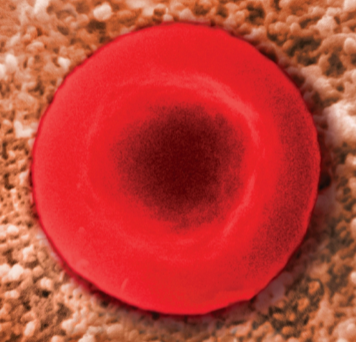
carrier-mediated transport
proteins (carriers) in cell membrane carry solutes into or out of cell (or organelle)
carriers exhibit specificity for their particular solutes
carriers also exhibit saturation

What are the 3 kinds of carrier proteins?
uniport
symport
antiport
uniport
carrier that moves on type of solute
ex. calcium pump only moves calcium
symport
carrier that moves 2 or more solutes simultaneously in the same direction (cotransport)
ex. sodium-glucose transporters move both sodium and glucose at the same time and in the same direction
antiport
carrier that moves 2 or more solutes in opposite directions (countertransport)
ex. sodium-potassium pump moves Na+ out of the cell and K+ into the cell
What are the 3 mechanisms of carrier-mediated transport?
facilitated diffusion
primary active transport
secondary active transport
Facilitated diffusion
carrier moves solute down its concentration gradient
doesn’t consume ATP
solute attaches to binding site on carrier, carrier changes conformation, then releases solute on other side of membrane

Primary active transport
carrier moves solute through a membrane up to its concentration gradient
the carrier protein uses ATP for energy
ex. calcium pump uses ATP while expelling calcium from cell to where it is already more concentrated

Secondary active transport
carrier moves solute through membrane, but only uses ATP indirectly
ex. sodium-glucose transporter (SGLT)

Sodium-potassium pump (Na+/K+ pump)
each pump cycle consumes one ATP and exchanges 3 NA+ for 2K+
Keeps K+ concentration higher and Na+ concentration lower within the cell compared to the extracellular fluid

What are the functions of the sodium-potassium pump?
maintains the NA+ gradient for use in secondary active transport
Regulates solute concentration and thus osmosis and cell volume
maintains negatively charged resting membrane potential
produces heat
Vesicular transport
moves large particles, fluid droplets, or numerous molecules at once through the membrane in vesicles
Vesicles
bubble-like enclosures of membrane
Endocytosis
brings material into cell; exocytosis releases material from cell
What are the 3 forms of endocytosis?
phagocytosis
pinocytosis
receptor-mediated endocytosis
Phagocytosis
engulfing and destroying large particles; cell eating
pseudopods surround object, fuse to form internal phagosome, which merges with lysosome to form phagolysosome within which the object is digested
Pinocytosis
taking in droplets of ECF containing molecules useful in the cell; pinocytic vesicles in cytoplasm; cell drinking
Receptor-mediated endocytosis
particles bind to specific receptors on plasma membrane
pit forms in membrane, cytosolic side covered in clathrin protein; form clathrin-coated vesicle that is directed to a destination within cell

Transcytosis
transport of material across the cell by capturing it on one side and releasing it on the other

Exocytosis
discharge material from cell; essentially the reverse of endocytosis
also functions to replace any plasma membrane lost by internalization during endocytosis
