Genetics Unit Test Review
 Call Kai
 Learn
Learn Practice Test
 Spaced Repetition
 Match
Match Flashcards
 Knowt Play
1/86

There's no tags or description
Looks like no tags are added yet.
Name | Mastery | Learn | Test | Matching | Spaced | Call with Kai | Chat |
|---|
No analytics yet
Send a link to your students to track their progress
87 Terms
Lesson 1: Cells and Organelles
Cell Theory
1. The basic unit of a living thing
2. Living things are made up of 1 or more cells
3. All cells are created from a re-existing cell
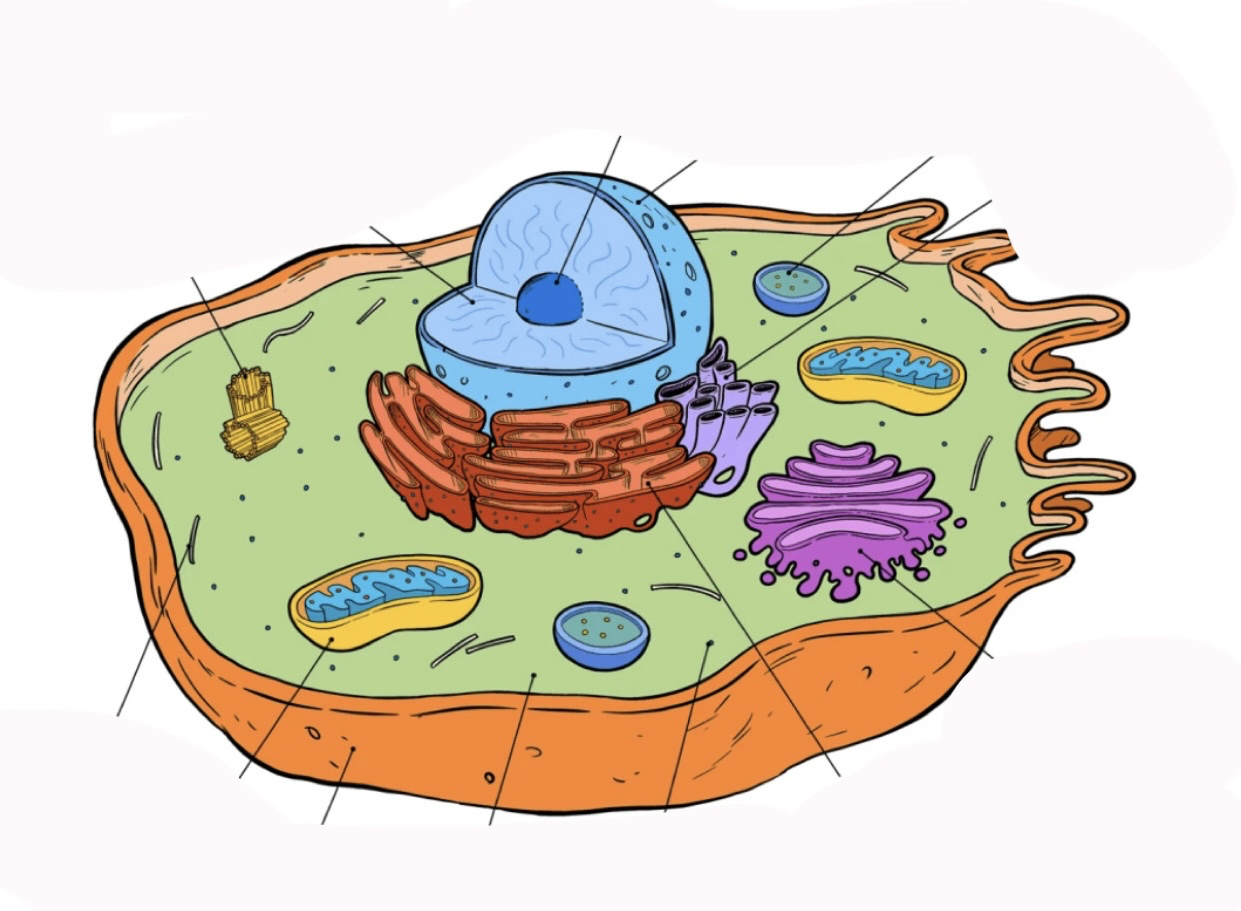
Lesson 1: Cells and Organelles (Organelles and their functions)
Cell Membrane
(Both) Regulates what enters and leaves the cell; provides protection and structural support.
Lesson 1: Cells and Organelles (Organelles and their functions)
Cytoplasm
(Both) Jelly-like fluid that fills the cell, holds organelles in place, and is the site of many chemical reactions.
Lesson 1: Cells and Organelles (Organelles and their functions)
Nucleus
(Both) Controls cell activities and stores genetic material (DNA).
Lesson 1: Cells and Organelles (Organelles and their functions)
Vacuole
(Both) Stores water, nutrients, and waste materials. Plant cells have a large central vacuole, while animal cells have smaller vacuoles.
Lesson 1: Cells and Organelles (Organelles and their functions)
Vesicle
(Both) Small membrane-bound sacs that transport materials into, out of, or within the cell.
Lesson 1: Cells and Organelles (Organelles and their functions)
Mitochondria
(Both) Converts glucose and nutrients into cellular energy (ATP) through cellular respiration. Powerhouse of the cell.
Lesson 1: Cells and Organelles (Organelles and their functions)
Lysosomes
(Both, mainly animal) Contain digestive enzymes that break down waste, cellular debris, foreign particles, and worn-out organelles.
Lesson 1: Cells and Organelles (Organelles and their functions)
Golgi Apparatus
(Both) Modifies, sorts, and packages proteins and lipids for storage or transport.
Lesson 1: Cells and Organelles (Organelles and their functions)
Rough Endoplasmic Reticulum (Rough ER)
(Both) Studded with ribosomes; helps synthesize, fold, and process proteins.
Lesson 1: Cells and Organelles (Organelles and their functions)
Smooth Endoplasmic Reticulum (Smooth ER)
(Both) Makes lipids and phospholipids
Helps break down carbohydrates
Removes harmful chemicals and drugs from the cell
Lesson 1: Cells and Organelles (Organelles and their functions)
Ribosomes
(Both) Synthesizes proteins by translating genetic information from RNA.
Lesson 1: Cells and Organelles (Organelles and their functions)
Cytoskeleton
(Both) Maintains cell shape, anchors organelles, and helps transport materials within the cell.
Lesson 1: Cells and Organelles (Organelles and their functions)
Cell Wall
(Plant) Provides rigid structural support, protection, and shape to the cell.
Lesson 1: Cells and Organelles (Organelles and their functions)
Chloroplasts
(Plant) Capture energy from sunlight through photosynthesis to help produce glucose.
Lesson 1: Cells and Organelles (Organelles and their functions)
Cilia & Flagella
(Animal) Hair-like or whip-like structures used for cell movement or moving fluids across the cell surface.
Lesson 1: Cells and Organelles (Organelles and their functions)
Centrioles
(Animal) Help organize spindle fibres during cell division.
Lesson 1: Cells and Organelles: Cell Cycle (Explain the steps)
Cell Cycle
G1 (Growth Phase 1)
The cell that was just created starts to grow and does whatever job that cell needs to do.
Most of the cell cycle.
S (Synthesis Phase)
The cell is copying its genetic material before it divides next.
This is the chromosomes (made of DNA)
G2 (Growth Phase 2)
Cell growth continues; the cell continues to do its job, whatever that is.
M (Division Phase)
Cell goes through a process to separate its genetic material (mitosis)
Cell then divides the cell in two new daughter cells (cytokinesis)
Lesson 1: Cells and Organelles
Differences Between Plant and Animal Cells
Plant cells:
Have cell wall
Have chloroplasts
Large central vacuole for water storage
Animal cells:
Have lysosomes
Have centrioles
May have cilia or flagella for movement
Lesson 1: Cells and Organelles (Able to identify steps based on images)


Lesson 1: Cells and Organelles (Able to identify steps based on images)

Lesson 1: Cells and Organelles: Cell Cycle (Steps within the cycle)
Interphase
G1 Phase
S Phase
G2 Phase
Mitosis
Prophase
Metaphase
Anaphase
Telophase
Cytokinesis
Lesson 1: Cells and Organelles (Why do cells need to divide?)
1. Growth
Cells grow through their life, and as you age
More cells = bigger tissues
2. Healing and Repair
Replacing damaged cells
3. Reproduction
Creating new cells
Producing reproductive cells
Lesson 2: DNA and Chromosomes (Chromosome structure)
Thread-like structure made of DNA and proteins found inside the nucleus of living cells
Double stranded coiled molecule
Coiled and compacted
Lesson 3: Mitosis and Cytokinesis: Mitosis (What is the purpose)
P - prophase
M - metaphase
A - anaphase
T - telophase
Mitosis creates a duplicate of the original parent cell.
This leaves 2 daughter cells.
Mitosis is used to make almost every cell in the human body (somatic cells), except for reproductive cells (sperm and egg cells).
Lesson 3: Mitosis and Cytokinesis
Mitosis and Cancer
Cancer cells stop responding to many of the signals that control cellular growth and death
Cancer cells even evade programmed cell death
Cells become cancerous after mutations accumulate in the various genes that control cell division
Upregulation of the telomerase gene is a key mutation in many cancer cells
Lesson 3: Mitosis and Cytokinesis (Identify and explain each stage)
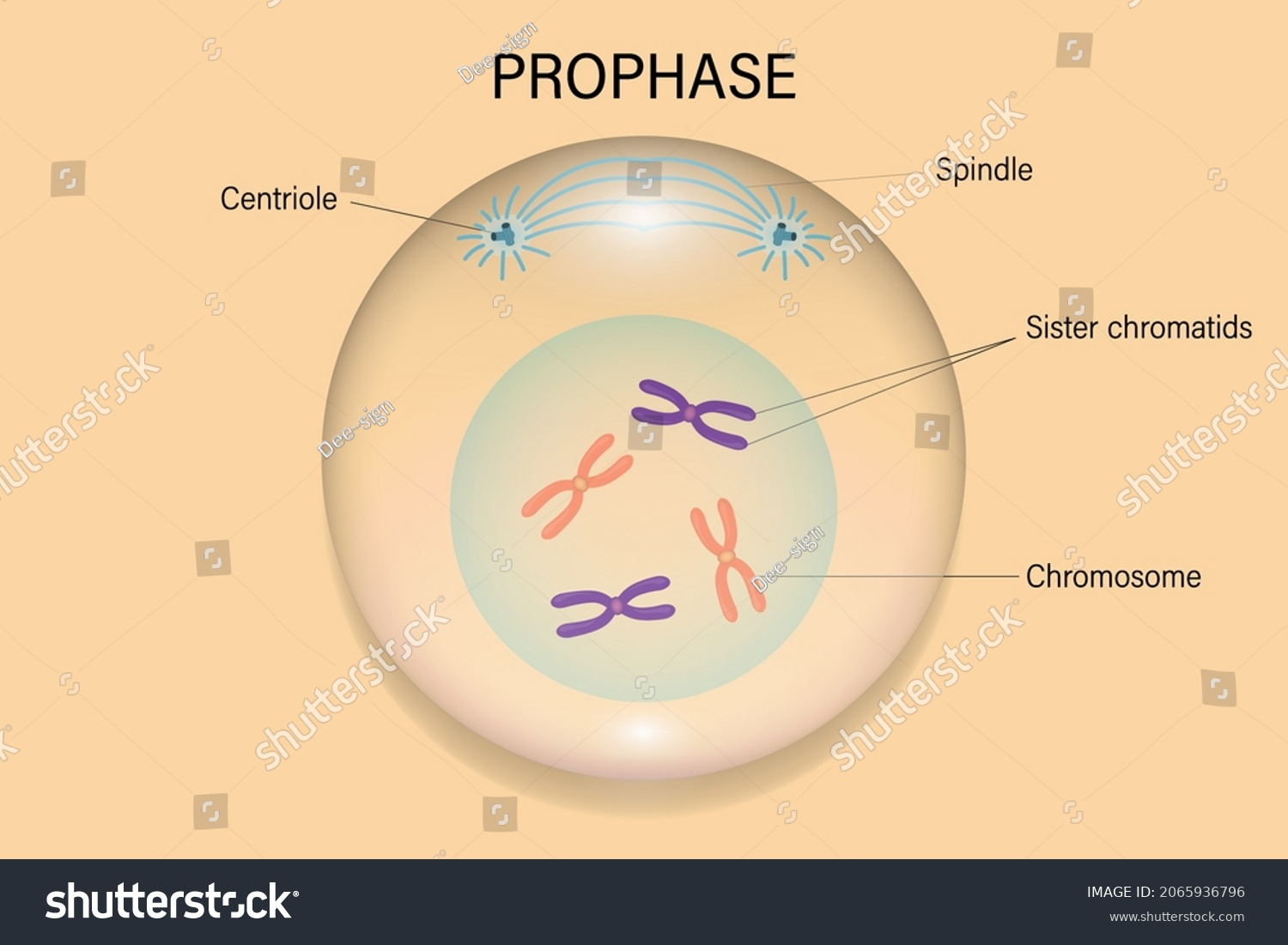
Prophase
DNA molecules coil and compact, forming short, thicker structures called chromosomes.
The membrane of the Nucleus disappears.
Centrioles move to the poles of the cell and start to produce the spindle fibres.
Lesson 3: Mitosis and Cytokinesis (Identify and explain each stage)
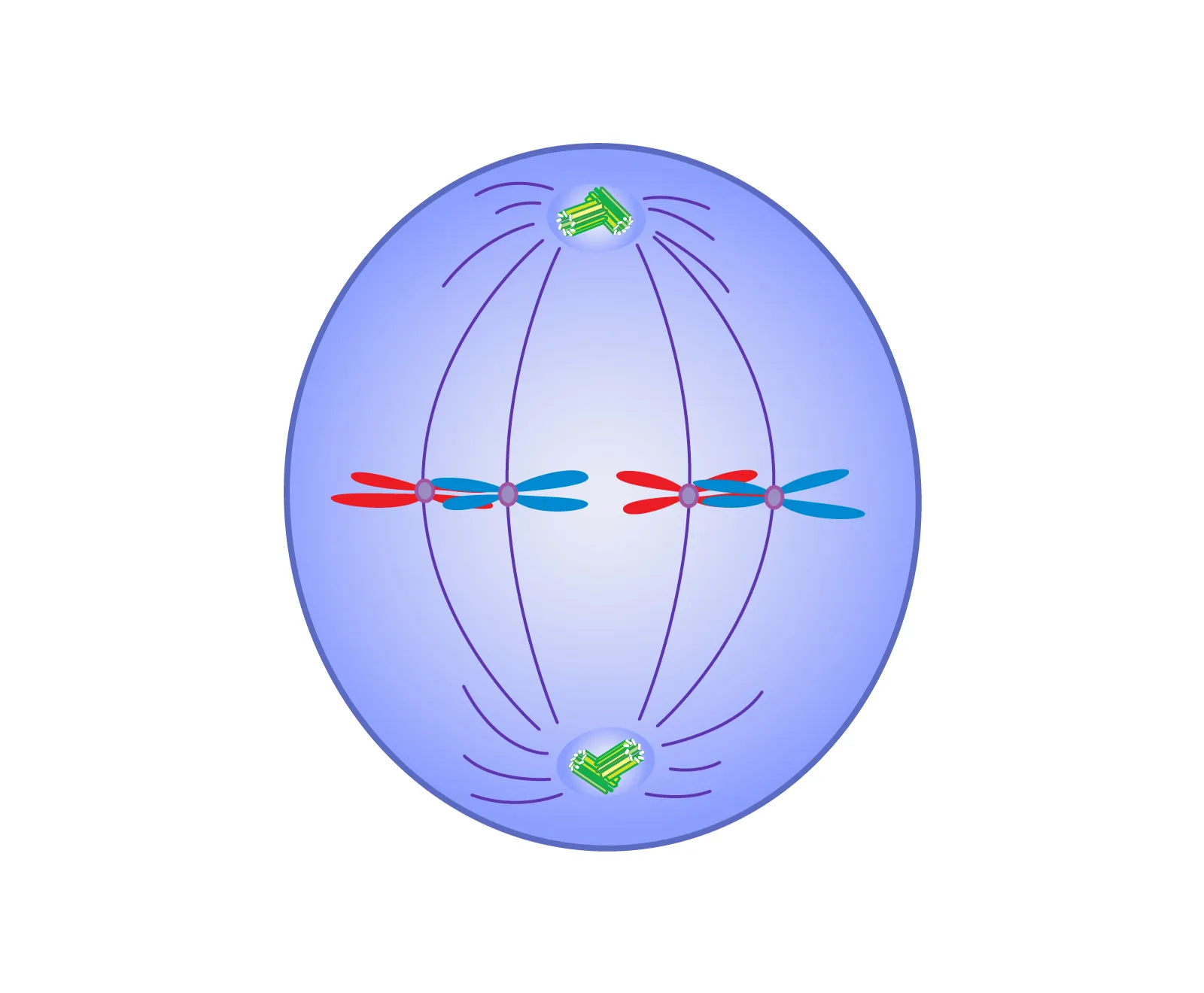
Metaphase
Spindle fibres attach to the chromosomes (at a centromere structure).
Spindle fibres pull to line up the chromosomes near the ‘equator’ of the cell.
Lesson 3: Mitosis and Cytokinesis (Identify and explain each stage)
Anaphase
Spindle fibres pull chromosomes apart, separating the chromatids by breaking the centromere.
One chromatid moves towards each side of the cell.
Lesson 3: Mitosis and Cytokinesis (Identify and explain each stage)
Telophase
Chromatids reach the poles of the splitting cell.
New nuclear membranes form around the chromatids.
The cell membrane starts to separate.
Lesson 3: Mitosis and Cytokinesis (Identify and explain each stage)
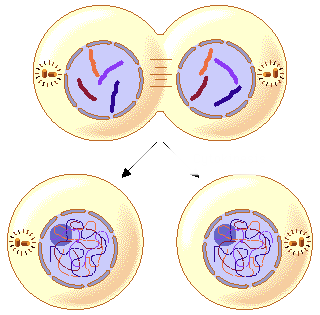
Cytokinesis
The cytoplasm is divided into each new daughter cell.
The organelles are roughly divided up between the new daughter cells.
The cell membrane completely separates to separate the new cells.
Plant cell cytokinesis is a little different:
In a plant cell, the cell wall can’t pinch together, like in an animal cell.
Instead, a new cell wall is built along the centre of the cell, called a cell plate (like splitting a room by building a wall across the middle!).
Lesson 3: Mitosis and Cytokinesis (Able to draw out the stages and identify stage based on diagram)


Lesson 3: Mitosis and Cytokinesis (Able to draw out the stages and identify stage based on diagram)


Lesson 3: Mitosis and Cytokinesis (Able to draw out the stages and identify stage based on diagram)

Lesson 3: Mitosis and Cytokinesis (Able to draw out the stages and identify stage based on diagram)
metaphase
Lesson 3: Mitosis and Cytokinesis (Able to draw out the stages and identify stage based on diagram)

anaphase
Lesson 3: Mitosis and Cytokinesis (Able to draw out the stages and identify stage based on diagram)

telophase
Lesson 3: Mitosis and Cytokinesis (Able to draw out the stages and identify stage based on diagram)

Lesson 3: Mitosis and Cytokinesis (Able to draw out the stages and identify stage based on diagram)
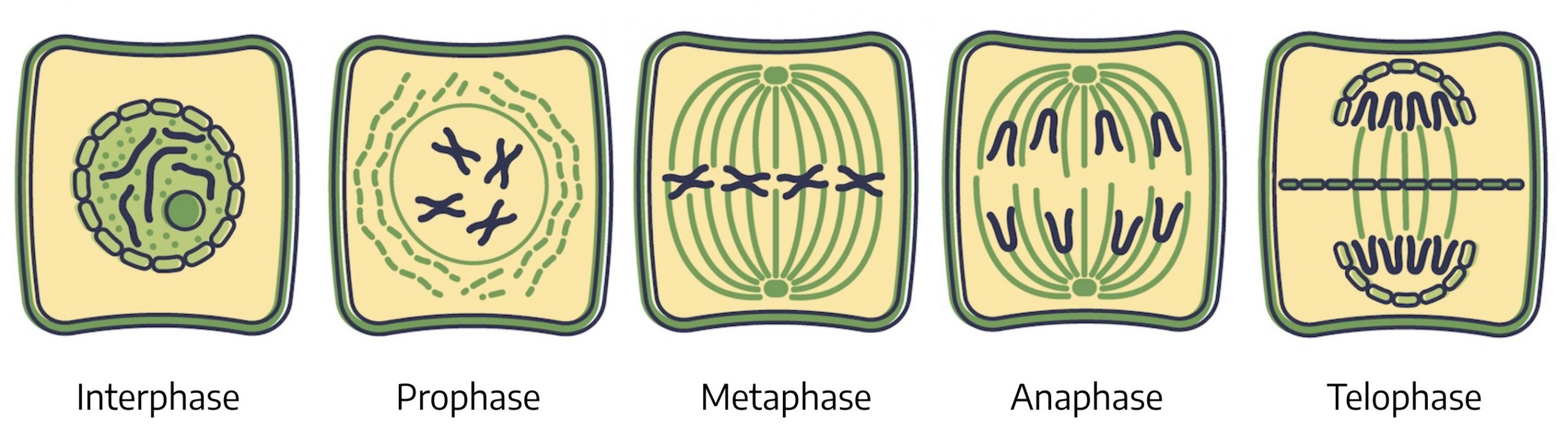
plant cell
Lesson 4: Meiosis (Meiosis)
The process by which sex cells (gametes) are formed
Only occurs in reproductive cells (testes and ovaries)
Lesson 4: Meiosis (What is the purpose)
1. Produces gametes with half the number of chromosomes
2. Produces genetically unique gametes
Produces haploid reproductive cells from a diploid cell
Lesson 5: Meiosis and Gametogenesis
Gametogenesis
This is the formation of sex cells (gametes).
Eg. Sperm and egg cells, pollen, etc.
The purpose of producing gametes is to help produce the next offspring for an individual(s).
Meiosis can form the haploid gametes from a diploid cell.
Lesson 5: Meiosis and Gametogenesis (Know the difference between males and females)
Spermatogenesis and Oogenesis
Spermatogenesis - sperm cells in males
Oogenesis - egg cells in females
Lesson 5: Meiosis and Gametogenesis (Know the difference between males and females)
Spermatogenesis
Spermatogenesis:
Happens in the testes
Produces 4 functional sperm
The sperm are haploid (23 chromosomes)
All 4 cells are roughly the same size
Lesson 5: Meiosis and Gametogenesis (Know the difference between males and females)
Oogenesis
Oogenesis:
Cytoplasm is not divided equally
One egg cell receives most of the cytoplasm and all organelles
One healthy egg cell is produced
Three egg cells die (polar bodies)
Lesson 6: Atypical Meiosis (Autosomes vs Sex Chromosomes)
Humans have 46 chromosomes total, which are organized into 23 pairs.
Autosomes
The first 22 pairs (chromosomes 1–22)
They contain genes for most of your body's traits and functions.
They are not the sex chromosomes.
Sex chromosomes
The 23rd pair
They are called X and Y chromosomes.
They are involved in determining biological sex.
XX = typically female
XY = typically male
Lesson 6: Atypical Meiosis (Karyotypes)
Karyotypes
Organization of traits that are passed down from parents
Lesson 6: Atypical Meiosis: Karyotypes (Analyze it (is it normal or not, Explain what we can see/ learn) (Abnormal (atypical) Meiosis)
Monosomy vs Trisomy
Monosomy – only 1 copy of a chromosome is present instead of 2
Trisomy – 3 copies of a chromosome are present instead of 2
Lesson 6: Atypical Meiosis: Karyotypes (Analyze it (is it normal or not, Explain what we can see/ learn) (Abnormal (atypical) Meiosis)
Non-disjunction
Nondisjunction = chromosomes fail to separate properly during meiosis I or II.
This creates cells with too many or too few chromosomes.
If an abnormal sex cell is fertilized, the resulting zygote may have 47 or 45 chromosomes.
It can happen during mitosis or meiosis, but meiosis can cause chromosome abnormalities in the resulting organism.
Lesson 6: Atypical Meiosis: (What is the result)
Nondisjunction in Autosomes
result in death of the embryo
Lesson 6: Atypical Meiosis: (what can happen)
All associated with organ defects, reduced lifespan, intellectual impairment, and characteristic physical attributes
Lesson 6: Atypical Meiosis: Be able to discuss the nondisjunction disorders covered (name, chromosomal abnormality, symptoms)
Trisomy 21 - Down syndrome
Can result from nondisjunction in the sperm or egg
3 chromosomes instead of 2 on chromosome 21
Characteristics:Heart defects
Developmental and intellectual challenges
Short height

Lesson 6: Atypical Meiosis: Be able to discuss the nondisjunction disorders covered (name, chromosomal abnormality, symptoms)
Trisomy 18 - Edwards syndrome
Nondisjunction in sperm or egg
3 chromosomes instead of 2 on chromosome 18
CharacteristicsMany organ system defects
Very low survival rate, most die before birth
Children do not usually live more than a few months

Lesson 6: Atypical Meiosis: Be able to discuss the nondisjunction disorders covered (name, chromosomal abnormality, symptoms)
Trisomy 13 - Patau syndrome
Characteristics
Many serious developmental problem
Brain, kidney, heart defects
Children rarely live more than a few months
nondisjunction during mitosis
extra chromosome on chromosome 13

Lesson 6: Atypical Meiosis: Be able to discuss the nondisjunction disorders covered (name, chromosomal abnormality, symptoms)
Klinefelter syndrome
Klinefelter syndrome, 47, XXY
Results from nondisjunction in egg or sperm
-> Symptoms:
Appear male at birth but develop high levels of female sex hormones
Language impairment
Sterile

Lesson 6: Atypical Meiosis: Be able to discuss the nondisjunction disorders covered (name, chromosomal abnormality, symptoms)
Turner’s Syndrome
Turner’s Syndrome (Xo)
Results from nondisjunction in egg or sperm
-> Symptoms:
Short stature
Widely spaced nipples
Low hairline

Lesson 6: Atypical Meiosis
Typical female and Typical male
Typical female: 46, XX Typical male: 46, XY
Lesson 7: Mitosis and Meiosis (Compare and contrast Mitosis and Meiosis)
Similarities
Both involve cell division
DNA is copied in interphase 1x
Both are diploid (2n) at beginning
Both have the same phase names & in the same order (prophase, metaphase, etc.)
Involves separation of sister chromatids
New cells are created
Lesson 7: Mitosis and Meiosis (Compare and contrast Mitosis and Meiosis)
Differences (meiosis)
Only occur in sex cells
2 divisions
Crossing over occurs (during Prophase I)
Homologous chromosomes separate from each other in Metaphase I
Random assortment occurs for maternal & paternal chromosomes
4 cells are created
Cells are haploid (1n) & are all different
Creates genetic diversity in a population
A form of sexual reproduction
Lesson 7: Mitosis and Meiosis (Compare and contrast Mitosis and Meiosis)
Differences (mitosis)
Cell division that occurs in all cells (somatic) except sex cells (gametes)
Only 1 division
Daughter cells are exact copies of parent cell (clones)
A form of asexual reproduction
Cells are diploid (2n)
2 daughter cells are made
Lesson 7: Mitosis and Meiosis (Compare and contrast Mitosis and Meiosis)
Number of parent cells
Mitosis - 1 Meiosis - 1
Lesson 7: Mitosis and Meiosis (Compare and contrast Mitosis and Meiosis)
Number of divisions
Mitosis - 1 Meiosis - 2
Lesson 7: Mitosis and Meiosis (Compare and contrast Mitosis and Meiosis)
Number of daughter cells produced
Mitosis - 2 Meiosis - 4
Lesson 7: Mitosis and Meiosis (Compare and contrast Mitosis and Meiosis)
Size of daughter cells
Mitosis - Same size
Meiosis - Smaller
Lesson 7: Mitosis and Meiosis (Compare and contrast Mitosis and Meiosis)
Chromosomes in parent cell
Mitosis - Diploid (2n)
Meiosis - Diploid (2n)
Lesson 7: Mitosis and Meiosis (Compare and contrast Mitosis and Meiosis)
Chromosomes in daughter cells
Mitosis - Diploid (2n)
Meiosis - Haploid (n)
Lesson 7: Mitosis and Meiosis (Compare and contrast Mitosis and Meiosis)
Genetically identical or different
Mitosis - Identical to parent
Meiosis - Different from parent
Lesson 7: Mitosis and Meiosis (Compare and contrast Mitosis and Meiosis)
Where does it happen?
Mitosis - Body cells
Meiosis - Reproductive organs
Lesson 7: Mitosis and Meiosis (Compare and contrast Mitosis and Meiosis)
Main function
Mitosis - Growth, repair, replacement
Meiosis - Produces sperm and eggs
Lesson 7: Mitosis and Meiosis (Compare and contrast Mitosis and Meiosis)
Sexual or asexual?
Mitosis - Asexual
Meiosis - Sexual
Lesson 7: Mitosis and Meiosis (Compare and contrast Mitosis and Meiosis)
Main advantage
Mitosis - Fast; useful for growth and repair
Meiosis - Creates genetic variation
Lesson 7: Mitosis and Meiosis (Compare and contrast Mitosis and Meiosis)
Main disadvantage
Mitosis - Little genetic variation
Meiosis - Takes longer; chromosome errors can occur
Lesson 8: Genetic Technologies (Genetic Technologies)
What are genetic technologies
tools and methods scientists use to study, test, or change DNA and genes.
Lesson 8: Genetic Technologies (Able to explain and discuss 2 technologies and Ethical considerations)
23andMe
23andMe — What is it?
A genetic technology that uses saliva to test DNA for ancestry, traits, and some health risks.
How does it work?
DNA is taken from saliva and tested for specific genetic variations.
Benefits:
Learn about ancestry, traits, and some health-related genetic variants.
Ethical concerns:
DNA privacy — who can access, store, or use your genetic information.
Important: 23andMe does not diagnose diseases.
Lesson 8: Genetic Technologies (Able to explain and discuss 2 technologies and Ethical considerations)
DNA Fingerprinting
DNA Fingerprinting — What is it?
A genetic technology used to identify people and determine biological relationships.
How does it work?
Scientists examine parts of DNA that vary between people to create a unique DNA profile that can be compared with another sample.
Benefits:
Used in forensics
Helps identify missing or deceased people
Can determine biological relationships, such as parentage
Ethical concerns:
DNA privacy and how it is collected/stored
DNA evidence can be contaminated or incorrectly interpreted
Lesson 2: DNA and Chromosomes (Human Composition) (Diploid vs Haploid)
Humans have 46 chromosomes arranged in 23 pairs
Autosomes: pairs 1–22 (44 chromosomes)
Sex chromosomes: pair 23 (XX or XY)
Diploid (2n): 2 sets of chromosomes, 46 total
Haploid (n): 1 set of chromosomes, 23 total
Chromosome: made of DNA and contains genes
Gene: a section of DNA that carries information for a trait
Lesson 4: Meiosis (Identify each state and explain)
Meiosis 1: Prophase I
Chromosomes become visible.
Homologous chromosomes pair up.
Crossing over happens, creating genetic variation.
Lesson 4: Meiosis (Identify each state and explain)
Meiosis 1: Metaphase I
Homologous chromosome pairs line up in the middle of the cell.
Lesson 4: Meiosis (Identify each state and explain)
Meiosis 1: Anaphase I
Homologous chromosomes separate and move to opposite sides.
Sister chromatids stay together.
Lesson 4: Meiosis (Identify each state and explain)
Meiosis 1: Telophase I + Cytokinesis
The cell divides into 2 haploid cells.
Chromosomes are still made of 2 sister chromatids.
Lesson 4: Meiosis (Identify each state and explain)
Meiosis 2: Prophase II
Chromosomes become visible again.
Spindle fibres form.
Lesson 4: Meiosis (Identify each state and explain)
Meiosis 2: Metaphase II
Chromosomes line up in the middle of each cell.
Lesson 4: Meiosis (Identify each state and explain)
Meiosis 2: Anaphase II
Sister chromatids separate and move to opposite sides.
Lesson 4: Meiosis (Identify each state and explain)
Meiosis 2: Telophase II + Cytokinesis
Cells divide again.
Produces 4 haploid cells that are genetically different.
Lesson 4: Meiosis 1 vs Meiosis 2
Meiosis I: homologous chromosomes separate
Meiosis II: sister chromatids separate
Lesson 4: Meiosis (Able to draw out the stages and identify them based on diagram)

Lesson 3: Mitosis and Cytokinesis (what is the purpose)
Mitosis divides the genetic material in the nucleus into two new identical nuclei.
Cytokinesis is different because it divides the cytoplasm and the rest of the cell, forming two new cells.