Chapter 8, Lesson 4 - The Universe
 Call Kai
 Learn
 Practice Test
 Spaced Repetition
 Match
 Flashcards
1/21

There's no tags or description
Looks like no tags are added yet.
22 Terms
space probe
This spacecraft flies without a crew and sends back information about what it studies in space.

astronaut
This person trains to travel and work in space.

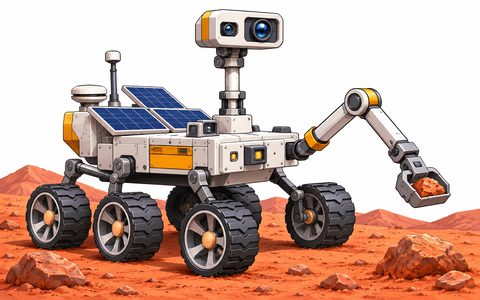
rover
This robotic vehicle drives across the surface of a planet or moon to study it.
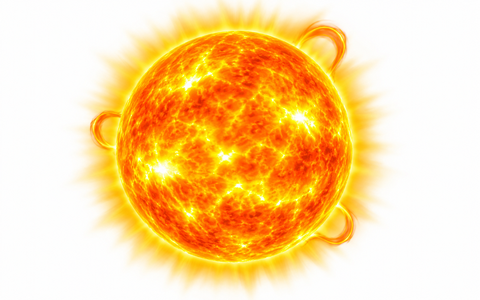
star
The Sun is an example of an object that makes its own heat and light.
nebula
New stars can form inside this huge cloud of gas and dust.

protostar
This is a star that is just beginning to form as gravity pulls gas and dust together.

red giant
At this stage an aging star like the Sun swells and its outer layers turn red.
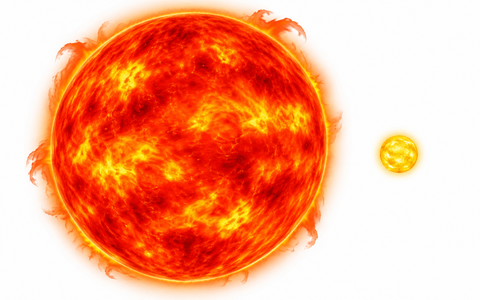
white dwarf
This small and very dense object is the core left behind when a Sun-like star dies.

supernova
A massive star can end its life in this bright explosion that sends material into space.
black hole
Gravity in this region of space is so strong that even light cannot escape.

constellation
Orion is an example of a group of stars that appear to form a pattern.

light-year
One of these units equals the distance light travels in one year.

galaxy
Gravity holds this huge system of stars, gas, and dust together.

spiral galaxy
This type of galaxy looks like a pinwheel with curved arms winding around its center.

barred spiral galaxy
The arms of this galaxy curve out from the ends of a straight bar of stars.
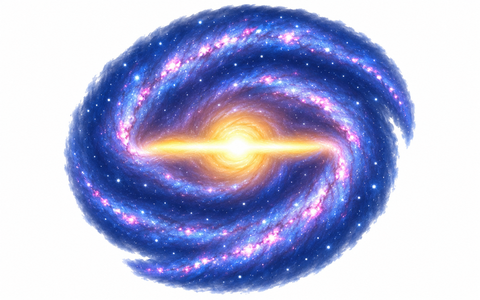
Milky Way
Our solar system lies in an arm of this galaxy.

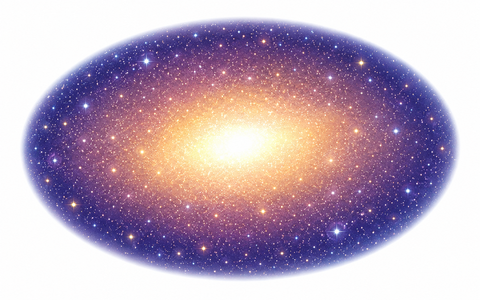
elliptical galaxy
This type of galaxy has a smooth round or oval shape and has no spiral arms.
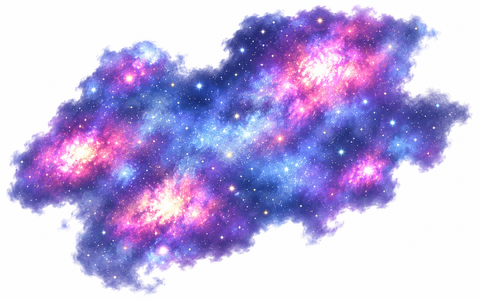
irregular galaxy
This type of galaxy has an uneven shape that can look like a lopsided cloud.
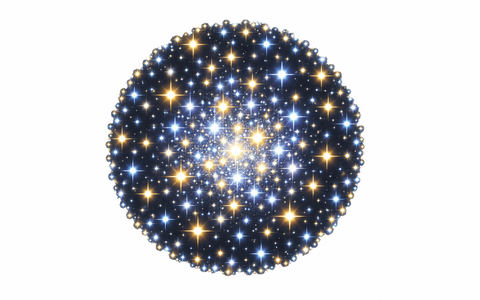
star cluster
These stars formed together and are still held in a group by gravity.
binary stars
These two stars are held together by gravity and orbit a shared point.

universe
This includes all of space and everything in it, including all matter and energy.

Big Bang theory
This scientific explanation says the universe expanded from an extremely hot and dense state.
