Team Leadership
 Call Kai
 Learn
 Practice Test
 Spaced Repetition
 Match
 Flashcards
 Knowt Play
1/51

There's no tags or description
Looks like no tags are added yet.
52 Terms
team leadership definition
a small number of people with complementary skills who are committed to a common purpose, set of performance goals, and approach for which they hold themselves mutually accountable
how does “team” differ from “group”
interactions among members within revolve around a deeper dependence on one another, interactions within occur with a specific task-related purpose in mind
what are the 3 main parts of team effectiveness
performance, viability, member fulfillment
what does performance mean in terms of team effectiveness
those affected by the work of the system (clients, collaborators, and other stakeholders) are reasonably satisfied, or even pleased by, what the team produces
what does viability in terms of team effectiveness mean
the team becomes more capable as a performing unit over time
what does member fulfillment in terms of team effectiveness mean
individual members derive at least as much learning and fulfillment as frustration and alienation from their work within the team
how to working groups and teams differ when it comes to leadership
strong, clearly identified leader vs shared leadership roles
how to working groups and teams differ when it comes to accountability
individual accountability vs individual and mutual accountability
how to working groups and teams differ when it comes to work products
individual products vs collective
how to working groups and teams differ when it comes to meetings
efficiently run meetings vs open-ended discussion and problem solving
how to working groups and teams differ when it comes to who does what
discuss, decide, delegate vs discuss, decide, and doing real work together
what are 5 characteristics of an effective team
purpose, goals, people, process, accountability
what does purpose mean in terms of an effective team
why are we here? having a shared objective that is meaningful and motivating enough to align a group’s effort into true teamwork instead of parallel individual work; gives the team direction, momentum, and commitment
what do goals mean in terms of an effective team
what does success look like? translate the broad into specific, measurable results, give the team a clear target for collective effort, creates urgency and focus, makes progress and failure visible, encourages discussion about how to achieve the goal
what do people mean in terms of an effective team
do we have the right mix of complementary skills? competent and complementary; goes beyond individual talent and includes how skills and members complement each other, technical skills match project requirements, problem-solving, decision making, and interpersonal skills, team members cover each others’ knowledge gaps, everyone understands their role and responsibilities, skills are evolved as needs evolve
what does process mean in terms of an effective team
how will we work together? common approach, team members understand their specific responsibilities and how they fit into the larger plan, involves structured routines - meeting norms, decision-making protocols - that support efficiency and coordination, work organized so members can use their strengths
what does accountability mean in terms of an effective team
who owns the outcome? mutual responsibility as well as individuals; accept responsibility for the team’s collective performance; grows from shared purpose, goals, and approach; builds trust, commitment, and shared ownership of results
what does purpose usually begin with
a challenge or mandate from outside the team
in order to develop purpose, what must the team do
have a shared understanding of why their work matters, shape and “own” it, invest substantial time developing it, share a deep dedication to the purpose, each other, and the collective success over the group, prioritize the team over individual interests, maintain loyalty and cohesion under pressure, demonstrate sustained effort and accountability
what does the team specifically do when it comes to goals
setting high expectations for performance, defines how work is done, how success is measured, and how team members hold themselves accountable, give regular, specific feedback focused on improvement, having clear expectations for excellence and accountability, continuous improvement is a part of team identity
how does the team environment impact process
characterized by trust, open communication, psychological safety, and mutual respect, open and transparent communication; information flows, mutual respect and supportive behavior; assume positive intentions, not just polite coordination
what are two helpful contextual factors
coaching and credible leadership, contextual support and recognition
what are the steps involved in coaching and credible leadership
providing direction, building capabilities, managing team dynamics, adapting their approach, protecting the team
coaching and credible leadership definition
effective leaders create the conditions for a team to succeed
what does providing direction mean in terms of coaching and credible leadership
establishing purpose, goals, priorities, and expectations
what does building capabilities mean in terms of coaching and credible leadership
teaching, coaching, feedback, and teamwork
what does managing team dynamics mean in terms of coaching and credible leadership
addressing conflict, building trust, and reinforcing accountability
what does adapting their approach mean in terms of coaching and credible leadership
knowing when to direct, challenge, support, or step back
what does protecting the team mean in terms of coaching and credible leadership
removing obstacles and obtaining resources
contextual support and recognition definition
a great team can fail without support from its environment
what does resources mean in terms of contextual support and recognition
funding, equipment, facilities, staffing, and time
what does information mean in terms of contextual support and recognition
access to knowledge and people outside of the team
what does organizational support mean in terms of contextual support and recognition
cooperation from other departments and removal of barriers
what does recognition and rewards mean in terms of contextual support and recognition
acknowledge team accomplishments and reinforce collective success
what are the three types of teams
recommend things, make or do things, run things
what do teams that recommend things do
solve a problem or make a recommendation, usually when there is a specific problem or question to address; often temporary rather than permanent
what do teams that recommend things require
people with different knowledge and perspectives, to establish a clear deadline and deliverable, strong recommendation and effective handoff
what do teams that make things do
the organization’s everyday work; produce products or deliver services, often operate continuously, rather than temporarily, performance can usually be measured directly
what must members in a team that makes things do
coordinate rather than perform separate jobs, most valuable at “critical delivery points”
what do teams that run things do
coordinate and lead organizations, provide direction and make decisions affecting others
what types of people do teams that run things usually consist of
managers or organizational leaders, but a management group is not automatically a team; sometimes a working group is more efficient
what are some examples of teams that run things
executive team, department leadership team, senior management team
what are some examples of teams that make things
production team, surgical team, sales team
what are some examples of teams that recommend things
consulting team, task force, case competition team
what is psychological safety
a shared belief within a team, it is safe to speak up, ask questions, raise concerns and disagreements, offer ideas, admit mistakes and ask for help
when is psychological safety most important
when work is creative, novel, collaborative
when it comes to reporting errors, who does more; good or bad teams
“good” teams; more willing to report and discuss mistakes
why does psychological safety matter
more questions and concerns raised, more perspectives enter discussions, mistakes become opportunities to learn, greater engagement and motivation, supports innovation, creativity, and resilience, critical when work is interdependent and uncertain
how do we create psychological safety
make speaking up necessary, acknowledge fallibility, invite input, respond productively, create clear team norms
what are some key questions when it comes to process/psychological safety?
do we have the right people with complementary skills who are committed to a common purpose, set of performance goals, and approach for which they hold themselves mutually accountable? will those people actually contribute what they know?
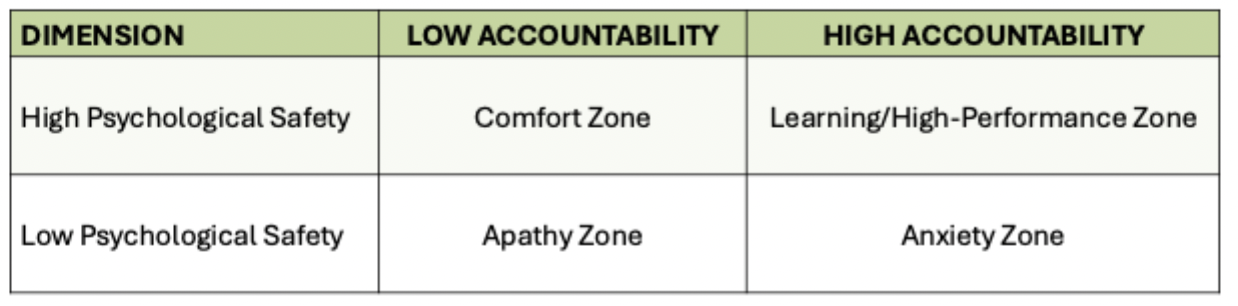
what does the psychological safety and accountability table look like?
groupthink
the desire for consensus and group harmony interferes with critical evaluation of alternatives and evidence