LV1- cytochrome p450 enzymes and drug metabolism 1
 Call Kai
 Learn
 Practice Test
 Spaced Repetition
 Match
 Flashcards
 Knowt Play
1/17

There's no tags or description
Looks like no tags are added yet.
18 Terms
what are the two different phases of drug metabolism
phase one and two
describe what phase one and two metabolism is, include what it is and the main enzymes
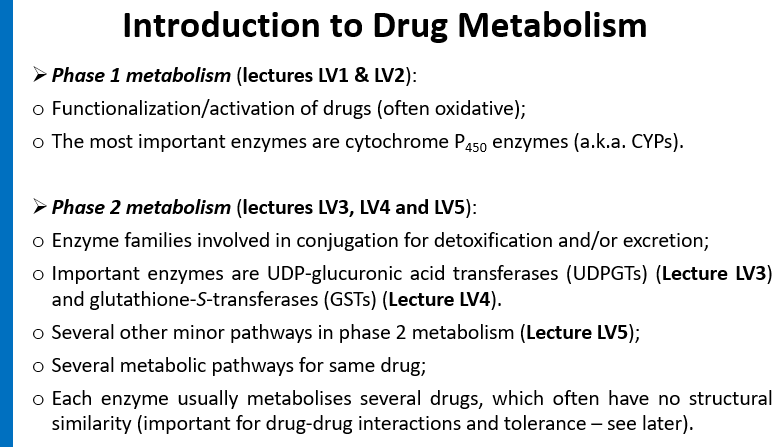
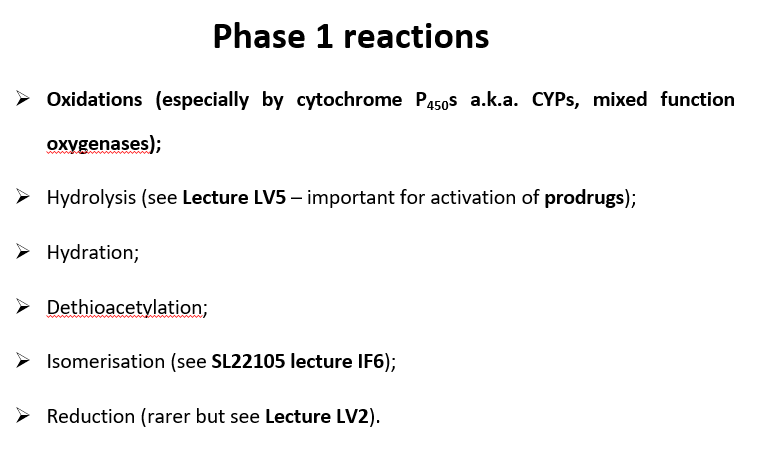
what are the reactions involved in phase one metabolism + enzymes involved
what are cytochrome p450 enzymes
they are a large superfamily of enzymes that oxidise a wide range of substances in the body so they can be broken down, activated or excreted
mainly in the liver and gut
they are found in the endoplasmic reticulum ( microsomes ) of cells
they are membrane bound so they able to metabolism hydrophobic drugs
they require a number of different cofactors and auxiliary enzymes e.g NADPH, O2, NADPH- cytochrome p450 reductase
there are more selective cytochrome 450 enzymes found in the mitochondria
describe the mechanism of action of action for cytochrome p450 enzymes
the enzymes have a haem group thats covalently bonded to it which contains iron
their reactions require dioxygen from air, NADPH and an auxiliary enzyme, a reductase
they catalyse their reaction through negative catalysis ( they generate a highly reactive chemical species and suppresses the reactions which arent required )
describe the catalytic cycle of cytochrome p450
we start off with the cyp450 enzyme with the iron ion
when the drug binds if forms an Fe3+- drug complex
then its fed an electron which reduced the iron ion to +2
this results in loss of water which allows the binding of water
once oxygen has bound another electron can be fed in via NADPH cyp450 reductase and a proton can be picked up
after eliminating water from the product the ion species is hydroxylates the drug releasing the product resulting with the same same enzyme and the oxidised product

describe the catalytic mechanism of cyp450 enyzme’s ( type 1 )

describe uncouples reaction cycle with CYP450

what is an enzyme super family
A super-family is ‘The whole group of enzymes that catalyse the same or a similar type of reaction using a similar mechanism and are related by primary sequence homology or identity’;
what are the three types of superfamilies involved in drug metabolism
CYP enzymes (various oxidative reactions);
UDP-glucuronosyl transferases (‘glucuronidation’);
Glutathione-S-transferases (‘glutathione conjugation’).
what is homology
homology is used to describe how similar different CYP450 enzymes are in their genetic sequence, amino acid sequence and structural features.
what is the weight and number of different types of CYP450
weight= 45-55 kDa
there are more than 50 types
describe how the CYP450 enzymes can be classified
they can be classified based on their amino acid primary sequence identity
families will typically be more than 40% identical whilst sub families will be more than 70%
what are the most important members of the super family for drug metabolism

explain why there are differences in the metabolism and pharmacokinetics of CYP3A4 within population and sub-populations
as the levels of CYP3A4 expression ( the amount of the enzyme produced in the body )can vary 100-fold between individuals
describe the effect of inducers and inhibitors on CYP3A4
inducers increase their activity, increasing their rate of metabolism
inhibitors decrease their activity
what are the different inducers of CYP3A4 enzymes ( SCRAP GPS )
smoking, carbamaepine , rifampicin , alcohol, phenytoin , griseofulvin , st johns wort
what are the different CYP3A4 inhibitors ( CACA A MOVIE )
clarinthromycin, amiodarone, cimetidine , azole antifungals, alcohol , metronidazole, omeprazole , verapamil, isonizid, erythromycin