Introduction to blood sampling techniques SDL
 Call Kai
 Learn
Learn Practice Test
 Spaced Repetition
 Match
Match Flashcards
 Knowt Play
1/22

Earn XP
Description and Tags
equipment, sheep goat and cow,s,
Name | Mastery | Learn | Test | Matching | Spaced | Call with Kai | Chat |
|---|
No analytics yet
Send a link to your students to track their progress
23 Terms
What must you do before taking a jugular sample..
needle holder at the ready (has a rubber stopper + it is a vacuum tube + hold at the bottom to keep dexterity) + EID to scan the sheep tag - always remember to mark the tube
What is a haemogaurd + vaccum collection system
Stops the blood dripping through, protects the needle..

Where do we blood sample from a sheep
jugular vein, shave wool + can see jugular groove from the break in the wool..
under the chin.. thumb into jugular groove to raise it..
see small vibration and condensation..

Step by step to blood sample..
uncap needle and occlude jugular being using non dominant hand..
insert up + squeeze needle holder, do not jsut jab into sheep.. + fill final hole and remove needle.. NEED preessure to prevent haemotomas..
Where do you blood sample in the cow
in the tail being..

Where is the vertebrae in proportion to the tail bein
vein is shallow and becomes deeper as we go up into the animals..

Cow tail vein samoel..
atttache needle first and od not blwo vaccumm Hold cows securley. + hold tail up and grip with finger and thumb..
can use an open or closed grip, palpate central groove + start to sample. Remove tube, then squeeze the second tube..
Remove afterwards and maintain pressure on thatvtail vein.. alwyas label tubes!!
need STRONG GRIP onto the tail..
Where are the 2 places that cow blood samples can be taken
tail vein + jugular vein
protects head with harm, + can use ear to hold, noce it to hold it stil..
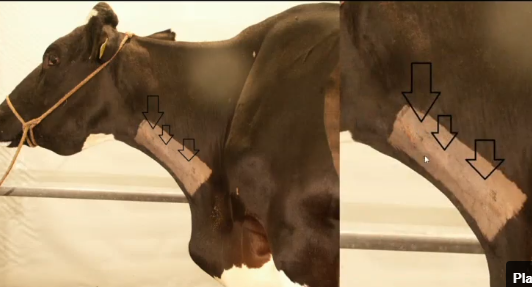
Sample at jugular vein, may no need to occlude, see it along the jugular groove..
Why do we take blood samples..
Sampling sick animals to help in diagnosis.
Sampling hospitalised to monitor improvement or decline of condition.
Sampling patients to monitor medication e.g. Diabetics, epileptics.
Small animal blood sampling equipment
hypodermic needle (below skin) ØCats: 23 - 21G, 5/8 inch long
ØDogs: 21G, 5/8 or 1 inch long
syringe
hibbi scrub, surgical spirit, blood conainers, gloves
What 3 places can venous blood samples be taken from (small animal)
Jugular vein - neck, back stop, head up
Cephallic vein - forelimb, sitting position or on the floor..
Sapheous vein - animal in lateral recumbancy, restained on a table or on the floor.
Cephallic blood sample process..
clip fur and straighten foot
hibiscrub to clean..
Surgical spirit to disinfect
palpate vein + prep kit (blood tubes with anticoagulant) + needles and synringes,,
carful of contamination, EDTA in the sample + remove needle into sharos bin + drip sample into blood tube to the fill line..
What colour do different tubes mean..
red / pink - edta haematology
brown - serum biochemistry
organge - hepinase - biochemistry
yellow - glucose
Jugular vein samll animal..
palpate groove. clip, clean (hibi) then surgical spirit..
lift head in opposite direction of the vein being used..
afterwards apply pressyre for 30 seconds..
Cephallic vein location
hibi, surgical spirit, palpate/ occlude + 30c’ into being until blood is drawn..

Cat friendly handling
towel on table so not slupply equipment in use
smaller tubes are preferable..
place a local aneasathetic on the neck..
OR can use the jugular vein + expose the forelimb..
OR can use the medial saphenous vein ( inner thigh, needs 2 people)
Saphenous veinn dog
lateral recumbancy
wrap hand around knee and hold up knee..
Materials required for a horse blood sample..
large 20 gauge needle
appropriate vacutainer
+ appropriate blood sampleing tube
Blood sample from a horse
2 bilateral jugular veings
+ carotid artery is also present therefore sample in teh uppper thirs.

How do you raise the jugular vein in a horse
also need a vacutiniser..
be

What should you do when taking a sample
bevel of the needle towars you
hold within the gaurd, but do not push onto th eneedle until you are within the vein..
Re cap - diff tubes..
always apply pressure post needle!

blood sample
put in syringe first..