Rocks & Minerals
 Call Kai
 Learn
 Practice Test
 Spaced Repetition
 Match
 Flashcards
 Knowt Play
1/18

Earn XP
19 Terms
Rock
A naturally occurring, inorganic solid material composed of one or more minerals or mineral matter
Mineral
A naturally occurring, inorganic solid element or compound defined by an ordered internal crystal structure, a characteristic chemical composition & specific physical properties
Igneous rocks
Rocks that form when hot molten rock cool and harden
Intrusive Igneous Rock
Form when magma ( hot molten rock deep underground ) cools slowly beneath the Earth, allowing large crystals to grow
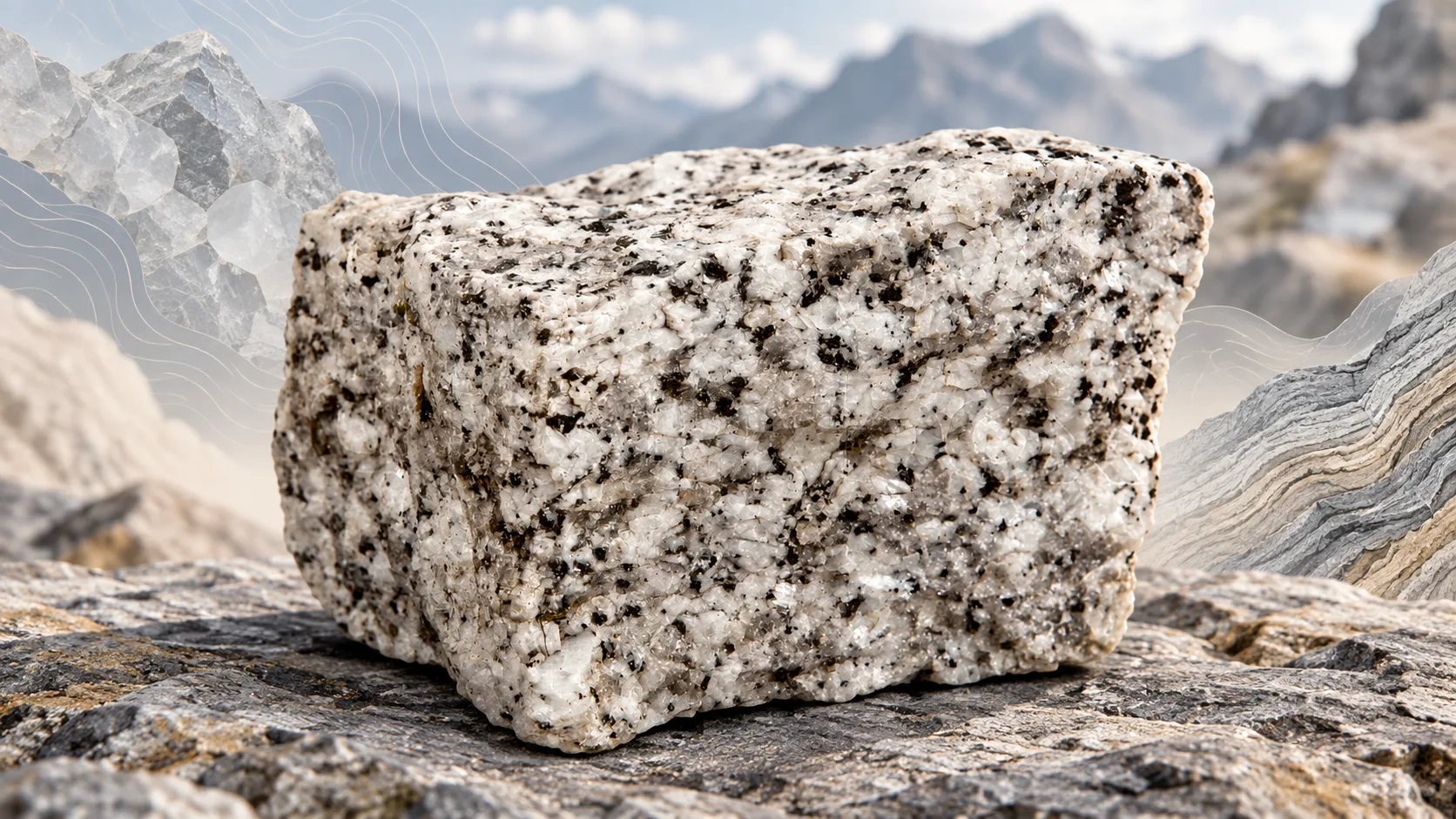
Granite
Has specks of quartz, feldspar & mica
Gabbro
Dark grey - black with crystal sections

Extrusive Igneous Rock
Form when lava cools quickly creating glass like textures, small holes, or microscopic crystals
Pumice
Formed when gas-rich bubbly lava cools quickly resulting in small holes, and is so light that it’s floatable

Obsidian
Lava is cooled instantly resulting in a black, glassy texture

Basalt
Dark, dense rock which forms when low-silica, iron-rich magma erupts onto the surface and cools rapidly

Sedimentary rock
Rocks that form when layers of sediment are washed away by bodies of water and settle at the bottom, where over thousands of years it is compacted & cemented into new rock
Sandstone
Composed of sand grains

Limestone
Made from compacted shells, coral pieces, and calcite

Shale
Formed from the finest, microscoping clay & silt particles

Metamorphic rock
Rocks that form when existic rocks are subjected to extreme heat & pressure. These rocks don’t melt completely during their transformation.
Marble
When softer limestone is subjected to extreme heat & pressure. Soft enough to carve into statues.

Schist
Where visible mica flakes appear

Gneiss
Forms from granite, known for its squiggly light to dark stripes due to layers of mineral frequently being shaped during the transformation
Slate
Forms from shale subjected to extreme heat & pressure, resulting in perfectly flat, thin sheets ideal for roofing