Wk 2 Lower Limb
 Call Kai
 Learn
 Practice Test
 Spaced Repetition
 Match
 Flashcards
 Knowt Play
1/29

There's no tags or description
Looks like no tags are added yet.
30 Terms
axial skeleton

appendicular skeleton

pectorial girdle
clavicele (shoulder bone) & scapula (shoulder bone)
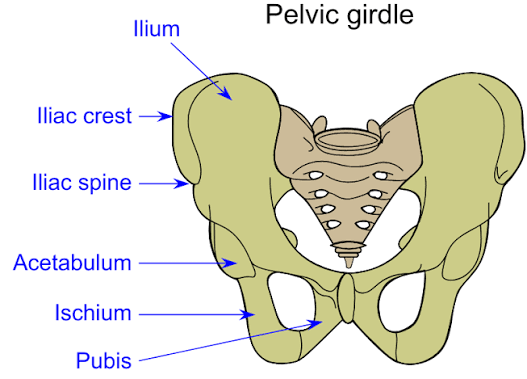
Pelvic girdle
ilium ischium pubis
sacrum coccyx
pelvic girdle
pair of hip bone , connect lower limb to axial skeleton
protect lower viscera - eg reproductive organs
support body weight
gluteal region
iliac crest - thick, curved upper border of the ilium—the largest bone of the pelvis
Gluteal folds

Bony pelvis formed by
hip bone - ilium ischium pubis
sacrum coccyx
Joints


Femoral region
epicondyle - muscle attachment
Condyle - joint articulation

__
Bony projection
trochanter (greater lessor)
Condyle
epicondyle
Knee Region (8)


Ligament
collateral
cricuate
Cartilage
meniscus ( c shaped)
articular cartilage
tibial condyle
medial & lateral tibial condyle
tibia - bone

weight beating bone of lower knee - between knee and ankle
articulation area

Leg region (7)

tibia
fibula
intersseous membrane
medial malleolus → tibia ( body projection)
lateral malleolus → fibula ( body projection)
inferior surface of tibia → form ankle joint talocrural joint

Ankle and foot (7)

Talus → ankle bone (big toe)
Calcaneus → heel bone
Navicular → boat shaped, support arch of foot
Cuneiform bone → medial intermediate lateral
Cuboid bone
Metatarsal → I II III IV V
Phalanx → distal middle proximal ( I II III IV V )
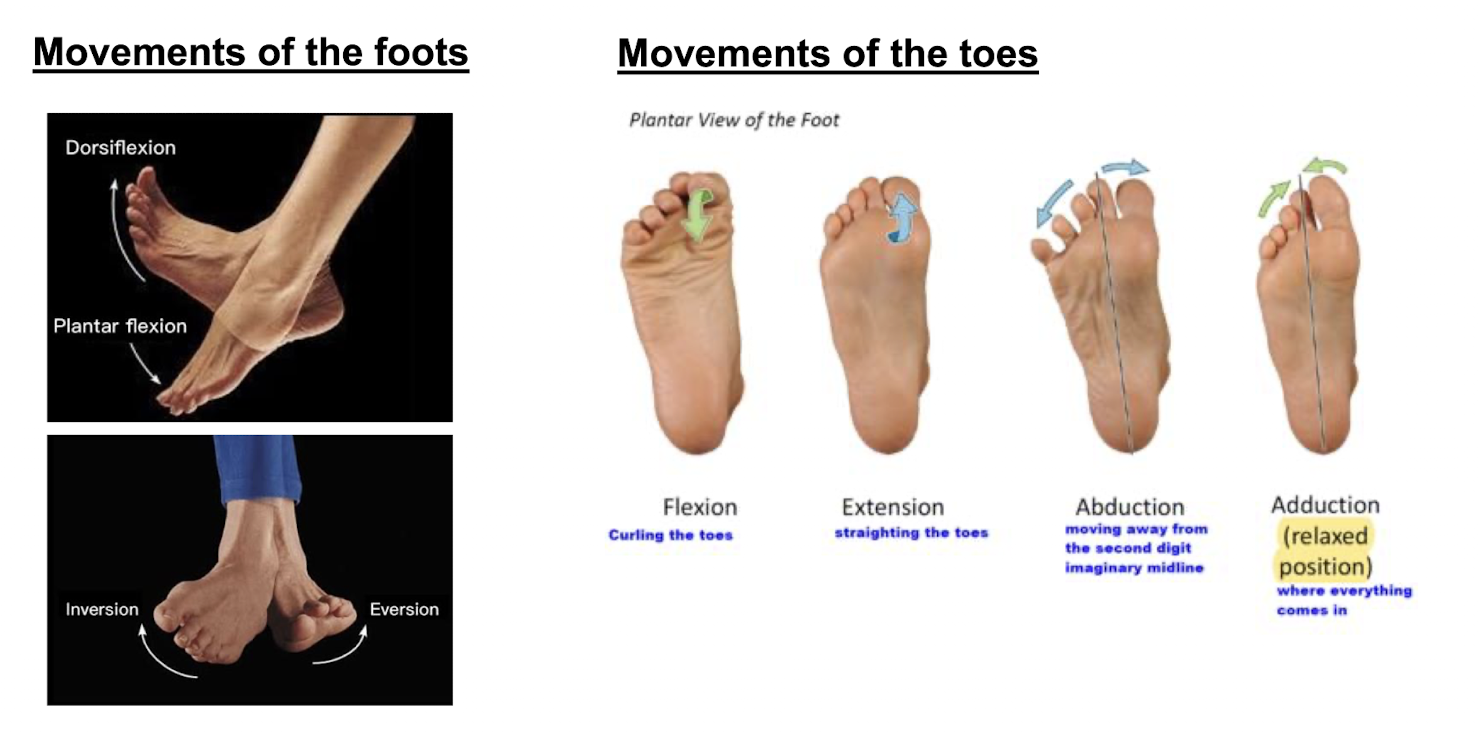
talocrural joint = Plantarflexion and dorsiflexion
Ankle and foot joint
ankle joint talocrural joint - talus crural
hinge joint
dorsiflexion(^) plantarflexion (down)
Subtalar joint - talus and calcaneus
plane joint
inversion eversion
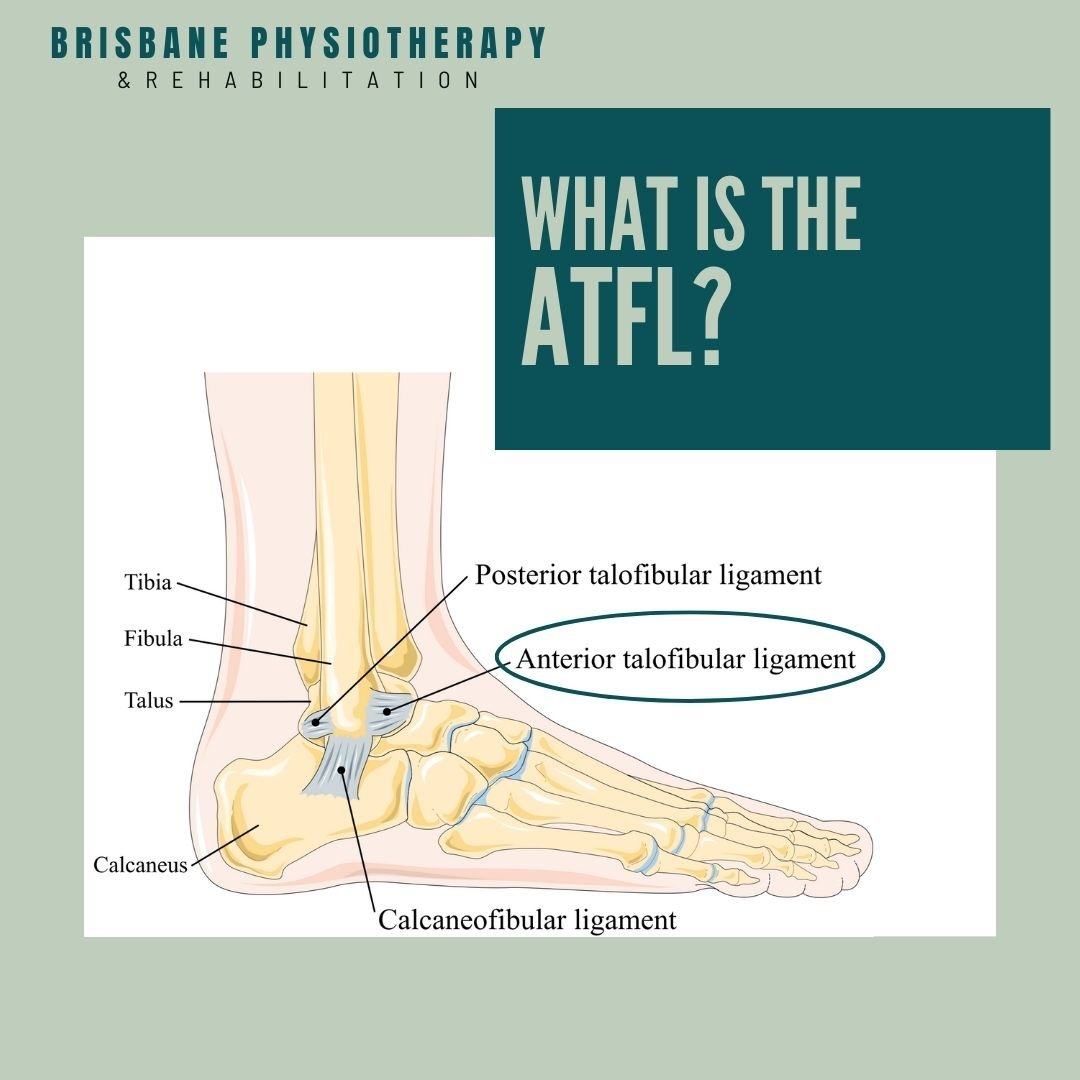
Inversion induced injury
ankle sprain
foot turns inward to the anterior talofibular ligament (ATFL)
and calcanefibular (CFL) ligament
Eversion injury is much less frequent because the deltoid ligament (DL), medial to the ankle, is strong and resists eversion
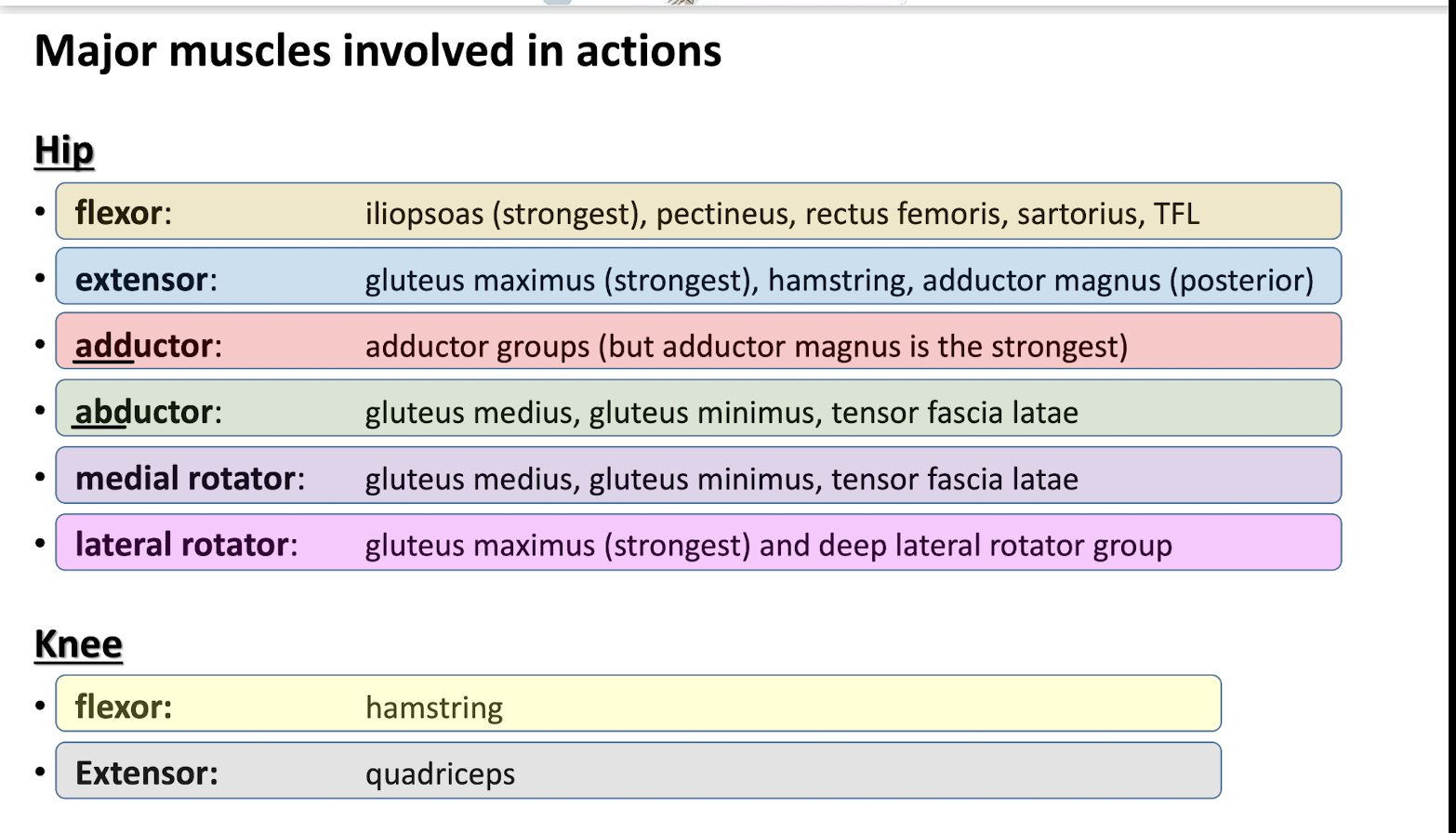
Gluteal group muscles and movement
Gluteal maximus - hip extensor, hip lateral rotation
Gluteus medius - hip stabilizer (grabs onto ilium for stabilisation), hip abduction , hip medial rotation
Gluteus minimus - hip abduction , hip medial rotation
Deep lateral rotator group

piriforms
superior, inferior gemellus
Quadatus femoris
Obturator internus , Externus
→ lateral rotation
Gluteus maximus & deep lateral rotator goup
lateral rotator muscle group → deep to gluteus maximus at posterior gluteal region

Gluteus maximus → chief lateral rotator
Lateral rotator group → contracts, also rotate head of femur externally
anterior thigh muscles - Hip


iliacus, psoas major → ilipsoas → hip flexion
Tensor fascia lactae (TFL) → hip medial rotator
Pectineus → hip flexion, hip adduction
Sartorius → hip flexion, lateral rotation, ABDuction, knee flexion
Adductor group - medial thigh muscles
Adductor magnus brevis longus pectineus → hip adduction
adductor magnus
hamstring part - hip extension (move back)
adductor part - hip flexion (move up and out)

Summary
Ilipsoas alone → hip flexion
Gluteus medius, minimus, TFL → main hip medial rotator
Gluteus maximus + deep lateral rotator group ( piriform + superior and inferior gemellus + quadratus femoris + obturator internus and externus ) → hip lateral rotation
Pectineus adducts with adductor + flex thigh with illiposias + assit in medial rotation with glut med min TFL
Quadriceps muscle

Quadriceps muscle - knee extension
rectus femoris → hip flexion
Vastus lateralis, intermedius, medialis → knee extension

The hamstring group

semitendious
semimebraneous
biceps femoris (femur- thigh)
Hamstring → primary knee flexor, work against quadriceps
Knee flexion
Hip extension


Summary
Quadriceps → main knee extensor
Rectus femoris → only quadricpes muscle that allow both Knee extension & Hip flexion
Hamstring → main knee flexor

movement of the toes and foot
Compartment in lower leg (4)

Compartment in lower leg → anterior compartment

inversion
dorsiflexion
EDL → 4 toes
EHL → big toe
Compartment in lower leg → lateral compartment
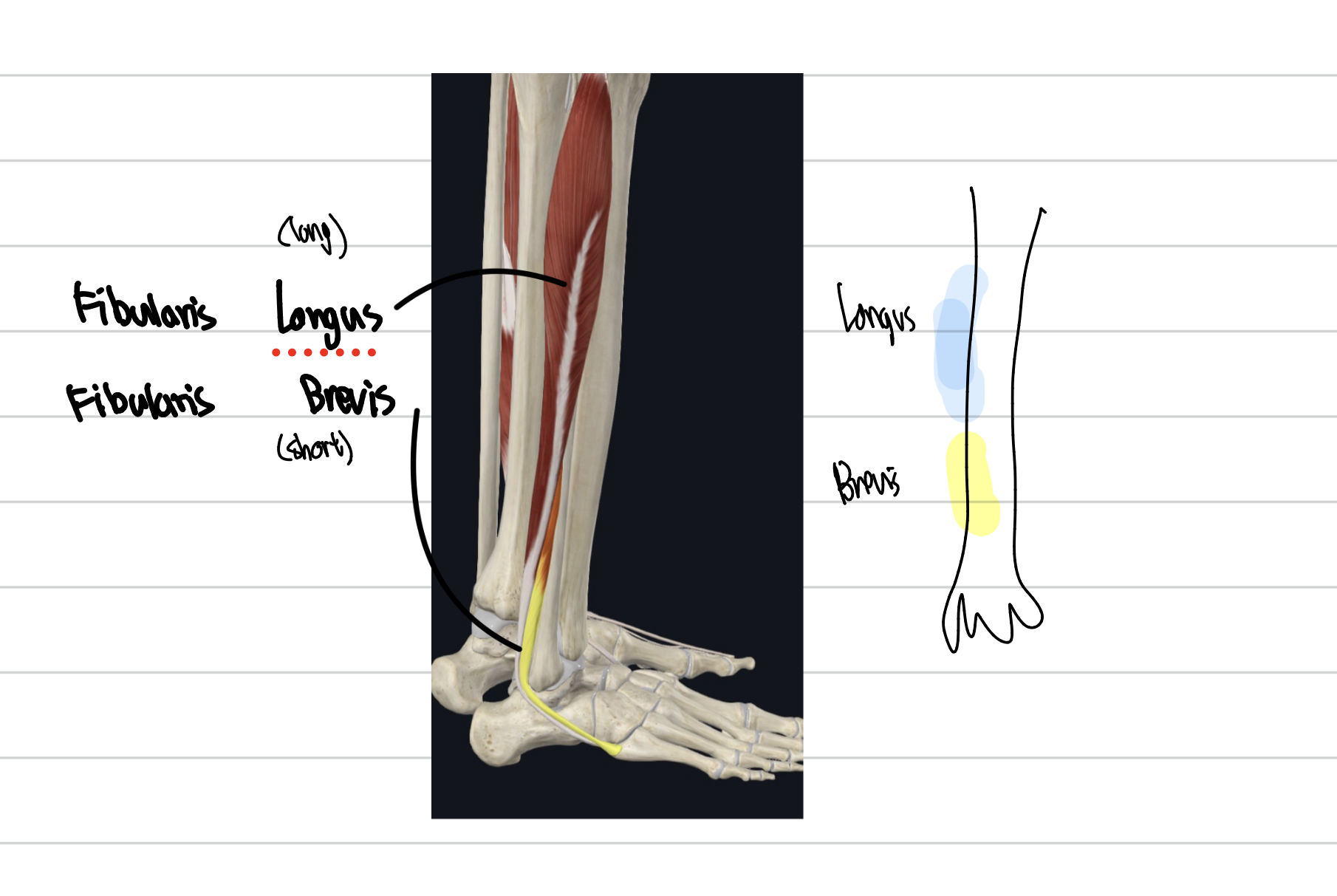
plantar flexion
foot eversion


Compartment in lower leg → Deep posterior compartment
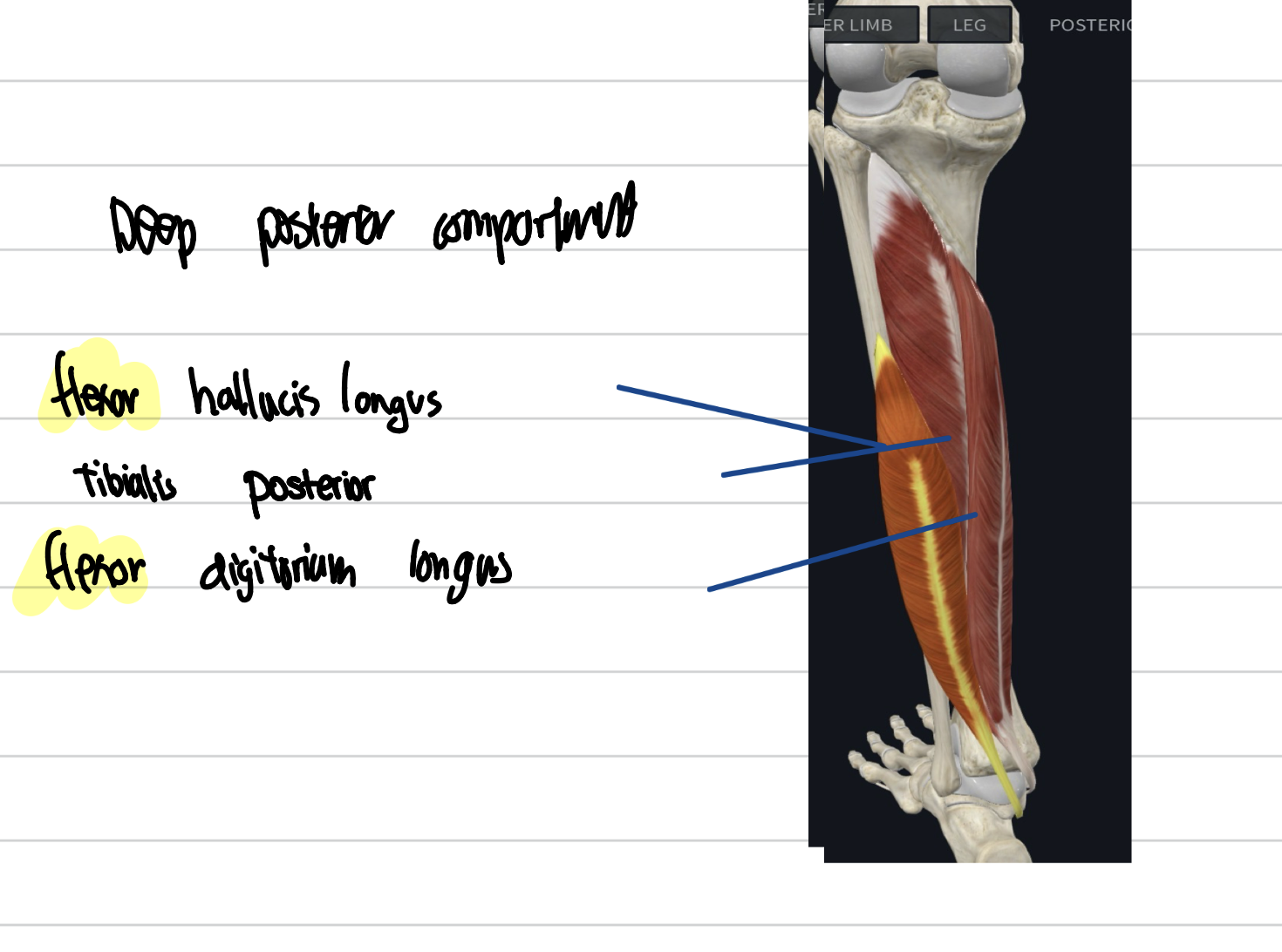
Plantar flexion ( flexor - curls toe) - move down
Inversion
low leg stbilizer, support meidial arch
Compartment in lower leg → superficial posterior compartment


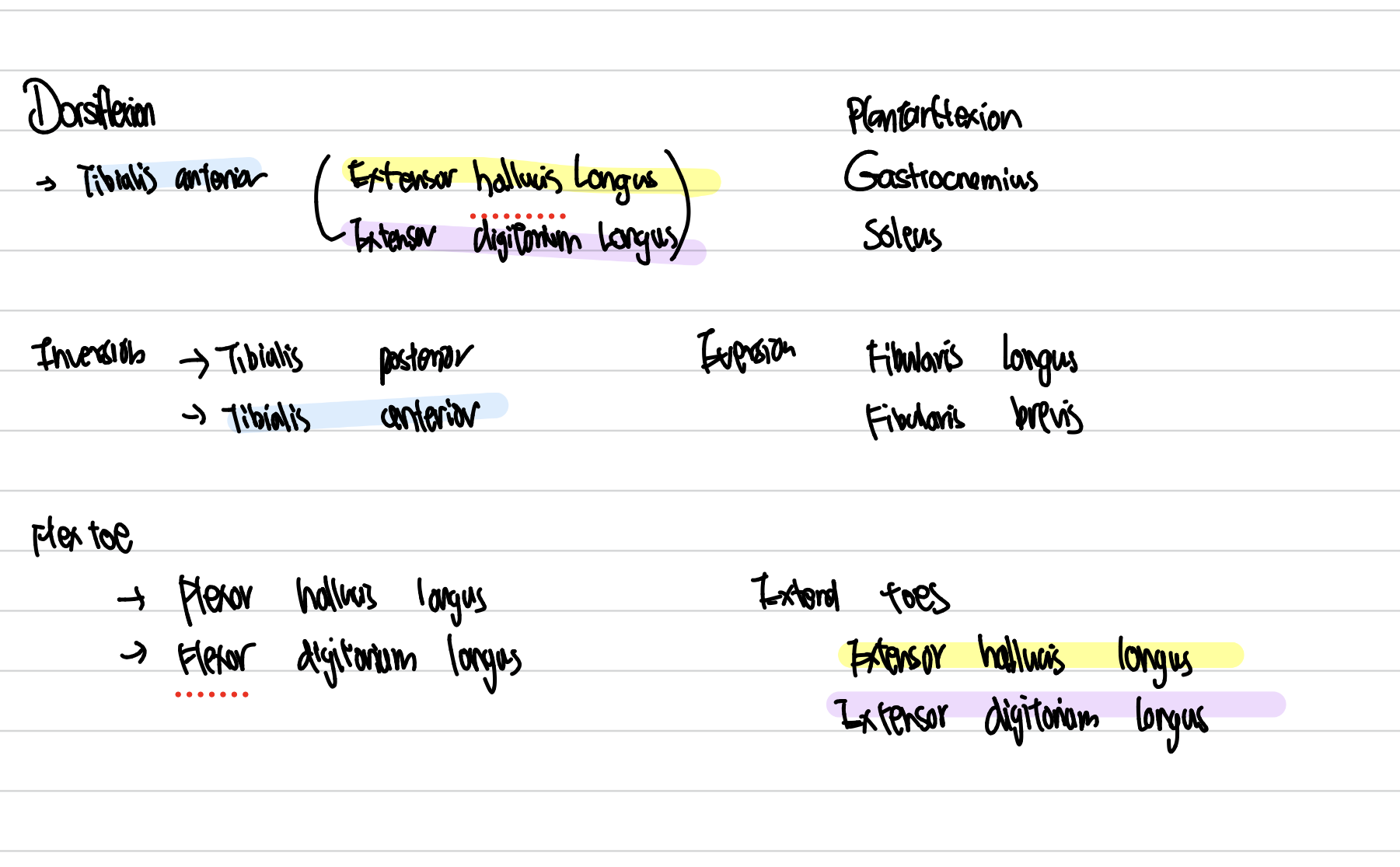
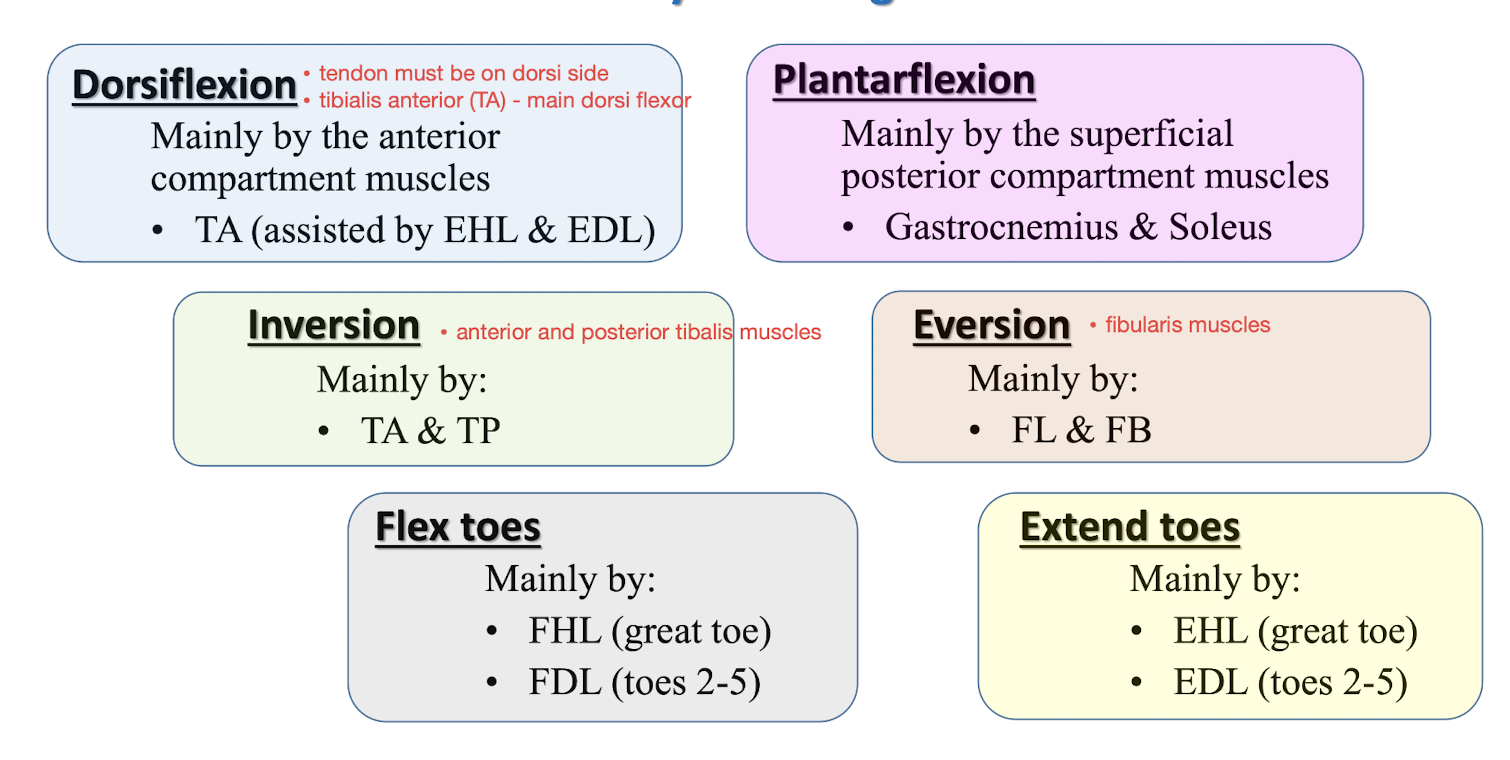
Action of foot contributed by lower leg muscles
nerve - no need