AnaPhy Prelims - Integ
 Call Kai
 Learn
 Practice Test
 Spaced Repetition
 Match
 Flashcards
 Knowt Play
1/40

There's no tags or description
Looks like no tags are added yet.
41 Terms
Hypodermis
Subcutaneous Tissue
not technically part of the skin

Epidermis
superficial layer
composed primarily of keratinized stratified squamous epithelium
receives nutrients by diffusion from the dermis
Keratinocytes
produce keratin
Keratin
tough structural protein that contributes to protection, strength, and reduced water loss
Melanocytes
Produces melanin
Melanin
Contributes to skin pigmentation
Dendritic Cells
Langerhans cells
immune defense
detect and help respond to pathogens
Merkel cells
sensory nerve endings
touch sensation

Stratum basale
basal layer
stem cells, keratinocytes, melanocytes, merkel cells
produces new epidermal cells

Stratum spinosum
multiple layers of keratinocytes
connected by desmosomes
provide strength
dendritic cells are present

Stratum granulosum
consists of three to five layers of flat keratinocytes—more in thick skin than in thin skin

Stratum lucidum
present only in thick skin like palms and soles
thin, clear layer of dead keratinocytes
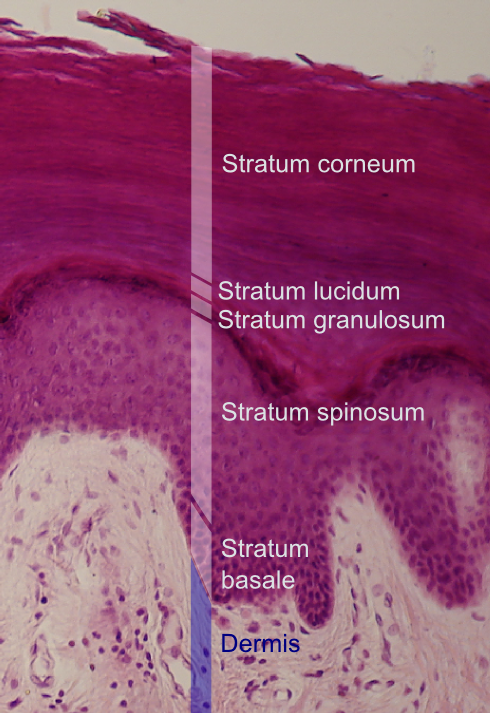
Stratum corneum
most superficial layer
contains many layers of dead, flattened, keratinized cells

Dermis
lies beneath the epidermis

papillary layer
superficial dermal layer
composed of areolar connective tissue
contains: dermal papillae, capillaries, and sensory receptors
Reticular layer
deeper and thicker layer
made up of dense irregular connective tissue
contains: collagen fibers, elastic fibers, blood vessels, nerves, hair follicles, and glands
Hypodermis
composed of areolar connective tissue and adipose tissue
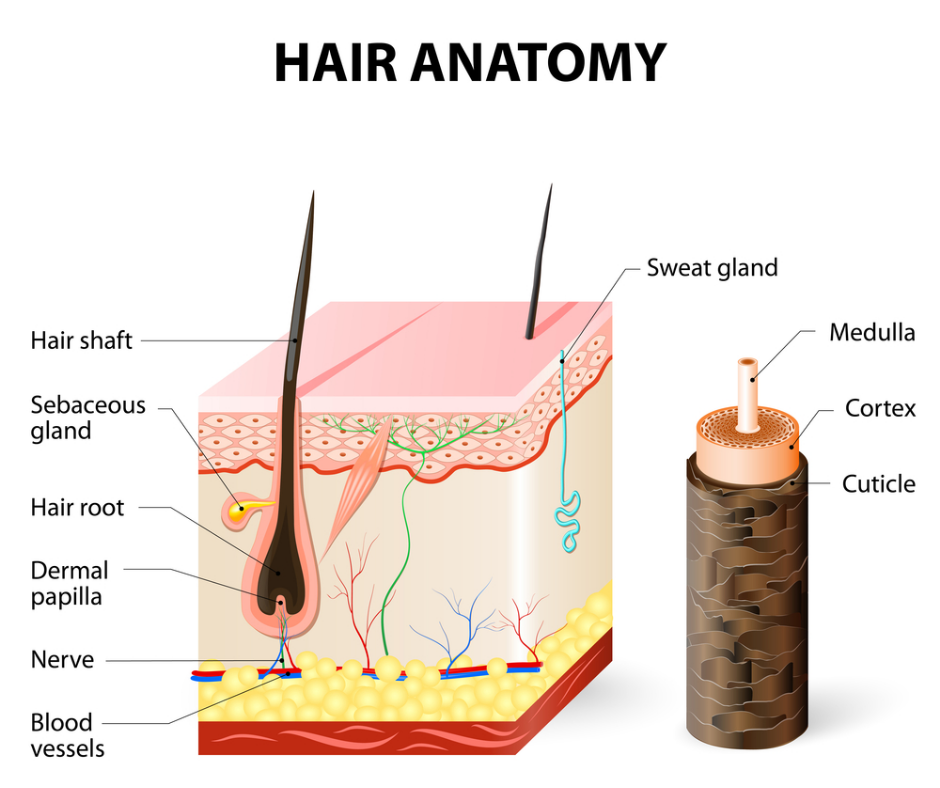
Hair shaft
part projecting above the skin
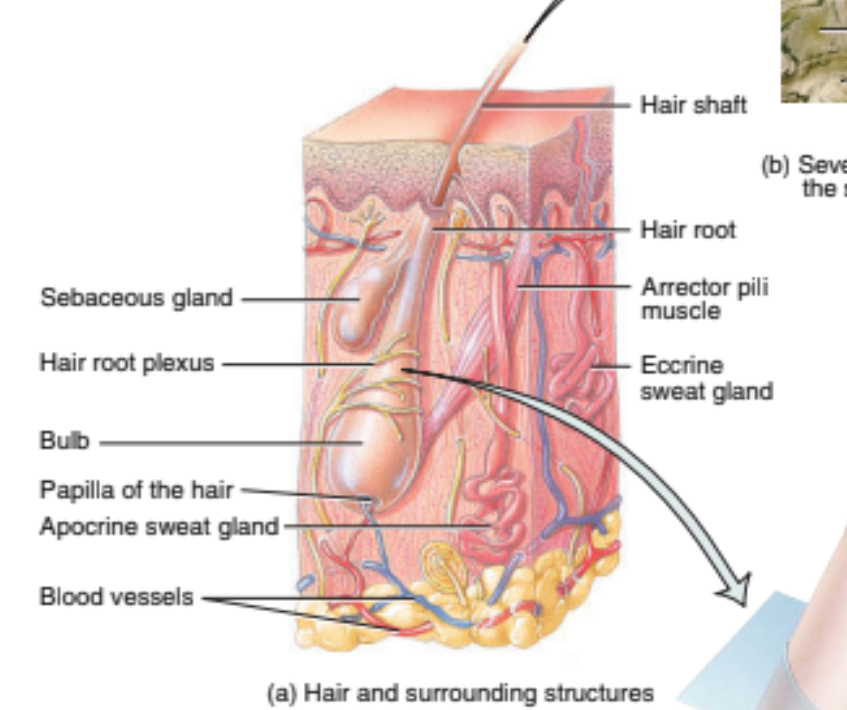
Hair root
Part of hair located located below the skin surface

Hair follicle
tube like structure surrounding the root
Hair bulb
expanded base of the follicle
contains actively dividing cells responsible for hair growth
Arrector pili muscle
smooth muscle attached to hair follicles
Nails
hard keratinized cells
nail plate
visible hard portion
nail bed
skin underneath nail plate
nail root
portion embedded in tissue
nail matrix
produces most of the nails
lunula
visible pale crescent at the nail base
Sebaceous glands
oil glands
produce sebum
associated with hair follicles
holocrine secretion
the entirre secretory cell breaks down to release its product
Eccrine sweat glands
palms, soles, and forehead
secreting outwardly
opens into skin surface
for cooling
watery secretion
Apocrine sweat glands
found in axillary and anogenital regions
become active around puberty
secretion is released into hair follicles
thicker secretion
Melanin
produced by melanocytes
Carotene
Yellow-orange pigment obtained from the diet and stored in tissues
Hemoglobin
blood circulating in dermal vessels that contributes to skin color
First-degree burn
epidermis
second-degree burn
epidermis and some part of dermis
third-degree burn
epidermis, dermis, and may extend into deeper tissues
Stratum basale
this layer contains tactile cells
keratinized stratified squamous epithelium
The epidermis of human skin is