Unit 2 Lecture 10: Energy Resource - Fossil Fuels
 Call Kai
 Learn
 Practice Test
 Spaced Repetition
 Match
 Flashcards
 Knowt Play
1/14

There's no tags or description
Looks like no tags are added yet.
15 Terms
fossil fuels
energy sources that formed from the remains of once-living organisms
oil (petroleum)
natural gas
coal
nonrenewable energy sources
the processes by which they form are so slow that they are not replaceable on a human timescale
what causes the differences in physical properties among the various fossil fuels?
differences in the starting materials from which the fuels formed and in what happened to those materials after the organisms died and were buried within the Earth
coal
formed from remains of swamp plants above sea level compressed by sediments as ocean levels rose and fell millions of years ago
heat and pressure inside the Earth turns plant remains into coal through different stages:
peat
lignite
bituminous
anthracite (metamorphic rock)
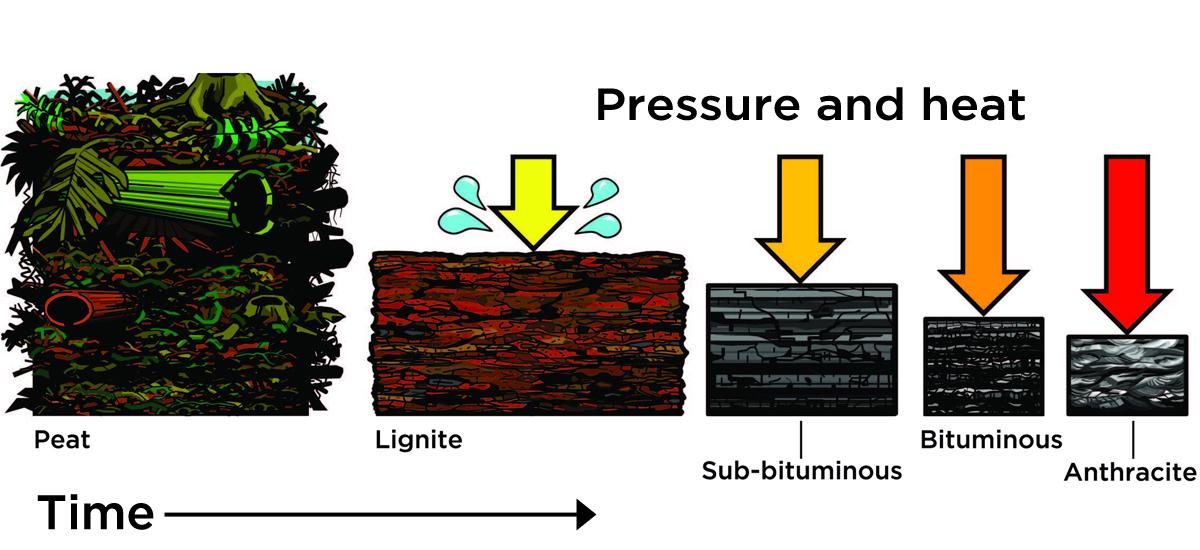
why does the grade of coal improve as time, pressure, and heat increase?
the percentage of carbon increases as the stages progress
environmental impacts of coal
emits
sulfur dioxide (acid rain, respiratory illnesses)
nitrogen oxides (smog, respiratory illnesses)
particulate matter (smog, haze, respiratory illnesses, lung disease)
carbon dioxide (primary GHG produced from burning fossil fuels = heats atmosphere)
uses of coal
generate electricity
domestic heating fuel
manufacturing in industries
how do petroleum (oil) and natural gas form?
marine organisms die and bury in the ocean floor sediments
overtime get covered by sediments and prevented from decay
remains of this organic matter get buried over millions of years
heat and pressure turns the remains into oil and gas

oil trap
a geologic environment that allows for economically significant amounts of oil and gas to accumulate underground
what are the 2 basic conditions of geologic structures that act as oil traps?
reservoir rock
cap rock
reservoir rock
porous, permeable rock that yields petroleum and natural gas in sufficient quantities to make drilling worthwhile

cap rock
virtually impermeable to oil and gas
halts the upwardly mobile oil and gas and keeps both from escaping at the surface
ex: shale

2 common oil traps
anticline
fault trap

shale gas extraction (fracking)
Shale is a dense, tight rock formation where natural gas is trapped in tiny pores. Because the rock has very low permeability, the gas cannot flow naturally to a well on its own.
Engineers drill vertically thousands of feet underground and then curve the drill to run horizontally through the shale layer to capture more gas.
A high-pressure mixture of water, chemicals, and sand is pumped into the well.
The high pressure cracks the shale rock, and the sand grains hold the tiny fractures open so the trapped gas can escape and flow up the well


methane hydrates
an unconventional natural gas source
an ice-like substance that forms under high pressure and low temperatures, trapping molecules of a gas like methane in a cage-like crystalline structure called a clathrate.
how to tap methane hydrates safely is not yet clear.