Ancient Egypt: Notable Art & Architecture
 Call Kai
 Learn
 Practice Test
 Spaced Repetition
 Match
 Flashcards
 Knowt Play
1/27

Earn XP
Description and Tags
Sources: Sister Wendy Beckett's "The Story of Painting"
28 Terms
Early Architecture (All Facts)
Characterized by the use of bricks, which developed and assumed impressive proportions to an extent that was unlike any other civilization before or during that time around 3000 BCE
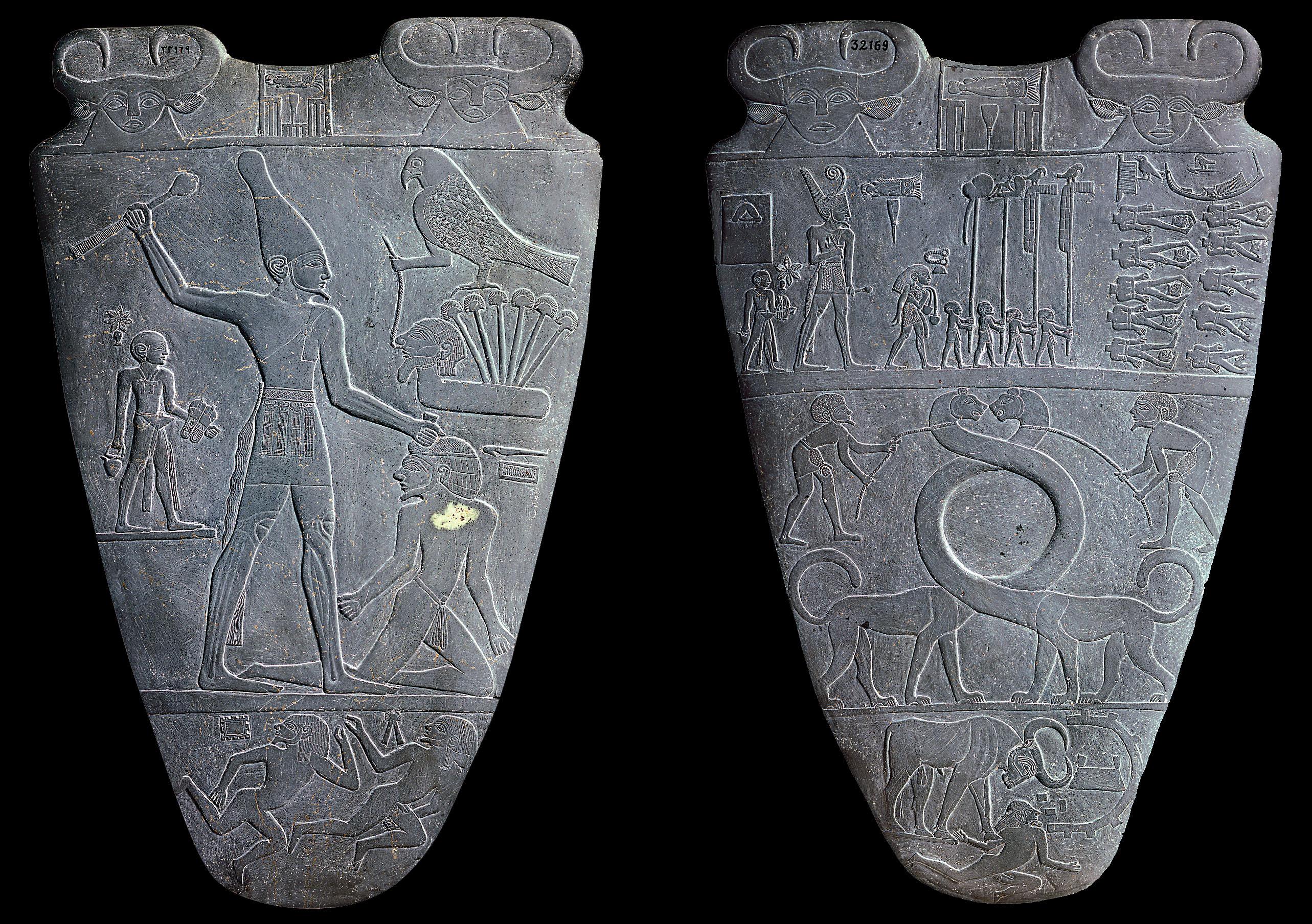
Palette of Narmer (All Facts)
Depicts the namesake King (Menes) wearing the white and red crowns, linked with north and south, showing that he controlled Upper and Lower Egypt
Led to the affirmation of Egyptian art from very early on
Depicts him with Horus
First Dynasty Art (All Facts)
Palettes
Exquisitely carved with scenes in raised relief
Represent the namesake dynasty’s most accomplished examples of their art
Mace Heads
Exquisitely carved with scenes in raised relief
Represent the namesake dynasty’s most accomplished examples of their art
First Dynasty Art and Architecture (All Facts)
Series of art and architecture that emerged and developed in the namesake dynasty including
Relief-carving
Metal craftsmanship
Sculpture (in the round)
Furniture-making
Mastabas
Mastabas (All Facts)
The first major tombs of Ancient Egypt, before the pyramids, which were specially made for members of the royal family and other important people
Free-standing tomb with sloping sides
Symbolizes the mound emerging from the liquid chaos created by the god Atum during the very first days of the earth
These tombs consisted of burial mounds of sand consolidated by brickwork and were finally replaced by rectangular mounds with walls sloping towards the center
After pyramids began to be built for the Ancient Kings / Pharaohs, noblemen continued to be buried in the namesake type of tomb
Alternatively, these can be described as underground chambers with chapels above ground
The chambers hold the sarcophagus and articles indispensable for the noblemen in the afterlife
The chapels house a statue of the deceased in which incense, food, and drink were regularly taken there
Maidum (All Facts)
The first “true” pyramid, whose construction began around 2600 BCE
Step Pyramid of Saqqara (All Facts)
Designed by Imhotep, the high priest of King Djoser
Tomb of King Djoser
Its design
is based on those of tombs built in previous dynasties
Although Imhotep used similar principles to these tombs of previous dynasties, one major difference is that he constructed the pyramid with stone to ensure that it will be eternal
emphasized the symbolism of the Mastaba, by adding several layers which evoke a “stairway to heaven” used by the soul of the pharaoh to rise up to his father Ra
represented the beams of light shooting out from the sun
was heavily concerned with maintaining security against future robbers and vandals
This is because, at the bottom of a huge 90-foot shaft, an intricate network of galleries leads to the burial chamber in which the mummified body of the King will lie
And because it had
Glazed tiles
Reliefs on the walls
False doors and niches
There were 14 false doors created for this effect but also in order to achieve a symmetrical appearance for the building
was like multiple layers of a Mastaba being stacked on top of each other
Imhotep’s design testified to the care taken in the construction of this monument
It was
Covered in limestone
Had been constructed of several blocks prepared and carefully adapted to size
Its dimensions are enormous, in which, the namesake object, along with its funerary temple, covers more than 180K square yards of desert
Included the Serdab of King Djoser
Near it, a second tomb to the south of the pyramid was built
Also within the wall that the main pyramid was in, it also contains an underground shaft and burial compartment decorated to the same high standard
Near it, chapels dedicated to different gods to the east of the pyramid was built
This pyramid and its temple are at the center of a complex of buildings surrounded by a 30-foot high enclosure wall which was crenellated (had battlements (wall parapets)) like a fortress
Serdab (All Facts)
Special closed room that contains a magnificent seated statue of the king
Sarcophagus (All Facts)
Where the mummified bodies were kept
Pyramids (All Facts)
Colossal stone-built tombs in the desert near the Nile River which are believed to assure eternity for the kings of Egypt in they are embalmed and mummified using simple techniques and then laid to rest in
The tallest, built by Khufu, is 480+ feet high
Are built of limestone quarried in the vicinity of the building site
Stone of better quality is transported from quarries on the opposite bank of the Nile while the remainder of the blocks of stone - each weighing over 2 tons - are transported by logs
Temple of Karnak (All Facts)
Constructed to celebrate the god Amun’s elevation to the country’s principal god by the reign of the 11th Dynasty
This was a significant chance from his minor status when Thebes was no more than a provincial town
Was enlarged into a major complex of temples
Wooden Models (All Facts)
Style of art Egyptian craftsmen created by around 1900 BCE which were placed in tombs next to the dead
Originally, this style of art was carved in limestone, but eventually they showed complex scenes involving daily activities in miniature settings including houses, gardens, granaries, and boats; all of which showed ordinary people and tradesmen going about their business
Some examples include
Two men at the plough
The butcher slaughtering the ox
The carpenter sawing through a plank of wood
The musician with his wind instrument
Women grinding corn
The baker kneading dough which he will pass to the brewer
The brewer sieving the fermented dough to make beer
Valley of the Kings (All Facts)
Site in which the pharaohs begun their voyage to the afterlife (1550 BCE - 1070 BCE), taking with him his earthly possessions and servants to care for him
Before the pharaoh is placed in one of the tombs here, he is involved in heavy ritual in which he is embalmed, mummified, and prepared for the journey to the underworld through which the sun god, Ra, passed each night in his Barque before rising again at dawn
At the conclusion of the 70 days of the funerary process, the pharaoh’s body is brought to the entrance of his tomb here, which consists of a series of corridors and halls cut into the rock
Here, to the chanting of incantations, with the air heavily scented with purifying incense, the ceremony of “opening the mouth” is conducted, in which the mummy is believed to regain the use of its senses
Thus, now fully prepared for the journey, the pharaoh is carried to his burial chamber through passages illustrated with scenes in which the gods protect him
Egyptian Funerary Process (All Facts)
Took 70 days
The first 40 days were devoted to the embalming of the pharaoh
The last 30 days were devoted to the mummifying of the pharaoh
As mummification is taking place, the preparation of the tomb involves an equally intricate level of planning
The pharaoh will take with him his personal equipment: weapons, games, jewels, musical instruments, clothes, and even his toilet case
These will be placed close to the body as essential requirements for the afterlife
At the conclusion of the 70 days, his body is brought to the entrance of his tomb, which consists of a series of corridors and halls cut into the rock
Here, to the chanting of incantations, with the air heavily scented with purifying incense, the ceremony of “opening the mouth” is conducted, in which the mummy is believed to regain the use of its senses
Thus, now fully prepared for the journey, the pharaoh is carried to his burial chamber through passages illustrated with scenes in which the gods protect him
Mummification (All Facts)
The last 30 days of the funerary process, in which the complicated bandaging of the body was performed
Each bandage required separate prayers and ceremonies
The bandages were woven especially for the pharaoh from the finest linen
Embalming Process (All Facts)
Involves the removal of the pharaoh’s entrails, the lungs, liver, stomach and intestines, each placed in individual canopic jars, their lids depicting the four sons of Horus, who protect the entrails
These entrails will be placed near the sarcophagus together with the shawabtis (or shabtis)
Shabti / Shawabti (All Facts)
Mummy-shaped statuettes who will do agricultural work for the deceased in the afterlife
Queen Hatshepsut’s Mortuary Temple (All Facts)
Was built for her by Senemut, her daughter’s tutor
Displayed the glory of the pharaohs and their deification in the afterlife for the first time publicly, rather than in the obscure darkness of the pyramids privately
Featured great doors fashioned from black bronze, its inlaid figures in electrum
Was positioned to overlook Karnak
Had height and splendor indicating the prestige in which the queen was held
Was partly cut into the rock and fit perfectly with its surroundings
Had a great central ramp linking its terraces
Had pillared porticoes decorated with painted reliefs
Temple of Luxor at Karnak (All Facts)
Built during the reign of Amenhotep III
Was rebuilt in sandstone to a monumental scale
The rooms at its rear were decorated with exquisite reliefs, and a courtyard is surrounded by a magnificent colonnade
The whole edifice is connected to the temple at Karnak by a two-mile pathway bounded by sphinxes, with resting places for boats
This pathway was actually built during the reign of Queen Hatshepsut
Pictorial Art of Amenhotep III’s Reign (All Facts)
Reached new heights
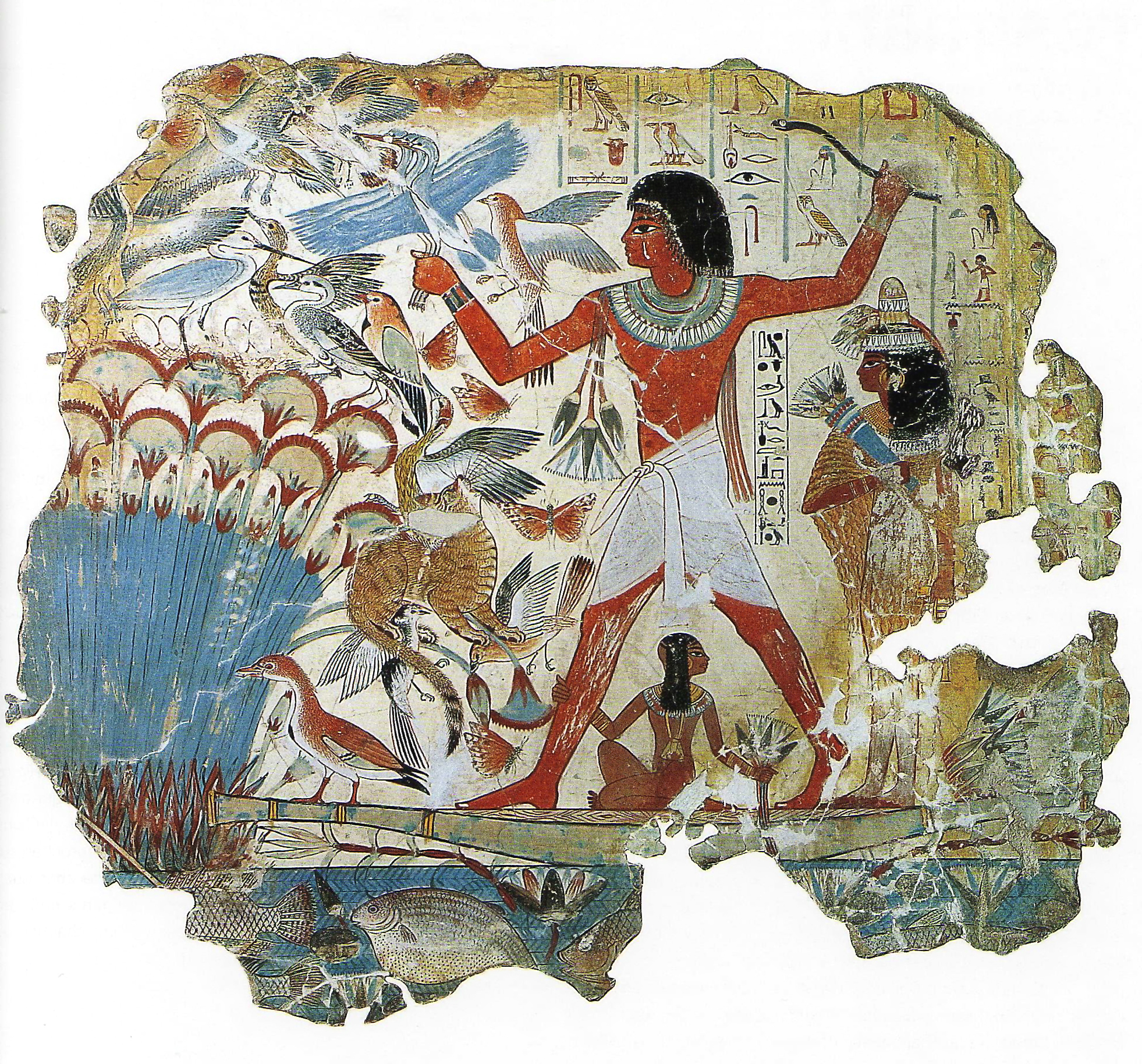
Naturalistic art was at its height exemplified by the fowling scene of Nebamun
Compositions were larger than ever before
The gestures of the subjects are more supple
The range of colors are more subtle
During this time of the namesake pharaoh’s reign, the white background was preferred to the grey-blue background of the earlier days of Egyptian art
Egyptian Painting (All Facts)
Art Movement whose artists
painted for the sake of the dead
belonged to a society which believed that the rich and powerful could enjoy the pleasures of life in the afterlife as long as the image of the deceased was reproduced on their tomb walls
painted murals for the living and wealthy Egyptians, completed in richly textured and painterly styles
were not the concerned with the changeable variation of externals for visual appeal, and even their keen observations of nature (evidently painted from memory) were subject to rigid standardization of forms, often becoming symbols
This is not due to primitivism as their technical skills and evident understanding of natural forms in other kinds of works is evident
This is instead the direct consequence of the essentially intellectual function of their art
Type of Art which can be produced because in Egypt there were
reed stems with pulped ends
brushes of palm fiber
naturally occurring pigments
various binding agents like gum arabic and gelatine
Type of Art which was produced when
finely ground mineral substances were mixed with water and gelatine, gum arabic, or white of egg was added
Art characterized by
the cracks in the limestone walls of Ancient Egypt having been filled with mud and covered in plaster, which became the base for the pigments
Nebamun Fowling Scene (All Facts)
Painting produced during the reign of Amenhotep III and found in the namesake man’s tomb
Depicts the namesake man hunting birds in the marshes, a cat snaring birds, butterflies taking flight, etc.
Painting in which everything depicted was recorded in the minutest detail
Ramose Funeral Scene (All Facts)
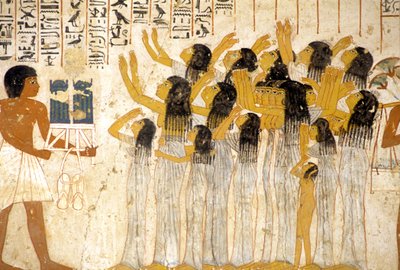
Painting produced during the reign of Amenhotep III and found in the namesake Vizier’s tomb
Depicts the Vizier’s namesake event in which the unrestrained grief, indicated by the tears flowing down the cheeks of the wailing women, is powerfully depicted and symbolized
The women in this painting are flat and schematic, but their anguished gestures vibrate with grief
Great Temple of Abu Simbel (All Facts)
Built during the reign of Rameses II
In Nubia
Typified the scale of Rameses’s approach to architecture
Its entire edifice, with its colossal statues both inside and outside the temple, was carved into the rocks overlooking the Nile River, facing the sunrise with the falcon-headed Re-Harakhti stepping forward to face the morning sun
The shrine is superbly designed to ensure that the first rays of light fall on the four gods inside it - Amun-Re of Thebes, Ptah of Memphis, Re-Harakhti of Heliopolis, and Rameses himself, who will join the others in eternity as a god in his own right
The entire temple if dominated by four massive statues of this pharaoh on his throne, each carved from a different stratum of rock to allow them to stand out in every condition of light
A small temple was dedicated to his queen Nefertari at this site
Ramesseum / Rameses II’s Mortuary Temple (All Facts)
Built during the reign of the namesake pharaoh
Located west of Thebes
Characterized by the presence of monumental figures of the namesake king dominating the entire scene, one of which (of him seated) was bigger than any other statue carved in Egypt
Its surrounding wall enclosed a great number of houses and workshops
Badarian Ware (All Facts)
Black-topped polished bowls produced in Egypt
2530 BCE - Geese of Medum (All Facts)
Work which
is from the tomb of Nefermaat and his wife Itet
Work whose namesake animals form only a detail in a pictorial frieze in a tomb at the the namesake ancient town, but hint at the vitality and power of the sculptural triumphs to come in Ancient Egyptian art history
