3.6, 3.7 Mammalian Gametes + Fertilisation
 Call Kai
 Learn
 Practice Test
 Spaced Repetition
 Match
 Flashcards
 Knowt Play
1/17

Earn XP
Description and Tags
Spec Point 3.6: Understand how mammalian gametes are specialised for their functions (including the acrosome in sperm and the zona pellucida in the egg)/ 3.7: Know the process of fertilisation in mammals, including the acrosome reaction, the cortical reaction and the fusion of nuclei
18 Terms
What is the function of gametes?
Fusion of genetic information to create offspring
To allow two haploid cells to join together forming a diploid cell
Diagram of an egg cell
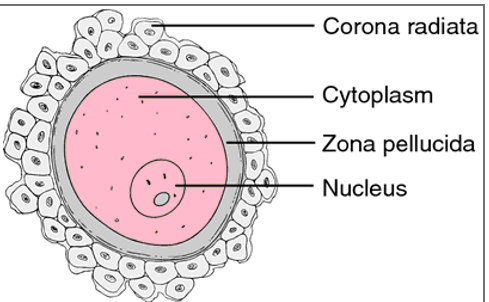
Corona radiata
outer layer of cells surrounding ovum
→ offers an outer layer of physical defence for the ovum
Zona pellucida
glycoprotein layer surrounding the egg that helps prevent polyspermy
hardens to form an impenetrable barrier after fertilisation has occurred to prevent other sperm nuclei from entering the egg
Egg cell: Large cytoplasm
contains nutrients and energy to nourish a growing embryo
Ovum: haploid nucleus
contains 23 chromosomes that fuse with haploid nucleus of sperm during fertilisation
Diagram of sperm cell

Flagellum
tail that allows sperm to swim towards egg cellm
Sperm cell: mitochondria
contains many mitochondria that provide energy for movement of the flagellum
Acrosome
contains digestive enzymes to break down zona pellucida
Are egg cells or sperm cells larger?
egg cells
Define fertilisation
fusion of nuclei from a male gamete and female gamete
Two reactions that are part of fertilisation
acrosome reaction
cortical reaction
Acrosome reaction
during fertilisation, the head of a sperm cell releases enzymes that digest a path through the zona pellucida, allowing the sperm to pass through the egg cell membrane
What happens once the sperm breaks through the zona pellucida?
the cortical reaction:
- the cortical granules fuse with the cell surface membrane and release their contents in exocytosis
- the contents of the cortical granules cause the zona pellucida to thicken and harden, preventing any further sperm from entering, stopping polyspermy
What happens when the contents of the cortical granules is released?
the chemicals contained within the cortical granules causes the zona pellucida to rapidly thicken and harden, preventing any more sperm cells from entering so only one sperm cell can fertilise the egg
- this is known as the cortical reaction
What happens after the cortical reaction?
the cell surface membrane of the egg cell fuses with the cell surface membrane of the sperm
the nucleus of the sperm cell fuses with the nucleus of the egg cell
→ when the male and female gamete nuclei fuse, they become a zygote (fertilised egg cell)
→ the zygote contains the full 46 chromosomes
→ the zygote divides by mitosis continuously until an embryo is formed
→ cell division continues and eventually many of the new cells produced become specialised to form all the necessary functions
Compare the structure of an