analysing evidence
 Call Kai
 Learn
Learn Practice Test
 Spaced Repetition
 Match
Match Flashcards
 Knowt Play
1/168

There's no tags or description
Looks like no tags are added yet.
Name | Mastery | Learn | Test | Matching | Spaced | Call with Kai | Chat |
|---|
No analytics yet
Send a link to your students to track their progress
169 Terms
history of dna
individuals involved - j watson, f crick and roselind franklin
rosalind franklins image of dna - image 51, proved the double helix structure
technique used to image dna - x-ray
genetic structures - overview
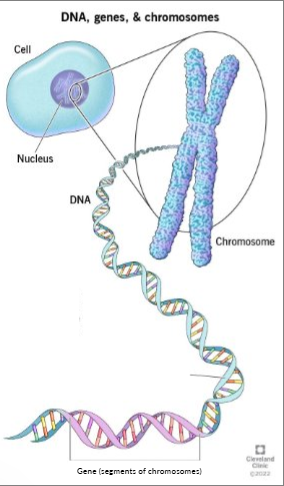
a chromosome is made of 1 DNA strand, along this chromosome is multiple genes, these structures are in the nucleus
dna
deoxyribonucleic acid
the genetic material of an organism, all of an organisms body cells will have the same DNA
found in the nucleus
set of genetic instructions used to build, grow and maintain living organisms
dna - structure
double helix strucutre
- two strands
monomer
small single simple molecules that can join together
polymer
large molecules made up of the smaller monomer units together in a repeating chain
polynucleotides
a single strand of DNA that are long chains of nucleotide monomers linked together , known as a polynucleotide - made of subunits called nucleotides
polymer - polynucleotide
monomer - nucleotide
nucleotide - parts
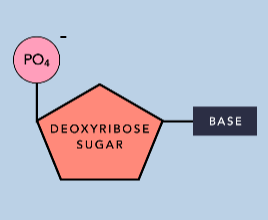
3 parts
deoxyribose sugar - as its pentose sugar
negative phosphate group (PO4³-)
nitrogenous base (varies) : adenine, guanine, cytosine or thymine
bonds within a strand (nucleotides)
strong sugar phosphate bonds join nucleotides to create a polynucleotide strand
between the negative phosphate group and the deoxyribose sugar
covalent bonds
dna backbone
deoxyribose sugar, negative phosphate group
dna - base pairing and bonds
four bases : adenine (A), thymine (T), guanine (G), cytosine (C)
bond on a complementary base pairing system - joined by hydrogen bonds
A will always bond to T (2 bonds)
G will always bond to C (3 bonds)
not as strong as sugar phosphate bond
chargaff’s rule
in DNA the number of
A = T
G = C
applies when considering both DNA strands, not one
strawberry practical - why did we crush the strawberries
to break the cell walls and tissue of the strawberries
exposes the individual cells so that the detergent and salt can reach them
what did the exactraction mixture contain
salt and detergent
what does the salt do
neutralizes the DNA’ charge so that the DNA strands are able to clump together
The salt provided positively charged sodium ions and these ions are attracted to the negative charges on the strawberry’s DNA phosphate backbone.
This allows the tiny DNA to stick together to aggregate and form visible clumps.
what does the detergent do
breaks the membranes (cell and nucleus)
acts as a chemical lysing agent - a substance used to break open cells by disrupting their outer membranes or walls
what does the ethanol do
precipitates the DNA (allows it solidify)
what purpose does the ice serve
to keep the solution cold which slows down the activity of the degrading enzymes of the strawberry called DNases, which can break down the DNA
so DNA does not break down
genes
a sequence of DNA bases which codes for your traits/proteins
proteins control the function and structure of an organism
all your physical attirbutes are a result of the sequence of bases in you DNA
traits can be determined by multiple genes
there are segments of DNA that do not code for a trait
genes are passed onto subsequent generations - genes of offspring are derived from their parents
genome
the complete set of genes in an organism
chromosomes
a chromosome is compacted DNA - found in the nucleus of eukaryotic cells
eukaryotes - organisms with nucleus and organells
1 chromosome is composed of 1 DNA double helix, humans have 46 chromosomes (23 pairs)
karyotype
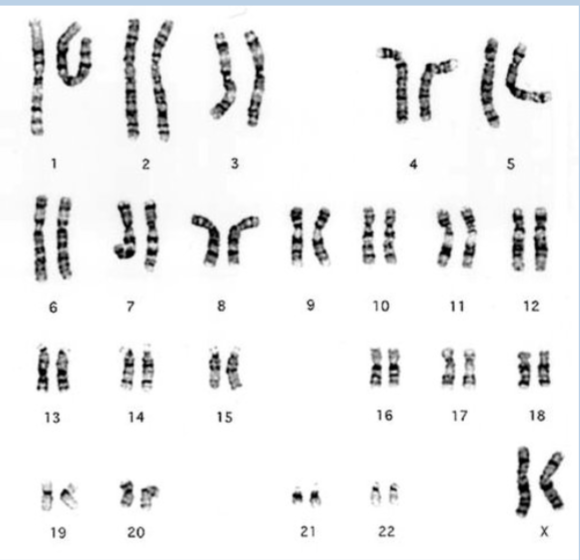
an image of an individuals complete set of chromosomes
human chromosomes
1 pair of sex chromosomes (X or Y)
22 homologous pairs of autosomal chromosomes (1-22)
autosomal chromosomes (autosomes)
non sex-chromosomes
you have 2 of each autosome - homologous pair
sex chromosomes
determine sex of indivudal
XX = female , 23 homologous pairs
XY = male , 22 homologous pairs , 2 non homologous sex chromosomes
each parent contributes 1 chromosome to each of the 23 pairs of chromosomes
homologous
having the same or similiar structure, position, or origin, after coming from a common ancestor
homologous pairs - chromosomes
chromosomes pairs with the same
genes
gene position (locus/loci) / bands
length
linked genes
genes on the same chromosome
dna replication - importance
DNA must be replicated to produce new cells (new DNA molecules are made from existing DNA) - ensures new cells have correct number of chromosomes
by using existing DNA strands as templates, we can ensure that new DNA is identical to the original
dna replication - enzymes
dna helicase - breaks hydrogen bonds between DNA strands / bases (unzipped)
dna polymerase - add nucleotides to template strands to create new strands
dna replication - process
DNA helicase moves along the DNA, breaking the hydrogen bonds between bases
DNA polymerase adds complementary nucleotides to the template strands to create new strands, 1 nucleotide at a time - helix will reform when strand is complete
semi conservative process
semi - half
conservative - to retain , keep the same
the way dna creates an identical copy of itself
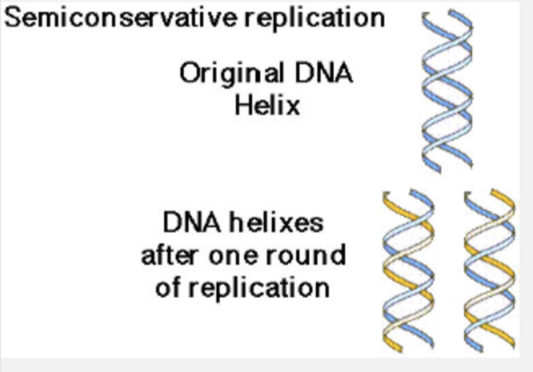
because new DNA is made from existing DNA strands, half of each new DNA helix is from the original
DNA replication - after
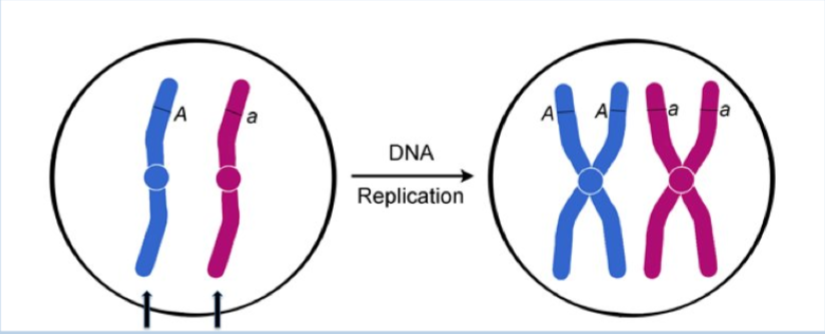
before replication - single strand chromosomes
after replication - double strand chromosomes
chromatids
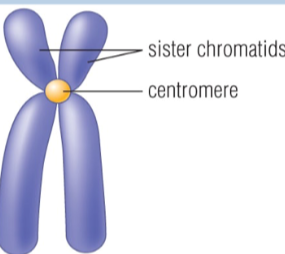
1 chromosome strand
DNA replication produces chromosomes with 2 chromatids
sister chromatids - on the same chromosome, chromatids attached by a centromere with the same genetic information
centromere
joins the chromatids
diploid vs haploid
diploid - 2 complete sets of chromosomes, body cells
haploid - single set of unpaired chromosomes (1 set for humans), gametes (sex cells, sperm and egg cell)
cell division - mitosis
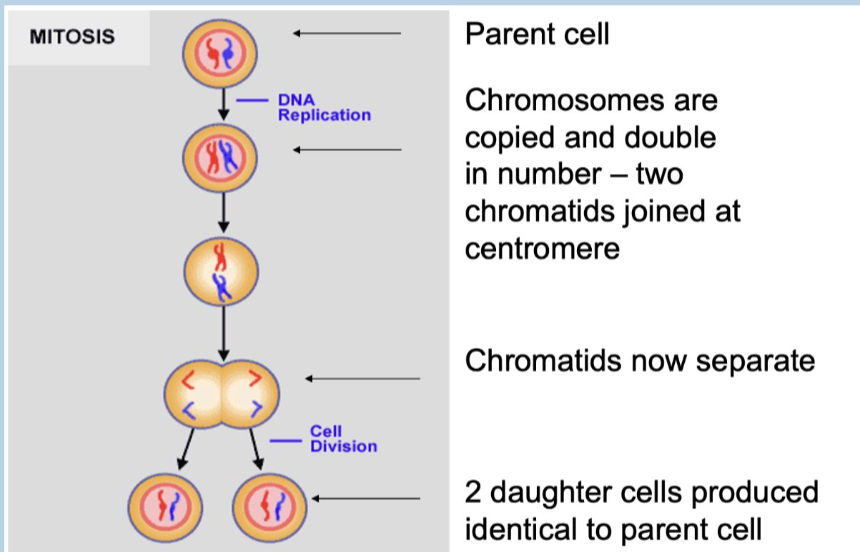
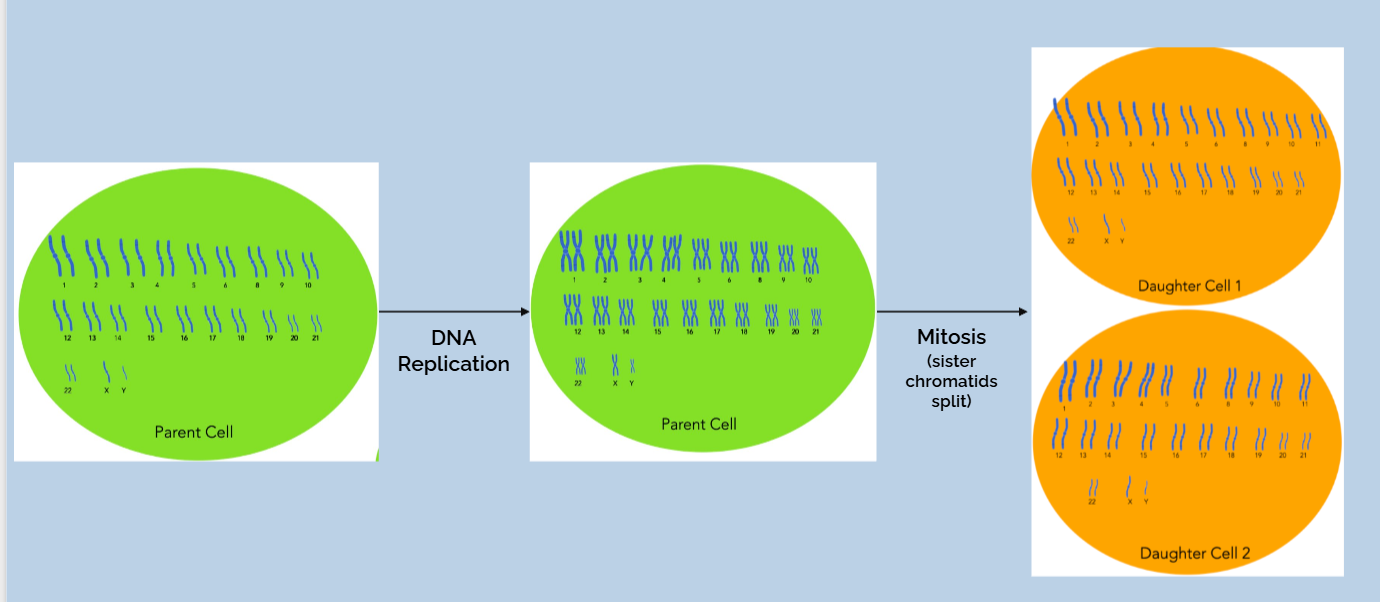
process - 1 parent cell divides into 2 diploid daughter cells, identical to the parent (original) daughter cells = new cells
occurs in somatic cells (body cells)
purpose of mitosis
growth and development
replacing old or damaged cells
mitosis seperations
before mitosis
dna replication must occur first, ensures each daughter cell can have enough chromosomes
during mitosis
sister chromatids seperate into each daughter cells
cell division - meiosis
process - 1 parent cell divides into 4 unique haploid daughter cells
occurs in germ line cells to form gametes (sex cells) - diploid to haploid
purpose of meiosis
why gametes have to be haploid
purpose
to produce gametes for sexual reproduction
so that when 2 haploid gametes fuse during fertilisation each contributing a set of chromosomes of 23, the resulting offspring receives the correct diploid number of chromosomes
form a zygote with the correct number of chromosomes
meiosis seperations
pre meiosis - dna replication must occur first
2 stage process
meiosis I - seperation of homologous chromosomes, produces 2 haploid daughter cells with sister chromatids
meiosis II - seperation of sister chromatids, produces 4 haploid daughter cells with 23 chromosomes (chromatids)
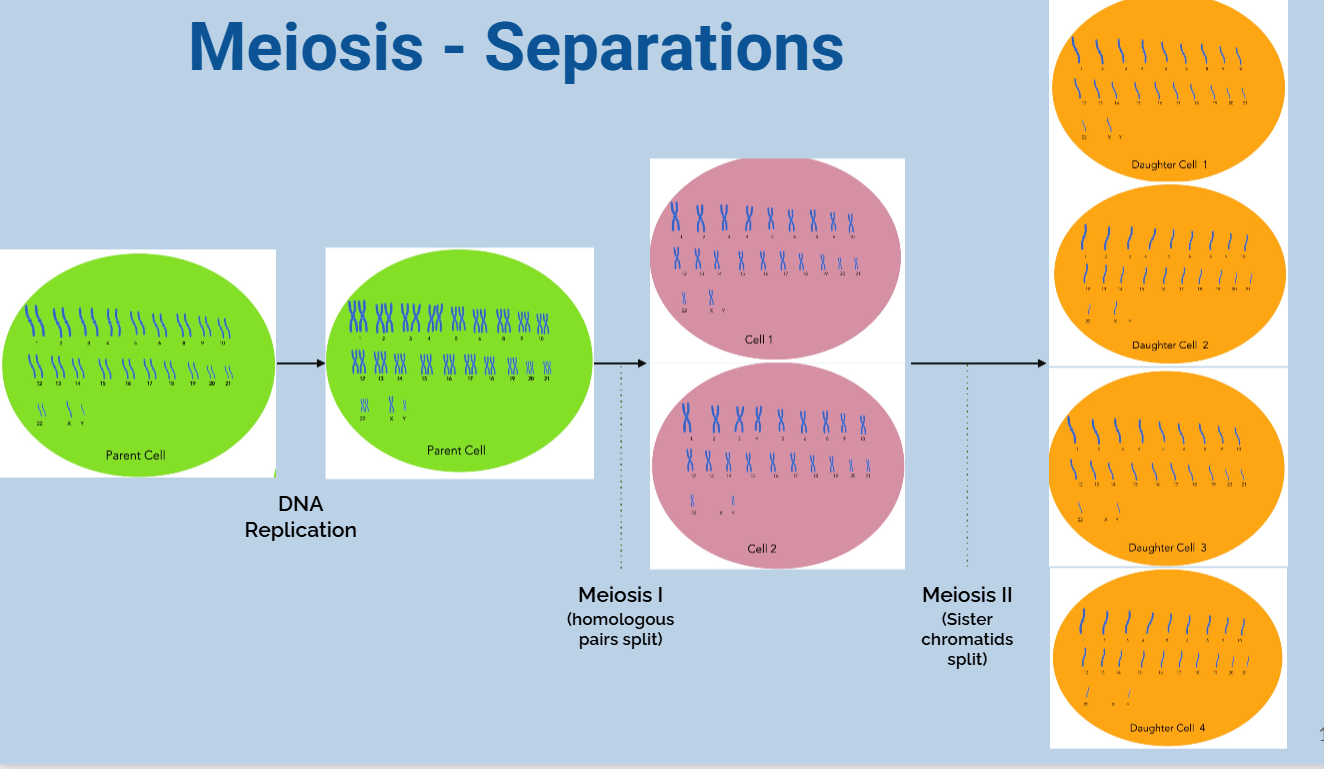
meiosis variations, name
extra processes during meiosis I to ensure the 4 daughter cells are not identical
independent assortment
crossing over
variation by independent assortment
homologous pairs line up randomly when split
variation - daughter cells have different chromosome combinations of parent chromosomes
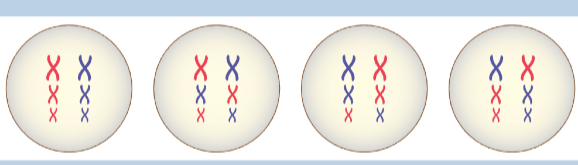
variation by crossing over
dna exchange between homologous pairs of non sister chromatids
homologous pairs have the same genes but could have different base sequence
gene expression
the process of producing proteins from genes
transcription: DNA to mRNA
translation: mRNA to protein
RNA
ribonucleic acid
single stranded nucleic acids involved in protein synthesis - made up of nucleotides
composed of
ribose sugar
negative phosphate group
cyclic nitrogenous base
RNA vs DNA differences
RNA has uracil (U) instead of thymine (T)
A binds with U
G binds with C
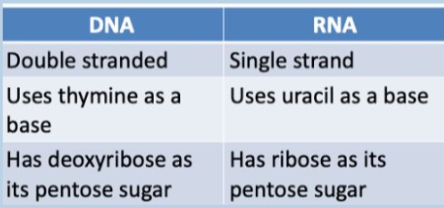
transcription
objective - produce a strand of mRNA from a gene of DNA
location - nucleus
mRNA - messenger RNA
capable of exiting the nucleus to act as a template for a protein
produced by RNA Polymerase
transcription process
RNA polymerase binds to template strand causing DNA to unwind
RNA polymerase runs along the strand to produce mRNA using complementary base pairs
at end of gene, RNA polymerase and mRNA are released
mRNA exits the nucleus
proteins and amino acids
polymer: protein, proteins are larger complex polymers and are made up of long chains of amino acids
monomer: amino acids, amino acids are the monomer of proteins just as nucleotides are the monomers of DNA and RNA
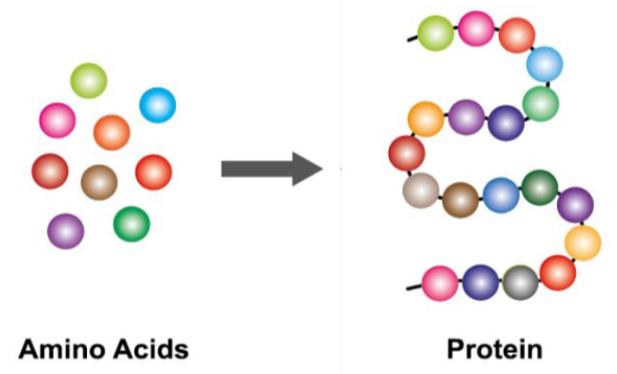
translation
objective: produce a protein from mRNA (proteins are formed from a sequence of amino acids one at a time)
location: ribosome - protein factory
tRNA - transfer RNA
carry amino acids to the mRNA based on the complementary base pairing
codons
sequences of 3 bases on mRNA
translation process
tRNA transport amino acids to the mRNA based on completementary base pairing
the amino acids are joined as they are added
once the stop codon is reached, the amino acid chain (protein) is released
redundancy
multiple codon sequences code for a single amino acid
tips for translation
look for start codon (AUG)
write full name of amino acid
don’t write stop
mutations
a change to the sequence or structure of DNA
typically occur during DNA replication
can be inherited from parents
cause of mutations
mutagens - environmental factors which increase the frequency of mutation
genetic (single gene) mutation - point substitution mutations
point substitution mutations: 1 base is changed
missense : an amino acid is changed
silent: no amino acid change
nonsense: early stop codon is produced
genetic (single gene) mutation - frameshift mutations
frameshift mutations: bases added or removed (changed reading frame of codons)
insertion; base added to a gene
deletion: base removed from a gene
amino acid sequence functionality
changed amino acid sequence = protein no longer functional
unchanged amino acid sequence = protein still functional
chromosomal structural mutations
segments of chromosome is changed
deletion - chromosome segment removed
duplication - chromosome segment repeated
translocation - chromsome segment moved to another chromosome
inversion - chromsome segment is flipped
chromosomal number mutations =
total no. of chromosomes changes
aneuploidy
abnormal no. of specific chromsome
trisomy 21 - down sydrome
polyploidy
abnormal no. of chromosome sets
alleles
different forms of a gene
classified as
dominant (uppercase)
recessive (lowercase)
genotype
someone allele combination for a trait
homozygous dominant - 2 dominant alleles
homozygous recessive - 2 recessive alleles
heterozygous - 1 of each allele (known as a carrier)
dominant allele masks the recessive allele when present
phenotype
the observed traits in an organism (depends on genotype and environment)
human somatic cells - parent alleles
diploid - 2 sets of chromosomes
one set inherited from each parent, so each parent contributes 23 chromosomes
each parent contributed an allele to all of your genotypes
your alleles/genotype were dependent on your parents genotypes
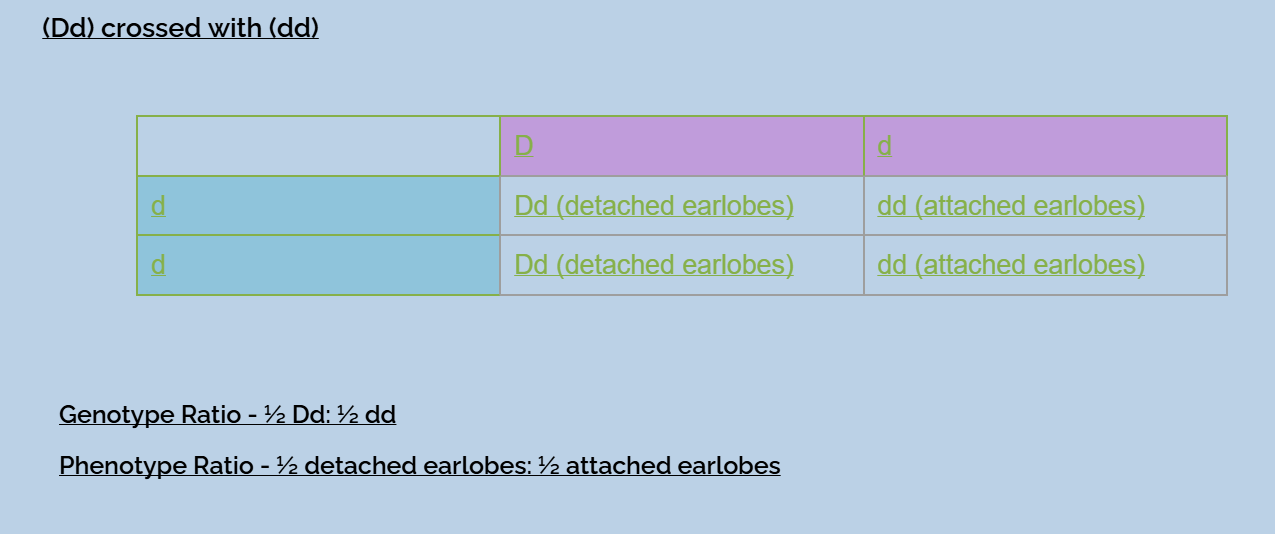
punnett square
determine genotype of offspring
genotype ratio - 1 Dd : 1 dd
phenotype ratio - 1 detached earlobes : 1 attached earlobes
law of dominance - mendels experiments conclusions
dominant alleles mask recessive alleles
law of segregation - mendels experiments conclusions
alleles are seperated during meiosis
law of independent assortment - mendels experiment conclusions
alleles for different traits are inherited independently of one another
x linked traits - sex linked traits
traits coded by a gene on the x chromosome
alleles can be dominant or recessive

x linked dominant traits - more likely?
more females affected
inherit 2 X chromosomes while males only inherit 1
x linked recessive traits - more likely?
more males affected
only inherit 1 X chromosome
no chance of having dominant allele to mask the recessive
Y linked traits
traits coded by a gene on the Y chromosome
affect biological males

human genome project
International collaborative project
Timeline: 1 October 1990 – 14 April 2003 (13 years)
Cost: 3 billion dollars total
Goal - map and understand the genes in the human genome
discoveries of human genome project
3 billion base pairs
20,500 genes
Which chromosome each gene is on
Location of each gene on a chromosome
Function of each gene
bioethical principles
beneficence - who can benefit from this technology
Rationale: Biotechnology should only be developed if it can benefit society in some way
Non-maleficence - Who might be harmed by this technology/ can the harm be minimised?
Rationale: Biotechnology should not be developed if it is extremely harmful. Or it should only be developed if the positives outweigh the negatives
Individual Rights/ Respect - Are the rights of all individuals involved considered and respected?
Rationale: use of the technology should not breach individual’s rights
Justice/ Equity - Are interests of communities considered/ discrimination prevented?
Rationale: use of the technology should not discriminate against any cultural or socioeconomic group (should be fair for everyone)
Integrity- Is technology developed with honesty and allowing for scrutiny?
Rationale: discoveries and faults of the technology must be honest
genetic screening and testing - purpose and importance
purpose - to check how likely someone is to have a condition/disease
importance - early detetion can improve quality of life
future potential: gene therapy
modification of genes within an individual to treat or prevent disease
once tech advances, may be possible to modify specific genes/sections of dna to remove detrimental diseases/conditions
issue - would require the dna in all the cells of an individual to be modified
use genetic screening/testing to identify genetic conditons and then use gene therapy to modify dna to eliminate conditions
genetic screening and testing - methods
methods
gene test - analyses specific genes
dna test - alayses whole dna
biochemical test - analyses proteins
can occur at any point in life
other info obtained
sex determination, carrier screening for recessive traits, diagnosing and predicting genetic diseases
genetic screening
routine analysis of many people regardless of family history of a genetic disorder - random check
early detection of these conditions can greatly increase the quality of life of affected patients
genetic screening e.g 1
heel prick - blood extracted from the heel of newborns to test for conditions
cytosis fibrosis - confirmed by high IRT protein
phenylketonuria (pku) - confirmed by low phenylalanine
hypothyroidism - confirmed by low thyroid
genetic testing
analysis of specific people with a history of genetic disorder - targeted and specific check
genetic testing - e.g 1
prenatal chromosome count - checks NO. chromosomes via a karyotype
can identify aneuploidy
Chorionic villus sampling (10-12 week foetus) – collects actual foetus cells
Amniocentesis (14-16 week foetus) – collects uterine fluid containing foetus cells
genetic testing e.g 2
dna sequencing - determines the base sequence (ATCG) in dna
diagnosis - confirm if someone has a condition
carrier testing - check if someone is a carrier (heterozygous) for a disease
genetic testing e.g 3
dna profiling - seperate and organise DNA into fragments (using gel electrophoresis)
diagnosis - confirm if someone has a condition
paternity testing - confirm the father of a child
forensics - confirm if someone was present at a crime scene
pros of genetic screening/testing
Early detection of diseases to inform medical Treatments
Informed decision making
Identification of carriers
Advance Medical Research
cons of genetic screening/testing
Psychological impact on patients
Privacy and equity concerns (discrimination due to having a confirmed disease)
Cost and accessibility
cloning
genetically identical copy of a gene, cell, tissue or organism
not only limitied to a whole organism
cloning - reproductive
copying whole organisms
process: somatic cell nuclear transfer (somatic cell - body cell, nuclear - nucleus containing dna)
reproductive cloning - individuals
individuals required
Nucleus donor - gives DNA for the clone , will be identical to the nucleus donor
Egg contributor - gives an egg tocarry the clone DNA
Foster mother - carries the embryoto develop into the clone
reproductive cloning - process
Diploid somatic cell is extracted - Haploid egg cell is extracted
Diploid nucleus is isolated from somatic cell - Haploid nucleus is removed from egg cell
Diploid nucleus is fused with enucleated egg cell with electric shock
Fused cell replicate to form an embryo
The embryo is implanted in the foster mother’s uterus
Embryo develops and is birthed as a clone of thenucleus donor

pros - reproductive cloning
medical advancements
biomedical research advancements
species preservation
offsrping for idnividuals who cannot have children
reviving extinct species
cons - reproductive cloning
poor welfare of surrogates
shortened lifespan/ welfare of clones
loss of genetic diversity
therapeutic - cloning
copying cells / tissue
process: somatic cell nuclear transfer
goal: harvest embroynic stem cells
therapeutic cloning: stem cells
cells which specialise into other cells
adult stem cells can only specialise into a small range of cell types - mulitpotent
embryonic stem cells can:
divide indefinitely
specialise into any cell type (totipotent) - can be used to treat various conditions through transplant

therapeutic cloning: process
same as reproductive cloning except embryo is not implanted in uterus
instead - further divides in a dish
is harvested as stem cells (after around 5 days)
these clones can be used for transplants for the donor