Depression
 Call Kai
 Learn
 Practice Test
 Spaced Repetition
 Match
 Flashcards
 Knowt Play
1/29

There's no tags or description
Looks like no tags are added yet.
30 Terms
what are the DSM criteria for major depressive disorder?
depressed mood most of the day and nearly every day
decreased pleasure
weight change
change in sleep
change in activity
fatigue
lack of concentration
suicidality
what are the 2 ways of diagnosis depression?
categorical - either have it or not
dimension - along a continuum and presented in different ways
why is DSM important?
uses non stigmatise and inclusive language
ensure same diagnosis of depression
how is depression presented in preschool children?
higher levels of regression, somatic complaints, violent play and more withdrawn then typical children or those with ADHD
they are more sad, anhedonia, appetite and sleep problems and trouble concentrating
what are the limitations of depression in preschool children
lesser cognitive abilities and vocabulary so can’t verbalise their thoughts
what does depression co-exist with? (comorbidity)
separation anxiety
OCD (intrusive, repetitive thoughts, obsessions and compulsions)
social phobias
ADHD (inattention, hyperactivity and impulsivity)
what did Nissa et al (2014) find about perceived family impact of preschool depression?
families of preschool children with depression reported the greatest number of impacted areas compared with other disorders
depression appears to have the strongest perceived effect on family functioning
what predicts depressive disorder in later childhood? (Luby et al, 2014)
preschool-onset depression
preschool-onset conduct disorder
non supportive parenting
(children who experiences depression during preschool years were significantly more likely to experience depression in later childhood)
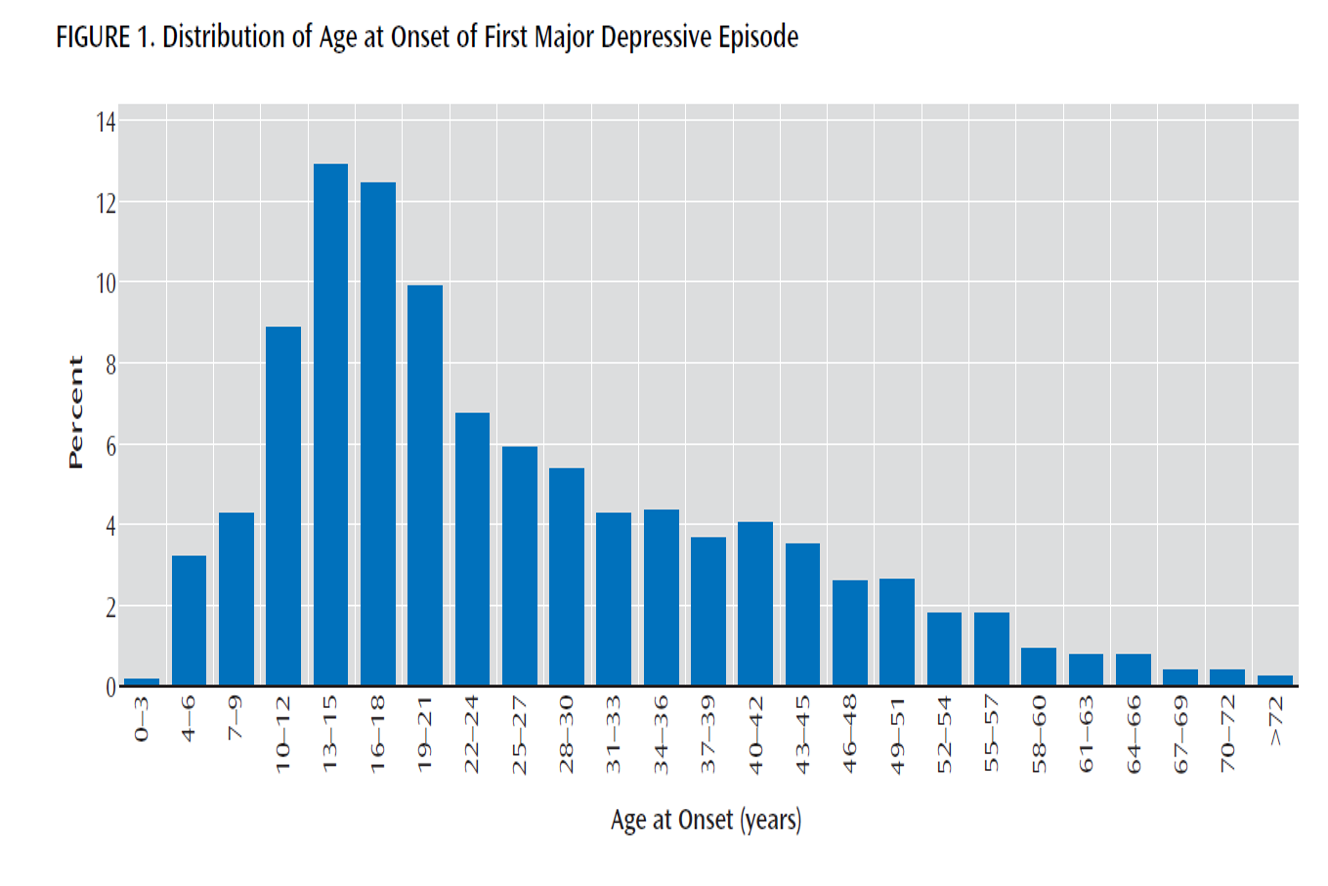
what is the distribution of age of onset of first major depressive episode? (Zisook et al, 2007)
emerges throughout the lifespan
increases to 13
peaks = 13-15 and 16-18
decreases from 18
what is the probability of experiencing an episode of major depressive disorder as a function of age and gender? (Hankin et al, 2015)
boys and girls show similar levels during childhood
11-13 rates begin to diverge
girls percentage is higher overall especially between 15 and 17
(gender gap emerges during adolescence rather than childhood)

what were the findings on prevalence of depression by gender and age from the national population health survey?
females constantly higher than men
decrease from 18 to 65+
largest prevalence 18-14 years

why does depression increase in adolescence?
puberty - changes in hormones and brain maturation
changes in cognition - adolescents make generalisations about themselves
interpersonal stressors - peer relationships
why are adolescent girls more likely to be depressed than boys?
girls more likely to:
experience stressors, sadness distress and anxiety
more affected by stressors
co-ruminate with their friends
experience pressure by older boys
be dissatisfied with their body image
what are the genetic factors of depression?
depression is heritable - supported by twin studies
genes explain 40% of the variance in depression
what did Owens et al (2012) find about gene x environment interaction?
examined 5-HTTLPR sere toning transporter genotype and childhood adversity (CA)
found children with CA and SS or SL genotypes showed higher depressive symptoms than those without CA
created depressive symptoms = CA and SS genotype
what did Hankin et al (2015) find about the interaction between HTTLPR x Chromic peer stress x age?
higher chronic peer stress predicted greater likelihood of depression onset
genetic variants interacted with peer stress
stronger among older adolescents
(diathesis stress model)
what is the proportion of female subjects with high levels of depression looking at environment and genotype? (Eley et al, 2004)
under conditions of high environmental risk individuals carrying the SS genotype displayed the highest level of depression
the impact of the genotype differed depending on environmental risk exposure
(diathesis stress model)

what neurotransmitters are associated with depression?
serotonin (involved in mood, sleep and appetite) - low levels associated with depression
norepinephrine - acts as both hormone and neurotransmitter an prepared mind and body for action - associated with depression
what brain regions are involved in depression? (Davidson et al, 2002)
orbital prefrontal cortex
ventromedial prefrontal cortex
dorsolateral prefrontal cortex
hippocampus
amygdala
anterior cingulate cortex
what did Anda et al (2006) find about negative events and adversity?
as adverse childhood experiences increased, there were also increases in:
perceived stress
depressive symptoms
anxiety
obesity
smoking
alcoholism
(risk increases cumulatively, multiple adverse experiences associated with progressively worse outcomes)
what personality is associated with depression? (Fanous et al, 2002)
neuroticism
what theory explains cognitive vulnerability?
Becks cognitive triad
depressed individuals develop negative beliefs about self, world and future
how does attribution style explain depression?
depressed individuals tend to explain negative events as:
internal
stale
global
how does rumination and self-criticism explain depression?
depressed children and adolescents are more likely to:
ruminate on problems
be self-critical
feel guilty
feel worthless when they fail to meet goals
what did Kovac’s et al (2014) find about emotion regulation?
compared with controls, depressed adolescents showed higher rates of:
ruminating
becoming passive
throwing things
screaming at family
emotional eating
what did Hames et al (2013) find about interpersonal vulnerabilities?
depressed individuals are more likely to:
seek excessive reassurance
show interpersonal dependency
feel dissatisfied with social support
have insecure attachment styles
what is the stress generation hypothesis? (Hammen, 1991)
proposes that depressed individuals may contribute to the create of additional stressful experiences through behaviours, symptoms and social interactions
leading to a continuing cycle of depression and stress
what cultural contexts may increase vulnerability?
poverty
low education
racism
what are 2 prevention approaches?
targeted prevention - interventions directed towards high-risk children and adolescents
universal prevention - directed towards all children and adolescents
what are some treatments for depression? (5)
pharmacotherapy - medication-based
cognitive behavioural therapy - psychosocial treatment
interpersonal therapy - targets social skills, role transitions, interpersonal conflicts and family problem coming strategies
family therapy - targets boundaries, communication and intimacy
play therapy