Exam III Molec Bio 2
 Call Kai
 Learn
 Practice Test
 Spaced Repetition
 Match
 Flashcards
 Knowt Play
1/403

There's no tags or description
Looks like no tags are added yet.
404 Terms
Ch. 18
Regulation of Gene Expression
❅ Basis of Adaptation, Cell Differentiation
Gene Expression Regulation (Eukaryotic)
❅ Posttranscriptional Processing / RNA Maturation
❅ mRNA Transport / Localization
❅ Posttranslational Modification
Gene Expression Regulation (Prokaryotic & Eukaryotic)
❅ Transcription
❅ mRNA Degradation
❅ Translation
❅ Protein Transport/Localization
❅ Protein Degradation
Gene Regulation in Prokaryotes Achieved through
❅ Transcription, mRNA Stability, Translation
Transcription Regulation in Prokaryotes
❅ Often Initiation, or Early Termination
mRNA Stability Regulation in Prokaryotes
❅ Bacterial mRNA half life average 3-5 mins
Translation Regulation in Prokaryotes
❅ Initiation
Regulation of Gene Expression at Transcription: RNAP Binding
❅ Binding → Closed Complex
❅ Activation & Repression: Occurs at Initiation

Regulation of Gene Expression at Transcription: Allosteric Mechanisms
❅ Promoter Melting → Open Complex
❅ Activation: Occurs at Initiation → Initial Transcription
Regulation of Gene Expression at Transcription: Attenuation Mechanisms (RNA Based)
❅ Early termination during Elongation
❅ Repression
Regulation of Gene Expression at Transcription: Late antitermination
❅ Polymerase Terminates → RNA Releases
❅ Activation: Occurs at Termination
Constitutive Gene Expression
❅ Genes transcribed in an ongoing manner with no specific regulators
❅ Gene expression level not controlled by regulators, only follow metabolic state of cell
Regulated Promoter-Driven transcription exhibits three levels:
❅ Basal
❅ Repressed
❅ Activated/Induced
❅ Occur at the level of RNA Pol Binding
Basal Level Transcription: RNA Pol Binding
❅ No activator/repressor: weak binding

Repressed Transcription: RNA Pol Binding
❅ Repressors block RNA Pol: no binding
❅ Repressor Binding Sites/Operators: DNA Segments bind Repressors
Activated/Induced Transcription: RNA Pol Bind
❅ Spontaneous Isomerization → Activated Transcription Level: strong binding
❅ Activator Binding Sites: Bind Activators
Activated/Induced Transcription: Mechanism
❅ Activators increase RNA Pol Binding & Recruit RNA Pol to Promoter
❅ Recruitment: cooperative
❅ Allosteric Activators: activate DNA Melting
Effector
❅ Signal Molecule
Inducer
❅ Effector that Stimulates Expression
Two-Component Systems:
❅ Sense External Signals → Regulate Gene Expression
Example of Two Component Systems
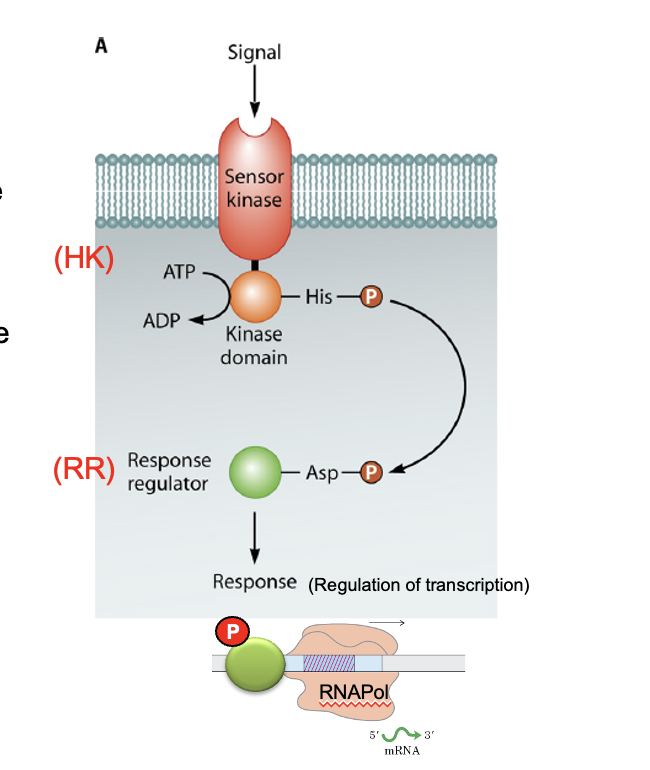
❅ Sensor Histidine Kinase (HK)
❅ Response Regulator (RR)
HK & RR: Signal Transduction
❅ Signal Transmitted through a Cell → Cellular Response
HK:
❅ Transmembrane Proteins
❅ Autophosphorylation
❅ Phosphate Transfer on Aspartate of RR
RR:
❅ Often Activators, Less Often Repressors
❅ Labile Phosphate
HK & RR:
❅ Homodimeric
❅ Some Exhibit Phosphatase Activity
Two Component Systems (TCS)
❅ Engable Bacteria to Sense/Adapt to Environment
TCS Stimuli:
❅ pH, Osmolarity Conditions
❅ Nutrient Availability
❅ Metal Ion Concentrations
❅ Respiratory Conditions
❅ Stress in Cells
❅ Chemical (Quorum) sense / Biological (Host) Signals
Transcription Regulation
❅ Lactose Operon
❅ Arabinose Operon
❅ MerT & GlnA Genes
❅ Attenuation mechanisms (Riboswitches)
❅ Bacterial Virus Lifestyle
Transcription Regulation: Lactose Operon
❅ Transcriptional Repression
❅ Activator: Catabolite Repression
❅ Synthetic Plasmids: E. Coli Protein Expression
→ Promotors & Regulatory Elements
Transcription Regulation: Arabinose Operon
❅ ONE Transcription Factor for ACTIVATION & REPRESSION
Transcription Regulation: MerT & GlnA Genes
❅ Transcriptional Activators Using Allostery
Trancription Regulation: Attenuation Mechanisms
❅ Trp Operon: Transcription/Translation Coupling
❅ Transcriptional Riboswitches
Transcription Regulation: Bacterial Virus Lifestyle
❅ Sigma Factor Cascades
❅ Regulatory Network/Termination Suppression
Operon
❅ Cluster of Genes on DNA Controlled by Singular Promoter
❅ Yields Polycistronic mRNA
LacZ
❅ Beta-Galactosidase
LacY
❅ Galactoside Permease
LacA
❅ Galactoside Acetyltransferase
❅ Detox
CAP
❅ Catabolite Activator Protein
LacI
❅ Lactose Operon Repressor
Lac Operon Regulation
❅ Positively Regulated: Lactose
❅ Negatively Regulated: Glucose
Catabolite Repression
❅ Global Regulatory Mechanism
❅ Inhibits Gene Expression via Secondary Carbon Source (Lactose) when Primary Carbon Source (Glucose) present
Lac Operon Controlled By
❅ Catabolite Repression
Complex Sugars need this before Metabolic Entry
❅ Catabolism
Diauxic Shift (Bacillus Subtillis)
❅ Glucose first metabolized, then Lactose

Repressor of Lac Operon
❅ Lac I: Active Repressor Protein
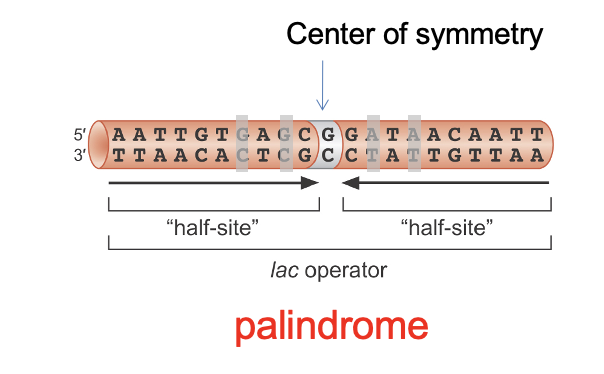
Palindrome
❅ Symmetric Gene
Lac Operon is a
❅ Palindrome
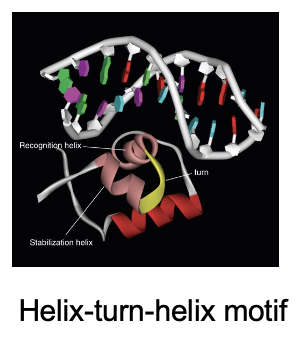
DNA Binding Proteins Binding Motifs:
❅ Helix-Turn-Helic Domain
CAP: Mechanism
❅ CAP binds cAMP
❅ CAP-cAMP: Global Activator (Activates 100+ Promoters)
cAMP Function
❅ Cyclic AMP; Secondary Messenger
❅ Signal Molecule/Effector Synthesized in Absence of Glucose
Lac Operon: -Lactose, +Glucose, Low cAMP
❅ Repressed Level
❅ Little/No mRNA Transcription
Lac Operon: +Lactose, +Glucose, Low cAMP
❅ Basal Level
❅ Low mRNA Transcription
Lac Operon: +Lactose, -Glucose, High cAMP
❅ Activated Level
❅ High mRNA Transcription
Phosphotransferase System (PTS)
❅ Glucose Uptake, Sensing
❅ Glucose-Specific Transport
❅ Coupled with Glycolysis
❅ Regulate Catabolite Repression
PTS Controls
❅ cAMP Synthesis
No Glucose in PTS Controls
❅ → Accumulation of EIIA-P → Adenylate Cyclase Activation → cAMP Increase → CAP-cAMP → Gene Activation
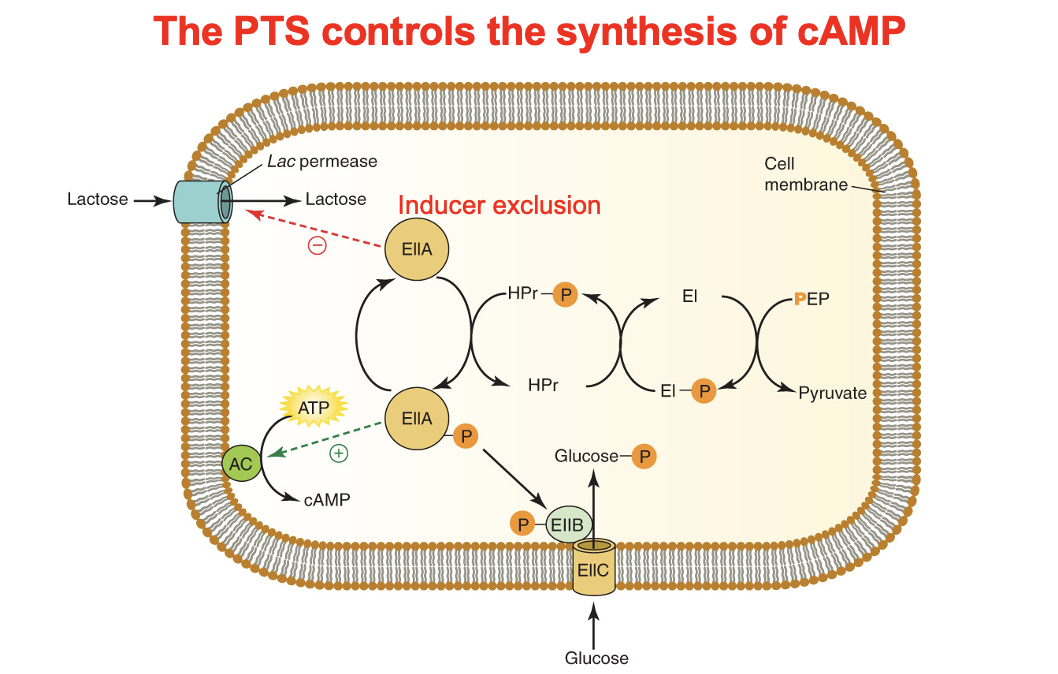
High Glucose in PTS Controls
❅ Accumulation of EIIA → Inhibition of Lactose Permease → Inducer Exclusion

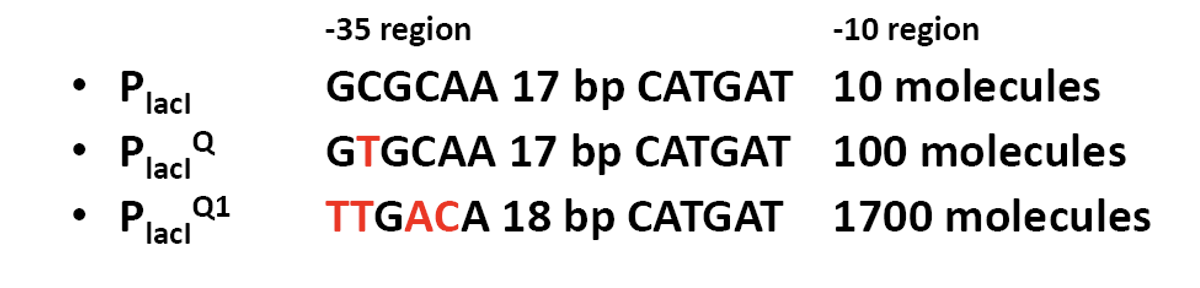
LacIQ
❅ Mutation that Provides better repression than LacI
NtrC: Works by Allostery
❅ Nitrogen Metabolism: Nitrogen Regulatory Protein C

MerR: Works by Allostery
❅ Activation by Mercury → DNA Conformation
Attenuation Mechanism
❅ RNA Based Regulatory Mechanism; Controls early termination of transcription
Attenuation Site
❅ Located before first structural gene (5’UTR)
Attenuation uses
❅ Transcriptional Riboswitches: Termination & Antitermination

Termination Conditions
❅ High aa Levels
❅ High aa tRNA Levels

Antitermination Conditions
❅ Low aa levels
❅ Low aa-tRNA Levels
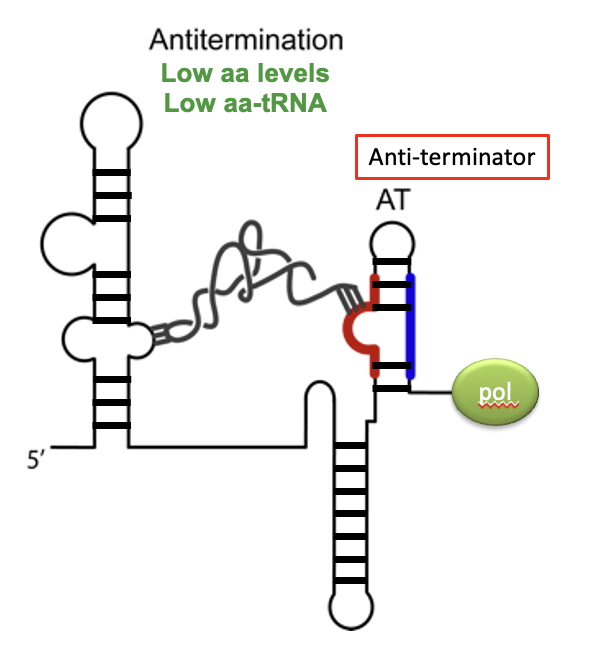
Attenuation Mechanism
❅ Peptide Leader & Ribosomes: trp Operon
trp Operon
❅ Operator, Leader Region, & Attenuator
Trp Repressor Requirements
❅ Requires Tryptophan binding trp operator
trpOperon: Transcription Occurs
❅ Basal Levels
❅ trpR: Aporepressor does not bind operator
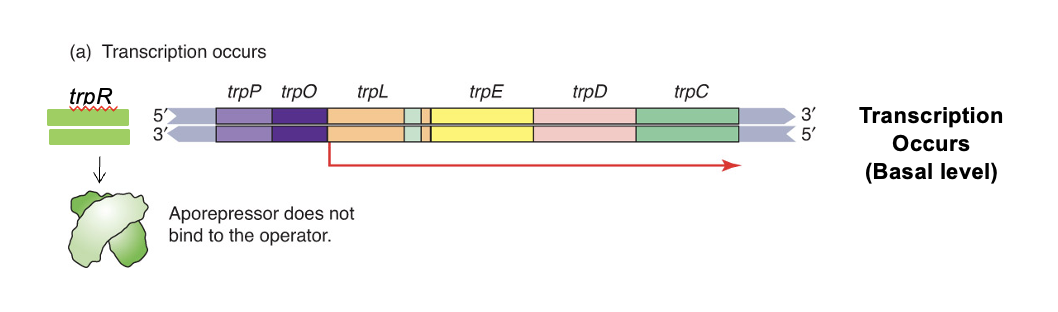
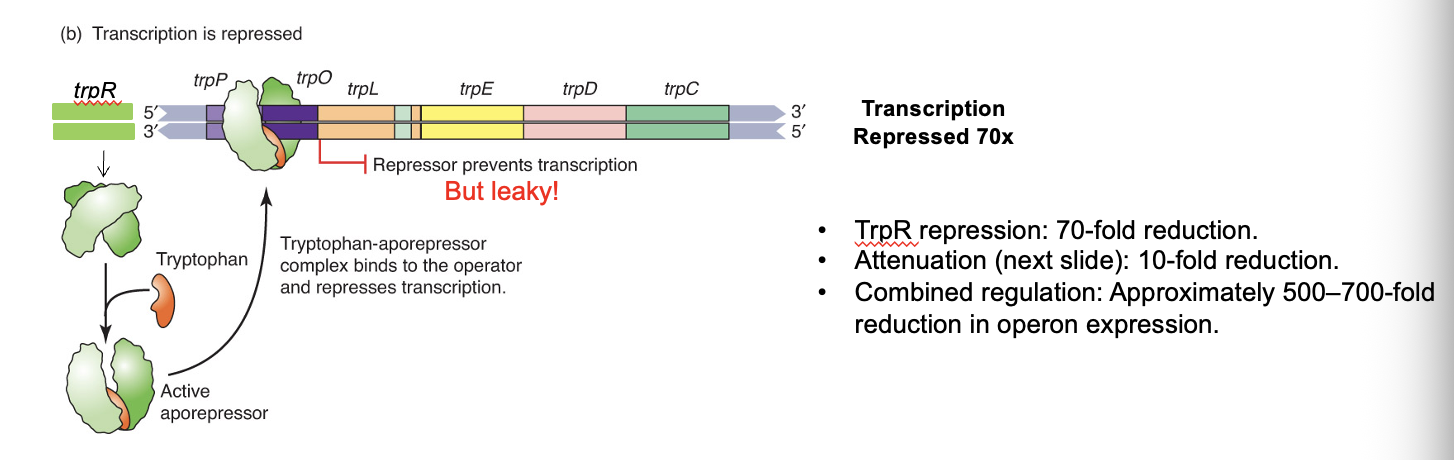
trpOperon: Transcription Released
❅ Repressors Prevents Transcription, Leaky
❅ Aporepressor Complex binds Operator, Represses Transcription
Attenuation Purpose
❅ RNA Based Regulatory Mechanism
❅ Controls Premature Transcription Termination
trp Operon Attenuation: High Tryptophan

trp Operon Attenuation: Low Tryptophan

Attenuation Structure Regulation
❅ Regulated by Protein (TRAP Protein, B. Subtilis)
Regulator Networks: Sigma Factor
❅ Sigma Factors Activate Regulons via Sigma factor cascades
❅ Consists of Activator & Reprepressor Networks
Sigma Factor Specificity
❅ Different Sigma Factors recognize different consensus sequences → Regulon Expression
Bacterial Regulon
❅ Gene ensemble: Coordinated Control of Single Regulatory Mechanism
Example of Bacterial Regulon
❅ E. Coli o70, oD: Housekeeping Sigma Factor
Housekeeping Sigma Factor Meaning
❅ Promotion of gene expression, including essential genes
Sigma Factors Function
❅ Activate Regulon
❅ Regulon: group of genes regulated by same regulator
Example of Regulon
❅ oE-Dependent Extracytoplasmic Stress Response
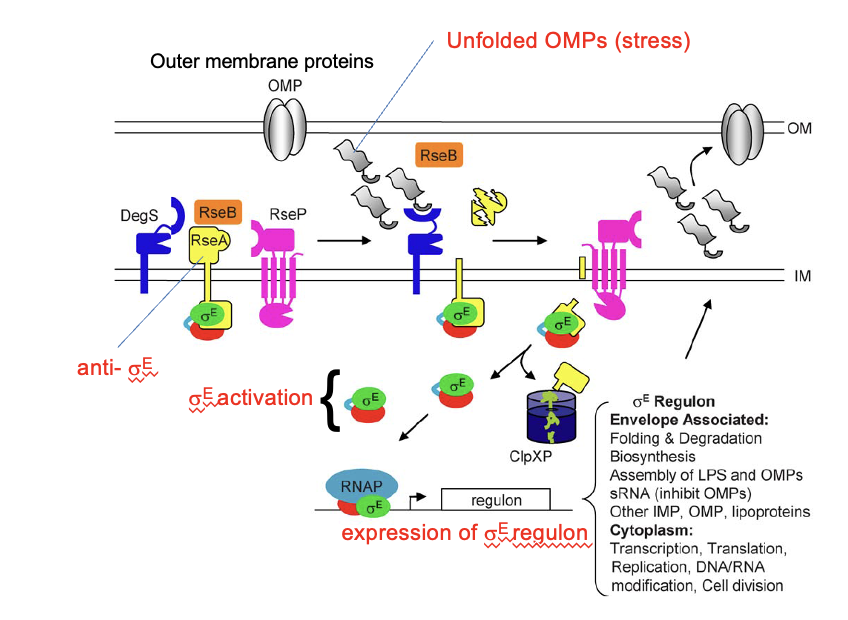
Sigma Factor Cascades
❅ Alternative sigma factors regulate ordered gene expression
❅ Allow temportal regulation of genes
Sporulation
❅ Differentiation of vegetative bacterium → Mother Cell that’s lysed + Released Spore
Sporulation Regulation
❅ Sigma Factor Cascade
phage SPO1 early genes
❅ Transcribed by Host RNA Pol
Early genes code for
❅ Viral Sigma Factor
❅ Causes RNA Pol to transcribe the middle genes
Lambda Phage Lifestyles
❅ Lytic & Lysogenic
Lambda Phage Genome: Transcriptional Regulators
❅ cI, cII, cro
Lambda Phage Genome: Antiterminators
❅ N, Q
Transcription Lambda Control Regions: Lytic Cycle
❅ Antiterminator N, Cro → PRM Inhibition

Transcription Lambda Control Regions: Lysogeny Cycle
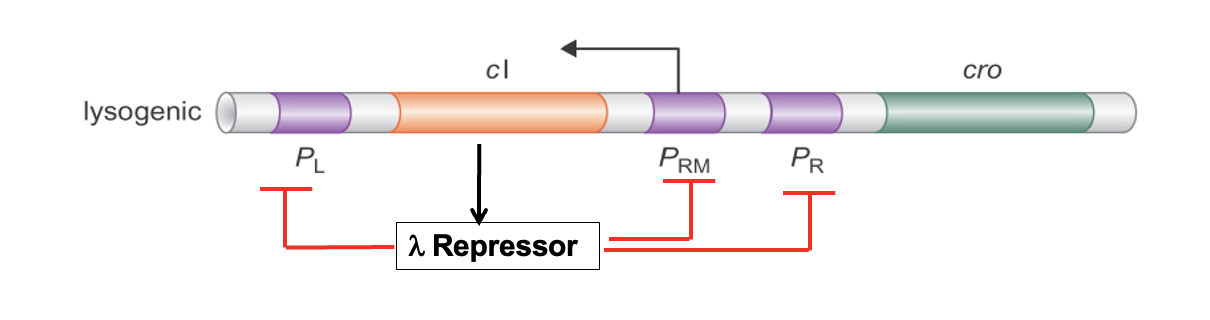
❅ Lambda Repressor: Inhibits PL, PRM, PR → cI

Lambda Repressor (CI)
❅ Repressor of PR
❅ Activator of PRM
Cro
❅ Control of Repressor’s Operator
❅ PRM Repressor
Binding of Lambda Repressor CI
❅ Coopoerative/Sigmoidal

CI Stabilizes
❅ Lysogenic state
Epigenetic Gene Regulation
❅ Inheritance of Pattern Expression / Phenotype in absence of initial stimuli without alteration of genetic sequence
Role of CII
❅ CII Stability Decides Lambda Phage fate
❅ CII Unstable, Sensitive to Proteases/Stress
→ Half Life = 1.5 Mins
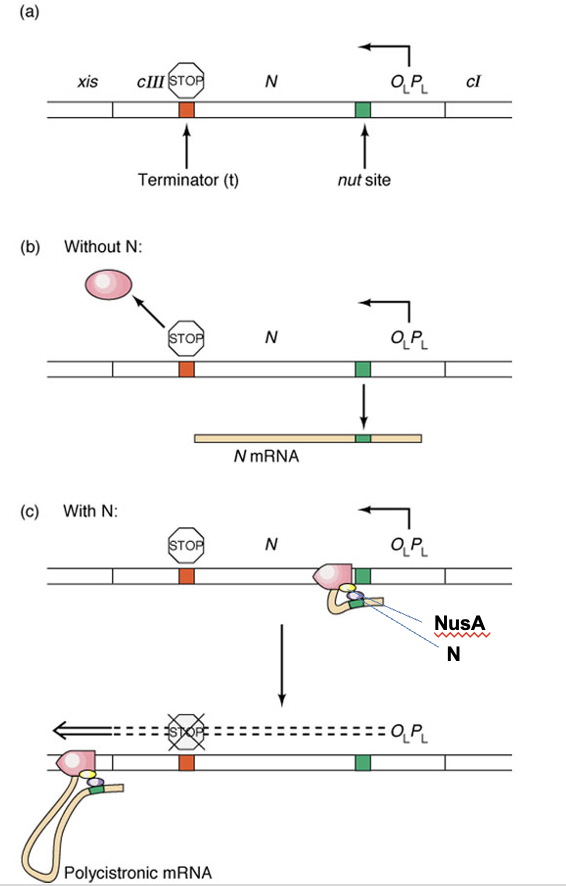
Effect of Nusa & Protein N
❅ Transcription Anitermination
Lambda Phage: Enough CII
❅ Lysogeny

Lambda Phage: Not Enough CII
❅ Late mRNA Lytic
❅ Protein Q: Antiterminator
