Mam Phys Lab Final
 Call Kai
 Learn
 Practice Test
 Spaced Repetition
 Match
 Flashcards
 Knowt Play
1/134

There's no tags or description
Looks like no tags are added yet.
135 Terms
kymograph
first machine invented to measure physiological events
who invented the kymograph?
Carl Ludwig
limitations of kymograph
length of record was limited
could only record one event at a time
messy
recording oscillographs
electronic machines used to produce a permanent record of a physiological event
BIOPAC is a computerized version of
recording oscillograph
recording channel
functioning unit of the recording oscillograph
sensing device
picks up information from the experimental set up
can be an electrode or transducer
electrode
device used to detect electrical events (EKG, ECG, “pin,” “sleeve,” etc.)
transducer
transforms non-electrical signal into an electrical signal that the computer can understand
transducers convert ____________ energy from muscle contraction into __________ energy
mechanical; electrical
what is the processor of the BIOPAC system
MP36
processor
takes the electrical signal from the transducer; has two components (coupler and amplifier)
two components of processor
coupler and amplifier
coupler of processor
alters the electrical signal so it can be recognized by the rest of the recording channel
amplifier
this amplifies (boosts) the signal received proportionally so it can be measured
reproducer
device for making a permanent recording of a physiological event (computer screen, printer, etc.)
three components of a recording channel
1) sensing device
2) processor
3) recorder
for recorder: when signal is received from a sensing device, the life is deflected in _____________ to the strength of the signal
proportion
the reproducer of the BIOPAC system is the
computer and the software
recording oscillographs must be ______________ before use
balanced & calibrated
balancing recording oscillographs
matches the signal from the sensing device with the processor; like setting bathroom scale to zero
calibrating recording oscillograph
standardizes the recording channel; lets use quantify results; like setting increments on bathroom scale
stimulators
devices for administering controlled electrical signals to an excitable tissue in order to elicit a response
stimulators are devices for administering a _______________________________ to an excitable tissue in order to elicit a response
controlled electrical signal
threshold stimulus
lowest stimulus that will elicit a physiological response
stimulator variables
1) intensity
2) frequency
3) duration
intensity
the strength of a stimulus measured in volts
frequency
the number of impulses administered per second measured in Hz
duration
the length of time each impulse lasts
duration is the _________ of time ______ impulse lasts (ms)
length; each
duration is _______ total length of time impulses are administered to a subject
NOT
motor unit
motor neuron and all the muscle fibers it innervates
functional unit of muscle contraction
motor unit
three parts of motor unit
1) neuron
2) neuromuscular junction (NMJ)
3) muscle fibers
basic unit of skeletal muscle
muscle fiber
plasma membrane surrounding a muscle fiber
sarcolemma
extended the entire length of a fiber but are arranged in compartments called sarcomeres
myofilaments
primary component of thin myofilament
actin
prevents actin and myosin from binding together
tropomyosin & troponin
primary component of the thick myofilament
myosin
sliding filament theory
1) myosin cross bridge attached to the actin myofilament
2) myosin head pivots and bends as it pulls on the actin filament, sliding it toward the M line
3) new ATP attached to the myosin head, cross bridge detaches
4) as ATP is split into ADP and Pi, cocking of myosin head occurs
in order for muscle fiber to contract, stimulus must be delivered to _______
neuron
when the AP reaches the end of the neuron, _____________________ and ________ rushes into neuron at ______
VR Ca2+ channels open; Ca2+; NMJ
influx of Ca2+ causes vesicles filled with ____________ to fuse with the neural membrane (in muscle contraction)
Ach
Ach is released to _________ where it binds to _______________ on sarcolemma of muscle fiber
NMJ; nicotinic
what happens when Ach released to NMJ and nicotinic receptors?
causes AP on sarcolemma by opening CR Na+ channels
Ach causes muscle contraction after binding to nicotinic receptors in NMJ because this causes an AP on sarcolemma by opening __________________
CR Na+ channels
what are the three parts of a normal curve for muscle twitches
1) latency
2) contraction
3) relaxation
latency
short delay between when a muscle receives an electrical impulse (AP) and when it actually begins to develop tension or change length (contract)
multi-unit summation
recruit more motor units as stimulus strength increases
what is the maximal stimulus?
stimulus strength where you have recruited all the possible motor units and the force of contraction has reached its max
does force of contraction increase with increasing stimulus in multi-unit summation?
Yes, until you reach the maximal stimulus where you’ve recruited all the possible motor units, then force of contraction reaches its plateau
first neurons excited are ________________
lowest thresholds
increasing the strength of the stimulus, step-by-step, will bring more and more _________________ into action
neurons (and motor units)
if you add additional, stronger stimuli once motor unit summation has been achieved, what is the effect?
no effect on force of contraction
role of Ca2+ in muscle contraction
1) activated myosin ATPase that allows ATP to bind to active site and be split = release energy that bends myosin head out and up
2) binds to troponin of actin polymer = troponin-tropomyosin complex changes shape = expose binding sites on actin filament that form cross-bridges
as long as Ca2+ is present in sarcomere and bound to troponin ….
muscle will continue to contract
ATP functions in contraction/relaxation of muscles
1) supplies energy that allows for contraction
2) initiate relaxation by powering Ca2+ ATPase in SR that clears Ca2+ from sarcomere = cross-bridges break = relaxation begins
what happens if you give a second stimulus during the absolute refractory period?
a second impulse will NOT be produced
if you increase the frequency of stimulation in muscle cell, it will…. (think wave summation)
contract again before cell has completely relaxed
with wave summation, second contraction is added to the first, resulting in….
larger total amount of force
temporal/wave summation
tension generated by muscle is added over a period of time in which the muscle is not allowed to completely relax
with wave summation, if frequency of stimulation is high enough….
muscle will have no chance to relax at all
maximum sustained muscle contraction is called….
tetany
during tetany, all _____________ are firing as rapidly as possible and the _____________ of the muscle is generated
motor units; maximum tension

what is this showing?
wave summation & generation of tetany

what is this showing?
multi-unit summation
if you decrease temperature, what happens to enzyme function?
decreases
acetycholinesterase
breaks down Ach in NMJ
myosin ATPase
converts chemical energy into directed mvmt and can be viewed as a molecular motor
SERCA pump
acts to transport Ca2+ ions from cytosol back to the SR following muscle contraction
what happens when you decrease the function of AchE?
increases Ach contact with nicotinic receptors
increase stimulation of Ca2+ release
increase length of contraction

what does this show
effect of decreased AchE function
what happens when you decrease functionality of myosin ATPase?
decreased ratcheting
decreased force
increased contraction time

what does this show
decreased myosin ATPase function
what happens if you decrease functionality of SERCA pump
increased time of Ca2+ in sarcoplasm
increased ratcheting
increased contraction
decreased sequester rate of Ca2+ = prolongs residence in sarcomere
increased relaxation time = prolongs Ca2+ residence in sarcomere
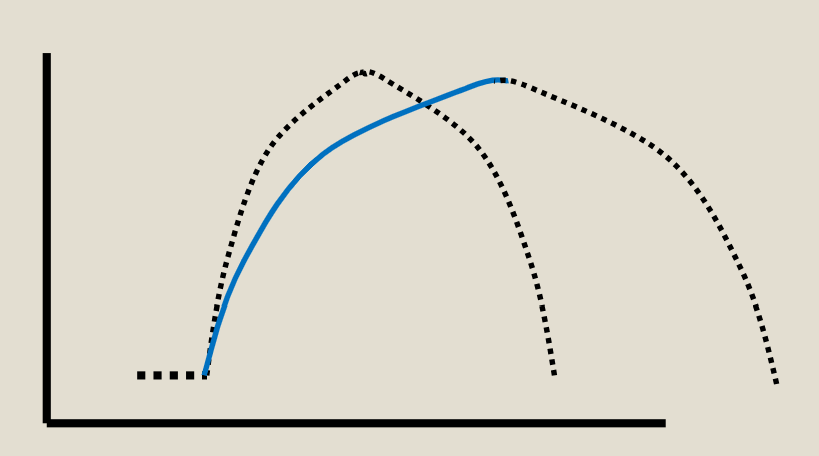
what does this show
decreased SERCA pump functionality
what happens during muscle fatigue?
ATP depleted
decreased ratcheting
decreases contractile force
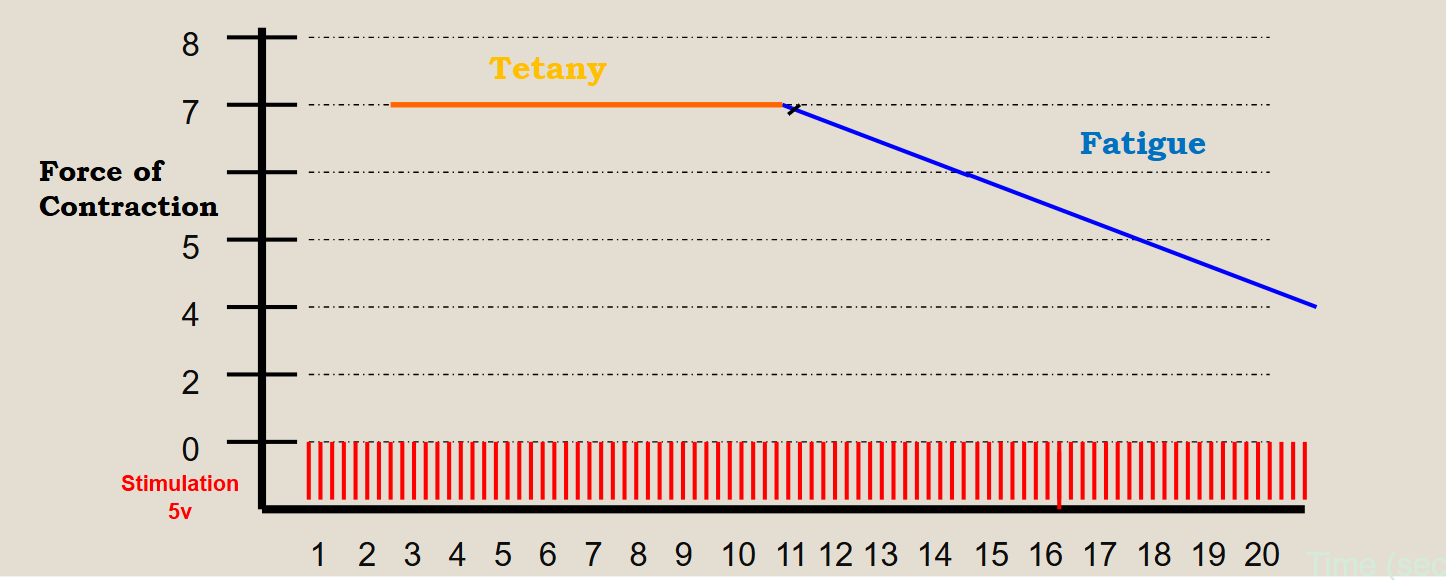
what does this show
muscle fatigue after tetany
if a muscle is continuously stimulated, it will _______
fatigue
fatigue
a transient and recoverable decline in muscle force and/or power with repeated or continuous muscle contractions
what are the possible initial causes of fatigue?
1) the nerve itself might fatigue from being overstimulated and no longer able to produce an AP (ionic [ ] prevent this from being physiological reality)
2) NT might be depleted and thus the AP couldn’t be transmitted across the synapse to the muscle
3) muscle itself could fatigue as result of many factors (reatine phosphate degredation, altered pH from lactic acid buildup, buildup of inorganic phosphate from ATP hydrolysis, deleterious effects of Ca2+ release and uptake from SR)
local anesthetics
stabilize lipid bilayer = more rigid and less flexible
lidocaine
local anesthetic that makes it harder for ion channels in bilayer to change shape and makes it hard for nerves to generate an AP
muscle cell membrane receptors that respond to Ach
nicotinic
D-tubocurare
binds to nicotinic receptors, blocks Ach from binding = no Na+ channels opened = hinders AP transmission
the site of first fatigue is the ______ due to __________________
NMJ; depletion of Ach
site of first fatigue interpret
after nerve fatigue, switch to muscle shows an increase in force; this means that the site of fatigue is the NMJ and not the muscle itself because the direct muscle stimulation bypasses the NMJ and Ach (limiting factor)
mechanical stimulus of nerve
damages the membrane and allows Na+ to rush in, depolarizing the membrane and causing an AP without electrical stimulation
what happens when you mechanically stimulate the nerve?
the 1st pinch breaks the the neurolemma, and broken neurons can’t generate APs meaning following contractions will be lower in force
in our lab how did we do mechanical stimulus?
distal then proximal; if we did proximal then distal, the distal contraction would be much less because the AP would have to travel over the damaged proximal portion
interpreting mechanical stimulus of the nerve
1st pinch breaks neurolemma of neurons, ions freely flow into neuron causing AP; broken neurons can’t generate AP’s so fewer neurons available to respond so force of contraction will be lower
effect of lidocaine & ether on nerve and muscle contraction
excitable membrane stabilizers make membrane more ridged
interfere with lipid matrix
Na+ and K+ channel controls are impaired
Na+ and K+ cannot cross the nerve membrane
Decreasing muscle contraction, till action potentials cannot be generated
with lidocaine added to the nerve, strength of contraction increases because no longer dependent upon an AP (and Ach) from the nerve
decreases Ach released = decreased # of AP = muscle contractions become weaker

what does this show?
muscle contractions from nerve stimulation decreases after lidocaine addition; switch back to muscle and the contraction force isn’t affected because the lidocaine was only added to the nerve, not the muscle
simplified effect of lidocaine
interfered with the lipid bilayer, impairing Na+ and K+ channels (force decreases with nerve stimulation, increases back to normal when switched to nerve)
d-Tc (curare)
nicotinic muscle isoform receptor type blocker
how does curare work?
d-Tc competes with Ach for the Ach receptors on the surface of the muscle cell membrane; doesn’t cause depolarization; it blocks the receptor, which prevents a normal response (contraction)
curare simplified
blocks N1 receptors at muscle; see no change when added to the nerve, because no N1 receptor; when injected into the muscle, contraction decreases in nerve stimulation but increases slightly when switched to muscle (may not go all the way back to normal due to excess fluid)
interpretation of curare
d-Tc added to the sciatic nerve —> strength of contraction
No change: no nicotinic receptors on nerve surface
d-Tc injected into the muscle + nerve stimulated
strength of contraction decreased
released Ach has fewer nicotinic receptors to bind to on the sarcolemma
flipped to direct muscle stimulation, bypassing need from Ach = strength of contraction increases and remain constant