life insurance basics 1
 Call Kai
 Learn
Learn Practice Test
 Spaced Repetition
 Match
Match Flashcards
 Knowt Play
1/33

There's no tags or description
Looks like no tags are added yet.
Name | Mastery | Learn | Test | Matching | Spaced | Call with Kai | Chat |
|---|
No analytics yet
Send a link to your students to track their progress
34 Terms
peril
cause of loss
pecific events causing loss
fire, accident, illness, death
risk
uncertainty of loss
hazard
conditions increasing loss likelihood
physical: tangible conditions
moral: dishonest character/intentional
morale: Careless attitude due to insurance
losses
unintentional decrease in value
direct: immediate damage from peril
indirect: Consequential losses
must be definite and measurable
risk sharing
spreading among multiple parties
risk transfer
moving risk to another party (insurance)
risk avoidance
eliminating risk-causing activity
risk reduction
decreasing loss likelihood/severity
risk retention
keeping risk (deductibles, self-insurance)
risk prevention
actions to eliminate loss potential
adverse selection
selection against the insurance company by higher-risk individuals
state insurance departments
issue licenses, enforce regulations
primary regulators
NAIFA
National Association of Insurance and Financial Advisors
professional association for agents
creates model laws and regulations
NAIC functions
promotes uniform state laws
creates model regulations
protects consumer interests
preserves state regulation
NCOIL
legislative organization focusing on insurance
what is insurance?
the transfer of risk through legal contract from policyholder to insurer
insurance contracts create an immediate estat
insured
person receiving insurance protection
insurer
company providing coverage and assuming risk
premium
payment made for insurance coverage
policyowner
person who transfers risk to insurer
stock insurance companies
owned by shareholders
issue nonparticipating policies
profits go to stockholders
publicly traded entities
mutual insurance companies
owned by policyholders
issue participating policies
policyholders receive dividends
policyholders elect board of directors
underwriting
reviews applications, assigns risk classifications
producers (agents/brokers)
sell insurance products
underwriters
assess and classify risks
actuaries
calculate rates and reserve
adjusters
investigate and settle claims
brokers
represent the buyer
cannot bind coverage
must work with agent/company
key legislation
Paul v. Virginia (1868): Established state regulation • McCarran-Ferguson Act (1945): Returned regulation to states • Gramm-Leach-Bliley Act (1999): Privacy requirements • Fair Credit Reporting Act (1970): Consumer protection
all insurance contracts must have all four essential elements to be valid
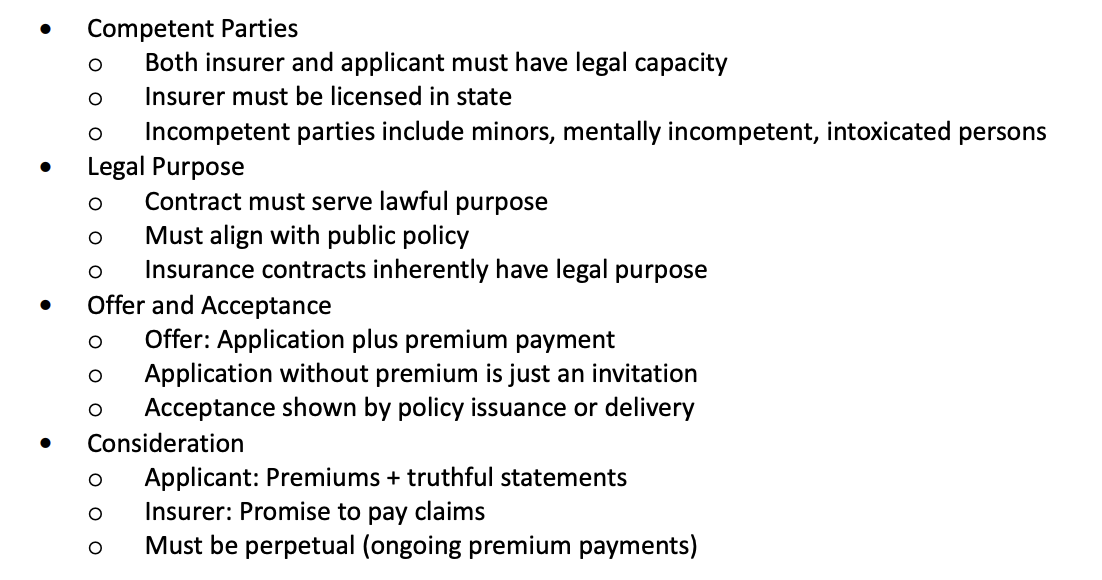
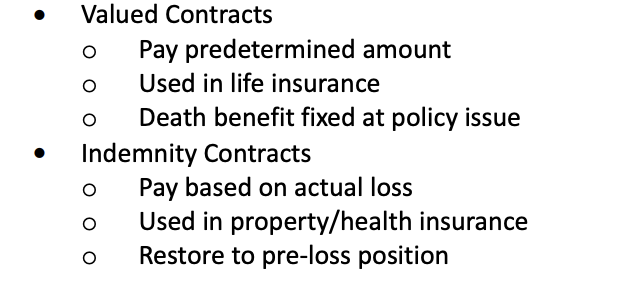
value vs indemnity
insurable interest
means financial/economic interest in the subject of insurance
must suffer financial loss if insured person/property is damaged
timing requirements differ by insurance type
key features that make insurance contracts unique
aleatory contract
unequal exchange pssible
benefits based on uncertain event
example: pay $1,200/year fr $500,000 cverage
contract of adhesion
written by insurer only
take-it-or-leave-it basis
ambiguities favor insured
unilateral contract
only insurer makes enforceable promise
policyholders don’t promise to pay premiums
insurer can cancel if premiums are unpaid
personal contract
between insurer and specific persn
can’t transfer to another person
exception: life insurance allows assignment
agents
represent insurer
can bind coverage
have fiduciary responsibility