Autonomic Pharmacology
 Call Kai
 Learn
 Practice Test
 Spaced Repetition
 Match
 Flashcards
 Knowt Play
1/28

There's no tags or description
Looks like no tags are added yet.
29 Terms
Nervous system overview
-NS= CNS + PNS
-CNS: brain + spinal cord
-PNS: Somatic NS and ANS
-ANS: SNS and PSNS

ANS divisions
-PSNS/SNS can control same organs but opposite effects
-PSNS: rest and digest (relax/conserve)
-SNS: fight and flight (mobilize)
rest/digest vs fight/flight
*anti-chol drugs block these things!

PSNS vs SNS (w/ hand analogy)
Hand Analogy: top/bottom=PSNS, middle=SNS
-Left hand thumb/pinky: PARASYMPATHETIC cranial and sacral
-Right hand fist: SYMPATHETIC thoracic and lumbar
-Left long fingers: long preganglionic
-Right fist short fingers: short preganglionic
-Left: two fingers are independent of each other – discrete
-Right fist: all work together – massive response
-Left Hawaiian hand sign: cool alright (para) conserve
-Right fist: flight/fight

ANS controls…
-ANS controls involuntary bodily functions
-Organs affected – heart, lung, GI, etc
ANS receptors
*Pre: Ach effects SNS and PSNS
*Post: SNS=NE; PSNS=Ach
*nicotionic=all; muscarinic=just PSNS
^so if drug effects Ach it effects all 3; if just NE effects 1 place
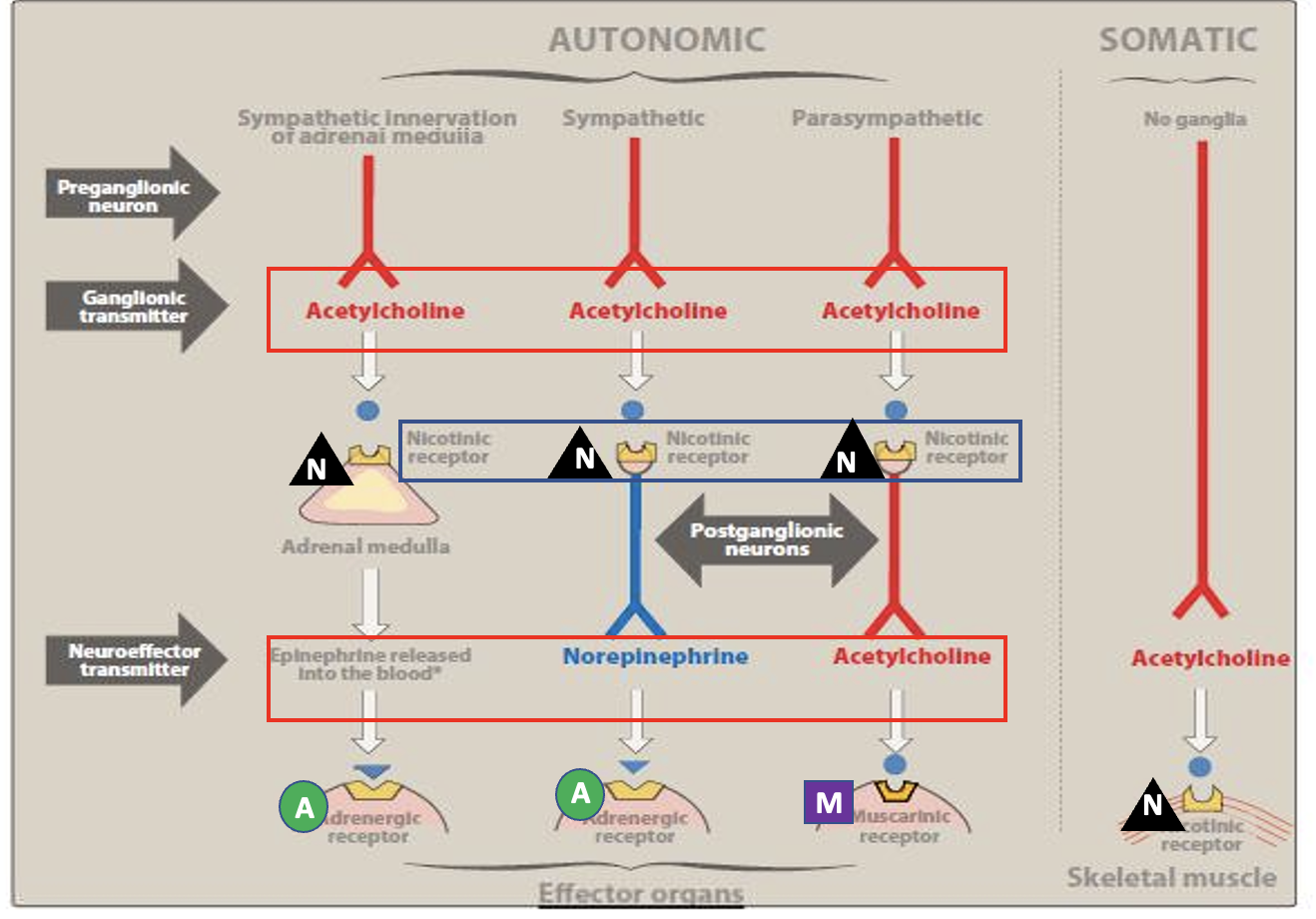
ANS receptor subtypes (list)

SNS summary
-Preganglionic neurons= thoracolumbar
-Energy expenditure
-“Fight or Flight”
-Drugs
Sympathomimetic
Sympatholytic
PSNS summary
-Preganglionic neurons= craniosacral
-Energy conservation
-“Rest and Digest”
-Drugs:
Parasympathomimetic
Parasympatholytic
Knowledge check
-2 ANS Divisions
-Describe SNS
-Describe PSNS
-NT Preganglionic SNS/PSNS
-NT Postganglionic SNS/PSNS
-Pre/Post- gang - Receptors – SNS
-Pre/Post- gang - Receptors – PSNS
-SNS, PSNS
-Fight/flight
-Rest and digest
-Ach
-SNS NE; PSNS Ach
-Pre-nicotinic, post-adgrenergic alpha beta
-pre-nicotinic, post cholinergic muscarinic
*all nicotinic= “whole gang smokes”
Adrenergic Drugs
-NT
-Actions
-Drugs can
-Use
-Neurotransmitters: Norepinephrine, Epinephrine
-Actions: Agonist, Antagonist
Drugs can
-Facilitate norepinephrine and epinephrine release or
-Activate/block the adrenergic receptors
Use
-Reduce bleeding by constricting arterioles
-Slow diffusion of local anesthetics
-Decongest mucous membranes
-Raise blood pressure when patient is in shock or hypotensive
location sympathetic/adrenergic receptors
α1
-Prostate gland
-Arterial smooth muscle
α2
-Pre-synaptic autoreceptors on sympathetic nerves
-Brainstem
β1
-Heart
-Kidneys – (Renin release)
β2
-Lungs
-Liver
-Arterial smooth muscle
alpha 1 adrenergic: agonist
-vasoconstriction (ex=eyedrops for bloodshot eyes)

alpha 1 adrenergic: antaognist
-vasodilation
-relaxation of prostatic

alpha 2 adrenergic: agonsist
-Reduced release of NE
-treat HTN

alpha 2 adrenergic: antagonist
-increased release of NE
-NO clinical uses! (*phentolamine not on quiz, only one use for it)

beta 1 adrenergic: agonist
-in heart
-increase HR
-used for heart failure (will die if don’t take)
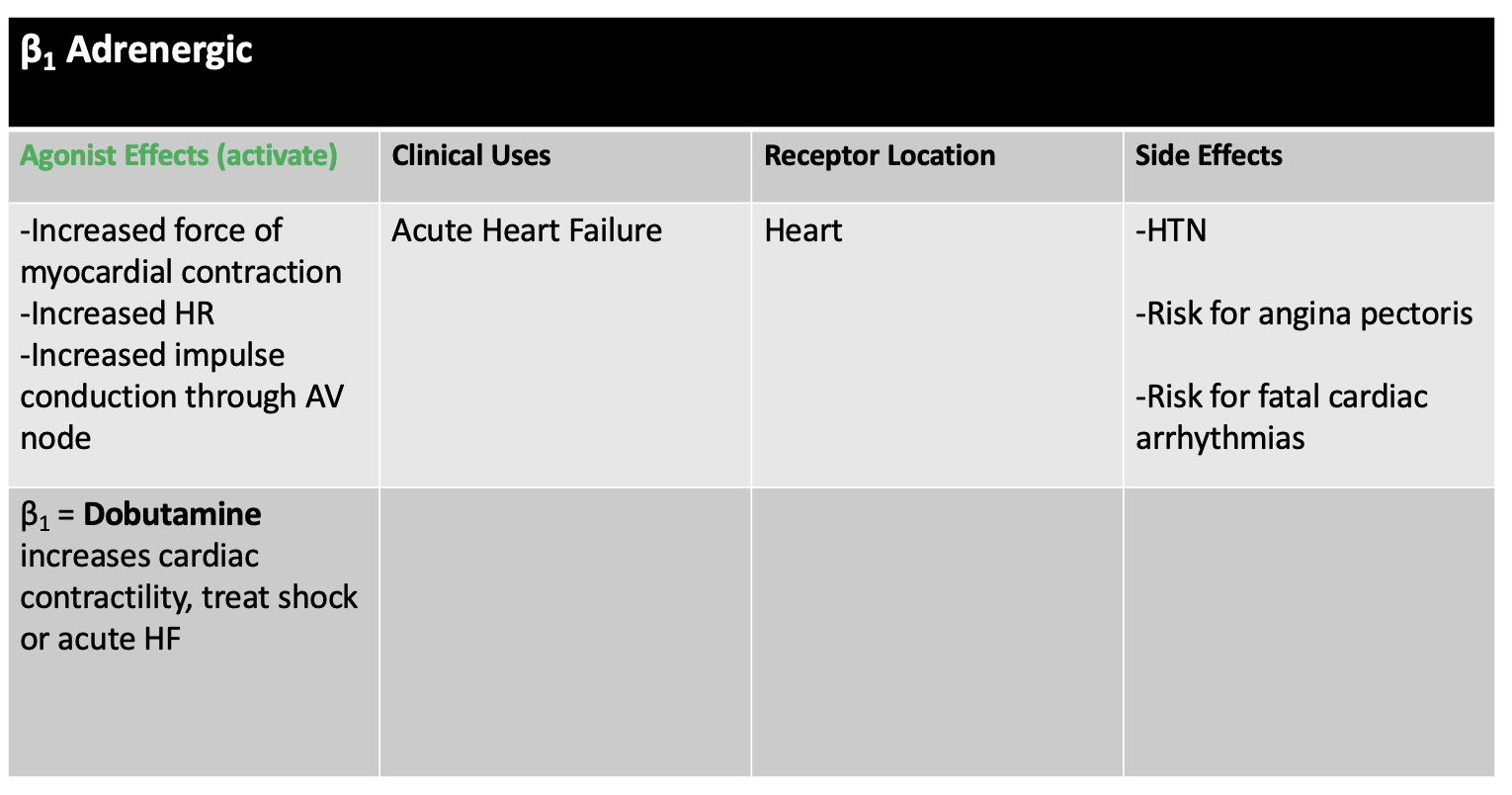
beta 1 adrenergic: antagonist
-lowers HR (so can’t use HR to reflect activity tolerance)
-meds all end in “lol”
-reduced cardiac output

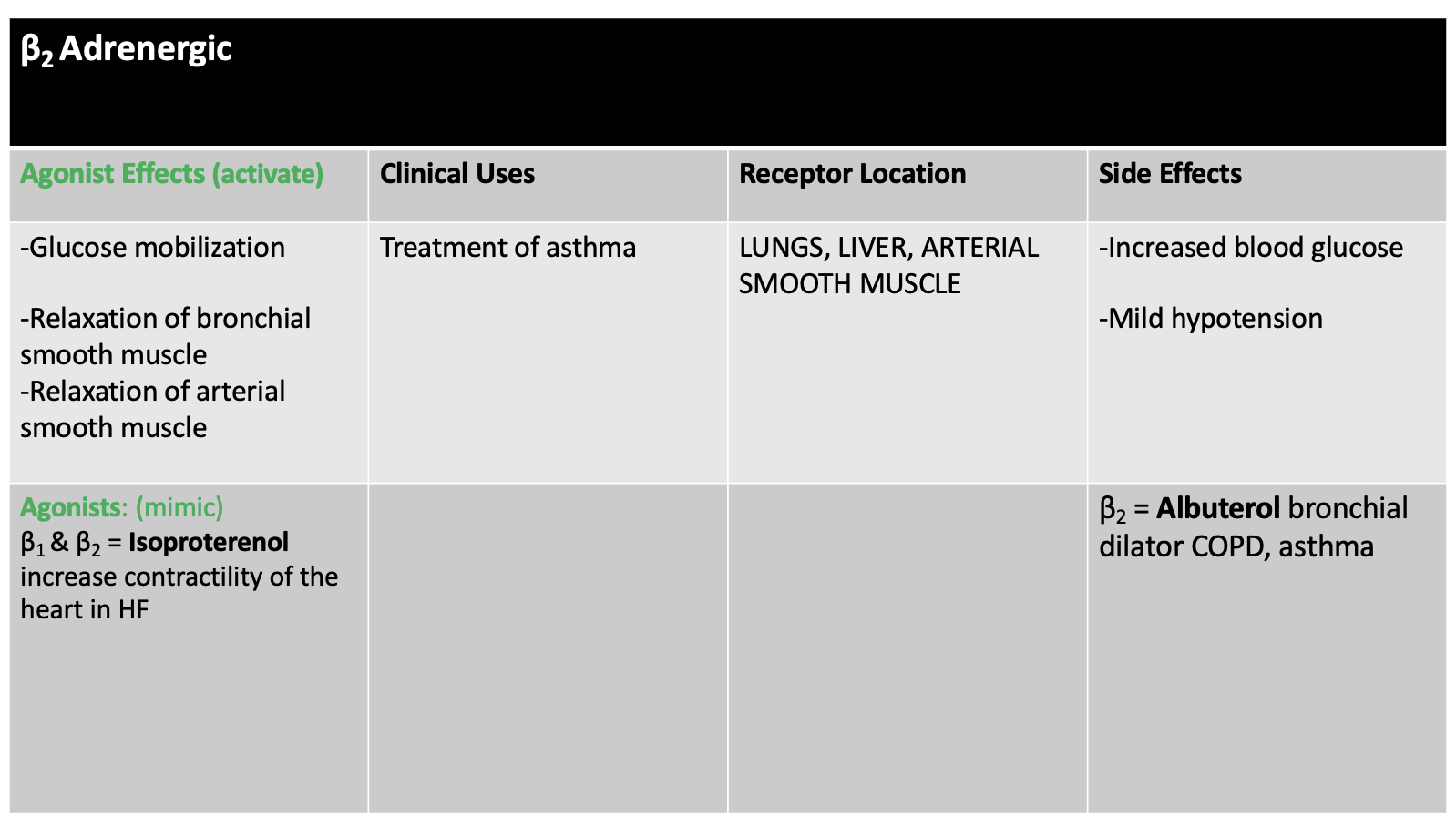
beta 2 adnregeric: antagonist
-better than PSNS antagonist
-glucose mobilization, relaxation of bronchial (breathe better)
-asthama, COPD
-increases HR (bc effects beta 1 as well)
-Albuterol inhaler
beta 2 adrenergic: antagonist
-for ED only!
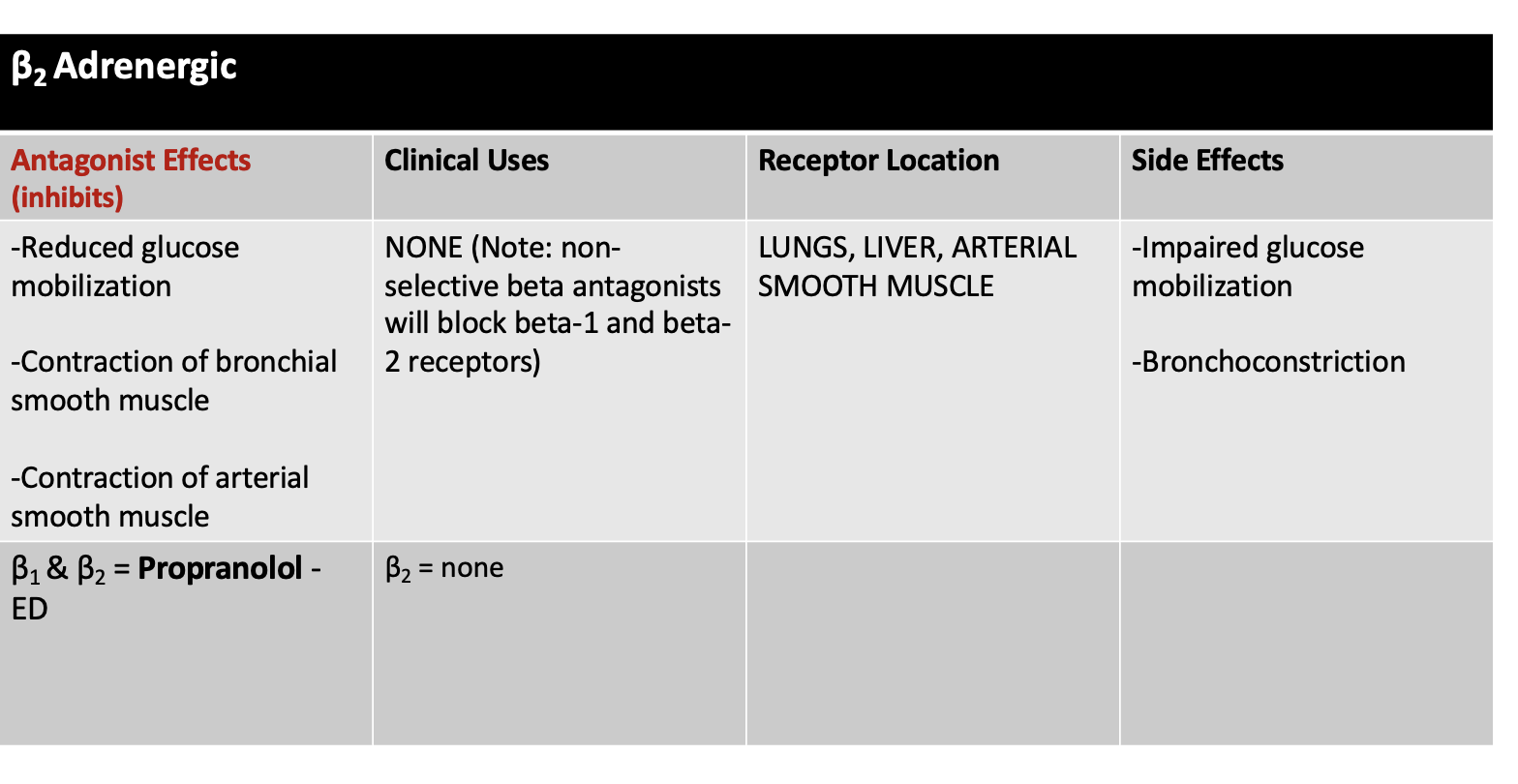
importance of selectivity: non-selective beta blockers VS cardioselective beta blockers
Non-selective Beta-Blockers: Beta 1 and 2
-Decrease CO in the heart, also binds to receptors in lungs & liver
-Ex. propranolol
-Implications?= ED, increases difficulty breathing but if lung or liver problem
Cardioselective Beta-Blockers: ONLY Beta 1 (so no effect on lung!)
-Reduces CO WITHOUT producing effects in lungs or liver
-Ex. metoprolol
-Implications?: just effects cardiac
cholinergic receptor 2 drugs
-Nicotinic
-Muscarinic: 5 different types in 3 places (CNS, Heart, Smooth muscle)
Muscarinic Agonists: Parasympathomimetic
*eye problem/increase eye pressure
*bowel movements and motility
*overactive bladder/relaxes bladder so allows to fill
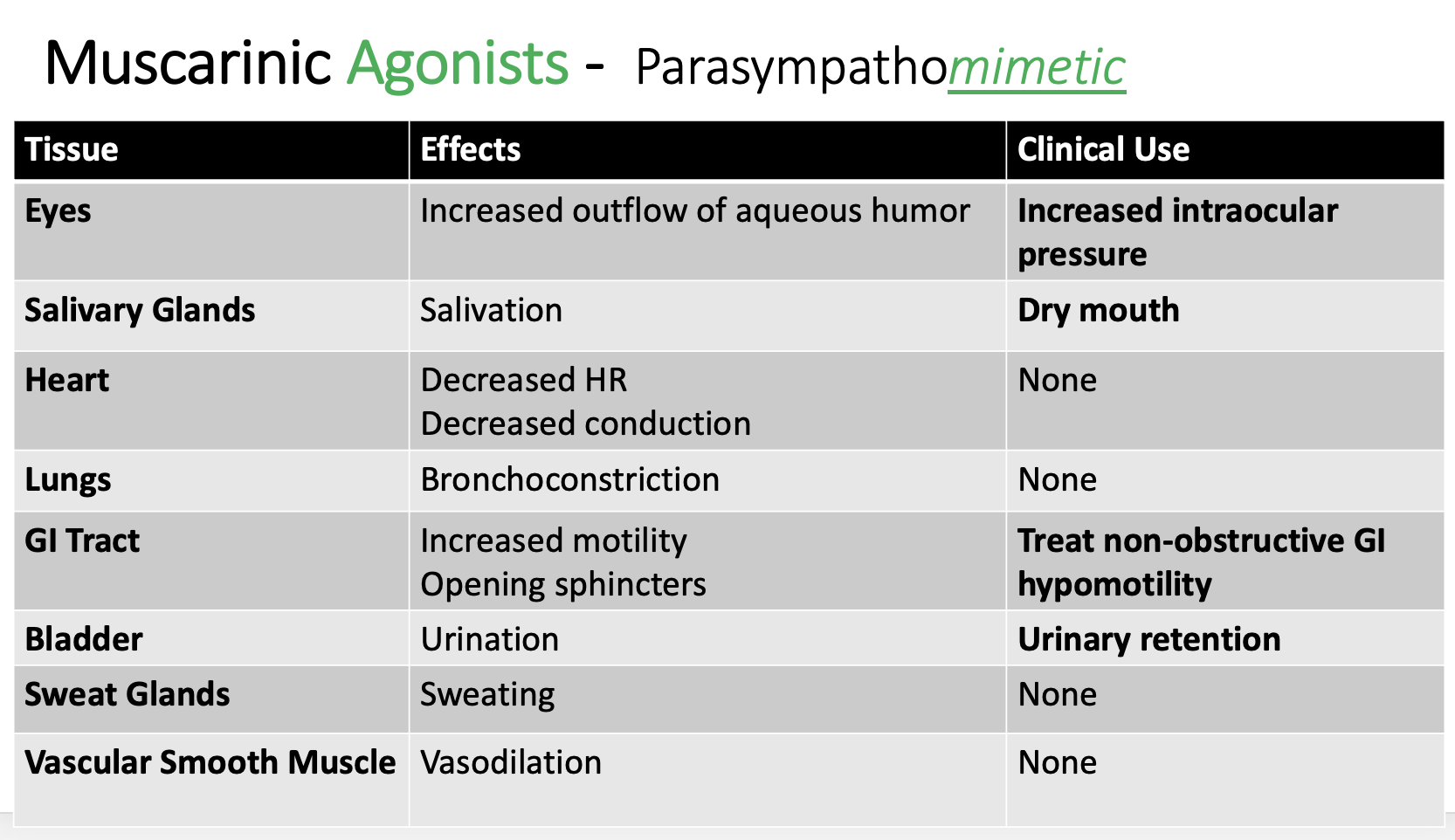
Cholinergic Application questions: agonist or antagonist
-if at dentist and goal is decreased salivation
-if COPD and want open airway
-agonist
-antagonist (SNS ag and PSNS antag)
Muscarinic Direct Acting Drugs Agonist
-Glaucoma: Increase intraocular pressure
Goal: Decrease intraocular pressure
Drug: Pilocarpine – increases flow of aqueous humour > decreasing pressure
-Urinary retention
Goal: Increase urination
Drug: Bethanechol – contract detrusor muscle for increase urination
Muscarinic Indirect Acting - Anticholinesterases
-Inhibits acetylcholinesterase to prevent acetylcholine metabolism (prolongs action of ACh)
-Examples
Edrophonium – Myasthenia Gravis - autoimmune disease – mm weakness unable to maintain a contraction, drug allows ACh to remain longer in junction allowing mm contraction
*not enough Ach so med increases Ach
Cholinergic Agonist: Adverse Effects
-GI distress (N/V, diarrhea)
-Increased salivation secretions
-Bronchoconstriction
-Bradycardia
-Impaired vision
-Increased sweating
Muscarinic Antagonists (Anti-Muscarinic)
*opposite antagonist and for dif reasons/diseases

Cholinergic Antagonists: Side Effects
-Dry mouth
-Blurred vision
-Urinary retention
-Constipation
-Tachycardia
-Agitation