lab lecture exam 2
 Call Kai
 Learn
 Practice Test
 Spaced Repetition
 Match
 Flashcards
 Knowt Play
1/128

There's no tags or description
Looks like no tags are added yet.
129 Terms
are animals heterotrophic?
yes
animal cells lack cell walls, so their cells are held together by what?
structural proteins called collagen
what is a blastula?
a hollow ball of cells
what is a blastocoel?
the empty space of a blastula
which hole does the gastrula create first for humans?
anus

endoderm
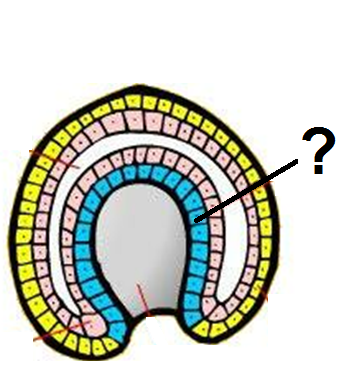
what is the white area in the gastrula?
blastocoel

what is the outer yellow layer called in the gastrula?
ectoderm

what is the inner gray fluid called in the gastrula?
achenteron

what is the middle red line pointing at in the gastrula?
blastopore
what organism is the only group to be at the cellular level?
porifera (sponges)
which phylum have radial symmetry?
cnidaria and ctenophora
what is an acoelomate?
they have no body cavity
what are pseudocoelomates?
they have a body cavity located between the mesoderm and endoderm
what are coelomates?
they have true coelom, a body cavity that is surrounded on all sides with mesoderm
what are protostomes?
animals that develop mouths first
what are deuterostomes?
animals that develop the anus first
what are some examples of protostomes?
mollusca, annelida
what are some examples of deuterostomes?
echinodermata (seastars), chordata (vertebrates)
what is the segmentation of mollusca?
soft unsegmented
what is the segmentation of annelida?
soft segmented
what is the segmentation of arthropoda?
hard segmented
what is the segmentation of chordata?
segmented
what are epithelial tissues?
tightly packed cells used for lining and is in contact with external environment, ex: skin, tube that food goes down
what are connective tissues?
cells scattered through an extracellular matrix, ex: bone, blood, cartilage
what are nervous tissues?
transmits signals (neurons)
what are muscle tissue?
fibers for contraction, ex: smooth, skeletal, cardiac
what do all lophophorate have?
a tentacle-like feeding structure
are porifera (sponges) asymmetrical or symmetrical?
asymmetrical
what does it mean to be a hermaphrodite?
usually mate twice, and are capable of producing both sperm and egg
are porifera hermaphrodites?
yes
what are two types of cellular levels porifera can be?
choanocytes-flagellated cells, amoebocyte-pseudopodia
what is an asconoid?
a flagellated spongocoel
how does the water flow through an asconoid?
ostia > spongocoel > osculum
what is a syconoid?
flagellated radial canals
how does water flower through a syconoid?
ostia > incurrent canal > prosopyle > radial canal > apopyle > spongocoel > osculum
what is a leuconoid?
flagellated chambers
how does water flow through a leuconoid?
ostia > incurrent canal > flagellated chamber > excurrent canal > osculum
what kind of spicules do class calcarea have?
calcium spicules
what kind of water movement do class calcarea have?
asconoid, syconoid, and leuconoid
what kind of spicules do class hexactinellidae have?
silica spicules
what kind of water movement do class hexactinellidae have?
syconoid, leuconoid
what kind of spicules do class demospongiae have?
silica spicules and/or spongin
what kind of water movement do class demospongia have?
leuconoid
what does it mean to be diploblastic?
has only the endoderm and ectoderm
what two body forms do cnidaria have with gastrovascular cavities?
polyp and medusa
what are nematocycts?
thread with barbs
what is a cnidocil?
a trigger for the nematocysts
what animals do class hydrozoa include?
portuguese man of war, hydra, obelia
what animals do class scyphozoa include?
jellies
what animals do class anthozoa include?
sea anemones, corals, sea fans, sea pansies
does class anthozoa have a medusa stage?
no
what class are box jellies in?
class cubozoa
what is the poison called in box jellies and how many people can it kill?
sea wasp-venom can kill 60 people
what is embedded in box jellies' medusa stage?
complex eyes
what are colloblasts?
adhesive cells
what phylum are comb jellies from?
phylum ctenophora
which jelly contains tentacles with colloblasts?
comb jellies
what are gastrovascular cavities?
one hole for the mouth and anus
what does it mean to be triploblastic?
3 tissue layers
what phylum are flatworms from?
platyhelminthes
are flatworms acoelomates, pseudocoelomates, or coelomates?
acoelomates
what is cephalization?
having a small brain/head
what does it mean to be sexually dimorphic?
male and female species look extremely different
what does monogenea mean?
parasitic and has one host
what do parasites from class monogenea latch onto?
fish
what is the life cycle of shistosoma?
human > miracidia larva > snails > cercariae larva
where does miracidia larva go in the shistosoma life cycle?
into a snail
where are cercariae larva found?
free swimming in water
how can you get clonorchis?
by eating raw fish and moves to the bile ducts of humans
what are the symptoms of clonorchis?
cirrhosis of the liver and death
what is swimmers dermatitis?
larvae enters the skin
what class is swimmer's dermatitis in?
class trematoda
what are proglottids?
body parts of tapeworms
what is echinoccocus?
a benign cyst in the heart
do rotifers and nematoda have real body cavities?
no, they have false cavities
what is parthenogensis?
uses meiosis to make sperm and eggs, but do not need a partner
what is proboscis?
an extending mouth part
what phylum are proboscis (ribbon) worms from?
phylum nemertea
how do ancylostoma (hookworms) infect people?
burrows into the skin and moves to the intestines
how do enterobius (pinworm) infect people?
kids scratch their butts and stick fingers in other kids' mouths
how do ascaris (roundworm) infect people?
- goes through the digestive tract then into the intestines
burrows out into the blood vessels to make larvae
travels to the lungs then triggers a cough, goes up the respiratory tract and the person will swallow it back down the digestive tract
how people people has ascaris (roundworm) infected currently?
about 1 billion people
what is trichinella?
a worm picked up from infected muscle in pork
how can you get wuchereria?
mosquitoes
what does wuchereria cause?
blocked lymph nodes, usually in one arm or in one leg
how can you get dracunuclus?
enters the digestive tract and migrates to the skin, exits from an injury
who is tried to eradicate dracunuclus?
jimmy carter
which animals contain open circulatory systems?
arthropoda, mollusca, and hemolymph
which animals contain closed circulatory systems?
mollusca, nematoda, and annelida
what are the 4 basic body parts of HAM?
foot, mantle, visceral mass, radula
which class in phylum mollusca do not contain a radula?
bivalvia
class gastropoda is asymmetrical due to what?
torsion
what are the two types of shell coiling?
dextral or sinistral
what is the radula used for in class scaphopoda?
to move food to the gizzard
does class cephalopoda have a closed or open circulatory system?
closed
does class oligochaeta have parapodia?
no
can calss oligochaeta grow back body segments?
yes