Metabolic Adaptations To Training
 Call Kai
 Learn
 Practice Test
 Spaced Repetition
 Match
 Flashcards
 Knowt Play
1/14

There's no tags or description
Looks like no tags are added yet.
15 Terms
lactate threshold
accumulation in blood, 50% VO2 max
trained: right shift 70-80% VO2 max
athletes: 88-90% VO2 max
as exercise increases what happens to glycolysis?
glycolysis should be turned on at a high rate
higher intensity of exercise, more ATP used
rely on carbohydrates
glycolysis at faster rate → [ ] increases → more lactate produced
in untrained individuals what happens to lactate?
lactate is built up at slower intensities
skeletal muscle adaptations to aerobic training
CMMO
capillary density
myoglobin concentration
mitochondrial density:
oxidative capacity
capillary density
increased O2 delivery to skeletal muscle, blood supply in fiber
myoglobin concentration
increased O2 delivery to mitochondria
mitochondrial density
increased capacity for aerobic ATP production, increases enzymes (speeds up/catalyzes reaction): enhances capacity and rate
oxidative capacity
increased rate (speed) of aerobic ATP production
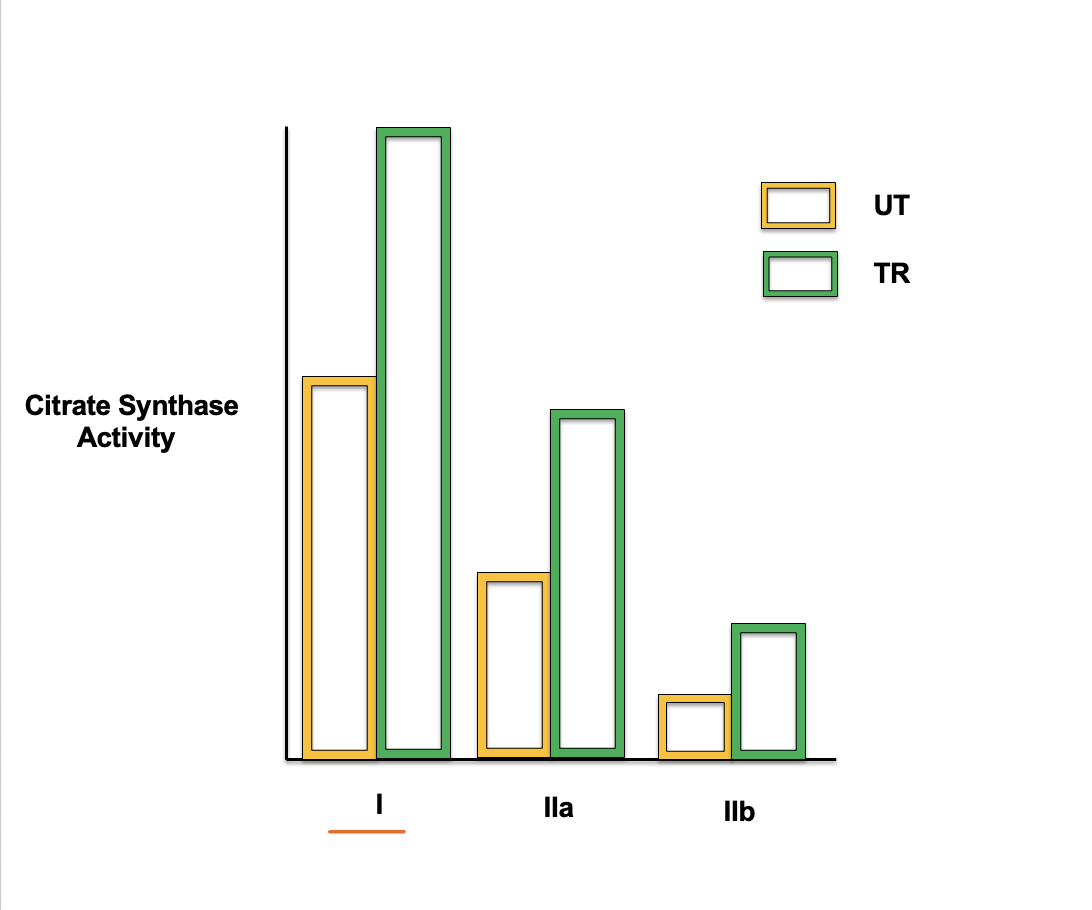
citrate synthase activity
citrate is an inhibitor of PFK (slows glycolysis) and enhances pyruvate clearance
aerobically trained individuals store more glycogen → can exercise for longer time
more absolute work when aerobically trained “ceiling is higher”
Adaptations to Aerobic Training: Metabolic
lactate threshold
respiratory exchange ratio (RER)
lactate threshold
increases to higher percent of VO2 max
decreases lactate production, increases pyruvate clearance
allows higher intensity without lactate accumulation
respiratory exchange ratio (RER)
decreases at both absolute and relative sub maximal intensities
increases rates of ATP production through beta-oxidation (fat) which decrease reliance on glycolysis
relative oxidative capacity
type 1 higher than type 2 a/b
exercise prescription
Frequency: optimal 3-5 days per week
Duration: 20-30 min per day
Intensity *most important factor: 70% VO2 max,
muscle must be active and performing work for adaptations to occur!
adaptations to anaerobic training
ATP-PCr system: little enzymatic change with training
Glycolytic system (fast): minor increase in key glycolic enzyme activity with training (phosphorylase, PFK, LDH, hexokinase)
performance gains from increase in strength, recruitment patterns, and buffering capacity