L2 - Cranial Morphology
 Call Kai
 Learn
Learn Practice Test
 Spaced Repetition
 Match
Match Flashcards
 Knowt Play
1/47

There's no tags or description
Looks like no tags are added yet.
Name | Mastery | Learn | Test | Matching | Spaced | Call with Kai | Chat |
|---|
No analytics yet
Send a link to your students to track their progress
48 Terms

Right/sides, lateral

Medial/center

Anterior/rostral, the front

Dorsal
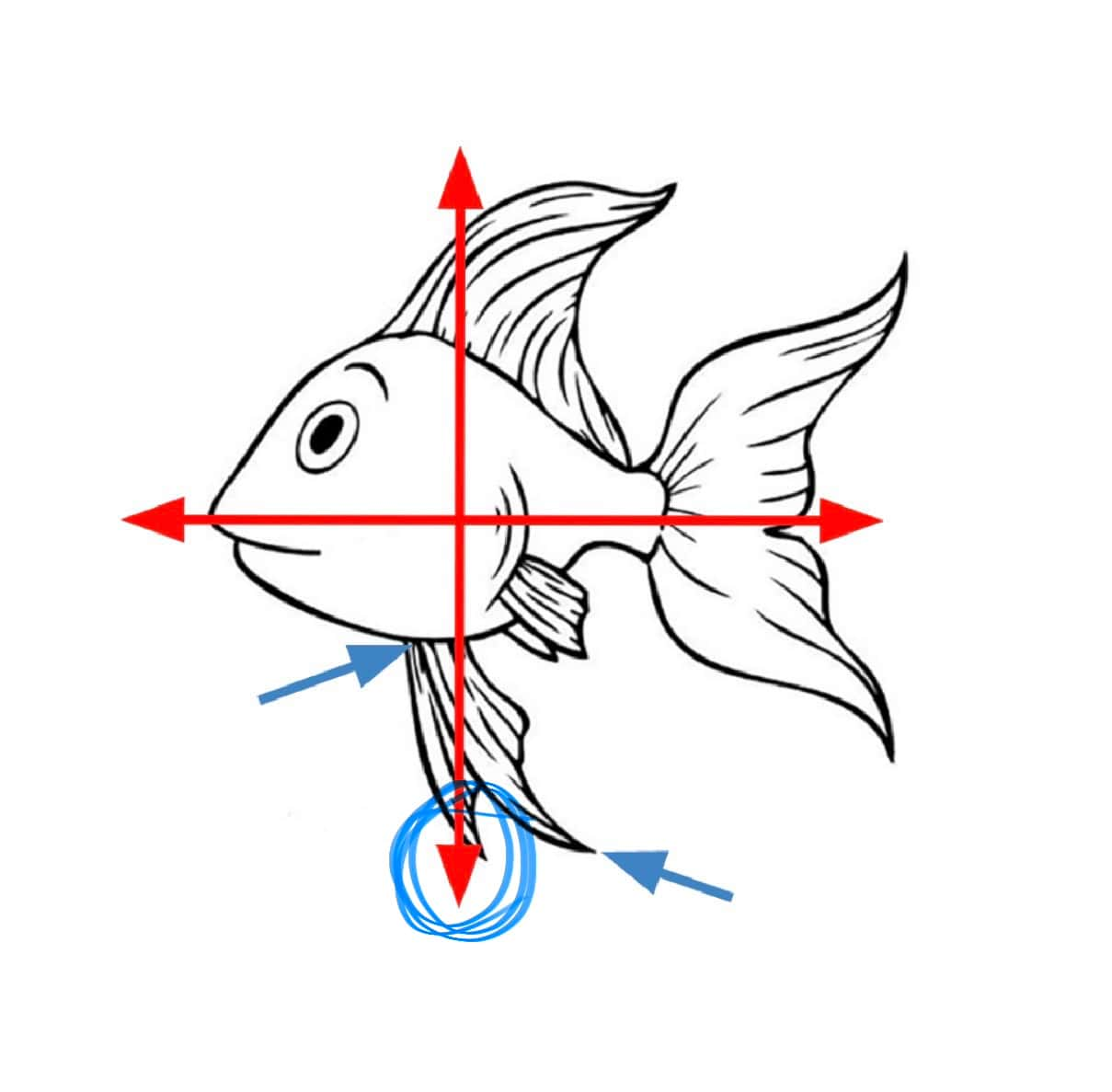
Ventral
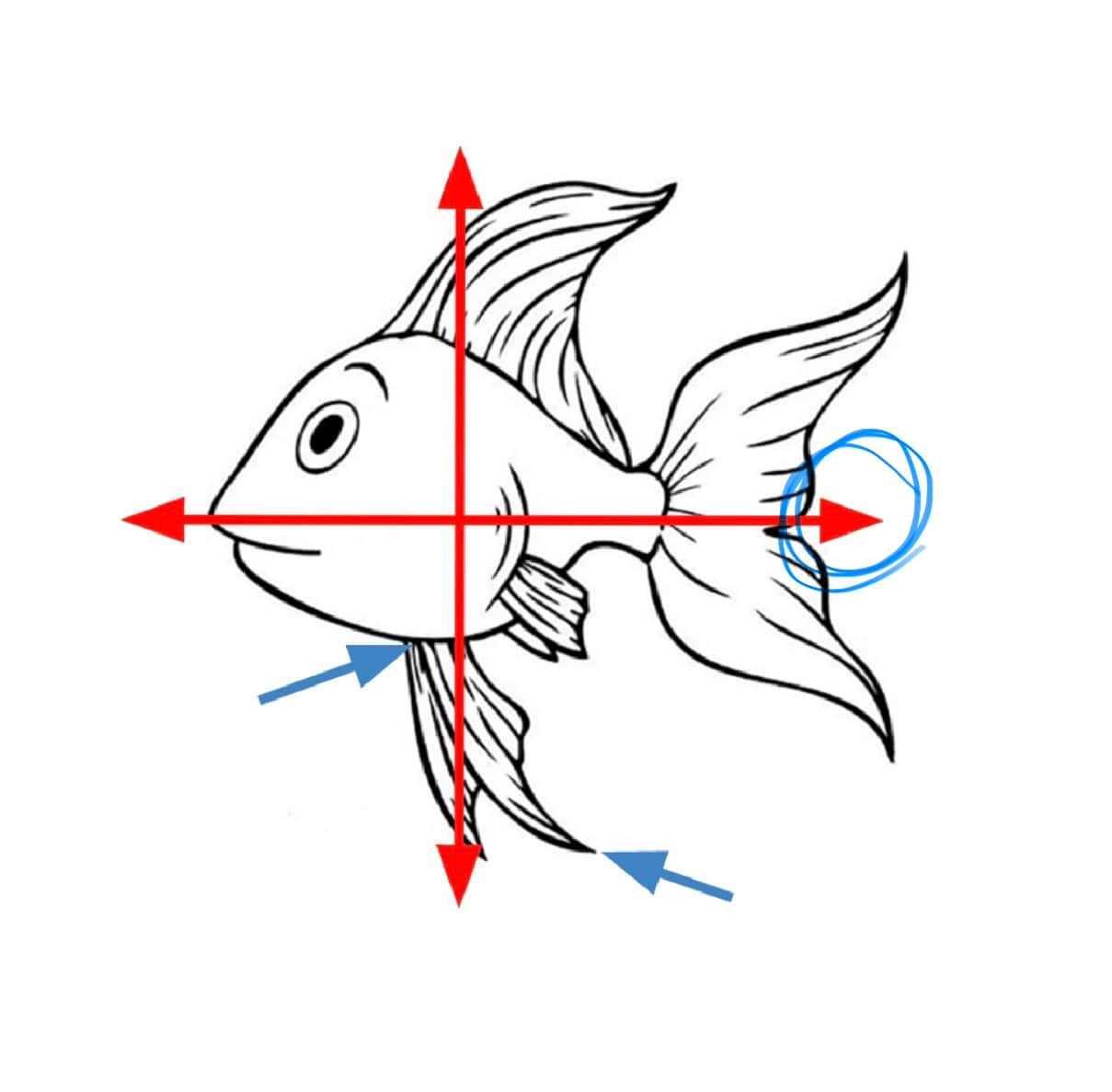
Posterior/caudal

Distal

Proximal
the two parts of cranial skeleton
Neurocranium and Branchiocranium
Neurocranium and what it contains
part of skull that surrounds the brain, Chondrocranium (from cartilage) and Dermatocranium (from scales/dermal)
Branchiocranium
include jaws and gills
Bones in Ethmoid region
front most: Ethmoid and Vomer
Ethmoid
Ethmoid: front/Antermost skull bone

Vomer
Ethmoid: dentigerous/can have teeth

Bones in Orbital region
eye region, Frontals, Circumorbitals, Sclerotic
Frontals
Orbital: Paired, Largest bone on skull

Circumorbitals
Orbital: large bones that surrounds eyes in primitive fish
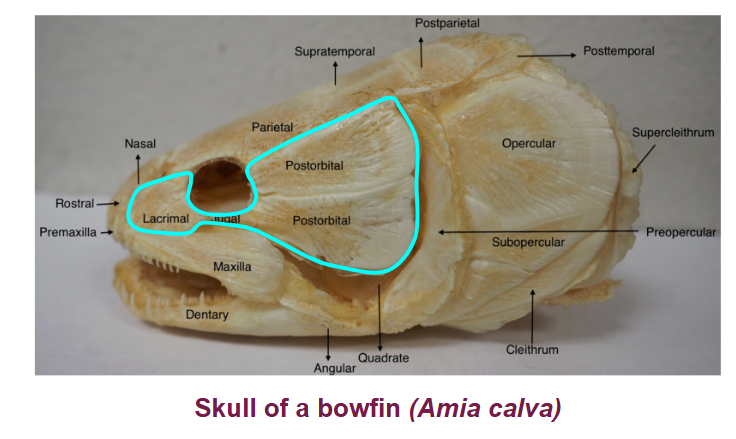
Infraorbitals
Orbital: small ring that surrounds eyes in modern fish

lateral line canals
Frontal, infraorbital and nasal (on top of ethmoid) house it, sense water flow
Sclerotic
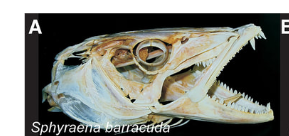
Orbital: bones/cartilages in fish/non fish, surround eyes and is in it
Bones in Otic region
ear region: otic, Epiotics and Intercalars attachment site for posttemporal bone (back of skull), rotate head for feeding

Bones in Basicranial region
back base of skull, Exoccipital, Basioccipital, Supraoccipital, Parasphenoid, dont need to recognize from photos
Exoccipital
Basicranial: Surrounds foramen magnum (opening for spinal cord)

Basioccipital
Basicranial: Connects to 1st vertebra
Supraoccipital
Basicranial: has crest, point of attachment for muscles when pull head back for rotation
Parasphenoid
Basicranial: Bar-shaped, between eyes
Bones in Branchiocranium: Mandibular Arch
oral jaws: upper jaw (Premaxilla, Maxillae) lower jaw (Dentary, Angular-articular, Retroarticular)
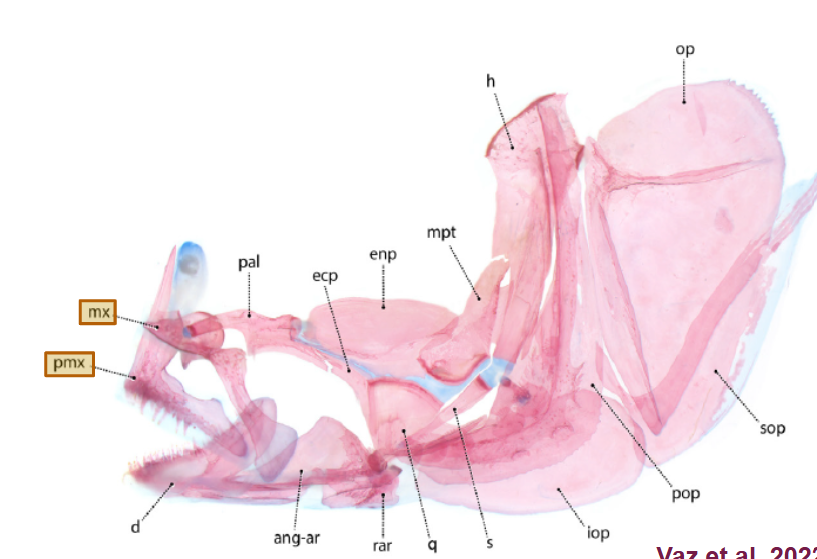
Premaxilla (pmx)
upper jaw: L shaped for jaw protrusion/suctioning, has teeth

Maxillae (mx)
upper jaw: move independent from Premaxilla but influence each other for modern fish

palatoquadrate
what the upper jaw is called for shark/relative (cartilage)
Dentary (d)
lower jaw: has teeth
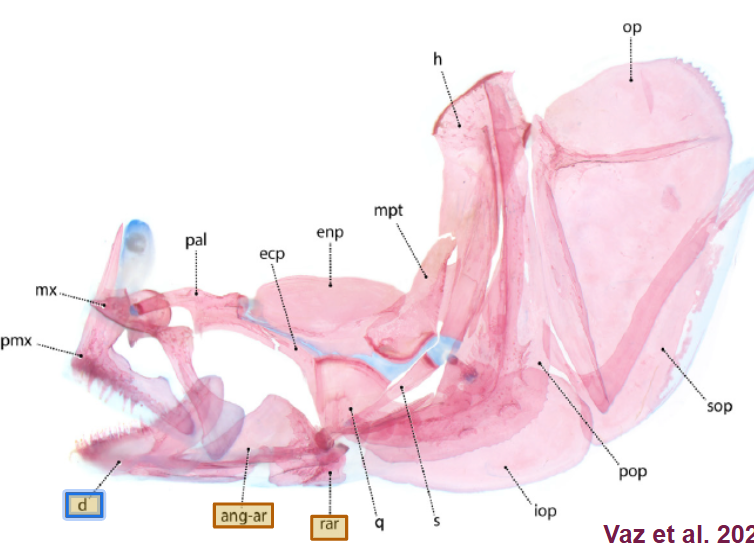
Angular-articular (ang-ar)
lower jaw: behind dentary, point of roation for lower jaw
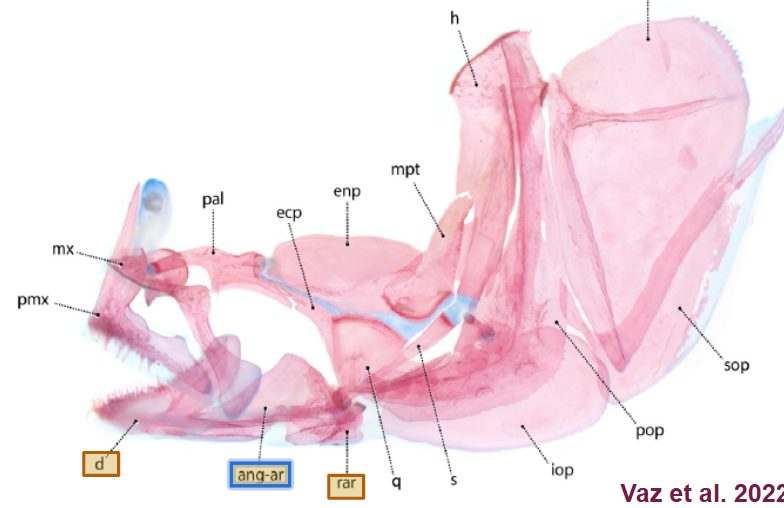
Retroarticular (rar)
lower jaw: back of jaw, for some fish fused to Angular-articular

Meckel’s cartilage
what the lower jaw is called for shark/relative (cartilage)
Bones in Branchiocranium: Suspensorium
links skull/behind lower jaw and hyoid, Hyomandibula and Quadrate
Hyomandibula (h)
Suspensorium: top of it attach to skull on either side, can move jaw laterally/let it expand
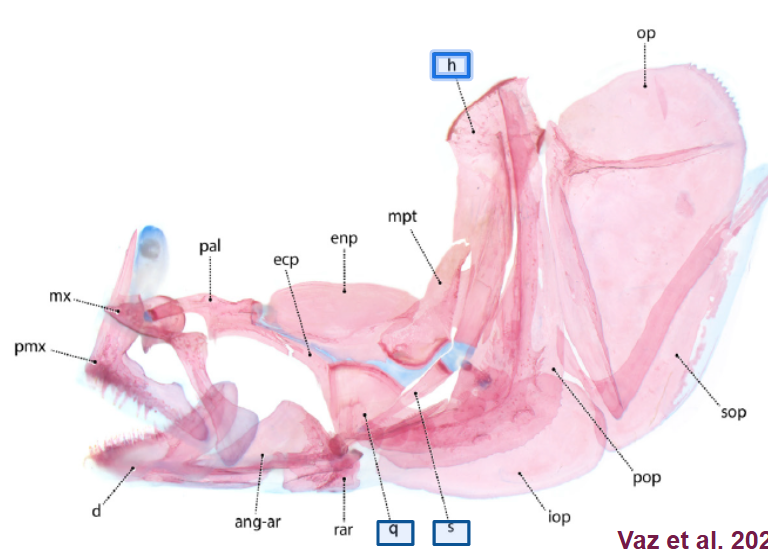
Quadrate (q)
Suspensorium: Fan-shaped, Connects to lower jaw

Bones in Branchiocranium: Palatine Arch
Palatines
Palatines (pal)
Palatine Arch: sometimes has teeth, connect to roof of mouth

Bones in Branchiocranium: Opercular Apparatus
For respiration and feeding, covers gills: Opercle, Subopercle, Preopercle, Interopercle
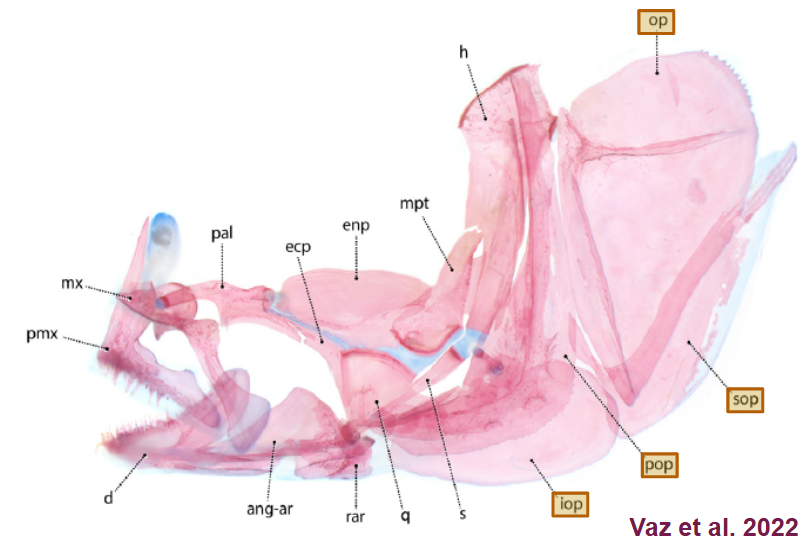
Opercle (op)
Opercular Apparatus: largest

Subopercle (sop)
Opercular Apparatus: Most posterior/back

Preopercle (pop)
Opercular Apparatus: Anterior/forward, lies on top of others

Interopercle (iop)
Opercular Apparatus: most ventral/bottom

Bones in Branchiocranium: Hyoid Complex
Hyoid Complex and Branchiostegal rays
Hyoid Complex
in the middle of jaw and operculum/boney gill cover, useful for feeding (hyoid depression)
Branchiostegal rays
riblike, ventilate gill chamber and let water flow
Branchiochranium: Branchial Complex
for respiration and feeding, contain gill arch and raker, boney fish has it modified to make second set of jaw in throat