Concept 34.1: Chordates have a notochord and a dorsal, hollow nerve cord
 Call Kai
 Learn
 Practice Test
 Spaced Repetition
 Match
 Flashcards
 Knowt Play
1/13

14 Terms
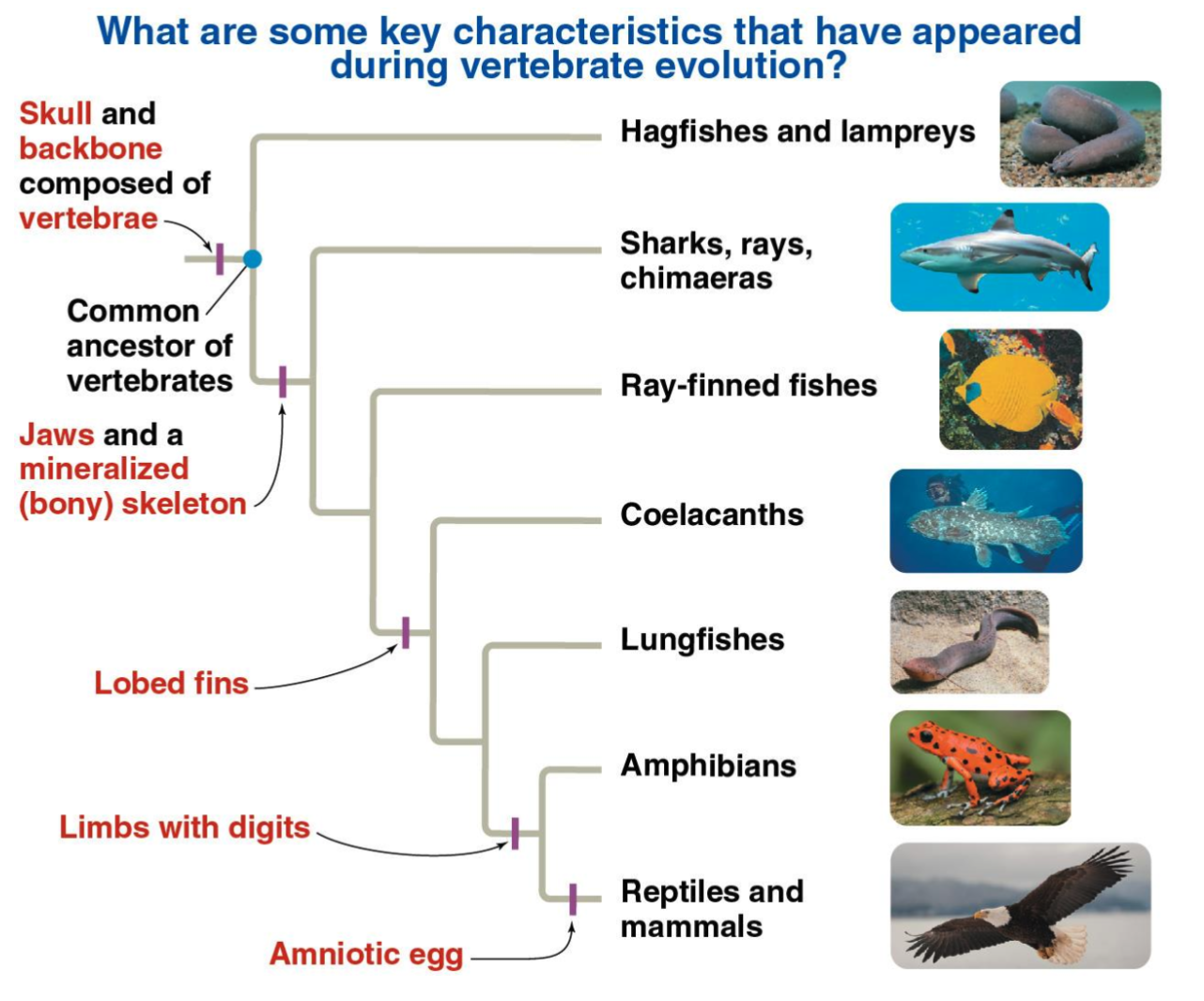
Vertebrate characteristics
Includes:
Skull and backbones composed of vertebrae
Jaws and a mineralized skeleton
Lobed fins
Limbs with digits
Amniotic eggs
Vertebrates
Animals with a backbone; includes over 60,000 species
Include the largest and heaviest animals to have ever lived
Smallest is less than a centimeter long
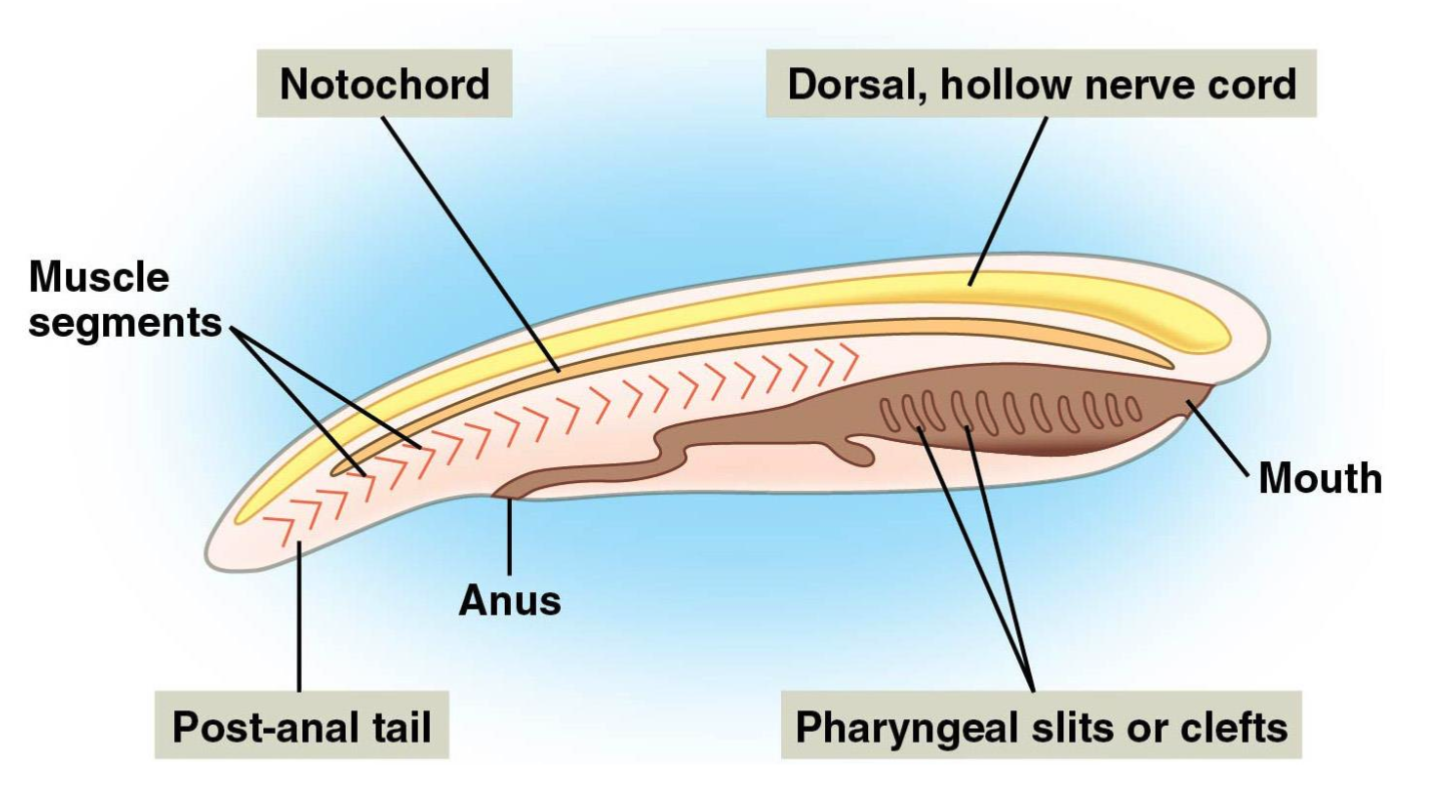
Chordates
Animals belonging to phylum Chordata, made of all vertebrates, urochordates, and cephalochordates
All exhibit, at some point in their life, a:
Notochord
Dorsal, hollow nerve chord
Pharyngeal slits or clefts
Muscular tail
Chordate characteristics
Includes, at some point in their life, a:
Notochord
Dorsal, hollow nerve chord
Pharyngeal slits or clefts
Muscular tail
These may appear only during developmental periods
Notochord
A longitudinal, flexible rod between the digestive tube and nerve cord
Provides flexible skeletal support; may be replaced by a jointed skeleton in adulthood
Nerve cord
Develops from a plate of ectoderm rolled into a neural tube dorsal to the notochord
After embryonic period, this develops into the central nervous system (brain and spinal cord)
Central nervous system
The nervous system comprising the brain and spinal cord, developed from the fundamental nerve cord
Pharyngeal clefts
Grooves along the outer surface of the pharynx in chordate embryos, later developing into pharyngeal slits opening into the pharynx
Pharyngeal slits
Slits that develop from the pharyngeal clefts that allow water to pass from the mouth to the outside of the body, bypassing the digestive tract
Can function as:
Suspension-feeding structures in invertebrates
Gills for gas exchange
Parts of the ear, head, and neck when developed as arches
Pharyngeal slit functions
Includes:
Suspension-feeding structures in invertebrates
Gills for gas exchange
Parts of the ear, head, and neck when developed as arches
Muscular tail
This is contained posterior to the chordate with skeletal elements and muscles
Provides propelling force in many species, but can be greatly reduced during embryonic development
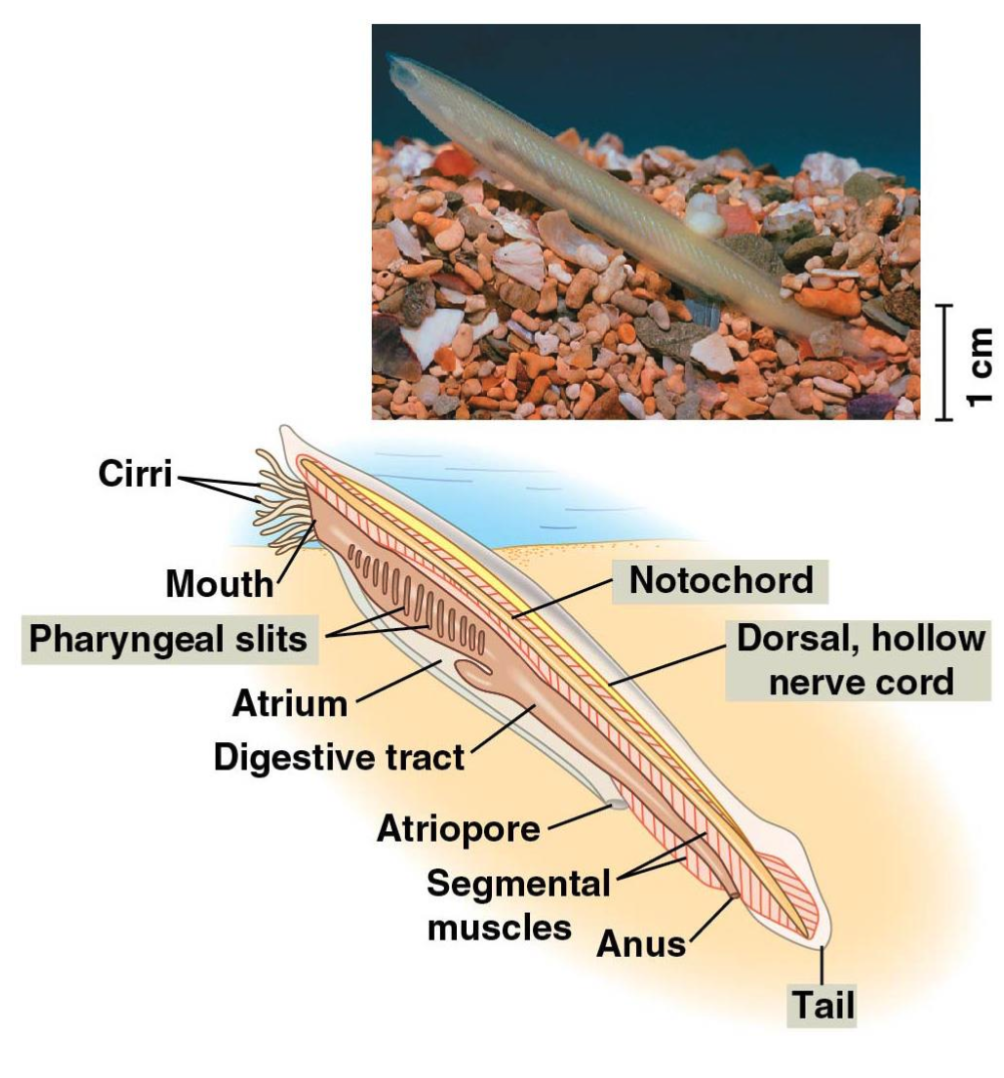
Lancelets (Cephalochordates)
Marine suspension feeders named for their bladelike shape, swimming using a simplified fish mechanism
Retain many of the key chordate characteristics
Ancestral chordates likely resembled these
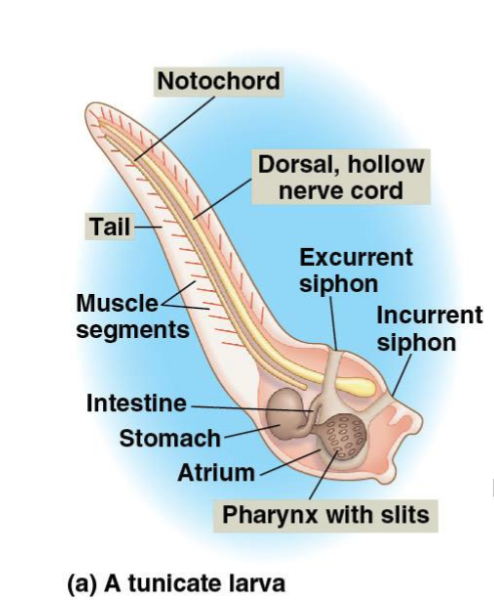
Tunicates (Urochordates)
Organisms more closely related to other chordates than lancelets
Chordate characteristics are most apparent during larval stage, lasting only a few minutes
Use tail muscles and notochord to swim until settling for metamorphosis
Adults (sea squirts) are sessile, filtering in and shooting out water for feeding and defense
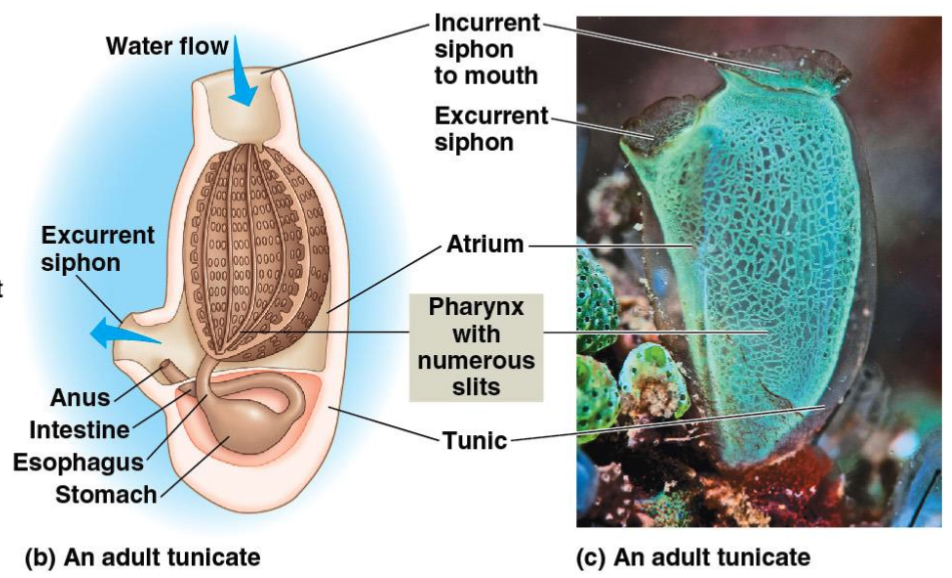
Sea squirts
Adult tunicates; these draw in and shoot out water to filter out food particles and repel attackers
These have fewer Hox genes compared to other vertebrates