Foundations Midterm J2 😊 (operative care, informed consent, inflammatory bowel disease, HTN, pneumothorax/hemothorax, palliative care)
 Call Kai
 Learn
 Practice Test
 Spaced Repetition
 Match
 Flashcards
 Knowt Play
1/91

There's no tags or description
Looks like no tags are added yet.
92 Terms
Surgical Safety Checklist (SSC)
- Informed consent
- Preop Education
- Health Hx including hx smoking, pregnancy, diagnostic screenings r/t procedure
- Allergies
- Head-to-toe Assessment
- Baseline VS, height, weight
- Skin prep PRN
- NPO
- Medications - home meds & preop meds
- Remove items including jewelry, dentures, make-up, mail polish, glasses/contacts, hearing aids, artificial limbs
- psychosocial support
- Consider age-related risks for older clients
Operative Care - Preoperative
Surgical Care Improvement Project
- If antibiotics are prescribed, should be given 1hr prior to incision and stopped within 24hr after the surgery
- Prepare surgical site according to recommended guidelines: remove dirt. hair (with clippers), or bacteria
- Client may shower with aseptic agent prior to surgery
Who is at risk of developing infections?
Operative Care - Intraoperative
Begins when the client is transferred to the operating table. Ends when the client is transferred to the PACU.
Anesthesia
- General
- Regional
- Local
- Moderate or conscious sedation
Nursing Team members
- Scrub Nurse: Ensure utensils are sterile and ready for use, assisting surgeon PRN
- Circulating Nurse: Coordinates care, Verifies consent forms, Assists anesthesiologist PRN, Client safety/monitoring/positioning, maintains sterility, Documents, Confirms counting supplies used during surgery
13 principles of Sterile Technique
1. Only sterile items are used within the sterile field.
2. Sterile persons are gowned and gloved.
3. Tables are sterile only at table level
4. Sterile persons touch only sterile items or areas. Unsterile persons touch only unsterile items or areas.
5. Unsterile persons avoid reaching over sterile field. Sterile persons avoid leaning over unsterile areas.
6. Edges of anything that encloses sterile content are considered unsterile.
7. Unsterile persons avoid sterile areas.
8. Sterile field is created as close as possible to the time of use.
9. Sterile areas are continuously kept in view.
10. Sterile persons keep well within sterile area.
11. Sterile persons keep contact with sterile areas to a minimum.
12. Microorganisms must be kept to irreducible minimum.
13. Destruction of integrity of microbial barriers results in contamination.
Operative Care - postoperative
Focus on safety & physiologic systems. Patent airway is a priority.
Immediate assessment of vital signs and repeated frequently to ensure stability
- Every 5-15 mins x 1hr
- Every 4hr x 24 hr
- Warming blankets, forced air warming until for hypothermia.
Enhanced Recovery After Surgery (ERAS)
- Getting the client up and moving early (mobility)
- Providing fluids and food early (nutrition)
- Using mild analgesics (pain)
- Managing any nausea or vomiting as soon as possible
- Discontinuing IV fluids early or in a sensible timeframe
- Continue ed started preoperatively
- PACU: Aldrete post anesthesia score
- Incentive spirometer
- Deep breathing and coughing
- Frequent turning
- Respiratory complications (suctioning, nebulizer, PEEP/IPPD if ventilated)
- Intake and output
- Pain management
- Monitor incision site
- Resume home medications if ordered
- Teaching
hand-off report
I - Introduction
• Introduce yourself & your role and job (include the client)
P - Patient
• Identifiers, age, pronouns, gender, sex assigned at birth, & location
A - Assessment
• Present chief complaint, vital signs, manifestations, & diagnosis
S - Situation
• Current status, including code status, level of uncertainty, recent changes, & response to treatment
S - Safety
• Critical lab values, SES factors, allergies, & alerts (falls, isolation)
B - Background
• Comorbidities, previous episodes, current Rx, & family history
A - Actions
• What actions were taken or are required? Provide brief rationale.
T - Timing
• Level of urgency & explicit timing & prioritization of actions
O - Ownership
• Who is responsible (nurse, doctor, team)? (Include client & caregiver
responsibilities).
N - Next
• What will happen next? Anticipated changes? What is the plan? Are there contingency plans?
Common Nursing Concerns - Postoperative
- Risk for constipation
- Risk for infection
- Acute Urinary Retention
- Nausea and Vomiting
- Postoperative Cognitive Dysfunction
- Venous Thromboembolism/PE
- Hypotension/Hypovolemia
- Atelectasis
- Wound Infection
- Wound Dehiscence
- Ileus
- Oliguria or Acute Kidney Injury
- Pain
What complications are you assessing for?
A client is 2 hours postoperative right total knee replacement due to arthritis. They have had 2 mg morphine IVP every 30 minutes for a total of 8 mg and 2 tablets of Percocet 10 mg/325 mg 15 minutes prior to discharge from PACU. Pain 3/10. The right hip dressing is dry and intact. 2+ pedal pulse. Wiggles toes on right foot. IV lactated Ringer's at 50 mL/hr in left hand
An 18-year-old patient who is unconscious and hypotensive and who has
sustained serious injury in an MVA in brought to the ED via ambulance. Which is
true of the treatment for this patient?
a. Next of kin needs to be notified prior to treatment beginning
b. Advanced directive and durable power of attorney should be reviewed
prior to treatment
c. The life-threatening injuries warrant immediate emergent treatment
d. The client can be treated after consent is given
C
The ostomy nurse is educating the client about how to
empty their ostomy pouch. Which of the following
actions by the client indicates that psychomotor learning
has taken place?
1. The client states how often the ostomy pouch should
be emptied
2. The client demonstrates emptying the ostomy pouch
3. The client writes the steps of how to empty the
ostomy pouch on a piece of paper
4. The client states they understand how to empty their
ostomy pouch
2
Informed consent
1. The provider obtains informed consent.
Explains procedure, risks, benefits, alternatives, and consequences of refusal.
2. The nurse's role is to:
Witness the signature
Ensure the client is competent
Ensure the client signs voluntarily
Verify understanding
Notify the provider if the client has question
3. The nurse does NOT:
Explain the procedure in detail for consent
Obtain the consent for the provider
4. Emergencies
Implied consent applies if the client is unconscious and treatment is life-saving.
Hypertension Definition & Epidemiology
- SBP >130 mm Hg OR DBP >80 mm Hg
- Confirmed on 2 readings at least 2 weeks apart
- 40% of U.S. Adults treated for hypertension
- Causes >40,000 deaths yearly
- Lifestyle changes are essential to prevent cardiovascular disease
Essential Primary Hypertension
most common type and is not caused by an existing health problem
Secondary Hypertension
Caused by:
- Kidney Disease
- Endocrine disorders (Cushing's, aldosteronism, pheochromocytoma)
- Brain disorders
- Medications (steroids, estrogen, sympathomimetics)
- Pregnancy
Treatment:
- Remove underlying cause
Untreated HTN can cause damage to...
Heart, Brain, Eyes, Kidneys
Higher BP --> Higher complication risk
BP Regulation Mechanisms
1. Baroreceptors: Located in carotid sinus, aorta, LV. Adjust HR and vessel tone.
2. Kidney fluid regulation
- Retain fluid if hypotensive
- Excrete fluid if hypertensive
3. RAAS system
- Angiotensin II --> vasoconstriction
- Aldosterone --> sodium/fluid retention
4. Vascular autoregulation
- Maintains tissue perfusion
Health Promotion & Prevention of HTN
- BMI
Essential Hypertension risk factors
- Genetics
- High Sodium Intake
- Obesity (BMI >25)
- Physical inactivity
- Smoking
- Hyperlipidemia
- Diabetes
- Alcohol excess
- African American ethnicity
- Age >60 / postmenopause
- Stress
Secondary Hypertension risk factors
- Kidney disease
- Cushing's disease
- Primary aldosteronism
- Pheochromocytoma
- Brain tumors/encephalitis
- Medications
- Pregnancy
Clinical Manifestations of HTN
Often asymptomatic
Possible findings:
- Headaches
- Facial flushing
- Dizziness/fainting
- Visual changes
- Retinal damage
BP Classification
Expected:
Assessments & Diagnostics HTN
Physical assessment:
- Check both arms
- Sitting & standing
- Correct cuff size
Labs (NOT diagnostic but supportive)
- BUN/Creatinine --> kidney disease
- Corticoids --> Cushing's
- Glucose/cholesterol --> vascular risk
Diagnostic procedures
- ECG --> LV hypertrophy (tall R waves)
- Chest X-ray --> cardiomegaly
Diuretics for HTN
Thiazide: hydrochlorothiazide
Loop: Furosemide
Potassium-sparing: spironolactone
Nursing actions:
- Monitor potassium: thiazide/loop-hypokalemia, potassium sparing-hyperkalemia
- Watch: muscle weakness, irregular pulse, dehydration
Teaching:
- Take last dose before 6 PM
- Increase potassium if not potassium sparing
- Keep follow-up appointments
Calcium channel blockers for HTN
Verapamil, amlodipine, diltiazem
Effects: Vasodilation --> lower BP
Nursing: Monitor BP/pulse, risk hypotension
Teaching:
- avoid grapefruit juice
- high-fiber diet for constipation
- Report irregular pulse
ACE inhibitors for HTN
Lisinopril, enalapril
Effects: Prevent angiotensin II formation
Key adverse effects:
- persistent cough
- angioedema
- Hypotension
- Possible HF or kidney complications
ARBs for HTN
Losartan, valsartan
Key:
- alternative if ACE cough occurs
- can cause hyperkalemia
- Monitor for angioedema
HTN nutrition guidelines
- Sodium
HTN lifestyle changes
- weight loss
- exercise >3x weekly
- Smoking cessation
- Stress reduction (yoga, massage)
Hypertensive crisis
Signs:
- BP >180/120
- severe headache
- Blurred vision
- Dizziness
- Epistaxis
- Disorientation
Nursing actions
- IV antihypertensives (nitroprusside, nicardipine, labetalol)
- Lower BP 20-21% in the first hour
- Monitor BP q5-15 min
- Neuro assessment
- ECG monitoring
Digestion Locations
Mouth: carbohydrates, fat
Stomach: Protein, carbohydrates, fat
Small intestine: carbohydrates, fat, protein, nucleic acids
GI Anatomy and Physiology
Lower gastrointestinal
- small intestine has "brush border" plasms rich lining
- chyme reaches large intestine or colon
- colon has bacterial flora that break down fibers and synthesize vitamins
- rectum expels water, dead bacteria, and food residue
Bristol Stool Form Scale
-Type 1: separate hard lumps like nuts (difficult to pass)
-Type 2: sausage shaped but lumpy
-Type 3: like sausage but with cracks on surface
-Type 4: like a sausage or snake, smooth and soft
-Type 5: soft blobs with clear-cut edges (passed easily)
-Type 6: fluffy pieces with ragged edges, a mushy stool
-Type 7: watery, no solid pieces (entirely liquid)
Inflammatory Bowel Diseases
- Chron's disease
- Ulcerative colitis
- Diverticulitis
Chron's disease
Idiopathic, chronic inflammatory process
- Probable genetic factors - IBD1, CARD15, IL23R, and others have been found
- Probable environmental factors - tobacco, diet, or fatty foods
Affects any part of the GI tract from mouth to anus
- 30% involve the small bowel, particularly the terminal ileum
- 20% involve the colon
- 45% involve both the small bowel and colon
Periods of symptomatic, unpredictable relapse and remission
Believed to be the result of an imbalance between proinflammatory mediators - chronic inflammation from T-cell activation leading to tissue injury
Crohn's Disease - clinical presentation
- Abd pain
- Diarrhea
- Intestinal fistuilization or obstruction
- Rectal bleeding
- Fever
- Weight loss, anorexia
- Nausea, vomiting
- Malnutrition, vitamin deficiencies
- Generalized fatigability
- Bone loss
- Psychosocial issues (depression, anxiety, coping difficulty) --> pediatric patients may also experience psychological issues regarding quality of life and body image
- Growth failure in pediatric patients: may precede gastrointestinal symptoms by years
Crohn's disease - Diagnosis
Based on clinical presentation and diagnostic tests
Lab tests
- Nonspecific - used more for facilitating disease management
- CBC count
- Chemistry panel
- Liver function tests
- Inflammatory markers
- Stool studies
- Serologic tests
Procedures
- Endoscopic visualization and biopsy
- Colonoscopy, ileocolonoscopic
- Small bowel endoscopy
- Interventional radiology: for percutaneous drainages of abscesses
Imaging studies
- CT scans
- Barium contrast studies
- CT enterorrhaphy or MR enterography
- MRI of the pelvis
- Abdominal and/or endoscopic ultrasonography
- Nuclear imaging
Ulcerative Colitis
A diffuse, nonspecific inflammatory disease whose etiology is unknown
Involves the large bowel, occasionally may involve the terminal ileum
Causes
- Environmental: NSAID use, psychosocial stress, smoking, milk-product consumption
- Immune dysfunction
- Likely genetic predisposition
Ulcerative Colitis - Clinical Presentation
- Rectal bleeding
- Frequent stools
- Mucous discharge from the rectum
- Tenesmus (occasionally)
- Lower abdominal pain
- Severe dehydration
- Severe diarrhea and cramps
- Fever
- Leukocytosis
- Abdominal distention
- Tachycardia
- Significant abdominal tenderness
- Weight loss
Grades
- mild: bleeding per rectum
Ulcerative Colitis - Diagnosis
Based on clinical presentation and diagnostic tests
Lab tests
- Serologic markers
- CBC count
- Comprehensive metabolic panel
- Inflammatory markers (ESR, CRP)
- Stool assays
Procedures
- Endoscopy & biopsy
Nutrition for IBD
- Provide nutrients in forms the pt can tolerate
- Diet is based on pt's specific disease process & triggers
During an exacerbation - low residue, high-protein, high-calorie diet with vitamin & mineral supplementation
- Fluid & electrolyte imbalances are corrected with IV fluids or oral replacement fluids
- Enteral nutrition can be prescribed if pt is reluctant to eat
- Parenteral nutrition is not used unless enteral nutrition is ineffective or contraindicated (TPN more expensive)
IBD Therapy - similar for UC and CD
Complementary therapies
- Vitamin C
- Herbs like flaxseed
- Yoga, hypnosis, breathing exercises
Antibiotics & prebiotics
- Metronidazole, ciprofloxacin, rifaximin
- Commensal E. coli, lactobacillus species
Antidiarrheal & antiperistaltic agents
Animo salicylate medications & corticosteroids to reduce inflammation
Immunomodulators & biologic agents to alter immune responce & prevent relapsagents
Surgery when treatments not effective
Differential features of Ulcerative colitis & Crohn's disease
crohns-
Can affect any part of the digestive tract from the mouth to the anus (small intestine and the colon).
Strictures (narrowing), abscesses, and fistulas (abnormal tunnels between organs/skin).
Rectal bleeding is less common
malabsorption weight loss are more frequent.
surgery can remove damaged sections, but the disease frequently recurs
Ulcerative colitis -
Limited strictly to the colon and rectum (large intestine).
Severe bleeding, toxic megacolon, and a higher long-term risk of colorectal cancer.
bloody diarrhea
Removing the entire colon and rectum can cure the condition.
Complications of IBD
Fluid & electrolyte imbalances
Hemorrhage/perforation
Abscess formation
Toxic megacolon
Malabsorption
Nonmechanical bowel obstruction
Fistulas
Colorectal cancer
Extraintestinal complications
Osteoporosis
Role of the Nurse in GI disorders
Assessment
Environmental factors
Health promotion to decrease GI conditions
- Avoid intake of substances that cause or exacerbate diarrhea
- Avoid nicotine
Safety considerations
Applying the nursing process in GI disorders
Address pain
Asses for GI bleed
Monitor and promote nutrition/fluid intake
Education
Monitor labs including CBC
Consult dietitian
GI disorders
GI health depends on many psychological and physical components
- limited stress
- No alcohol or smoking or illegal drug use
- Healthy diet
- Early diagnosis of GI such as cancer or liver disease
From oral health to healthy bowel habits, each part is important
Exercise and stress reduction can prevent serious GI issues
Ventilation
- The process of inhaling oxygen into the lungs and exhaling CO2 from the lungs
- May be impaired by the unavailability of oxygen, or any disorder affecting the conducting airways, lungs, or respiratory muscles
Transport
- The availability of Hgb and its ability to carry oxygen from alveoli to cells for metabolism & to carry CO2 produced by cellular metabolism from cells to alveoli to be eliminated
- May be impaired when an insufficient # of quality RBC is available to carry oxygen, or when the amount of Hgb in the blood is low
Perfusion
- The ability of blood to transport oxygen-containing hemoglobin cells & return CO2 containing hemoglobin to the alveoli
- May be impaired by decreased cardiac output, thrombi, emboli, vessel narrowing, vasoconstriction, or blood loss
What is a Pneumothorax?
- Air in the pleural space --> causes lung collapse
- Happens when air leaks from lung or chest wall into pleural cavity
- Medical emergency! Requires immediate intervention
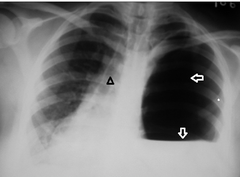
Pathophysiology of Pneumothorax
Normally
- Pleural space has negative pressure --> keeps lungs expanded
With Pneumothorax
- Air enters pleural space
- Pressure becomes positive
- Lung collapses --> ⬇️ oxygenation
Air enters via
- chest trauma
- Ruptured blebs/bullae in lung

Traumatic Pneumothorax
Cause: Rib fracture, stab/gunshot wound, blunt trauma, pressure changes (flying/diving)
Subtypes
- Open pneumothorax: "sucking chest wound", air freely moves in/out
- Iatrogenic pneumothorax: Caused by procedures (central line placement, thoracentesis, biopsy, mechanical ventilation)

Spontaneous Pneumothorax
Primary (PSP)
- no underlying lung disease
- Common in tall thin young males, smokers
- Cause: Ruptured blebs, lung inflammation/oxidative stress
Secondary (SSP)
- Due to lung disease: COPD most common, TB, CF, cancer, covid
Tension Pneumothorax
Emergency!!
- Air trapped --> cannot escape
- Pressure builds each breath
- Causes: Mediastinal shift, decreased cardiac output, respiratory failure
Classic signs:
- Hypotension
- Distended neck veins
- Tracheal deviation
- Cyanosis

Pneumothorax risk factors
- Smoking (tobacco/cannabis)
- Tall thin body type
- COPD or lung disease
- Trauma
- Pressure changes (diving/flying)
- Mechanical ventilation
- Environmental exposures (pollution, smoke)
Aging considerations pneumothorax
- Slightly lower O2 saturation normal (93-94%)
- Reduced lung elasticity
- Higher energy needed to breathe
Common pneumothorax symptoms
- Sudden chest pain
- Shortness of breath
- Tachypnea
- Tachycardia
- Hypoxia
Pneumothorax assessment findings
- Asymmetrical chest expansion
- reduced or absent lung sounds
- Hyperresonant percussion
- reduced tactile fremitus
- severe hypotension
- JVD
- Cyanosis
- Tracheal deviation (late)
Pneumothorax diagnostics
Most common --> Chest x-ray
Other tests - CT scan, ultrasound, E-FAST in trauma
Nursing priorities pneumothorax
ABC's first
- Airway
- Breathing
- Circulation
Monitor
- O2 saturation
- Breath sounds
- VS
- Chest symmetry
- Signs of shock
Pneumothorax nursing interventions
- Semi or high-fowlers position
- Oxygen therapy
- Pain control
- Prepare for: needle decompression, chest tube insertion
Chest tube management
Placement
- Needle decompression: 2nd intercostal space
- Chest tube: Usually 5th intercostal space
Nursing Care
- Keep drainage system below chest
- Monitor: drainage amount/type, air leaks, breath sounds, pain, fever
- Encourage coughing/deep breathing
Pneumothorax treatments
- Needle decompression (emergency)
- Chest tube drainage
- high-flow oxygen
- pleurodesis (prevent recurrence)
- Surgery if recurrent/severe
What is a hemothorax?
Blood in the pleural space
- Usually caused by chest trauma
- Causes both respiratory compromise (lung compression) and hemodynamic compromise (blood loss)
- Life threatening emergency requiring immediate intervention

Pathophysiology of hemothorax
Respiratory effects
- lung compression
- Reduced lung expansion
- Hypoxia
Circulatory Effects
- Blood loss --> hypovolemia
- Decreased preload and cardiac output
- Increased pulmonary vascular resistance
- Severe cases can lead to shock, cardiac arrest, or death
Hemothorax causes
Traumatic (most common)
- Motor vehicle collisions
- Rib fractures
- Gunshot or stab wounds
- Blunt chest trauma
Iatrogenic (procedure related)
- Central line placement
- Thoracentesis
- Chest tube insertion
- Thoracic surgery
Spontaneous (less common)
- Bleeding disorders (hemophilia, thrombocytopenia)
- Anticoagulant therapy (heparin, warfarin)
- Genetic or vascular conditions
Hemothorax risk factors
- Trauma (largest risk)
- Anticoagulation therapy
- Thoracic procedures
- Bleeding disorders
- Older age (may present subtly) --> Higher risk of complications, may require more intensive monitoring, reduced physiologic reserve, symptoms may appear later
Hemothorax Clinical manifestations
Respiratory findings
- SOB (dyspnea)
- Tachypnea
- Decreased or absent breath sounds
- Dull percussion over affected area
Circulatory/Shock signs
- Hypotension
- Tachycardia
- Cool, clammy skin
- Anxiety
Additional signs
- Chest pain
- Chest asymmetry
- Hypoxia
- Mediastinal shift (late, serious sign)
- Neck veins often flat (unlike tension pneumothorax)
Hemothorax diagnostics
Primary test --> chest x-ray
Other tests: ultrasound, CT scan, ABG's
Hemothorax immediate nursing priorities
Always prioritize ABC's
Initial actions
- Administer high-flow oxygen
- Continuous pulse oximetry
- Cardiac monitoring
- Insert two large-bore IVs --> possible need for blood transfusion
- Prepare for chest tube placement
Hemothorax treatment overview
Goal = remove blood and re-expand lung
Typical treatments:
- Chest tube drainage (thoracostomy)
- IV fluids or blood transfusion
- Oxygen therapy
- Surgery if bleeding persists
Chest tube size often
- 28-32 french
Hemothorax nursing care - assessment, intervention, teaching
Assessment
- Respiratory distress
- Breath sounds
- VS
- Signs of shock
- chest symmetry
- Pain level
Interventions
- Semi or high-fowlers position
- Oxygen therapy
- Pain control
- Prepare for chest tube insertion
- Monitor drainage system closely
Client teaching
- Injury prevention
- Medication safety (esp anticoagulants)
- Deep breathing exercises
- Early mobility when stable
Key differences from pneumothorax
Hemothorax
- Blood in pleural space
- Dull percussion
- Signs of blood loss/shock
Pneumothorax
- Air in pleural space
- Hyperresonant percussion
- More air-related respiratory compromise
Purpose of Chest Tubes
Chest tubes are inserted to:
- Drain air, blood, or fluid
- Re-establish negative pressure
- Promote lung re-expansion
- Restore intrapleural pressure
Removed when
- Lung re-expands
- Drainage stops
Chest tube Three chamber Drainage System
1. Collection chamber
- Collects drainage
- Measure & document output
2. Water seal chamber
- Acts as one-way valve
- Prevents air from re-entering pleural space
- Fill to 2 cm (minimum; follow manufacturer)
- Expected findings: Tidaling (rise and fall with breathing), intermittent bubbling if removing air (during coughing/exhaling)
- Abnormal: Continuous bubbling = air leak, no tidaling = obstruction OR lung re-expansion
3. Suction control chamber
- Wet suction: water level determines suction, usually -20 cm H2O, gentle bubbling expected
- Dry suction: dial set to prescribed suction (often -20), no bubbling expected

Indications for Chest Tube
- Pneumothorax
- Hemothorax
- Pleural effusion
- Empyema
- Post thoracotomy or open-heart surgery
Chest tube safety rules
Do NOT
- Clamp routinely
- Strip tubing
- Milk tubing
Clamp only if
- Ordered
- During system change
- During air leak evaluation
At bedside ALWAYS
- Oxygen
- Sterile water
- Occlusive dressing
- two hemostats
Chest tube expected vs unexpected findings
Expected
- Tidaling in water seal
- Gentle bubbling in suction chamber (wet system)
- Drainage increases with coughing
- System below chest
unexpected Report Immediately
- SaO2 <90%
- Sudden stop in drainage in first 24 hr
- Continuous bubbling in water seal
- Visible chest tube eyelets
- Signs of tension pneumothorax
Complications chest tube
Air leak: continuous bubbling in water seal
Accidental discontinuation: instruct client to exhale/cough, place tube end in sterile water, notify provider
Accidental removal: Cover with dry sterile gauze, apply occlusive dressing, call provider/rapid response
Tension Pneumothorax (emergency): tracheal division, absent breath sounds, JVD, cyanosis, respiratory distress
Accidental chest tube removal
1. Apply sterile occlusive dressing
2. Instruct client to exhale/cough
3. Notify provider/rapid response
4. monitor respiratory status
Expected findings in chest tube drainage system
Correct:
- Gentle constant bubbling in suction chamber
- Rise and fall in water seal with respiration
Incorrect:
- Continuous bubbling in water seal (air leak)
- Exposed sutures
- System at chest level (must be below)
Palliative Care - Attributes and criteria
◦ State of the art treatment tailored to the individual
◦ Support for the family and/or caregivers
◦ Interdisciplinary team approach
◦ Optimal assessment & management of physical & psychological
symptoms
◦ Eliciting and advocating for the wishes & preferences of patients and
developing a comprehensive and individualized plan of care
◦ Assisting patients in advance care planning including the delegation
of a surrogate decision-maker, clarifying values, preferences, &
beliefs in advanced directives, and out of hospital orders for life-
sustaining treatment with the completion of appropriate documents
specific to each state
◦ Promoting effective communication among patient, families, &
members of the interdisciplinary team
◦ Promoting continuity of care and care coordination across transitions
of care
Hospice Care
Care of an individual who cannot be cured or chooses not to be treated
Client anticipated to have 6 or fewer months to live (National Institute
of Aging, 2021, p. 3,7)
Care provided at home, facility, or nursing home
Respite care
Comfort care
Palliative sedation
Palliative Care
Physical, Psychological & psychiatric aspects of care
◦ Fatigue
◦ Sleep
◦ Nutrition
◦ Elimination
◦ Pain
◦ Mood and affect
◦ Anxiety
◦ Stress and coping
Structure & process of care
◦ Health care quality
◦ Caregiving
◦ Care coordination
Social aspects of care
◦ Family dynamics
◦ Development
Cultural & spiritual needs
Cultural affiliations can affect how clients view illnesses, which includes the end of life.
Cultural assessments
◦ View of end-of-life care
◦ Cultural rituals
Spiritual assessments
◦ Religious staff
◦ HOPE
Therapeutic communication
◦ Open-ended questions
HOPE tool for spiritual assessment
Hope
◦ What gives you a sense of hope, peace, or strength?
Organized
◦ Do you have a religion you belong to? Is your religion important to
you?
Personal spirituality and practices
◦ What are your personal spiritual beliefs? What spiritual practices
are most helpful for you?
Effects on medical care and end of life issues
◦ Has your illness interfered with the ability to do things that give
your life meaning and a sense of purpose? What spiritual practices
should we know about when we care for you?
End of Life - Expected findings
Early Stage:
◦ Loss of mobility
◦ Decrease ability/desire to eat or drink
◦ Cognitive changes - delirium or increased
sleeping
Middle Stage:
◦ Continued decline in mental status, increased
sleeping
◦ Noisy respirations - "death rattle"
Late Stage:
◦ Apnea
◦ Fever
◦ Mottling
Breathing and Respirations at the end of life
Dyspnea: shortness of breath
Retention of secretions in the
respiratory tract, also known
as "death rattle"
Cheyne-Stokes respirations:
an irregular respiratory rate
fluctuating between several
quick breaths and periods of
apnea
Pain at the end of life
Experienced by nearly 60% of
older adult hospice clients
who have cancer
Occurs as a result of nerve
injury, organs being stretched
and compressed, and/or bone
pain
Temperature at the end of life
◦ Ability of the nervous system to regulate body
temperature diminishes, causing clients to
experience both increased and decreased
temperature.
◦ Also caused by infection, cancer, and cancer
therapy.
◦ Mottling occurs hours or days before death, with
the upper and lower extremities becoming cool to
the touch. Mottling occurs as result of the heart's
inability to pump blood effectively, leading to
decreased blood perfusion throughout the body.
Vision and hearing at end of life
Clients may experience hallucinations or report
hearing and seeing those who have already died.
End of life - Nursing care/interventions
Pain control: Pharmacological & Nonpharmalogical methods
Dyspnea: Administer opioids& bronchodilators, administer oxygen at 2-3 L
Skin interventions: Incontinent care and change sheets PRN, apply lotion to the clients skin, turn and reposition every 2 hours. Pressure relief mattress PRN, wound care PRN
GI interventions: offer favorite foods and drinks, small, frequent meals are recommended, never force a client to eat, anorexia is a natural part of the dying process
Constipation: Hydration, medications, increased fiber
Fatigue: provide assistive devices such as commodes, shower chairs, & performing bathing, assess underlying cause for fatigue such as depression or dehydration