Lesson 40 - Vector Borne Diseases in Production Animals
 Call Kai
 Learn
Learn Practice Test
 Spaced Repetition
 Match
Match Flashcards
 Knowt Play
1/112

There's no tags or description
Looks like no tags are added yet.
Name | Mastery | Learn | Test | Matching | Spaced | Call with Kai | Chat |
|---|
No analytics yet
Send a link to your students to track their progress
113 Terms
stable fly (stomoxys calcitrans)
What vector is this?

face fly (musca autumnalis)
What vector is this?
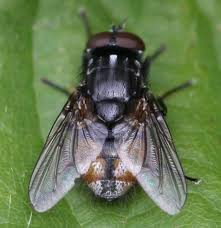
culicoides (biting midge)
What vector is this?

biting and sucking
What kind of fly is the stable fly?
ixodes
What vector is this?

1. non-biting
2. feed on the secretions around an animal's eyes, nose, and mouth
3. primary vector for diseases that affect the eyes and skin
What are the characteristics of the face fly?
dermacentor spp.
What vector is this?

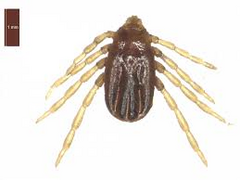
rhipicephalus/boophilus tick
What vector is this?
moist warm conditions and stagnant water
Where are biting midges found?
three
How many host life cycles fo ixodes spp. have?
large, reddish-brown ticks, recognized by white, silvery, or grayish mottled markings on their upper shield
How can you recognize dermacentor ticks?
1. cattle tick
2. brown dog tick
What is another name for rhipicephalus/boophilus tick?
yellow legs
What is a recognizable feature of rhipicephalus/boophilus tick?
blacklegged tick
What is another name for Ixodes/deer tick
american dog tick
What is another name for dermacentor?
lonestar tick
What is another name for amblyomma?
Erlichia ruminantium
What is the pathogen that causes heartwater disease?
no
Is heartwater disease zoonotic?
amblyomma
What vector spreads heartwater disease?
1. Infects endothelial cells and neutrophils
2. Fever
3. edema heart and lungs
4. Death
What are the clinical signs of heartwater disease?
PCR (staining issues)
What test is used to diagnose heartwater disease?
tetracyclines
How is heartwater disease treated?
vaccine if endemic
How is heartwater disease prevented?
anaplasma marginale
What pathogen causes bovine anaplasmosis?
Dermencator/Boophilus
What vector causes bovine anaplasmosis?
erythrocytes
What cell does anaplasma marginale infect in cattle?
a. marginale
What is the most pathogenic anaplasmosis in cattle?
1. Dermacentor ticks (also Ixodes and Boophilus)
2. Tabanid flies (big flies that bite: horse flies, deerflies)
What are the vectors for anaplasmosis?
2-8 weeks
What is the incubation period for anaplasmosis?
anemia, icterus, fever, dead w/in a few hours
What are the peracute clinical signs of anaplasmosis?
die over a couple of days
What are the acute clinical signs of anaplasmosis?
subclinical
How does anaplasmosis present in calves
30-50% mortality
How does anaplasmosis present in adults >2 yo?
relapse with immune suppression
What can happen to carriers of anaplasmosis?
1. Fever, depression, anorexia
2. Hemolytic crisis leading to tachycardia, dyspnea/tachypnea, pale and/or yellow mucous membranes, reluctance to move
3. Ticks visible
4. discoloured dark yellow and brown urine
What are the clinical signs of anaplasmosis in cattle?
1. within vessel
2. hemoglobin released to bloodstream
3. hemoglobinurea
What are the characteristics of intravascular hemolysis?
1. spleen and liver hemolysis
2. liver processes products
3. hyperbilirubinemia
4. bilirubinuria
What are the characteristics of extravascular hemolysis?
bilirubin
When testing the urine of cattle with anaplasmosis, which would be of high value?
1. risk region
2. history
3. clinical signs
4. splenomegaly on PM
What should you consider when diagnosing anaplasmosis?
1. Blood smear (Giemsa)
2. ELISA
3. PCR
What test do you use to diagnose anaplasmosis?
1. Daily or LAoxytetracycline
2. Imidocarb (extra label in the US)
3. Supportive care
4. Treat/remove ticks
How is anaplasmosis treated in cattle?
can't be used as food animals
What happens if you treat cattle with imidocarb?
prevent the development of antibiotic-resistant bacteria that can threaten human health
Why is enrofloxacin (fluoroquinolone) not used to treat anaplasmosis?
1. Injectables - macrocyclic lactone
2. Pour-ons - macrocyclic lactones, permethrin/flumethrin
3. Spray - organophosphates/amitraz/ deltamethrin
4. Dipping Vats - organophosphates
5. Insecticide Ear Tags (localized treatment)
What are the tick treatments for cattle?
1. How long can live off host? (prevent re-infection
2. Duration of activity of product used
3. Is the product ovicidal/treat all stages?
What does the timing of tick treatment and prevention depend on in cattle?
1. Control biting insects and blood transfer
2. Move into endemic areas while young
3. Vaccines (not allowed in US)
4. Control outbreaks
How is anaplasmosis prevented?
small ruminants
What does anaplasma ovis primarily affect?
yes, but much less common
Can small ruminants get a. marginale?
a. marginale
What are the clinical signs, transmission, and treatments of anaplasma ovis the same as?
1. Seen in cattle but not in the US
2. Much reduced pathogenicity of A. marginale
3. Vaccine available in areas where it is a problem
4. Look for location of pathogen on blood smears
What are the characteristics of anaplasma centrale?
Babesia bigemina and B. bovis
What kinds of babesia are notifiable in the US?
B. divergens
What kind of babesia is endemic in the UK?
1. Boophilus/Rhipicephalus ticks in USA
2. Ixodes tick in Europe/UK
What ticks spread babesia?
sporozoites are inoculated into the vertebrate host by ticks and invade red blood cells (RBCs) where they transform into trophozoites causing lysis
What is the pathogenesis of babesia?
2-3 weeks
How long does it take for babesia to become clinical?
1. transovarially between tick generations
2. fomites and mechanical vectors contaminated by infected blood
3. calves can become infected in utero
4. maintained in subclinically infected animals
How can babesia be transmitted?
hemoglobinuria
What would urine analysis of a cow with intravascular hemolysis would show?
icterus
How does a cow with RBC lysis represent?
1. High fever
2. Ataxia and incoordination
3. Anorexia
4. Production of dark red or brown-colored urine
5. Tachycardia, tachypnea/dyspnea
6. Sometimes nervous signs associated with sequestration of infected erythrocytes in cerebral capillaries
7. anemia and hemoglobinuria later in disease
8. Bulls may become infertile
9. cows may abort
What are the clinical signs of babesia?
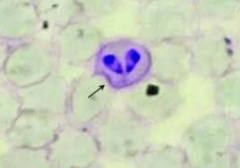
anaplasma
What is this?

babesia
What is this?
1. blood transfusion
2. tick treatment
3. NSAIDs
How is babesia treated?
1. treat/control the ticks
2. Vaccination in some countries (not US)
How is babesia prevented?
new forest eye
What is this?

moraxella bovis
What bacteria causes new forest eye?
1. fimbriae and pili proteins that allow it to adhere to the corneal epithelial cells and conjunctiva
2. 𝛽-haemolysin toxin that lyses the corneal epithelial cells
3. destructive enzymes, including pathogenic fibrinolysin, lipase, hyaluronidase, and aminopeptidases, which break down tissue and cause ulceration
What are the bacterial mechanisms that contribute to moraxella bovis infections?
intense ultraviolet (UV) radiation (sunlight) and dust act as predisposing factors by irritating the eye and making it easier for the bacteria to take hold
What are the environmental factors that contribute to moraxella bovis infections?
young stock are more susceptible to severe disease
What is the host susceptibility for moraxella bovis infections?
asymptomatic carriers often harbor the bacterium, facilitating the spread in a herd
What are the carrier animals for moraxella bovis infections?
flies acting as mechanical vectors through direct contact with infected lacrimal secretions, saliva, or nasal discharges
How is moraxella bovis spread?
skin, eyes, mucosa, mammary
What systems can flies transmit bacteria to?
1. extreme pain, causing animals to shut their eyes, especially in sunlight (photophobia)
2. Excessive lacrimation
3. mucopurulent discharge in later stages
4. Cloudiness of the cornea, progressing to ulcers
5. temporary or permanent blindness in severe, untreated cases
6. significant weight loss due to disrupted grazing
What are the clinical signs of moraxella bovis?
penicillin
How is moraxella bovis treated?
bacterin vaccine
How is moraxella bovis prevented?
fly control
How can transmission of moraxella bovis be reduced?
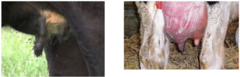
summer mastitis
What is this?
trueperella pyogenes
What bacteria causes summer mastitis?
headfly (hydrotaea irritans)
What vector transmits summer mastitis?
low-lying, damp, wooded, or sheltered pastures
What environment is summer mastitis prevalent in?
late summer and autumn, particularly during warm, humid, and lowwind conditions
What time of year is summer mastitis prevalent?
dry cows and heifers
What groups are at high risk of developing summer mastitis?
1. immediate veterinary attention is required
2. Systemic, long-acting antibiotics (e.g., penicillins)
3. NSAIDs
4. Frequent manual removal of pus from the teat is crucial
5. Separate infected animals from the herd immediately
6. Teat amputation in severe chronic cases
How is summer mastitis treated?
1. fly control
2. Avoid grazing vulnerable stock in high-risk, sheltered areas
3. Use of sealants during the dry period to protect the teat canal
4. Regular, daily inspections of dry cows and heifers, particularly during July and August (months with high numbers of flies)
How is summer mastitis prevented?
infectious, primarily vector-borne viral disease that affects wild and domestic ruminants such as sheep, goats, cattle, buffaloes, deer and most species of African antelope, and camelids as vertebrate hosts
What is blue tongue virus?
culicoides midges
How is blue tongue virus transmitted?
reportable disease
What is significant about blue tongue virus?
1. vaccines
2. mosquito nets
3. chemical mosquito repellents
4. eliminate stagnant water
5. remove bedding and manure once a week
How can blue tongue virus be prevented?
1. usually subclinical except BTV-8
2. fever
3. hyperemia and congestion
4. facial edema and hemorrhages
5. erosion of the mucous membranes
6. coronitis and laminitis
7. pleural and pericardial hemorrhages.
What are the clinical signs of blue tongue virus?
increase in vascular permeability
What can the clinical signs of blue tongue virus be attributed to?
1. Clinical signs
2. Time of year/vector present
3. Local surveillance
What should be considered with blue tongue virus diagnosis?
1. PCR of blood or tissue at time of disease
2. ELISA once seroconverted
What tests can diagnose blue tongue virus?
orthobunyavirus affecting cattle, sheep, and goats across Europe, causing transient illness in adults (fever, diarrhea, reduced milk yield) and severe congenital malformations or abortions in calves when infected during pregnancy
What is schmallenberg virus (SBV)?
culicoides midges
What vector transmits schmallenberg virus (SBV)?
no treatment, but infected animals develop long-lasting immunity, and vaccines are available in some regions
What is the treatment for schmallenberg virus (SBV)?
schmallenberg virus (SBV)
What is this?

acute, often fatal viral disease (flavivirus) affecting sheep, particularly in upland areas of the British Isles and Ireland
What is louping III?
ixodes ricinus ticks
What vector transmits louping III?
up to 60%
What is the mortality rate of louping III in lambs?
1. High fever (biphasic)
2. depression
3. anorexia
What are the clinical signs of the initial stage of louping III?
1. Incoordination
2. ataxia
3. "louping" or jumping gait
4. muscle tremors
5. paralysis
6. jaw champing
7. recumbency
What are the clinical signs of the neurological stage of louping III?