Camelid health & welfare
 Call Kai
 Learn
Learn Practice Test
 Spaced Repetition
 Match
Match Flashcards
 Knowt Play
1/36

There's no tags or description
Looks like no tags are added yet.
Name | Mastery | Learn | Test | Matching | Spaced | Call with Kai | Chat |
|---|
No analytics yet
Send a link to your students to track their progress
37 Terms
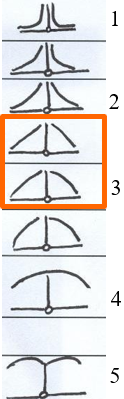
How do you BCS camelids?
What is the technique of taking bloods from a camelid?
Go down the neck - feel the bony protuberance of C5
Slide finger medially - in jugular groove (will not see vein rise)
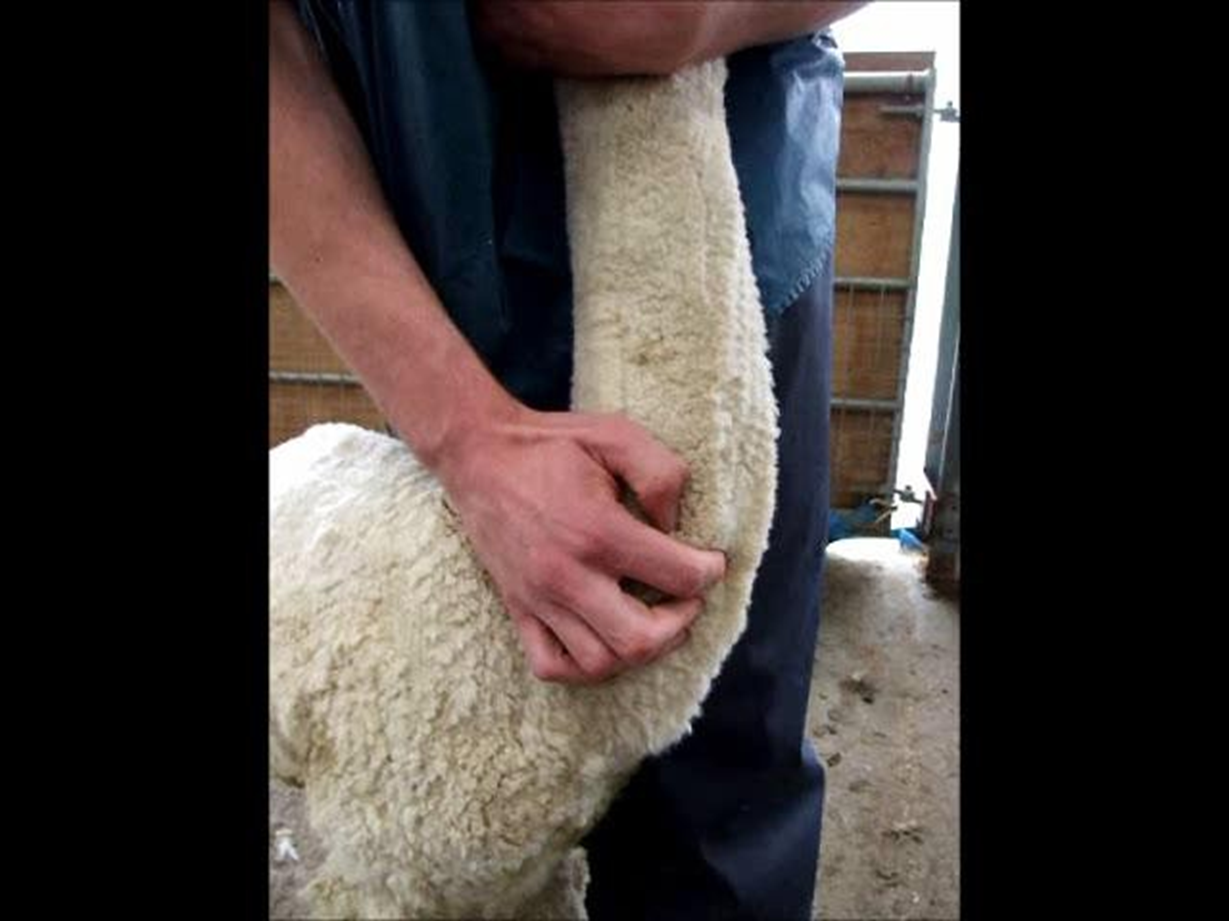
Insert the needle just above your finger
What are the different things to consider when treating camelids with fluids?
2ml/kg/hr and deficits, care with boluses (don't do for more than 30mins) susceptible to pulmonary oedema
Care with glucose - many cria are hyperglycaemic when ill, also a lot of adults are insulin resistant
Youngsters & Adults: use alkaline fluids (hartmans)
When placing a catheter which location will you go for?
Right jugular
Skin nick before because the skin is tough
Always place down towards the heart
Can go for cephaliic in young crias that are still nursing
What classes as hypoproteinaemia and how can you rectify this?
Less than 20g/l albumin, TP less than 40g/l
Plasma transfusion
What do you think about this alpaca
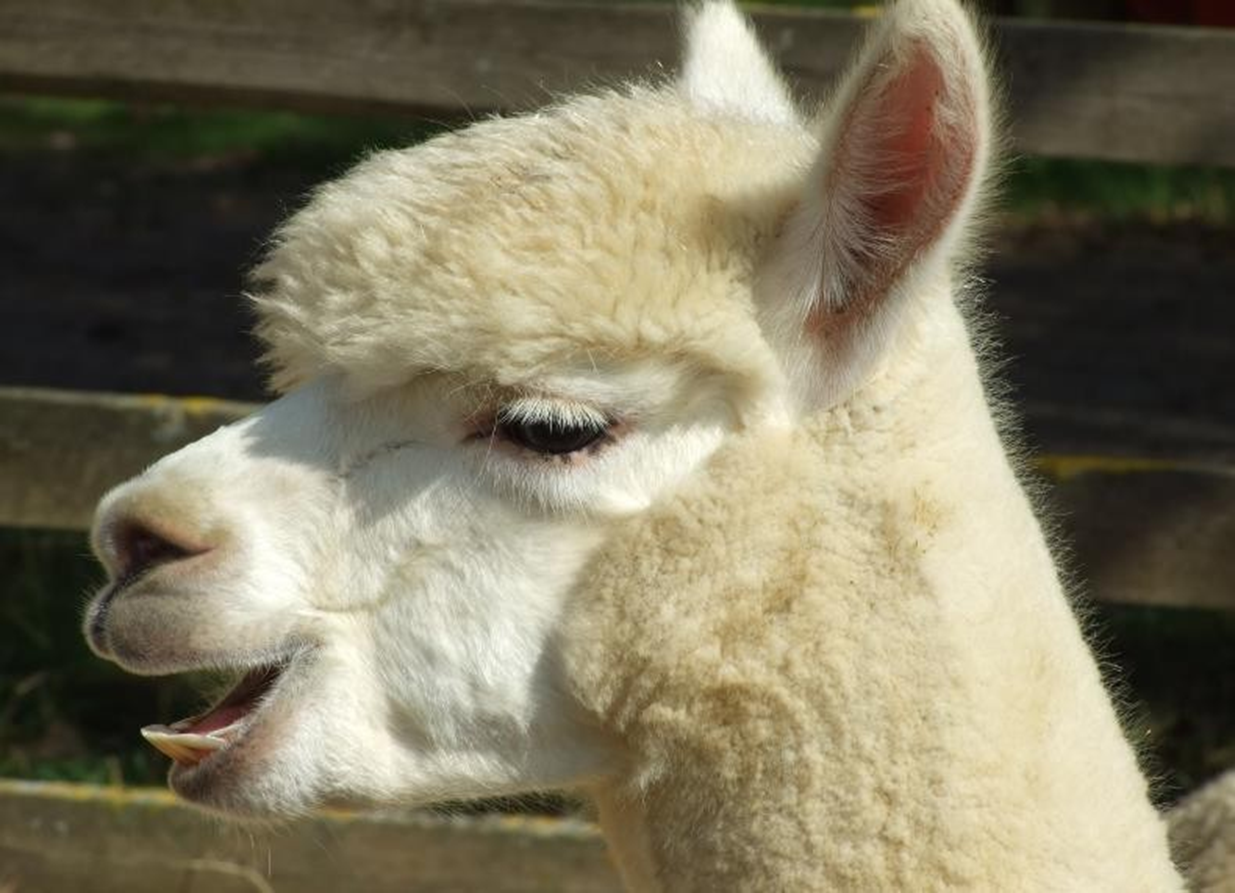
Stress lines under eyes and open mouth breathing
Stressed (leave this animal alone)
What do you suspect this is due to?
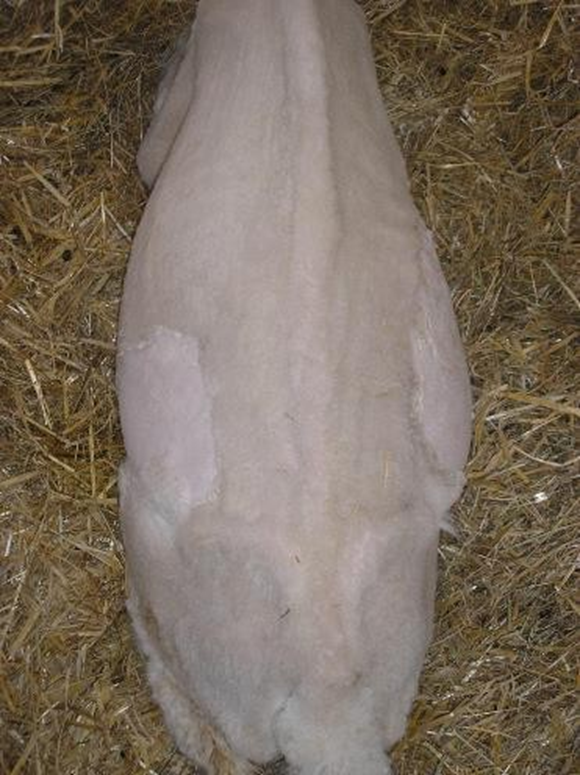
Free fluid in the abdomen
SI obstruction
What are the common causes of colic?
Phytobezoar
Enteritis
Spiral colon torsion
Where would a microchip be placed?
Upper left neck
Care with angle (30-45 degrees) - to make sure you don't go into the spinal canal
What vaccinations should you give?
Clostridial
Others as required
Bluetongue
Orf, leptospirosis, salmonellosis
Rota & Coronavirus, E.coli
Abortion agents
What are the clinical signs associated with endoparasites in camelids?
Soft faeces (rather than diarrhoea)
Ill thrift
Anaemia
Malaise and death
How many eggs in the faeces for the different endoparasites indicate a clinical infection?
Trichostrongyle-type = 300-400
Fluke, Nematodirus = 1
Haemonchus, Lungworm = any are noteworthy
How can you aid reducing pasture contamination?
Poo-picking (like horses)
What are the wormer dose rates for camelids?
Benzimidazoles
10 mg/kg (= 2x sheep dose) (albendazole never give more than this , toxicity)
Levamisol (only if able to weigh, toxicity common if get dose even slightly wrong)
6 mg/kg injection, 8 mg/kg by mouth
MCLs
Generally 1 – 1.5x cattle / sheep dose
Moxidectin for haemonchus: 0.4 mg/kg oral (horse dose)
Monepantel
3 x sheep dose
When would you dose for fluke and what would you use?
High forecast: dose 6 weeks later
Typical (sheep): Oct & Jan
Closantel, Albendazole (not in pregnant)
What is the most pathogenic cocci species that affect camelids?
E. macusaniensis
When should you treat camelids for cocci?
Early-born crias @ weaning (6mo)
Late-born crias @ 2-3 mo
Adults after stress
Incoming animals
(moving troughs can help)
What are the common types of mange that you see?
Chorioptic
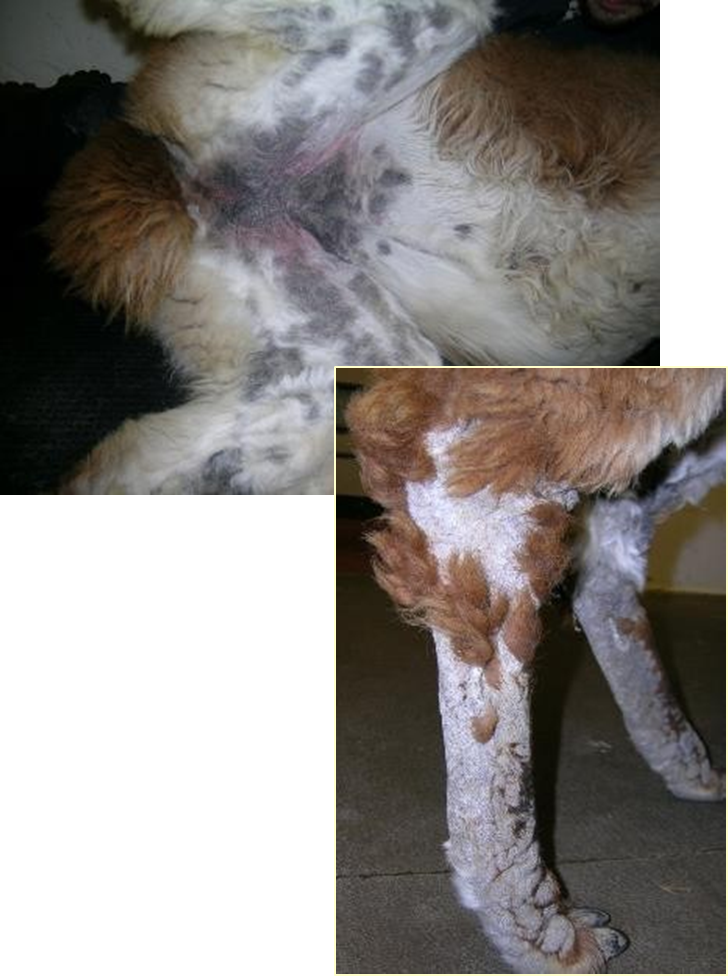
Sarcoptic
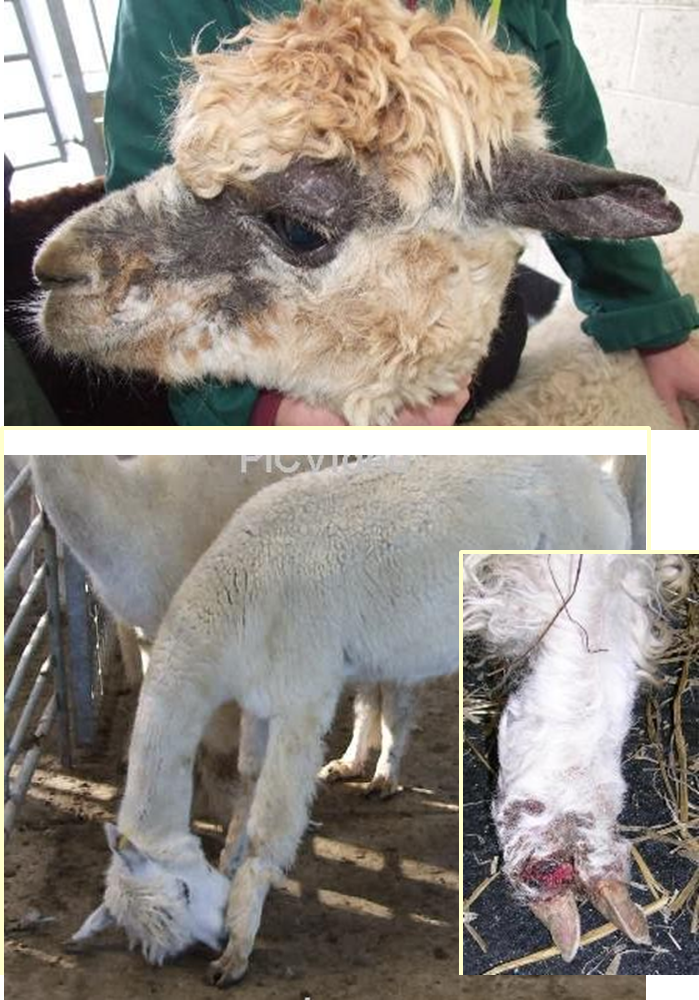
(skin scrape to distinguish, interdigital space)
How do you treat the different types of mange?
Ivermectins
Injectable for Sarcoptic mange (invading mite)
Pour-on for Chorioptic mange (surface spreading mite)
Typically 3 - 4 treatments 7 – 10 days apart
Treat the whole group
What additional treatment may you need to give to the severe mange cases?
Shampoo (keratolytic)
Topical acaricide (Deosect, Frontline)
Skin conditioner
Antibiotics (systemic)
Steroid? if very severe and not pregnant
What are the signs of blow-fly strike?
Fleece stuck together
Skin wounds
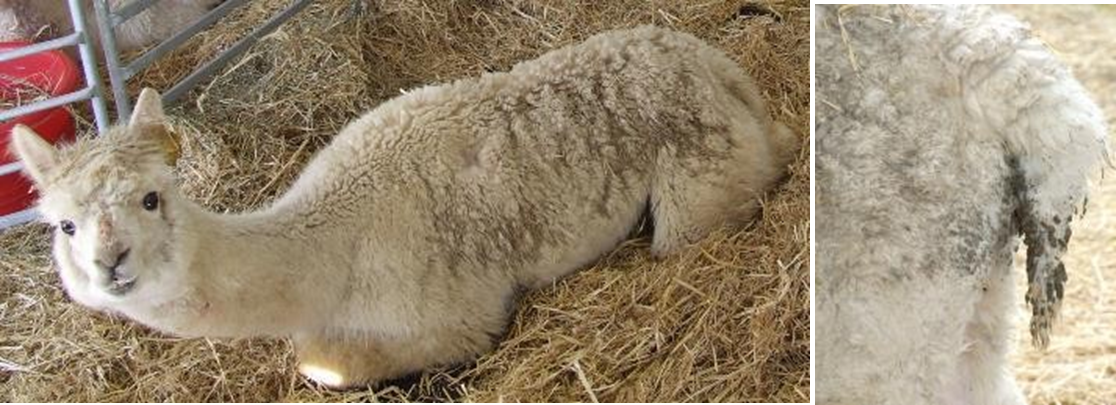
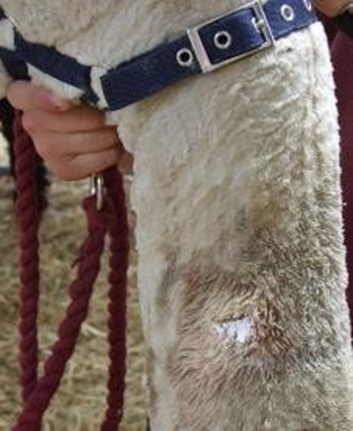
What is this showing, you have has 3 repeated skin scraped for mange?
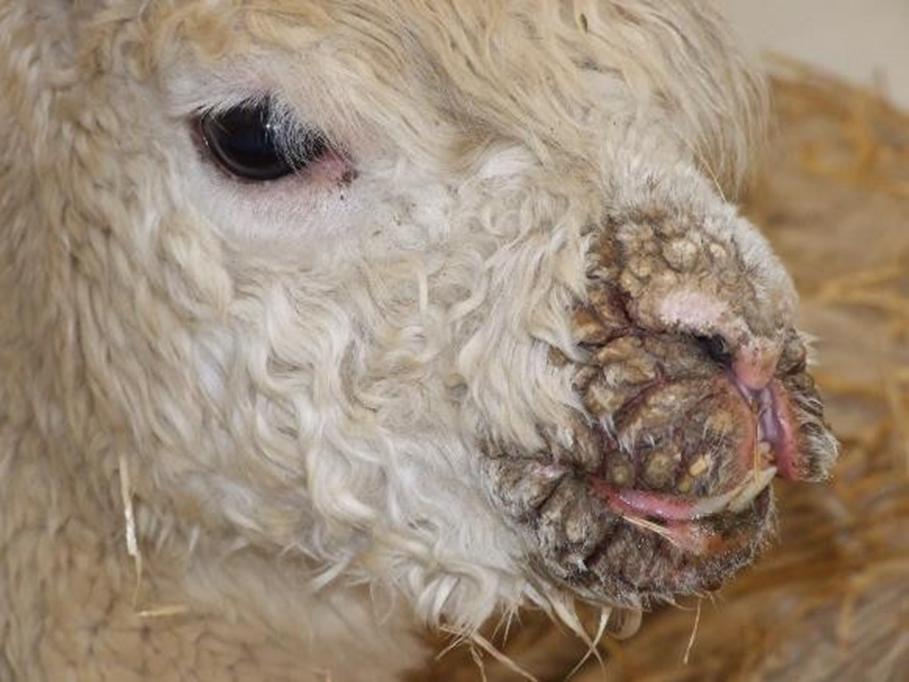
Munge
Hyperkeratosis
Typically weaning age & adolescent
Idiopathic, i.e. cause unknown
Symptomatic treatment (like additional mange treatment)
What would you need to rule out when you see this?
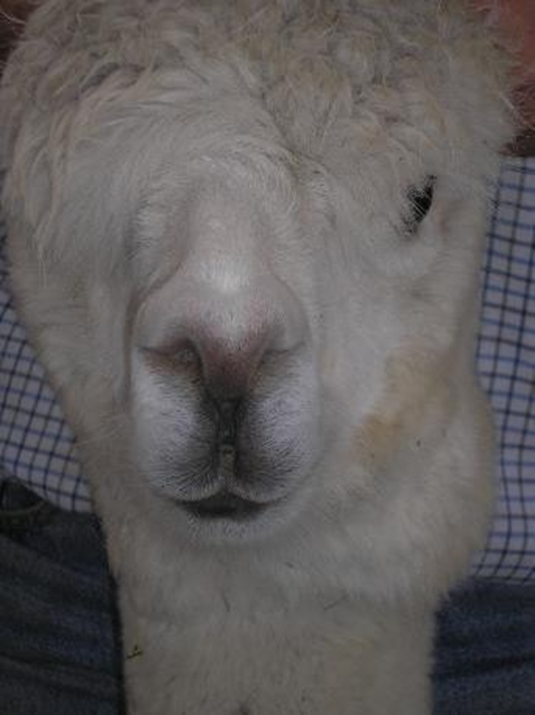
Caseous Lymphadenitis
Take sample and look before draining any assumed abscess
If you suspect gastric ulcers how would you treat this?
Systemic antacids (pantoprazole) - not oral
You can give these prophylactically if an animal is inap
What is the main ddx for anaemia?
Cardio-vascular compromise
What are the different things that can cause anaemia?
Chronic disease
Haemonchosis, fluke
Gastric ulceration
Haemolysis
Ivermectin toxicity
Mycoplasma haemollamae
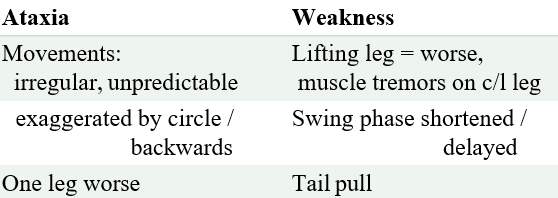
What is the difference between ataxia and weakness?
When can we castrate camelids?
and what is the preparation and pre-op procedures?
Over 18months of age
In preparation, the animal must be covered for tetanus and concentrated withheld for 24hrs. Immediately pre-op, antibiotics and NSAIDs. Check that it has 2 testicles!!
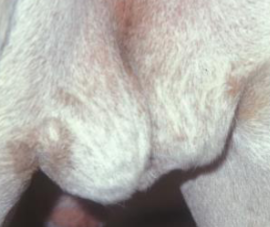
what are the anaesthesia options for a castration?
Local infiltration
Triple stun
Caudal epidural
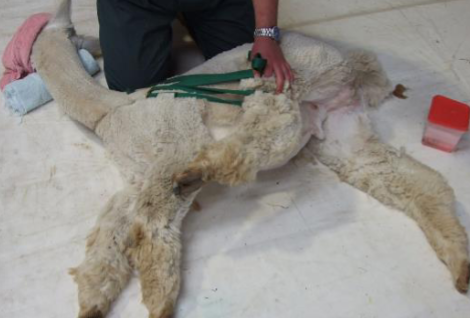
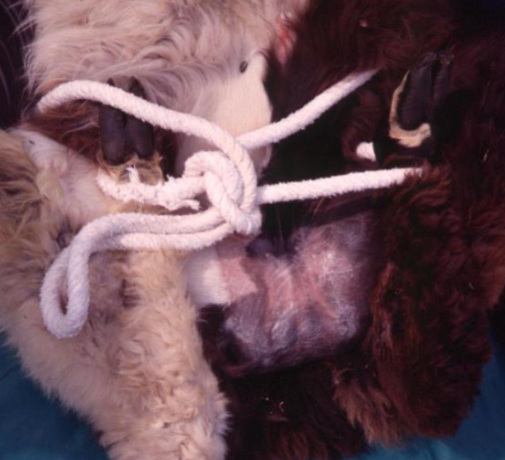
How should the alpaca be prepared for castration? (restraint wise)
Tie out like horse
Nose below larynx
Blindfold
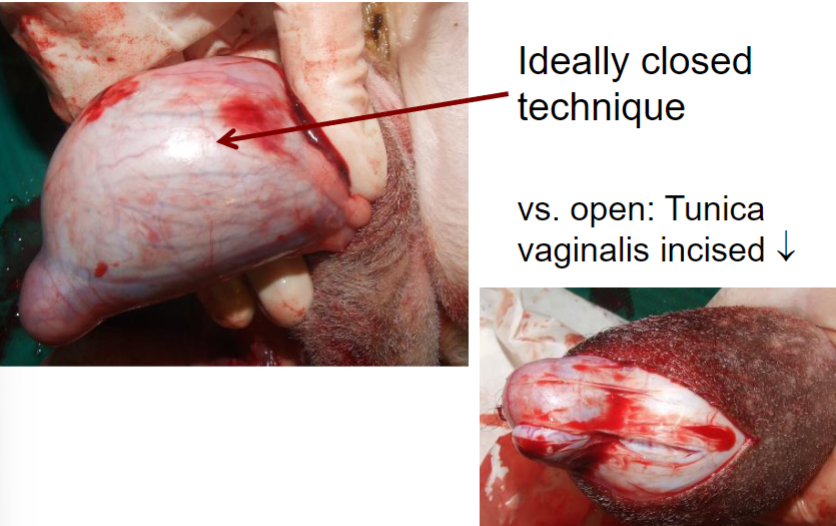
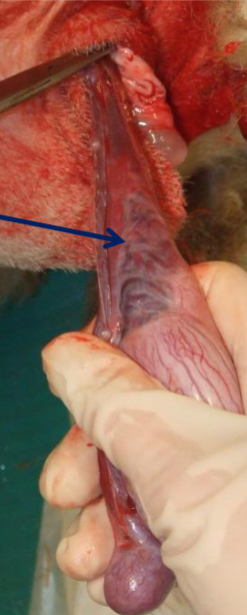
What are the haemostasis options for the blood supply of the testicles?
Ligature (above pampiniform plexus)
Clamp (above pampiniform plexus)
Twist and pull
What are the top 3 differentials for weight loss?
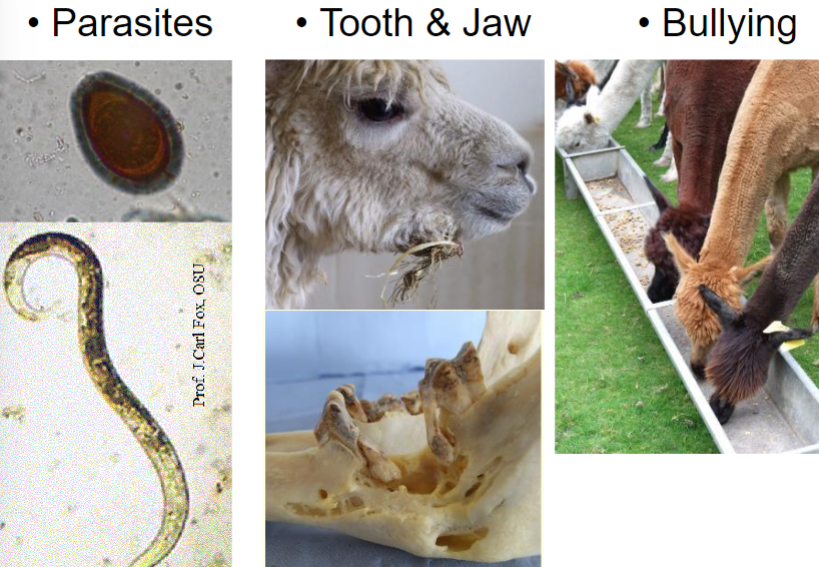
When is it indicated to trim the incisors?
Low BCS, quidding.
Care not to expose pulp cavity
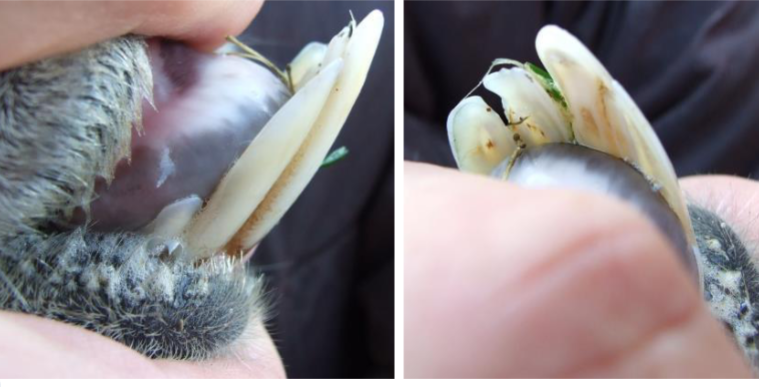
what is this a presentation of?
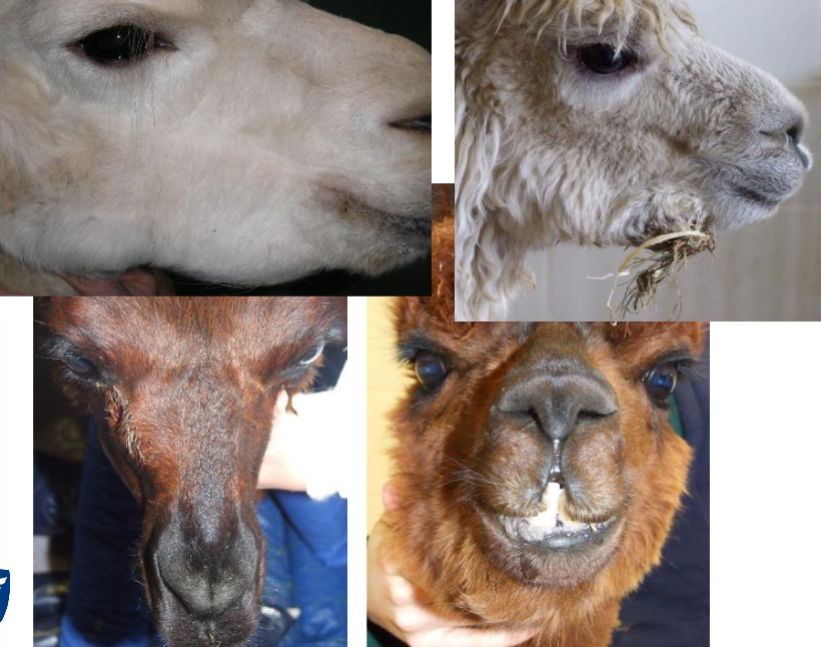
Dental dx
What are common malpresentations of dystocia?
What can help you deal with dystocia?
Foot/lower limb caught on pelvic brim
Carpal flexion
Head deviation, neck flexion
Breech
Twins
C section is an option!
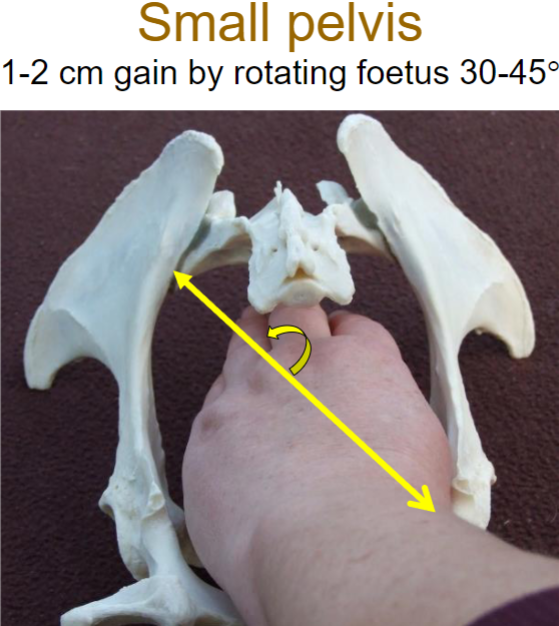
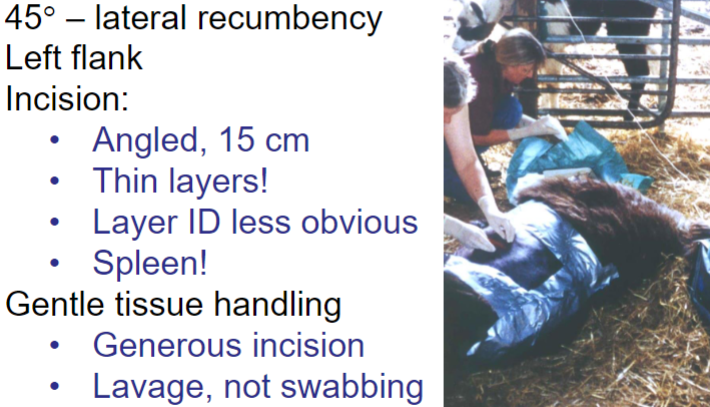
What is the protocol for a caesarean section?
Local anaesthetic used over GA
When are foetal membranes usually passed? and when is it considered retained?
Usually passed after 1-3hrs and should weigh from 800-1000 grams
Retained means longer than 6hrs - give gental pull, oxytocin, systemic check