LVQ Panel Questions - Basic Electronics
 Call Kai
 Learn
 Practice Test
 Spaced Repetition
 Match
 Flashcards
 Knowt Play
1/18

There's no tags or description
Looks like no tags are added yet.
19 Terms
Semi Conductor
A solid material that has electrical conductivity in between that of a conductor and that of an insulator; it can vary, either permanently or dynamically.
Electrical Properties of a Diode
Allow electric current to flow in one direction (forward biased condition)
Block it in opposite direction (reverse biased condition)
Think of it as an electric check valve
Using a breadboard and a DC power supply, determine the voltage drop across a diode when forward and reversed biased.
Voltage drop across diode is 0.6 VDC when forward biased.
Voltage drop across diode is Power Supply voltage when reverse biased.
Explain how a Zener Diode Functions, Identify Where they might be used in your department
a type of diode that permits current to flow in the forward direction AND in the reverse direction IF the voltage is larger than the breakdown voltage known as "Zener voltage".
Explain Operation of a simple bridge rectifier
an arrangement of four diodes connected in a bridge circuit, that provides the same polarity of output voltage for any polarity of the input voltage
Most Common Application - conversion of alternating current (AC) input into direct current (DC) output, see photo for explanation
Simple Bridge Rectifier

Explain the theory of operation of a NPN and PNP bipolar junction transistor (BJT)
BJT - A three-terminal device constructed of doped semiconductor material and may be used in amplifying or switching applications.
their operation involves both electrons and holes, as opposed to unipolar transistors, which only one carrier type is involved in the charge flow
Identify the appropriate voltage level for signals involving transistors.
TTL - 5V
CMOS - 3.3V
Explain Operation of Silicon Controlled Rectifiers and uses of it
Acts as an electrically controlled, unidirectional switch
It is difficult to cycle a mechanical switch several hundred times a minute; yet, some SCRs can be switched 25,000 times a second. It takes just microseconds to turn on or off these units.
Motor-speed controllers, inverters, remote switching units, controlled rectifiers, circuit overload protectors, latching relays, and computer logic circuits all use the SCR.
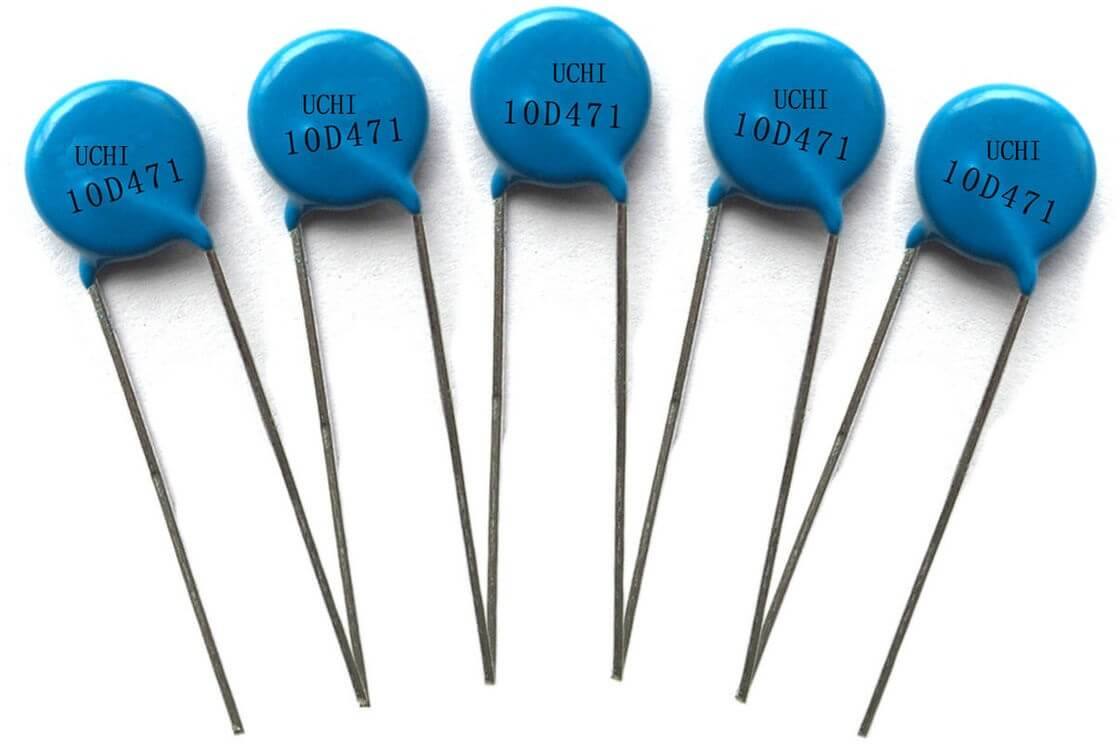
Explain the operation of a Metal Oxide Varistor. Identify typical applications for this device in industrial applications.
They are used for absorption of transient voltage, suppression of pulse noise and circuit voltage stabilization.
Applications
• Surge Protection in consumer electronics
– industrial electronics
Explain Light Emitting Diodes (LEDs)
An LED is a special semiconductor which emits light when current is passed through it. There are many different physical styles. The emitted color spectrum is usually very narrow. It can generally be specified as a specific wavelength in the electromagnetic spectrum. The emitted color selection is somewhat limited. The most commonly available colors are red, green, amber, yellow, blue and white. The red, green, yellow and amber have a working voltage of approximately 1.8 volts. You can refer to the data sheet for each LED to find the exact value. The actual working voltage is determined by the breakdown voltage of the particular semiconductor material.
When using an LED in a circuit, the exact working voltage is not extremely important. The most important thing is the current flow through the LED. The current through the diode must be limited by a series resistor. An LED has a specified maximum continuous current rating. Most LEDs can pass 20 milliamps continuously without damage but it is not necessary to use the maximum rated current. An LED will light with much less current. The difference between high current and low current will be the brightness of the LED. To decide what resistor value is needed, you subtract the working (forward) voltage from the power supply voltage and divide that number by the desired current flow.
Explain the function of a "reactor" when used in a power circuit.
It is an inductor and is used to prevent harmonic distortion on power systems.
Explain the concept of reflective reactance. Identify the hazards and mitigation techniques of this phenomenon.
Harmonics running across the wire with long lead to motor. Mitigate by keeping motor leads as short as possible, or use load reactors.
Explain the operation of an Insulated Gate Bipolar Transistor. Identify typical applications for this device in industrial applications.
An Insulated-Gate Bipolar Transistor (IGBT) is a hybrid power semiconductor device that combines the easy, voltage-controlled input of a MOSFET with the high-current, low-saturation output of a Bipolar Junction Transistor (BJT).
High speed switching applications (VFD's)
Explain the function of an opto-isolator. Identify typical applications for this device in industrial applications.
An Opto-Isolator is an electronic component used to provide isolation between two circuits. This is done to promote noise immunity and to protect the circuits from accidental bad connections and electrical surges that might be damaging.
Gate Bipolar Transistor

Silicon Controller Rectifier

Metal Oxide Varistor
Opto - Insulators
