A&P Lab: Exercise 15,17,19
 Call Kai
 Learn
 Practice Test
 Spaced Repetition
 Match
 Flashcards
 Knowt Play
1/147

There's no tags or description
Looks like no tags are added yet.
148 Terms
Olfactory nerve

sensory
what type of nerve is olfactory nerve?
smell
What is the function of olfactory nerve?
optic nerve

II
What is the number for optic nerve?
sensory
what type of nerve is optic nerve?
vision
what is the function of optic nerve?
oculomotor nerve (location)

III
what is the number of oculomotor nerve?
motor (oculomotor)
what type of nerve is oculomotor nerve?
moves eyeball
function of the oculomotor nerve?
Trochlear nerve (location)

IV
what is the number of trochlear nerve?
motor
what type of nerve is trochlear nerve?
eye movement via superior oblique
function of trochlear nerve
trigeminal nerve
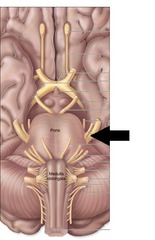
V
what is the number of trigeminal nerve
both
what type nerve is trigeminal?
facial sensation, muscles of mastication
function of trigeminal nerve
Abducens nerve

VI
number of abducens nerve
motor (abducens)
what type of nerve is abducens?
moves eyeball. Lateral rectus moves eye laterally
function of abducens nerve
facial nerve

VII
facial nerve number
both
what type of nerve is the facial nerve?
facial expression, taste ( anterior 2/3 of tongue), lacrimal and salivary gland functions
function of facial nerve
vestibulocochlear nerve

VIII
number of vestibulocochlear nerve
sensory
what type of nerve is vestibulocochlear nerve
balance and hearing
function of vestibulocochlear nerve
glossopharyngeal nerve
superior
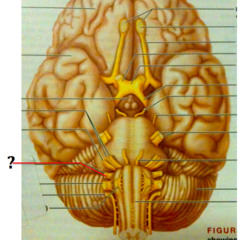
IX
number of glossopharyngeal nerve
taste/sensation (posterior 1/3) swallowing, visceral functions
function of glossopharyngeal nerve
both
what type of nerve is glossopharyngeal nerve?
vagus nerve
middle

X
what number is vagus nerve?
both
what type of nerve is vagus nerve?
muscle, senses, blood pressure, visceral receptors
vagus nerve function
accessory nerve
inferior

XI
what number is the accessory nerve?
swallowing, muscles of head, neck, shoulders
function of accessor nerve
motor
what type of nerve is the accessory nerve?
hypoglossal nerve

XII
what is the number of the hypoglossal nerve?
motor
what type of nerve is the hypoglossal nerve?
moves tongue for speech, chewing, swallowing
function of hypoglossal nerve
node of Ranvier location

node of ranvier
gap or indentations in the myelin sheath
Schwann cell

axon

axons
called nerve fibers when they are long, form the impulse generating and conducting region of the neuron
dendrites

dendrites
receptive regions that bear receptors for neurotransmitters released by the axon terminals of other neurons
axon hillock

axon hillock
the axon in motor neurons begin just distal to a slightly enlarged cell body structure
cell body

cell body
receives information from the dendrites
myelin sheath location

myelin sheath
formed by many individual schwann cells, it is a discontinuous sheath
sensory (afferent) neurons
Conducts impulses only toward the CNS. Changes in the environment produce a stimulus that is detected by the receptors associated with the dendrites of ___________

interneuron
structurally a multipolar neuron and makes up about 90% of the neurons in the CNS

Schwann cells
nerve fibers in the PNS are typically heavily myelinated by special supporting cells called ___________
white matter
groups of myelinated axons in the CNS form tracts and are called

gray matter
unmyelinated areas comprised of neuron cell bodies, dendrites, axon terminals, and neuroglia are called

meninges
also known as connective tissue membranes, cover the spinal cord and are continuous with the cranial meninges that protect the brain
dura mater
outer menix, tough single-layered membrane that is deep to the epidural space

arachnoid mater
spider web-like matter

pia mater
the inner menix, hugs the spinal cord, delicate

conus medullaris
where the spinal cord ends inferiorly

central nervous system
consists of the brain and spinal cord, which primarily interpret incoming sensory information and issue instructions based on that info and on past experience
motor (efferent) neurons
neurons carrying impulses from the CNS to the viscera and/or body muscles and glands

peripheral nervous system
consists of the cranial and spinal nerves , ganglia, and sensory receptors
cervical spinal nerves
C1-C8 nerves

thoracic spinal nerves
T1-T12 nerves

lumbar spinal nerves
L1-L5 nerves

sacral spinal nerves
S1-S5 nerves

coccygeal spinal nerves
1 nerve

dorsal root
contains axons of sensory neurons

central canal
A tiny channel found within the spinal cord and inferior medulla oblongata

ventral root
contains axons of motor neurons

ventral (anterior) horn
contains cell bodies of motor neurons

lateral horn
visceral motor neurons

dorsal (posterior) horn

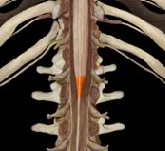
Conus Medullaris
Dorsal Root Ganglion
a nodule on a dorsal root that contains cell bodies of neurons in afferent spinal nerves.

Dorsal Funiculi

Ventral Funiculi

Lateral Funiculi

Dura mater
outer meninx; tough single-layered membrane that is deep to the epidural space

Arachnoid mater
deep to dura mater; spider web-like

Pia mater
inner meninx; delicate and hugs the spinal cord

Cerebrospinal fluid
in subarachnoid space; cushions the spinal cord
Conus medullaris
inferior end of spinal cord; between vertebrae L1 and L2

Anterior median fissure
wide deep grove on the anterior surface of the spinal cord

Gray matter
looks like a butterfly; centrally located

Anterior gray horn
contain somatic motor neuron cell bodies

Lateral gray horn
contain cell bodies of autonomic motor neurons

Posterior gray horn
contain neuron cell bodies that receive impulses from sensory neurons

White matter
surrounds the gray matter; made up of white, myelinated fibers that are either sensory or motor