AP Psychology: Topic 2.8 - Intelligence and Achievement
 Call Kai
 Learn
 Practice Test
 Spaced Repetition
 Match
 Flashcards
 Knowt Play
1/18

There's no tags or description
Looks like no tags are added yet.
19 Terms
Intelligence
the ability to learn from experience, solve problems, and use knowledge to adapt to new situations

g (general intelligence)
a hypothetical factor that accounts for overall differences in intellect among people
Intelligence quotient (IQ)
a total score derived from a set of tests designed to assess human intelligence, originally stated as the ratio of mental age to chronological age multiplied by 100

Mental age
the age level of an individual's mental ability based on the age an average person would reach the same level of mental attainment

Chronological age
the number of years since a person's birth

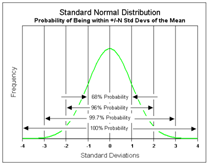
Standardization
the use of uniform procedures in test administration to ensure that all participants take the same test under the same conditions and are scored by the same criteria (norms)
Validity
the extent to which results from a test are accurate and represent something useful

Construct validity
the extent to which a test or measure accurately assesses what it's supposed to
Predictive validity
the extent to which a test or other measurement can predict a future outcome

Reliability
the extent to which a test yields consistent results, as assessed by the consistency of scores on two halves of the test, on alternate forms of the test, or on retesting
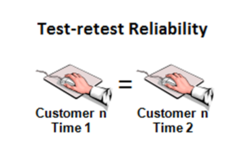
Test-retest reliability
a method for determining the reliability of a test by comparing a test taker's scores on the same test taken on separate occasions
Split-half reliability
a measure of reliability in which a test is split into two parts and an individual's scores on both halves are compared.

Stereotype threat
the apprehension experienced by members of a group that their behavior might confirm a cultural stereotype (e.g., "I'm a girl, so that means I'll probably be bad at math")

Stereotype lift
improvement of a group's test performance due to not being part of a negative stereotype (e.g., "I'm not a girl, so that means I'll probably be OK at math")
Flynn Effect
the worldwide phenomenon that shows intelligence test performance has been increasing over the years

Achievement tests
tests that measure a person's existing knowledge and skills

Aptitude tests
tests designed to predict a person's future performance (i.e., the capacity to learn)

Fixed mindset
a person's belief that they have a set amount of an ability that cannot change

Growth mindset
a person's belief that their abilities can change and improve through effort
