Ch. 3: Bacteria and Archaea Diagram
 Call Kai
 Learn
 Practice Test
 Spaced Repetition
 Match
 Flashcards
 Knowt Play
1/67

There's no tags or description
Looks like no tags are added yet.
68 Terms
Bacteria and Archaea overview
- lack of true nucleus + histones
- peptidoglycan makes up cell wall
- lack of membrane-bound organelles
All bacteria
- cytoplasmic membrane
- cytoplasm
- ribosomes
- cytoskeleton
- genetic material (one or few chromosomes)
Most bacterial cells
- cell wall (99%)
- glycocalyx
Some bacteria
- flagella
- pili
- fimbriae
- outer membrane (part of cell wall)
- nanowires/nanotubes
- plasmids
- inclusions
- endospores
- micro-compartments
Bacterial shapes
- cocci, bacilli, vibrio, spirillum, spirochete
Bacteria average size
- 1 μm (micron)
Pleomorphism
- variations in cell wall structure
- shape-shifting bacteria
-<1% of cells
-can live in many environments

Cocci
- spherical
- perfect spheres or oval, bean-shaped
-coccus

Bacilli
- rods
-Bacillus
-There is a genus with the same name

Coccobacillus
- short + plump rod

Vibrio
- gently curved
- comma shaped

Spirillum
- rigid helix, twisted twice (or more along its axis)
- like a corkscrew

Spirochete
- flexible spiral
- like a spring

Filaments
- multiple branches off a basic rod structure
- thread-like structures
Arrangement of Cocci
- single (many stay)
- diplococci (many stay)
- tetrads
- sarcina
- streptococci
- staphylococci
Diplococci
- pairs of cocci

Tetrads
- group of 4 cocci

Sarcina
- cubical pack of 8, 16 or more cocci

Streptococci
- chains (long-linear) of cocci

Staphylococci
- irregular clusters of cocci

Arrangements of bacilli
- single
- diplobacilli
- streptobacilli
- palisades
-no random clusters
Diplobacilli
- pair of bacilli with ends attached

Streptobacilli
- chain of several bacilli

Palisades
- cells of a chain remain partially attached by a small hinge region at ends

Arrangement of Spirilla
Only sometimes in short chains
Arrangement of Spirochetes
rarely remain attached after cell division
Cytoplasmic membrane
- lipid bilayer w/ proteins embedded
- FX: ATP production, nutrient processing, synthesis, regulate transport of nutrients + waste
- selectively permeable
Bacterial chromosome or nucleoid
- hereditary material exists
Ribosomes
- site of protein synthesis
- composed of rRNA (60%) and protein (40%)
- consist of large (50s) and small (30s) subunits together: 70s
Cytoplasm
- 70-80% water + sugars, amino acids + salt
- DNA freely floats
S layer
- single layers of thousands of copies of a single protein linked together like chain mail
- only produced when bacteria are in a hostile environment
- surround cell wall + provides protection
Fimbriae
- small, bristle-like fibers sprouting off surface
- allow tight adhesion b/t fimbriae + epithelial cell (bacteria does not get swept away)
Outer membrane
- contains lipopolysaccharides (LPS) + porin proteins
- contributes an extra barrier = more resistant + difficult to kill than gram-positive
Lipopolysaccharide (LPS)
- signaling molecules + R
- endotoxin (toxic when released in large amts in body --> septic shock)
Porin protein
- highly selective membrane channels
- allow certain chemicals to pass through
- affect entry of antibiotics
Cell wall
- determine shape of bacterium
- provides strong structural support (maintain rigidity) to keep bacteria from bursting (lysis)
- gains rigidity from peptidoglycan
Peptidoglycan
- only in bacteria cell wall
- composed of repeating framework of long glycan (sugar) chains cross-linked by short peptide (protein) fragments (aka bridge)
- provide strong but flexible support framework

Gram-positive cell wall
- thick sheet of peptidoglycan (20-80 nm thick)
- contains teichoic acid + lipoteichoic acid
- cell wall maintenance + enlargement + contribute to acidic charge on surface

Gram-negative cell wall
- single, thin sheet of peptidoglycan (1-3 nm thick)
- thinness = more susceptibility to lysis
- contains an outer membrane***

Acid-Fast bacteria cell walls
- EX: myobacterium + norcardia
- contain peptidoglycan but bulk of wall is composed of MYCOLIC ACID (unique lipid)
Mycolic acid
- very long fatty acid chain
- found in cell walls of acid-fast bacteria
- contributes to pathogenicity (ability to cause infections) of bacteria
- makes bacteria highly resistant
hardest to easiest
1. Acid-fast
2. Gram-negative
3. Gram-positive
Archaea cell wall
- all lack true peptidoglycan structure***
- some composed entirely of polysaccharides
- some lack cell wall entirely
Mycoplasmas
- lack cell wall
- sterols in cell membrane stabilize cell against lysis
L forms
- have a cell wall but lose it during life cycle
- role in chronic infections
- resistant to antibiotics
Cytoskeleton
- long polymers of protein
- contribute to cell shape
Pilus/pili
- conjugation between bacterial cells
- characterized in gram-negative bacteria
- type IV can transfer genetic material, assist in attachment, + motile
Glycocalyx
- coating of polysaccharide or glycoprotein units on cell wall
- Slime Layer
- Capsule
- FX: holds onto moisture, escape immune system, + attachment
Slime layer (glycocalyx)
- loose, protects against loss of water and nutrients
Capsule
- tightly bound, denser, + thicker
- produces sticky character
- formed by pathogenic bacteria
- increased virulence (leave immune system) →↓
- protect against WBC/phagocytes (capsule too slippery to hold onto)
-increased pathogenicity
Biofilms
- covers (protects) whole community of microbes
- very hard to destroy

Inclusion bodies
- FX: food storage, pack gas into vesicles for buoyancy, store crystals of iron oxide w/magnetic properties
Plasmid
- nonessential pieces of DNA
- drug resistance, toxin + and enzyme production
Flagellum
- motility: run (rotation counterclockwise) + tumble (change of direction)
- moves in zig-zag
- 3 parts: filament (mobility), hook (360 movement), basal body (innermost)
- chemotaxis
Chemotaxis
movement of bacteria in response to chemical signals
Positive Chemotaxis
Movement toward chemical signal
Negative Chemotaxis
Movement away from chemical signal
Arrangement of flagella
- monotrichous
- lophotrichous
- amphitrichous
- peritrichous
Run
rotation of the flagellum counter clockwise, resulting in a smooth linear direction
Tumble
reversal of the direction of the flagellum, causing it to stop and change course
Monotrichous flagella
single flagellum

Lophotrichous flagella
- small bunches of tufts of flagella emerging from same site

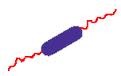
Amphitrichous flagella
- flagella at both poles
Peritrichous arrangement
- flagella dispersed randomly over surface

Nanotubes/nanowires
- thin, long, tubular extensions of cytoplasmic membrane
- used as channel to transfer amino acids + electrons (not very relevant)
Endospore
Intracellular membranes
Cell envelope
- cell wall
- cytoplasmic membrane
- outer membrane
(lies outside cytoplasm)