Antiviral drugs II 05
 Call Kai
 Learn
 Practice Test
 Spaced Repetition
 Match
 Flashcards
 Knowt Play
1/30

There's no tags or description
Looks like no tags are added yet.
31 Terms
Herpes
- V causes lifelong infections that may recur
- V can escape elimination by immune syst: latency in neurons
- 2 types of herpes simplex virus: HSV-1 and HSV-2
HSV-1
- Cold sores around mouth & nose (+sometimes eyes)
- Many don't experience noticeable symptoms
- V travels along axon to epithelial cells
- Lytic infection of epithelial cells causes cold sores
Many infected individuals don't experience noticeable symptoms (HSV-1)
- V escapes elimination by immune syst
- Remains latent inside neurons
- Stress, sunlight & immunosuppression may trigger outbreaks
Lytic infection (HSV-1 outbreaks)
Viral rep is greatest during early stages of an outbreak
Tissue damage caused by viral rep + destruction of infected cells, inflammation caused by immune response
Antiviral D's most effective when administered early
HSV-2
- Common STI causing sores & blisters around genitals and anus
- Genital HSV-2 infections recur more frequently than genital HSV-1 infections
- Frequency of outbreaks varies
- Tissue damage caused by viral rep & immune response
- Antiviral D's r most effective when administered early
Herpes virus structure
- Gen material consists of double-stranded DNA
- Complex virus: >70 genes, V encodes its own DNA polymerase (D target)

Components of nucleic acid
- Nucleosides (no phosphate group): sugar + nucleobase
- Sugar: 2-deoxyribose in DNA & ribose in RNA
- Nucleobase: nitrogen-containing aromatic heterocycle

Nitrogenous bases
4 bases in DNA: A, T, C, G
Each recognized by other molecules bc of its shape and H-bonding pattern
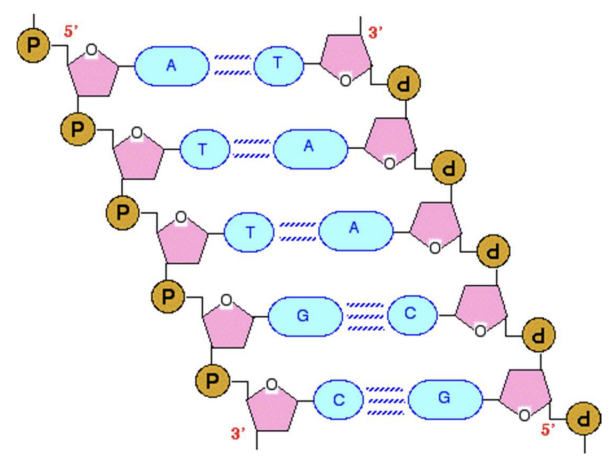
Form comp pairs: A&T, G&C

Nucleic acids
Polymers formed by linking nucleo’s w phosphodiester bonds
Encode gen. info stored in the sequence of bases
Nucleo's consist of a sugar, a base and phosphate
Backbone of alternating sugars & phosphate groups
1 base per sugar

Nucleic acids can form double strands
- Double-stranded structure ↑ stability
- Long-term info storage
- Each strand can serve as a template for DNA rep
- Comp base pairing allows error checking during rep
DNA replication
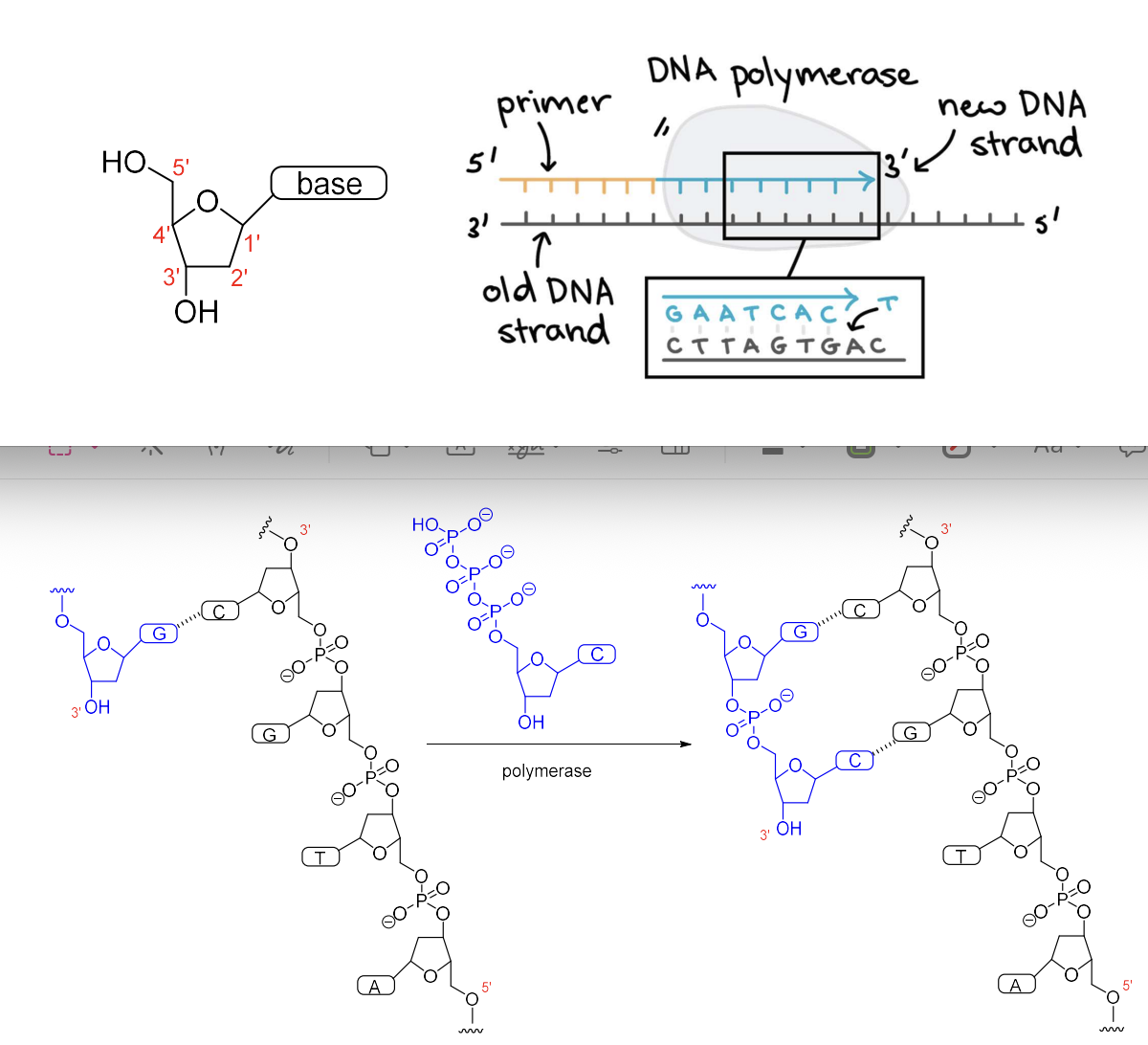
Use 1 strand as template to make a comp strand
DNA polymerase requires a primer w a free 3′-OH group on growing strand
Nucleo's r added one at a time according to comp base pairing
DNA synth proceeds from 5′ to 3′
Rational drug design
Use knowledge of an enzyme's mech & natural substrates to design D's that interfere w its activity

Selectivity problem w nucleic acids
Ideally, an antiviral D should inhibit viral DNA rep while minimizing interference w host-cell enzymes
Normal vs. virally infected cell
Poor selectivity = toxicity
Interference w normal host-cell functions can cause adverse effects

Strategies for selectivity problem
1. Non-natural base
2. Chain termination
Non-natural base strategy
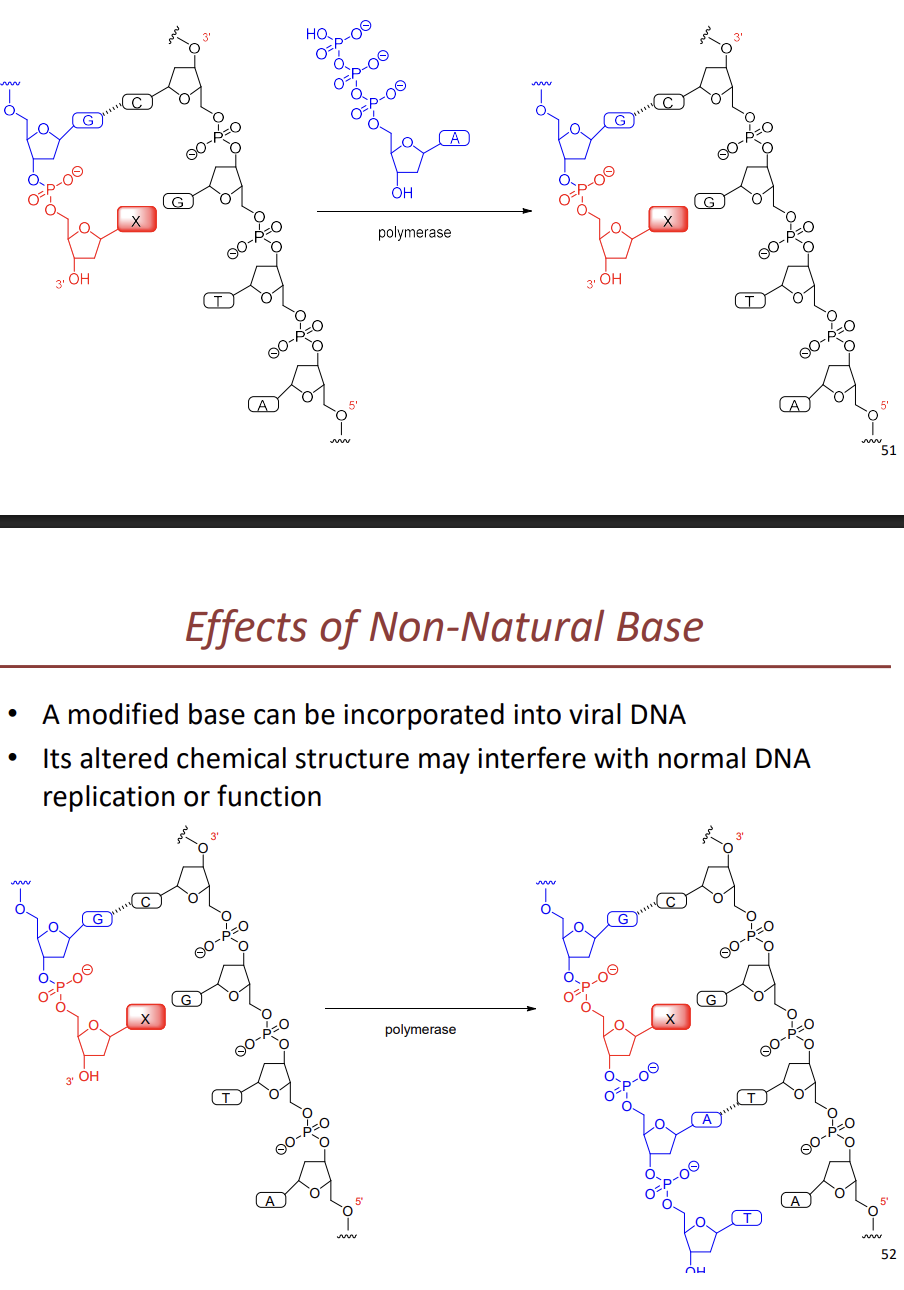
- Design a nucleo analogue containing a modified nucleobase
- If incorporated into viral DNA, mod. base may interfere w DNA rep or function
- Resulting nucleic acid strand is non readable by host enzymes

Effects of non-natural base
- Modified base may interfere w recognition or incorporation of subsequent nucleo's
- Dep on analogue, DNA synth may slow or stop
Requirements for a non-natural base
1. D must be activated by viral and/or host kinases
2. Activated D must be recognized by viral polymerase: incorporated into viral DNA, interferes w viral DNA rep or function
3. D should have minimal activity against host polymerases: ↓ risk of side effects
Virally infected cell: selectivity requirements for non-natural base
Results in:
- Altered viral DNA
- Inhibits viral rep

Healthy cell: selectivity requirements for non-natural base
May result in:
- Damage to host DNA
- Interference w host-cell rep
- Host-cell toxicity

Non-natural base examples

Idoxuridine (non-natural base)
- Modified thymidine analogue
- Incorporated into DNA by viral & host DNA polymerases
- Poor selectivity → potential toxicity
- Primarily used topically
- Early proof that antiviral D treatment is possible

Chain termination (strategy for selectivity problem)
- Design a nucleo analogue w/o a functional 3′-OH group
- Viral DNA polymerase incorporates analogue into growing DNA strand
- No further nucleo's can be added, stopping DNA chain elongation

Combining a modified base w chain termination
- A nucleo analogue can contain both a modified base and modified sugar
- If incorporated into DNA, absence of a functional 3′-OH prevents further chain elongation
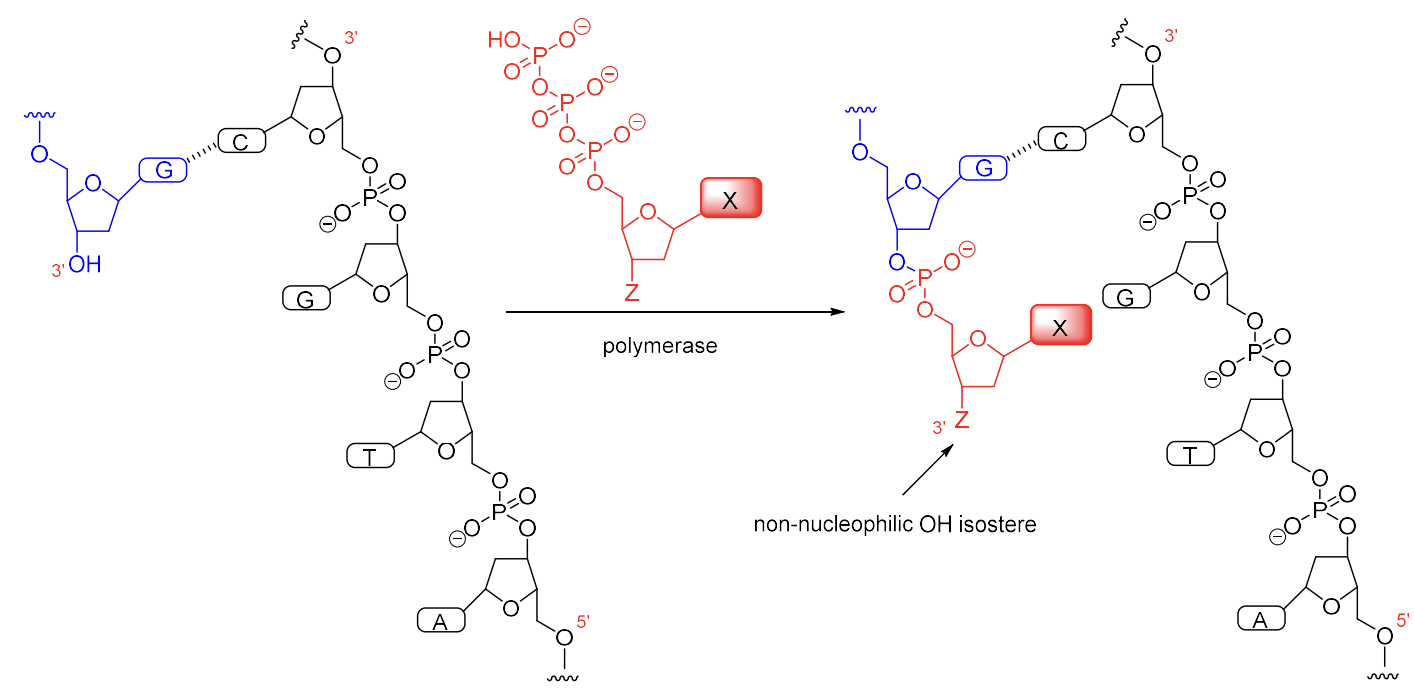
Requirements for chain termination
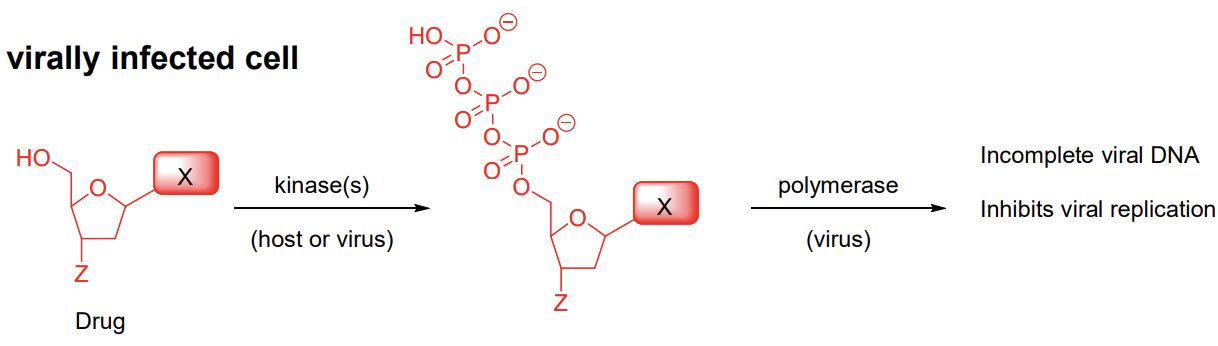
1. D must be activated by phosphorylation: viral and/or host kinases
2. Activated D must be recognized by viral DNA polymerase: incorporated into viral DNA, prevents further DNA chain elongation, inhibits viral rep
3. D should have minimal activity against host DNA polymerases: ↓ risk of side effects
Virally infected cell (chain terminator selectivity challenge)
Results in:
- Incomplete viral DNA
- Inhibits viral rep
Healthy cell (chain terminator selectivity challenge)
May result in:
- Incomplete host DNA
- Impair host-cell rep & cause toxicity

Chain termination selectivity challenge
- Chain terminators resemble natural DNA building blocks → can also be recognized by host DNA polymerases
- Incorporation into host DNA may cause toxicity
- D design must improve selectivity for viral rep

Modifying the suagr to improve antiviral selectivity
Natural nucleoside contains a cyclic sugar
Acyclic nucleoside analogue contains an open-chain sugar-like structure that interact differently w viral & host enzymes
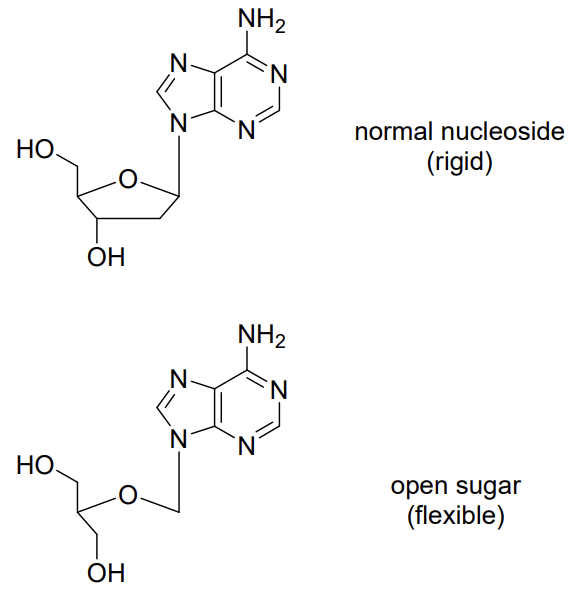
Acyclovir (chain terminator)
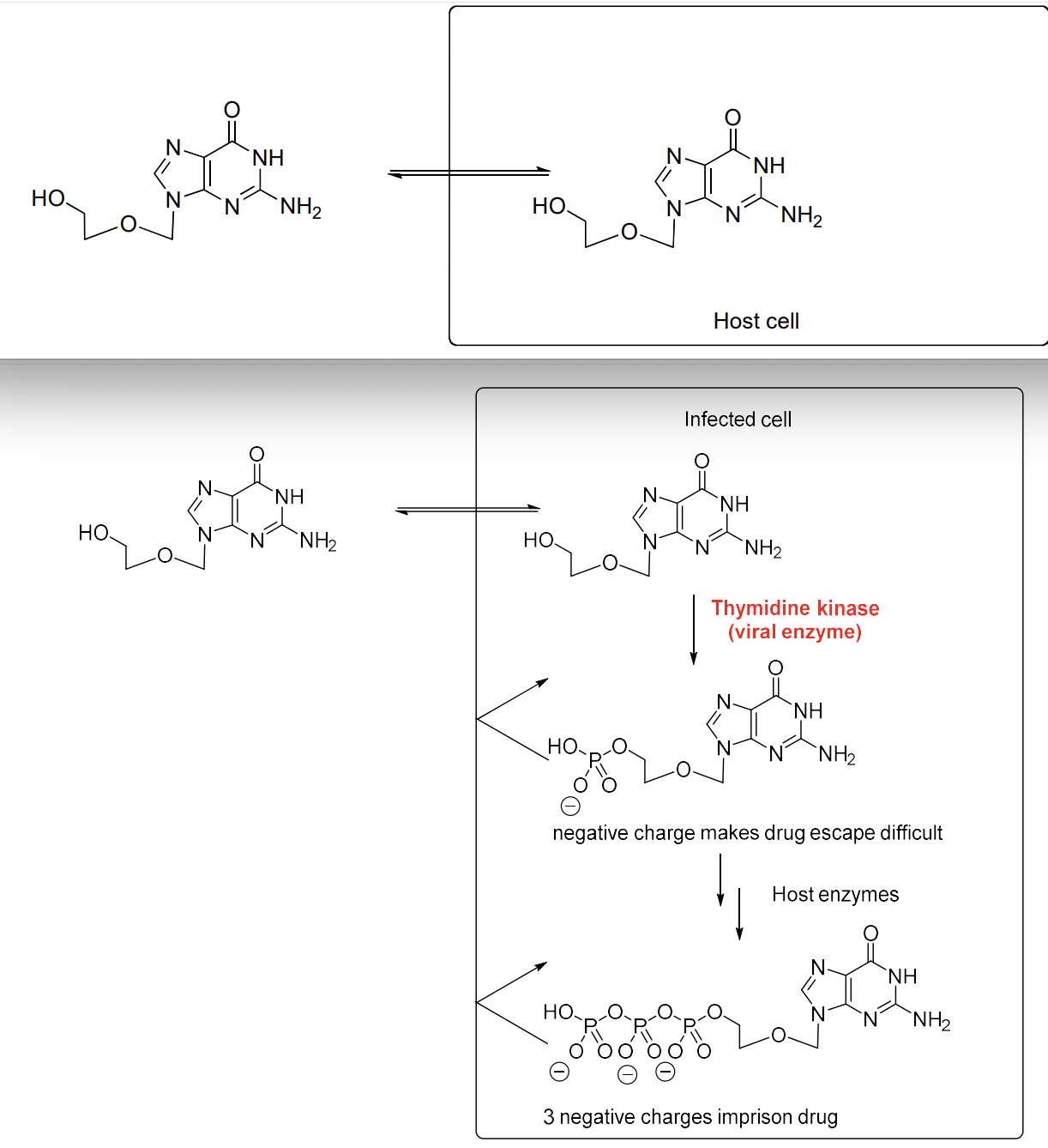
Highly selective for herpes-infected cells (preferentially activated in virally infected cells)
Well tolerated, serious side effects r rare
Selectivity due to preferential activation by viral thymidine kinase & preferential inhibition of viral DNA polymerase
Prodrug that’s phosphorylated to active D form
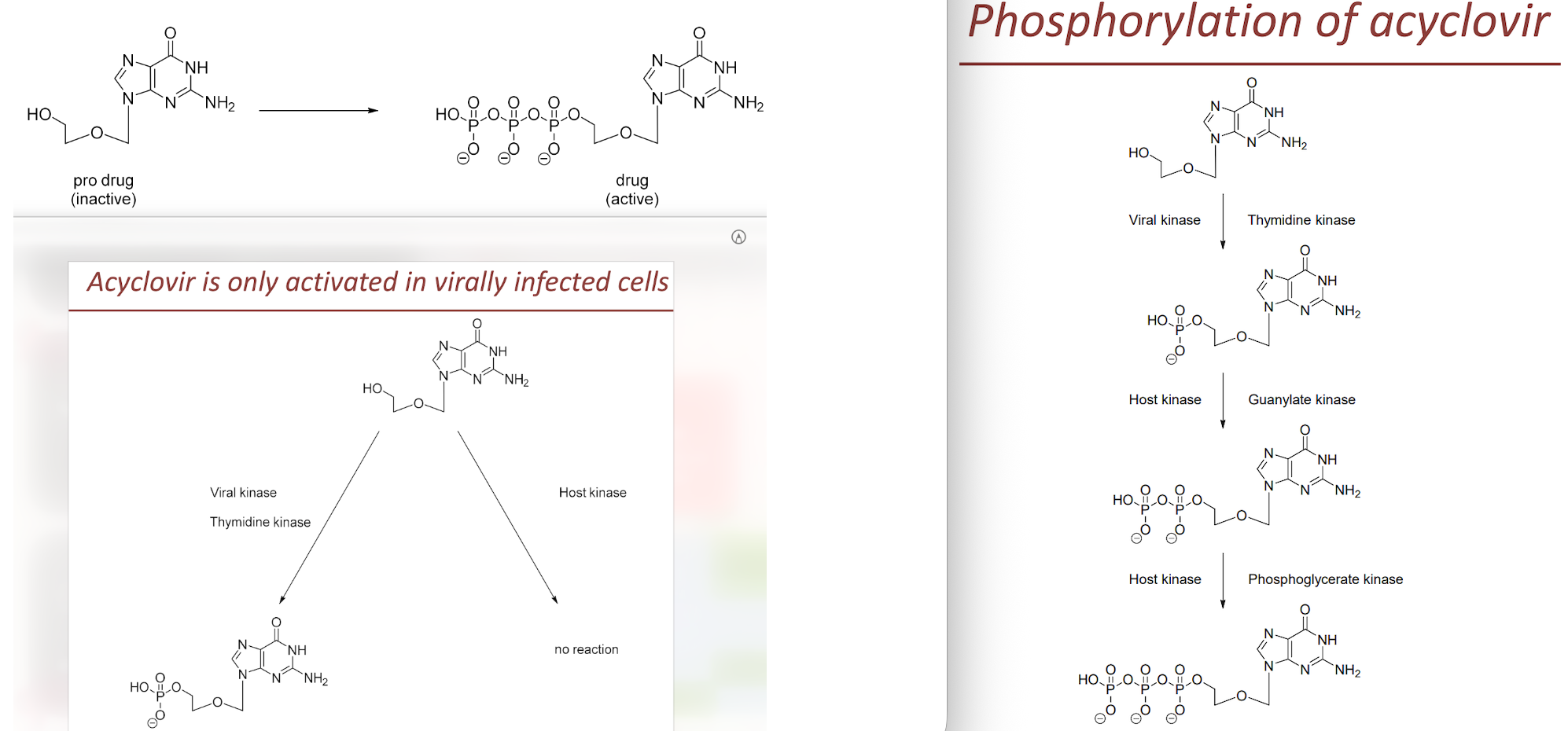
Acyclovir diffusion in normal vs. infected cells
D circulates randomly in body
Normal cells: diffuses in and out
Infected cells: phosphorylation results in 3 -ve charges, making it difficult for D to escape (trapped)