131: PPCP (plan, implement, follow-up)
 Call Kai
 Learn
 Practice Test
 Spaced Repetition
 Match
 Flashcards
 Knowt Play
1/24

There's no tags or description
Looks like no tags are added yet.
25 Terms
PLAN
pharmacist develops an individualized pt=centered care plan
Collab w/ other health care prof & pt/ caregiver —> evidence-based & cost-effective
what does the care plan include
addresses medication-related problems (from assessment)
medication therapy
sets goals of therapy
achieve clinical outcomes for pt’s health care goals & access to care
engages pt thru education —> empowerment, self-management
supports care continuitty —> follow up & transitions of care
3 questions to consider
what goals of therapy are you & your pt trying to achieve w/ pharmacotherapy?
what are you going to do, how are you interveining, resolve drug therapy problems?
add or lower med dose
what interventions (drug therapies, devices, pt education) are you providing to ensure your pt achieves desired goals of therapy?
GOALS of therapy
what you know
what is wrong
drug therapy problem identified
all presenting & background info
now what? what is your desired outcomes
primary goals to accomplish
cure a disease or illness —> antibiotic
prevent a disease or illness —> vaccines
slow the progession of disease or illness
supplement nutritional, Electrolyte, hormonal, or other deficiencies
correct abnormal lab test results
provide comfort or temp relief fro signs & symptoms of disorder
assist in diagnostic process
seconday goals
don’t do any harms
not complicating other disease states
avoiding adverse effects
providing cost effective therapy
maintaining QOL
quality of life
ex: end-stage canvcer — keep it managed
goals of therapy examples
get from guidelines
hypertension
systolic <140 mmHg (115-140 mmHg)
diastolic <90 mmHg (75-90 mmHg)
<130/80 mmHg for pts w/ diabetes or chronic kidney disease
<140/90 mmHg w/ cardio disease
aim of reducing bp —> minimize end-organ damage including heart disease (angina, myocardial infarction, heart failure), stroke, renal impairment, and/or retinopathy
INTERVENTIONS - what are you going to do?
pt-centered care plans manage pt’s medication can contain INTERVENTIONS to
start drug therapy
stop drug therapy
increase doses
decrease doses
and don’t forget about continue
provide personalized pt instructions or education
refer pts to another practiitioner or specialist
what is there intervention
specific drug therapy
drug, dose, route, frequency
specific non-drug therapy
therapies, OTC, herbals, diets, etc
pt education or training
how to use a device, self-monitoring info
how to design a plan
drug and non-drug therapy
select best drug therapy
evaluate all contraindications
allergies, other co-morbididties, etc
evaluate all pharmacokinetics
LADME or ADME
kidney ir liver function
age, other disease states, etc
therapy should able to achieve goal of therapy
acute and/or chronic problem?
use evidence based decision guidelines to help
IMPLEMENT —> actually doing it
pharmacist implements care plan in collab w/ other health care professionals & pt/caregiver
things pharmacist do
addresses med/ health related problems
preventive care strat, vaccine admin
initiates, modifies, discontinues, administers medication therapy as authorized
provides education & self-management training to pt/ caregiver
contributes to coordination of care —> referral or transition of pt to another health care professional
schedules follow up care
is ppcp a continuous process
YESS
what is soap
documentaion of whole PPCP process at a point of implantation
w/o documentation, effective & continuous pt care can’t happen
SOAP format
subjective
objective
assessment
plan
goals of therapy
drug/non drug therapy
monitoring/ follow up
pt eductaion
FOLLOW UP — monito & evaluate
pharmacist monitors & evaluates effectiveness of care plan & modifies plan in collab w/ other health care prof & pt/caregiver
includes continuous monitoring & evaluation of
medication appropriateness, effectiveness & safety & pt adherence thru available hea;the data, biometric test results & pt feedback
clinical endpoints of pt’s overall health
outcomes of care, including progress twd or the achievement of goals of therapy
is follow last step of PPCP
noo, last part not last step
it’s a circular process & continuously cycling to produce positive pt ourcomes
all is guided by goals of therapy
PPCP cycle
goals of therapy
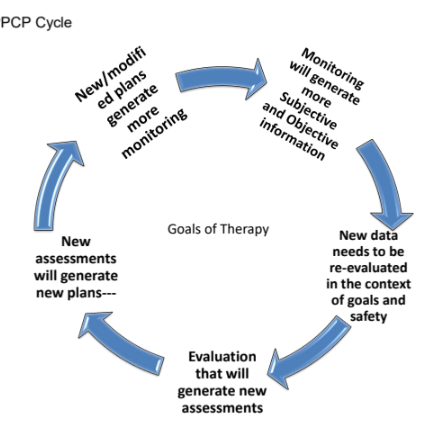
3 things to consider
is it working?
is it safe?
what’s next
3 things to consider when monitoring how effective a drug plan is
understan pathophysiology of disease you are treating
understand pharmacology of drugs
understand therapeutic guidelines & practice standards
How do you evaluate the effectiveness of drug therapy during follow-up?
Compare:
Original presenting signs and symptoms.
Clinical parameters used to establish therapy goals.
Improvement in those same clinical parameters (outcomes) at follow-up.
evaluating safety
if you don’t understand how the drug work —> how can you assess & ensure safety?
lab tests
physical assessments
worsening of clinical symptoms
identification of new symptoms
it’s important to schedule monitoring parameters
time for clinical effect to take place
time for adverse effects to take place
what happens during follow-up visit
whole ppcp process starts again where info has to be collected, assessed, and current plan will need to be continued, modified, it stopped
therapy will be reassessed & documented if the goals are or are not being met
goals of therapy are being met
resolved: goals achieved, therapy completed
stable: goals achieved, continued same therapy
improved: progess being made, continue same therapy
partial improvement: progess being made, minor adjustments reuiqred
goals of therapy are NOT being met
initial: goals being established, initiate therapy
unimproved: no progress yet, continue same therapy
worsened: decline in health, adjust therapy
failure: goals not achieved, discontinue current therapy & replace w/ different therapy