7B: Neurogenic Communication Disorders 2
 Call Kai
 Learn
Learn Practice Test
 Spaced Repetition
 Match
Match Flashcards
 Knowt Play
1/65

There's no tags or description
Looks like no tags are added yet.
Name | Mastery | Learn | Test | Matching | Spaced | Call with Kai | Chat |
|---|
No analytics yet
Send a link to your students to track their progress
66 Terms
Assessment of Dysarthria (5 purposes)
Determine if speech is abnormal
Evaluate nature/severity of difficulties
Determine cause of difficulties
Determine need for intervention
Identify directions for treatment
Motor speech examination (5 elements)
Respiration
Phonation
Resonance
Articulation
Intelligibility
Respiration
Observe posture and general appearance
Observe rate of respiration
Sustained phonation of open vowels
Measure respiratory pressure/flow (manometer)
Phonation
Laryngeal mechanics
Phonation time and voice quality
Vocal flexibility and coordination
ask them to cough, grunt, make uhhhh sound
VP Function and Resonance
Velopharyngeal mechanics
Visual assessment of resting palate
Observe palate during repeated /ah/
Resonance
Perceptual evaluation of hyper nasality and distorted consonants
Articulation
Articulatory mechanics (oral mech examination)
Speech movements
Syllable and phrase repetitions
Puh-tuh-kuh (complex articulatory task)
Multisyllabic words
Samples of speech in several contexts
Intelligibility
Observation in multiple contexts
Perceptual rating scales and measures
e.g., Assessment of Intelligibility of Dysarthric Speech
% Intelligibility
Speech rate for sentences (words/minute)
Intelligible words/minute
Unintelligible words/minute
Intervention for Dysathria
Focus on improvement of speech clarity and naturalness
Type of intervention, course, and prognosis vary with dysarthria type
Treatment may include:
Indirect activities or compensatory strategies
Direct interventions
Changes to the environment
Augmentative and Alternative Communication (AAC)
Indirect activities and compensatory strategies
sensory stimulation
muscle strengthening
Posture and speaking position
Sensory stimulation
To increase motor control
*Controversial
Muscle strengthening
Exercises to improve respiration, phonation, articulation and resonance
*Controversial
posture and speaking position
Modify posture to improve speech
Done with OT and physician support
Direct Interventions
Rate reduction therapy
Using metronome or Pacer software
Amplification devices
Delayed auditory feedback device
Lee Silverman Voice Therapy (LSVT)
Intensive therapy for Parkinson speech
Focus on laryngeal adduction, increased vocal effort, and recalibration of intended intensity (Think Loud)
Changing the environment
Training patient and caregivers to minimize environmental impact on speech intelligibility
Train patient to monitor listeners’ comprehension
Train listeners to advise when they don’t understand
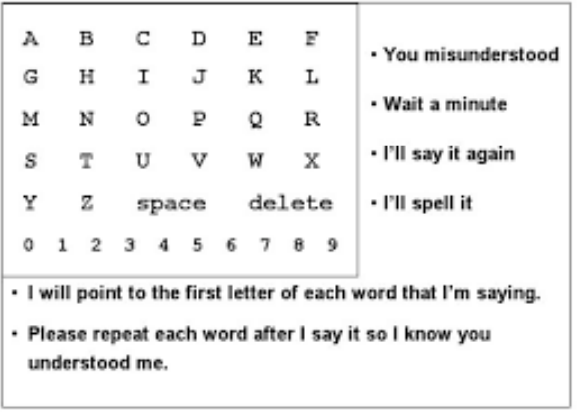
Example AAC Devices
Communication boards and books
Electronic devices
Gesture and sign language
2 Identifying characteristics
Articulatory error patterns
Consistency of errors
Articulatory error patterns
Substitution, distortion errors common
Consistency of errors
Phonemes are correct in one instance and incorrect at other times
Related to variations in context
Typically more consistent in natural settings
Consistent = NOT apraxia
Inconsistent errors = Apraxia
Major components of assessment include:
Non-speech oral motor movements
Non-speech movement sequences
Repetition of syllables
Repetition of words
Repetition of phrases
*at varying levels of complexity
Type of intervention depends on severity of impairment
General treatment principles:
Intensive treatment required (massed practice over a long interval)
Many repetitions required
Progress through a hierarchy of task difficulty (focused on sequencing)
Overall goal = successful communication (not perfection)
example interventions
Sound-sequencing therapy
Pacing therapy
AAC
Speech vs language problems
Apraxia and Dysphagia = speech disorder
Aphasia = Langauge disorder
Aphasia
Acquired language disorder
Collection of clinically diverse, acquired disorders that affect production and comprehension of spoken language, written language, and nonverbal communication
Location of Aphasia
Different types and severity depending on location and size of region(s) involved
Damage to cortical and/or subcortical regions known to support language functioning
Left hemisphere
controls most language processes in most people
Focal damage to left hemisphere results in aphasia
Right Hemisphere
contributes (to lesser extent) language functions
Right hemisphere damage does not usually result in aphasia but can lead to cognitive-communication disorders
Cerebrovascular Accident (CVA)
AKA STROKE
Majority of aphasia cases
Subtypes
Ischemic (thrombotic, embolic)
Transient ischemic attack (mini stroke)
Hemorrhagic (includes aneurysm, arteriovenous malformation)
Other causes of Aphasia
Traumatic Brain Injury (TBI)
Brain infections
Degenerative brain disorders
Tumors
Language impairments in aphasia
expressive deficits
language comprehension deficits
Expressive deficits
Word finding difficulties (anomia)
Reduced vocabulary
Omission/addition of words or grammatical markers
Word substitutions
Delayed or reduced output of language
Stereotypic language
Hyper-fluent speech
*all symptoms depend on the type
Language comprehension deficits
Impaired interpretation of linguistic information (words, grammar, syntax, etc.)
Types of Aphasia
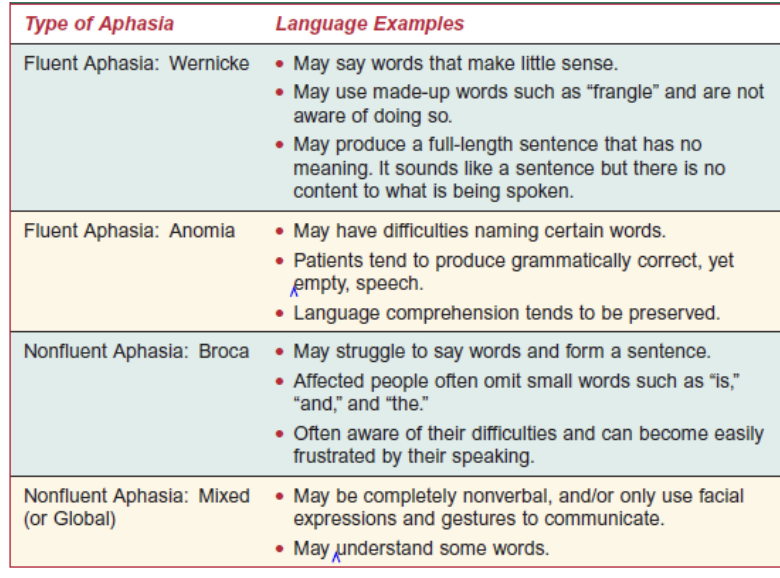
Fluent Aphasias
Main problems in understanding spoken and written language
Word substitutions, neologisms, and often verbose verbal output
Site of lesion often posterior in left hemisphere
*talk a lot but don’t understand
Non fluent Aphasias
Main problems in producing spoken and written language
Slow, laboured speech, and word retrieval and syntactic problems
Site of lesion often in or near left frontal lobe
*cannot produce spoken or written language
Fluent aphasia example:
Wernickes aphasia
Transcortical sensory aphasia
Conduction aphasia
Anomic aphasia
Wernicke’s Aphasia
Damage in temporal lobe, sometimes reaching into parietal lobe, in language-dominant hemisphere
Spoken language flows well with normal prosody, but content often lacks meaning
Significant comprehension problems
Limited awareness of problem
Transcortical Sensory Aphasia
Damage to language-dominant hemisphere at temporal occipital border or parietal region
Classic symptoms of Wernicke’s profile except stellar repetition skills and echolalia
Similar to people with Wernicke’s expect your really good at repeating phrases (Wernicke’s are not good at echoing)
Conduction Aphasia
Damage to connecting pathway in temporal-parietal region
Hallmark difficulties in repetition
Anomic Aphasia
Not identified with specific brain area/lesion site
Relatively few deficits in language expression and comprehension except naming/word retrieval-
Nonfluent Aphasia examples
Brocas Aphasia
Transcortical motor aphasia
Global aphasia
Broca’s Aphasia
Frontal lobe damage
Slowed, halting, laboured, “telegrahic” language
Mostly nouns and verbs
Mild-to-moderate language comprehension problems
Longer and more complex messages
When contextual cues removed
Awareness of problem
Transcortical Motor Aphasia
Frontal lobe damage
Symptoms similar to Broca’s Aphasia except have repetition skills that far exceed spontaneous speech
really good repetition skills
Global Aphasia
Large region of brain damage or multiple sites of brain injury in language-dominant hemisphere
Deficits across all language modalities
Limited functional communication
Poor language comprehension
Aware they have a problem
Cognitive communication disorders
Wide range of communication problems that result from damage to regions of brain that control thinking (e.g., frontal lobe)
Difficulties in communication that arise from problems with cognition
Communication vs cognition
Causes of CCDs
Traumatic Brain Injury (TBI)
Often includes frontal lobe damage
Stroke
Encephalitis due to toxins or anoxia
Tumours
Dementia
Traumatic brain injury
Wide range of deficits related to injury severity
Commonly disturbed area is pragmatics, e.g.,
Inappropriate
Poor topic maintenance
Difficulties with conversational turn-taking
May also have impairments in speech (dysarthria, apraxia), voice, and swallowing, and personality changes
Dementia
Intellectual decline due to neurological causes
e.g., Alzheimer disease, Parkinson, ALS, AIDS, etc.
Core areas of impairment
Memory
Language and communication
Visuospatial skills
Reasoning/judgment/abstract thinking
Social cognition/personality
Alzheimer disease
Early/Mild - word finding difficulty, problems understanding more abstract language (e.g., humour, sarcasm, metaphors)
Middle/Moderate - More obvious word finding difficulties, reduced vocabulary and syntax, pronoun confusion, topic digression, reading/writing errors
Later/Severe - Severe word finding difficulty, generic terms, repetitive, grammar/syntactic errors, minimal comprehension, jargon, echolalia, mutism
Assessment of Aphasia
Assessment occurs in multiple phases as client recovers
Initial (bedside) assessment
Formal testing postponed until patient is stable
Primary assessments
Components include
Medical history
Interview with client and family
Oral peripheral exam (to identify any co-occurring speech impairments)
Hearing testing (to identify any co-occurring hearing impairments)
Direct language testing
Asses overall communication skills and all modalities and aspects of language
These are the things an SLP might do to assess modalities of language
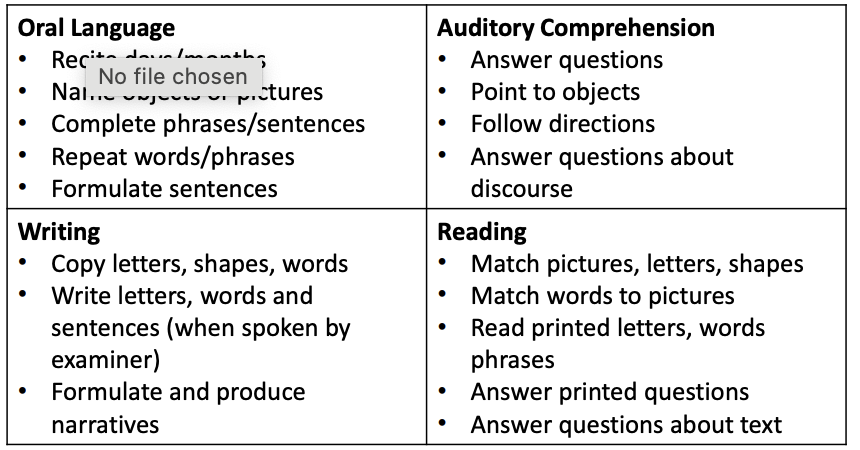
Methods to assess Aphasia
Consideration of premorbid state
Observation/interpretation of client behavior
Caregiver interview
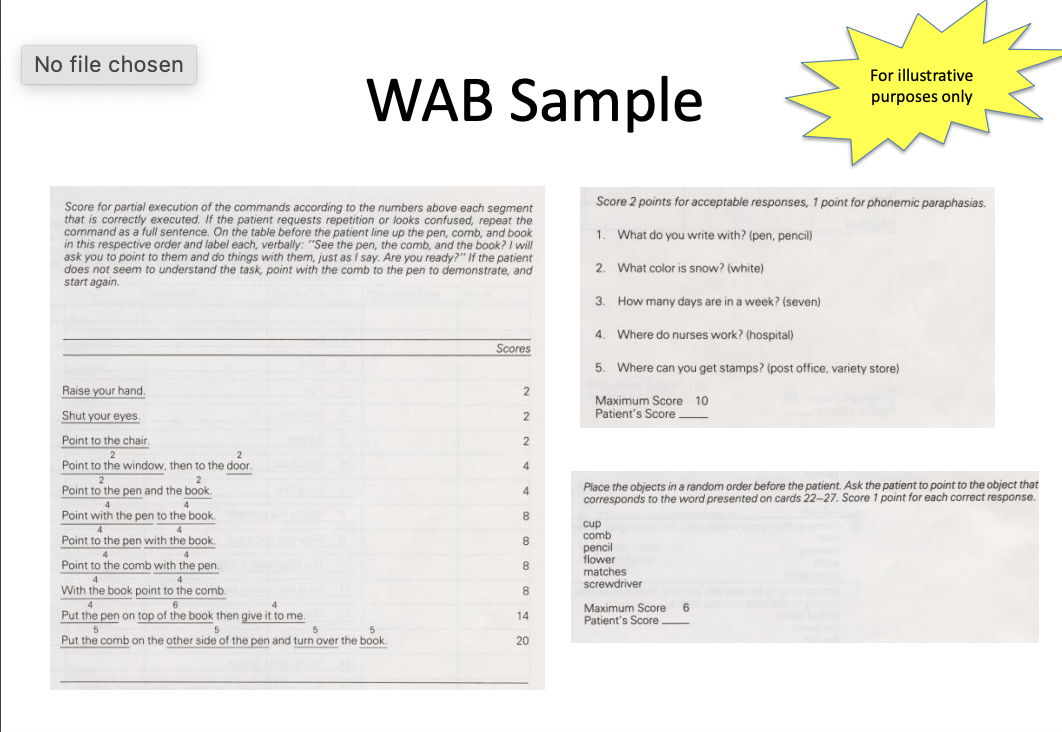
Standardized tests
Standardized tests
Boston Diagnostic Aphasia Examination
Western Aphasia Battery (WAB)
Boston Naming Test
Treatment: Therapy goals:
Maximize recovery of impaired function
Assist in development of compensatory communication strategies
Help patient adjust to residual deficits of brain injury
Treatment is effective when:
It is delivered by qualified personnel
Patients with irreversible aphasia are excluded from trials
Intensity, content, duration and timing of intervention are appropriate
Sensitive and reliable measures are used to document treatment effects
Treatment: Comprehension
Auditory comprehension
Listening comprehension and memory
Single word comprehension
Understanding spoken sentences
Discourse comprehension
Reading comprehension
More treatment methods
word retrieval
Sentence completion
Word/phrase repetition
Naming drills
Cueing
Sentence production
Imitation, repetition-elaboration, story completion, question and answer
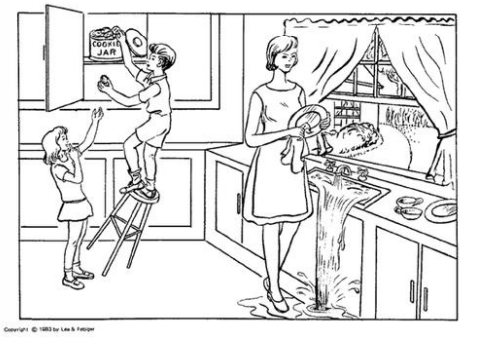
Connected speech
Picture description
Prompted storytelling
Conversation
Writing
survival writing skills
Writing treatment programs
Group therapy
AAC
New interventions: Stem cell, transcranial magnetic stimulation
melodic intonation therapy
Melodic Intotation therapy
Using intonation (melody, rhythm, and stress) to increase length of phrases and sentences
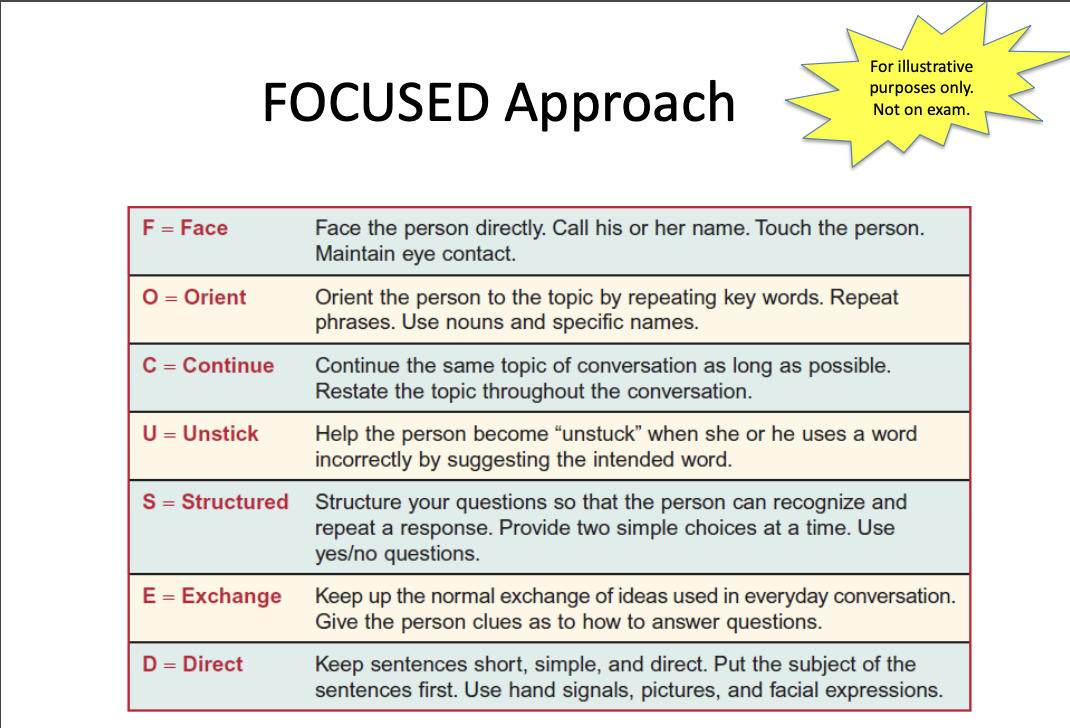
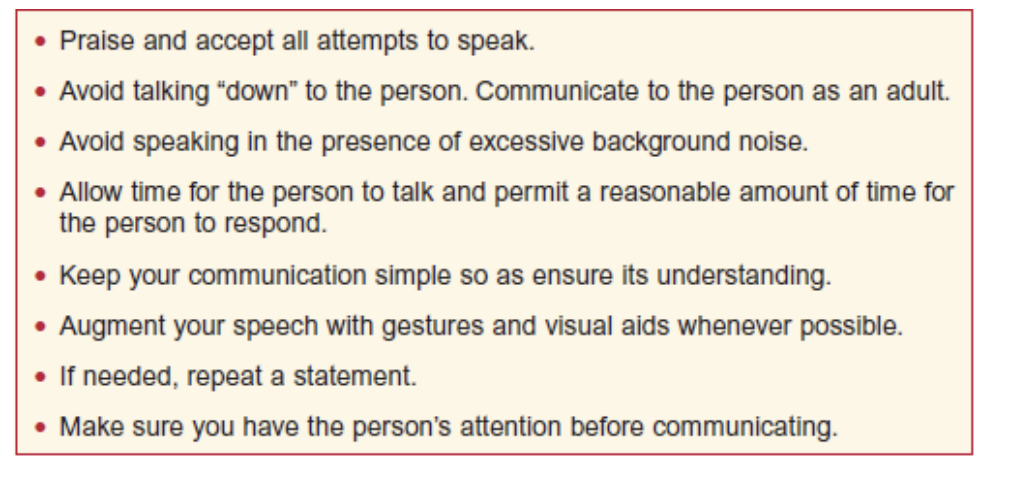
Communication tips
Predicting recovery
Amount and speed of language recovery influenced by…
Spontaneous recovery (everyone will have different amounts)
Language/communication therapy
Severity of impairment at onset
Aetiology
Size and location of damage
Type of aphasia
Other factors (e.g., sex, education level)
Assessment of CCDs: Purpose
Identify changes in language performance and behaviour
Identify cognitive impairments (attention, memory, organization) impacting communication
Identify impact of disorder on overall functioning
Assessment of CCD: How?
Examine all aspects of communication, including listening, speaking, gesturing, reading, writing and pragmatics
Evaluate cognitive-communication skills related to attention, orientation, memory, planning, organizing, reasoning, problem solving
Include observations in daily environment, interviews with communicative partners
Assessment of CCD: Goals
Emphasize intact abilities
Compensate for deficient abilities
Maintain highest level of functioning possible
Help others maximize client’s communicative participation
Tailored to unique needs of individual and caregivers
Treatment of CCDs
Memory training and memory aids
Cognitive stimulation therapy
Caregiver training in supportive communication techniques
Environmental modifications
AAC
Improve specific aspect of language (e.g., reading comprehension, language formation)
FOCUSED Approach