Foundations Quiz 5 (L18 + L19 + L20)
 Call Kai
 Learn
 Practice Test
 Spaced Repetition
 Match
 Flashcards
 Knowt Play
1/70

There's no tags or description
Looks like no tags are added yet.
71 Terms
L18
vanco- example
glycopeptide

vanco- mechanism of action
bactericidal
binds to D-alanine D-alanine, preventing synthesis and polymerization within the peptidoglycan layer
vanco- spectrum of activity
gram-positive
covers MRSA staph
mostly IV
C. Diff infection → oral only
vanco- adverse effects
vancomycin infusion reaction (IV) - red band reaction
histamine-mediated infusion reaction
NOT allergic reaction
slow flow to fix
nephrotoxicity (IV)
reversible
ototoxicity (IV)
irreversible
-vanc- examples
lipoglycopeptides
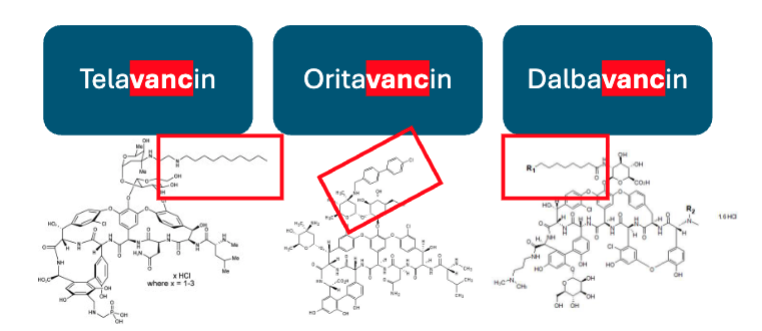
-vanc- mechanism of action
bactericidal
work similarly to vancomycin - binds to D-alanine D-alanine, preventing synthesis and polymerization within the peptidoglycan layer
-vanc- spectrum of activity
gram-positive
MRSA staph infection
VRE (vancomycin resistant enterococcus)
Telavancin - only one used for HAP/VAP and bacteremia
bacteremia & osteomyelitis - new data supporting dalbavancin
-vanc- adverse effects
infusion reaction - red band
telavancin ONLY
nephrotoxicity
QTc prolongation
clindamycin classification
lincosamide

clindamycin mechanism of action
bacteriostatic
inhibit protein synthesis by binding to 50S ribosomal unit
inhibit toxin production in necrotizing infections
clindamycin spectrum of activity
gram-positive activity
MRSA staph infections
anaerobes
bacteroides
C. perfringes
Fusobacterium
peptostreptococcus
good for aspiration pneumonia
clindamycin adverse effects
diarrhea
C. diff infection
daptomycin classification
cyclic lipopeptide
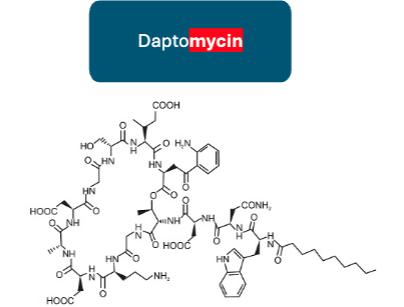
daptomycin mechanism of action
bactericidal
req Ca for binding and insertion into cell membrane, oligomerization and channel formation causes depolarization, ion efflux, and cell death
daptomycin spectrum of activity
gram-positive
MRSA staph infections
VRE enterococcus
NOT FOR PNEUMONIAS - bc it is inactivated by lung surfactant
daptomycin adverse effects
inc creatine phosphokinase (CPK)
well-tolerated
-mycin/-micin classification
macrolides
IN forms of amikacin and tobramycin → used in patients w CF
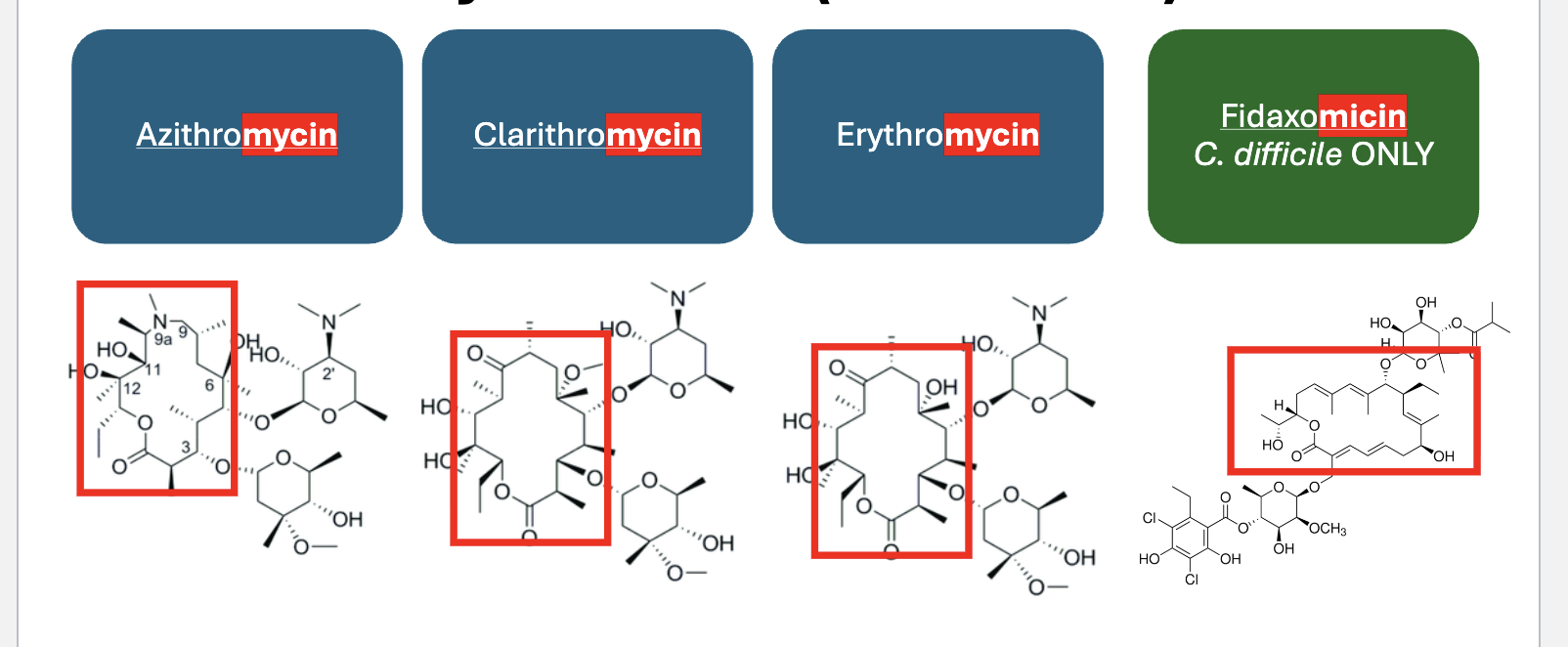
macrolides mechanism of action
bacteriostatic
fidaxomicin - bactericidal
inhibits protein synthesis by binding to 50S ribosomal unit
macrolides spectrum of activity
gram-negative
atypical
community-acquired pneumonia
fidaxomicin - C Diff only
macrolides adverse effects
nausea, vomiting, diarrhea
QTc prolongation (least to greatest)
azithromycin
clarithromycin
erythromycin
-acin/-micin/-mycin classification
aminoglycosides

aminoglycosides mechanism of action
bactericidal
post-antibiotic effect
inhibit protein synthesis by binding to 30S ribosomal unit
aminoglycosides spectrum of activity
add to betalactam for syntergistic killing of Staph infections
mainly gram-negative
anti-pseudomonal
aminoglycosides adverse effects
nephrotoxicity
reversible
ototoxicity
irreversible
neuromuscular blockade
-zolid classifications
oxazolidinones

-zolid mechanism of action
bacteriostatic
inhibit protein synthesis by binding to 50S ribosomal subunit
inhibit toxin production in necrotizing infections
-zolid spectrum of activity
gram-positive
MRSA staph infections
L19
-in classification
polyenes
amphotericin B - many formulations
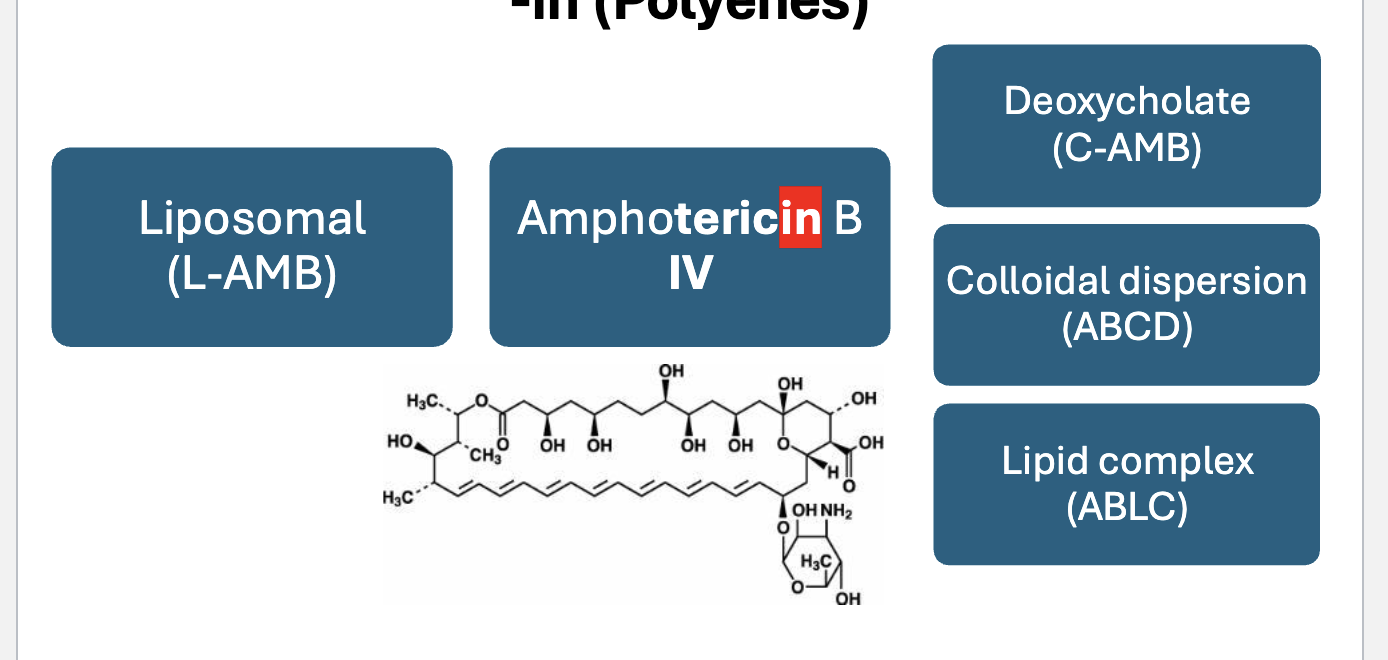
polyenes mechanism of action
binds to ergosterol, the main sterol in fungal cell membranes, which disrupts membrane integrity and causes cell death
polyenes spectrum of activity
covers everything
candida
cryptococcus
aspergillus
mucorales
dimorphic fungi
polyenes adverse effects
nephrotoxicity
hypokalemia
hypomagnesia
amphotericin B Deoxycholate
fever, chills, n/v, headache hypotension
solve → slow infusion
amphotericin B liposomal
chest pain, dyspena, hypoxia, abdominal + leg pain, flushing
solve → pre-medicated w diphenhydramine
polyenes formuations
amphotericin B deoxycholate → IV solution
amphotericin B liquid complex → IV suspension
liposomal amphotericin B → IV suspension
-azole classification
triazoles

-azole mechanism of action
inhibit Lanosterol 14α-Demethylase, which prevents transformation to ergosterol, major component of cell wall
-azole spectrum of activity
all 5 classes
aspergillus (least to most)
fluconazole - no activity
itraconoazole - very low activity
voriconazole - drug of choice
posaconazole - yes activity
isavuconazole - yes activity
-azole adverse effects
isavuconazole → QTc SHORTENING; everything else prolongs QTc
hepatotoxicity
-cytosine example
flucytosine

-cytosine spectrum of activity
candida endocarditis
crytococcus meningitis
-cytosine adverse effects
bone marrow suppression
hepatotoxicity
GI upset
metabolism into 5-FU - chemo drug
-fungin classification
echinocandins
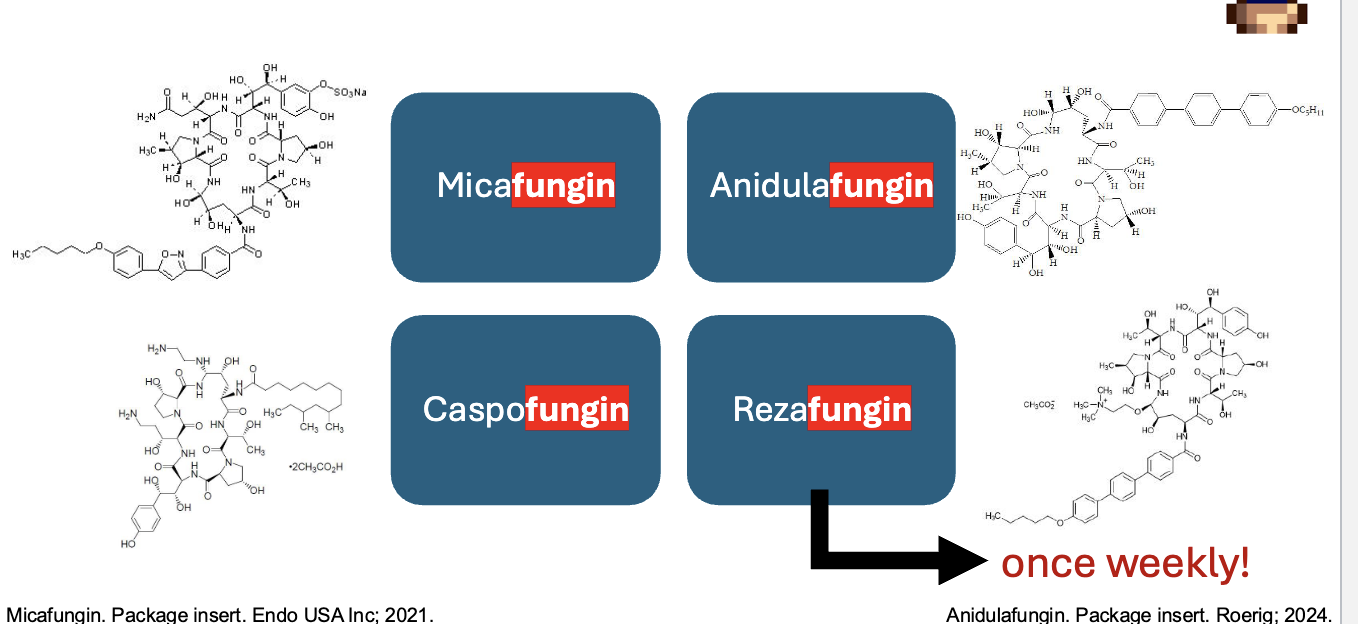
-fungin mechanism of action
noncompetitively inhibit enzyme complex β-(1,3)-D-glucan synthase, which blocks the production of β-(1,3)-D-glucan
β-(1,3)-D-glucan: a major structural polysaccharide in the fungal cell wall
-fungin spectrum of activity
all treat aspergillus
-fungin adverse effects
well tolerated
infrequently reported
elevated liver enzymes
flushing
GI effects
L20
-oxetine, -italopram clasification
SSRI (selective serotonin reuptake inhibitor)
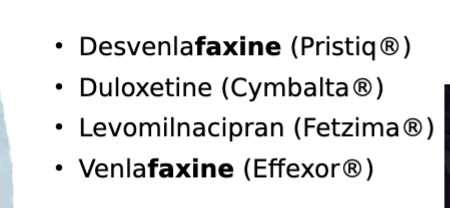
-faxine classification
SNRI (serotonin NE reuptake inhibitor)
SSRI examples

SNRI examples
SSRI/SNRI mechanism of action
inhibits reuptake or serotonin or serotonin and NE into pre-synaptic neuron
SSRI/SNRI adverse effects
well-tolerating
neurologic
anxiety
headache
insomnia
GI irritation
sexual dysfunction
hyponatremia
serotonin syndrome
better to ween off drug
highest risk w drugs w shorter half lifes
SNRI adverse effects
cardiovascular
inc bp
tachycardia
orthostatic hypotension
neuropathy
SSRI/SNRI warnings
inc risk of suicidality
expressed in breastmilk → Monotherapy with sertraline or paroxetine is preferred
SSRI/SNRI contraindications
use of an MAOi
hypersensitivity
-odone examples
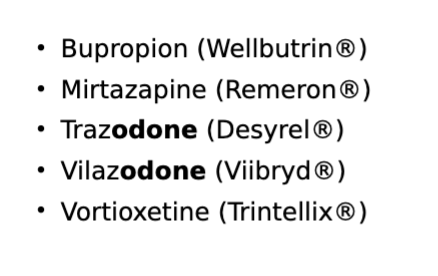
bupropion (Wellbutrin) mechanism of action
NE and dopamine reuptake inhibitor
mirtazapine (remeron) mechanism of action
alpha 2 antagonist (inc serotonin and NE release)
trazodone (desyrel) mechanism of action
SARI - serotonin antagonist (5HT2A and 2C) and reuptake inhibitor
viladozone (viibryd) mechanism of action
serotonin reuptake inhibitor and 5HT1A partial agonist
Vortioxetine (trintellix) mechanism of action
Complicated mechanism: serotonin reuptake inhibition, 5HT-1A agonist, 5HT-3, 7 and 1D antagonist
-odone adverse effects
bupropion → risk of seizures, insomnia
mirtazapine → sedation, inc appetite
trazodone → somnolence, dizziness
vilazodone → similar to SSRIs
trintellix → similar to SSRIs
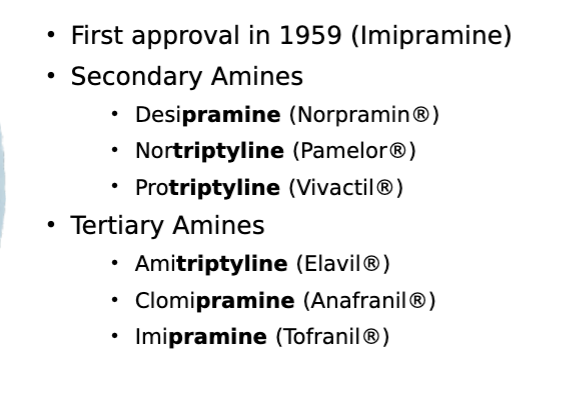
-triptyline, pramine classification
tricyclic antidepressants (TCAs)
-triptyline, pramine examples
**know secondary vs tertiary amines
secondary amines → greater affinity for NE
tertiary amines → greater affinity for serotonin
-triptyline, pramine mechanism of action
serotonin and NE reuptake inhibitor
also blocks
histamine-1 receptors
alpha-1 receptors
muscarinic receptors
-triptyline, pramine adverse effects
neurologic → sedation, redcued seizure threshold
anticholinergic → blurred vision, urinary retention, dry mouth, constipation
cardiovascular → orthostatic hypotension, tachycardia
inc risk of suicidality
-triptyline, pramine contraindications
use of MAOi within 14 days
hypersensitivity
recent myocardial infarction
MAOi classification
mono amine oxidase inhibitors
MAOi examples

MAOi mechanism of action
irreversibly inhibitor enzymes MAO-A and MAO-B
MAO - break down serotonin, NE, dopamine, and amines
why are MAOis not used anymore?
Dietary restrictions
cannot have → beers, cheese’s, fermented foods and more
can lead to hypertensive crisis