Art and Architecture of the Islamic World Midterm
 Call Kai
 Learn
Learn Practice Test
 Spaced Repetition
 Match
Match Flashcards
 Knowt Play
1/55

There's no tags or description
Looks like no tags are added yet.
Name | Mastery | Learn | Test | Matching | Spaced | Call with Kai | Chat |
|---|
No analytics yet
Send a link to your students to track their progress
56 Terms

What is this building? Where is it? Dates? Commissioner? Architects? Significance (state at least 3 things)?
Church of Hagia Sophia in Constantinople,
532 – 537 CE, commissioned by Justinian I,
Architects: Isodorus of Miletus & Anthemius of Thralles
The most important ecclesiastical structure of the Byzantium and set of the patriarch. This was the largest cathedral until the 1500s. Used amply by Byzantine emperors to impress his visitors from the Islamic land and elsewhere. Many Islamic mosques, especially Ottoman mosques, imitate this style (with its domed top and internal mosaics). Likely inspired buildings like the dome of the rock.
What is this art piece? Where is it? Dates? Commissioner? Architects? Significance (state at least 3 things)?
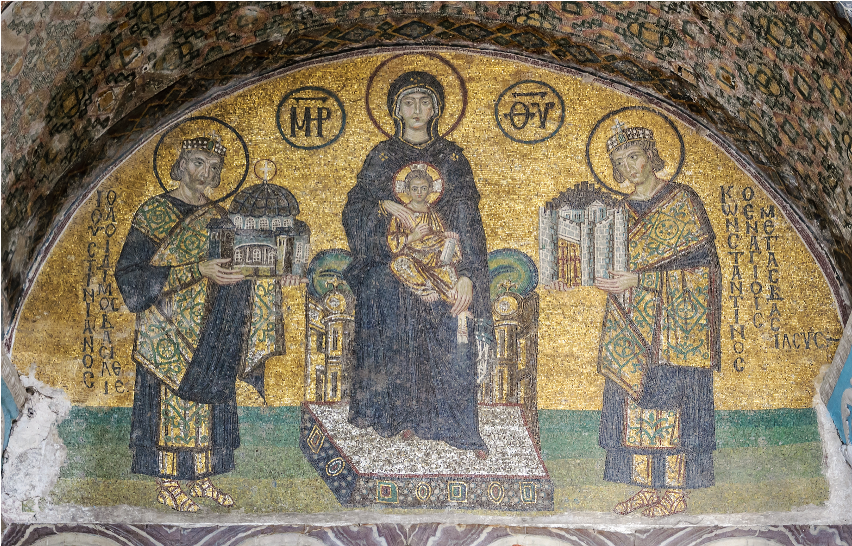
Entrance mosaic of the Hagia Sophia, 10th century CE, Made of gold and colored tesserae.
Important for its older iconographic art from the Byzantine era that stayed despite Islamic takeover of the building. These characteristics were banned and covered up. Here, other kings are presenting buildings to the Mother Mary and Jesus.
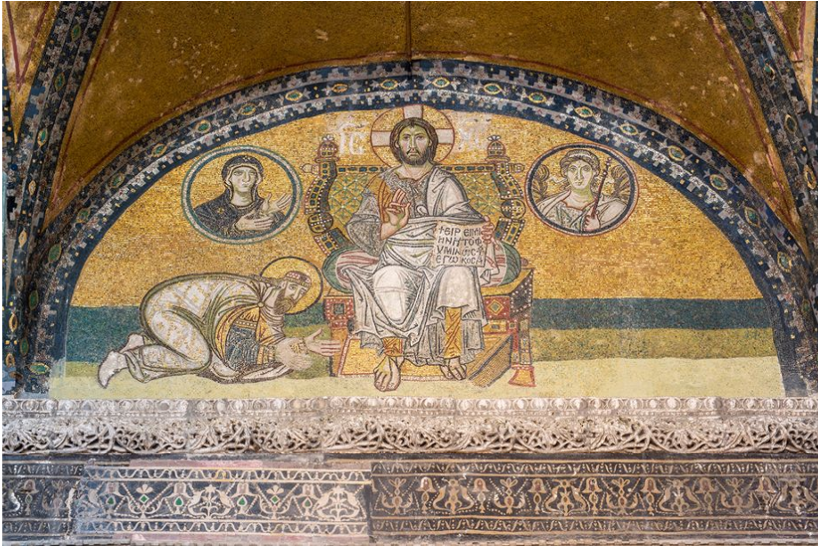
What is this art piece? Where is it? Dates? Commissioner? Architects? Significance (state at least 3 things)?
Lunette panel of Christ, Hagia Sophia, above the entrance of the main hall, ca. 900 CEMade of gold and colored tesserae. Seems to be a commissioned work from one of the kings, who is bowing to Jesus and fellow saints.

What is this art piece? Where is it? Dates? Commissioner? Architects? Significance (state at least 3 things)?
Icon of Christ, St. Catherine Monastery, Egypt, Encaustic on wood panel, 6th century CE. Byzantine iconic characteristics like this look “into your soul,” with differently positioned Jesus eyes, as well as halos and golds.

What is this art piece? Where is it? Dates? Commissioner? Architects? Significance (state at least 3 things)?
Icon of St. Peter, St. Catherine Monastery, Egypt, Encaustic on wooden panel, 6th century CE. Byzantine iconic characteristics like this look “into your soul,” with differently positioned eyes, as well as halos and golds. All saints hold some form of Christianity, and Saint Peter is known for holding a key.

What is this art piece? Where is it? Dates? Commissioner? Architects? Significance (state at least 3 things)?
Mosaic Apse with Virgin and Child, Church of the Koimisis, Nicaea (Iznik, Turkey), 9th century, Made of gold and colored tesserae. During the period of banned iconography, many of these arts were painted over. This originally looked like this or was redone to look like this and was replaced with purely a cross, as for a while that was the only allowed Iconoclast.

What is this relief? Where is it? Dates? Commissioner? Architects? Significance (state at least 3 things)?
Sassanian rock relief portraying a Roman emperor kneeling before an Iranian king, Naqsh-I Rustam in Iran, 3rd century CE. These sort of arts were hand-carved, and probably were originally painted, although that was eroded over time.
The tombs of Achaemenid kings became an important center for the Iranian rulers in the centuries following the collapse of the Achaemenid Persian empire. Sassanian kings (224 – 651 A.D.) left carvings of their own under the Naqsh-I Rustam tombs. In this way they probably claimed that they were the descendant of the Achaemenid kings (even though they were not connected to the Achaemenids by blood!).

What is this object? Where is it? Dates? Commissioner? Architects? Significance (state at least 3 things)?
Sassanian King, Yazgard I, slaying a stag, silver plate with mercury gilding, ca. 399 – 420 C.E. The Sassanian empire loved plates. These plates are some of the first relics of the princely cycle (such as hunting, fighting, partying), and these stories of Sassanian kings later became somewhat mythical in Islamic empires, especially following the penning of the Book of Kings.

What is this object? Where is it? Dates? Commissioner? Architects? Significance (state at least 3 things)?
Plate with a hunting scene from the tale of Bahram Gur and Azadeh (which is about an emperor bringing a girl on the hunting trip for her to later be trampled), silver plate with mercury gilding, ca. 5th century C.E.The Sassanian empire loved plates. These plates are some of the first relics of the princely cycle (such as hunting, fighting, partying), and these stories of Sassanian kings later became somewhat mythical in Islamic empires, especially following the penning of the Book of Kings.

What is this building? Where is it? Dates? Commissioner? Architects? Significance (state at least 3 things)?
Takh-i Kisra (Throne of Khusrau), made of baked mud-bricks, ca. 540 CE
One of the wonders of the ancient world was Taq-i Kisra (“Throne of Khusrau”), the royal palace built at Ctesiphon by the Sasanian king Khusrau I (r. 531–79). Its brick throne hall, 115 feet (35 m) high, is an iwan, a space typically vaulted and walled on three sides, with one end entirely open. The hall is famous for its great arch, the world’s largest parabolic barrel vault (84 feet [26 m]) built without centering and spanning. It has marble and glass mosaics with stucco panels, and used to have color.
![<p>Takh-i Kisra (Throne of Khusrau), made of baked mud-bricks, ca. 540 CE</p><p></p><p>One of the wonders of the ancient world was Taq-i Kisra (“Throne of Khusrau”), the royal palace built at Ctesiphon by the Sasanian king Khusrau I (r. 531–79). Its brick throne hall, 115 feet (35 m) high, is an <em>iwan</em>, a space typically vaulted and walled on three sides, with one end entirely open. The hall is famous for its great arch, the world’s largest parabolic barrel vault (84 feet [26 m]) built without centering and spanning. It has marble and glass mosaics with stucco panels, and used to have color. </p>](https://assets.knowt.com/user-attachments/a8db371f-8696-46b3-99ba-c4f086a5b700.png)

What is this art piece(s)? Where is it? Dates? Commissioner? Architects? Significance (state at least 3 things)?
Stucco wall reliefs from Ctesiphon, used as wall decoration, 6th century CE


What is this building? Where is it? Dates? Commissioner? Architects? Significance (state at least 3 things)?
Dome of the Rock, Jerusalem, construction began in 691, commissioned by Abd al-Malik. This is the earliest well-preserved monument that helped construct the “visual language” of Islam (although it seems inspired by Byzantine works, which makes sense considering Christian architects were brought in for Umayyad-period buildings).
This building is part of the larger Al-Aqsa mosque, and holds a relic of a rock, where the meanings change but it seems to have something to do with Mary’s path to give birth to Jesus. Its’ octoganal shape and three-shelled structure to pray around is relatively unique, at least in terms of its ability to support a much larger number of visitors. It was meant to show off, prevent marvel at other religious institutions, and impose over the skyline. The inscriptions focused on ONE god, marking Jerusalem as a Muslim city.
It is contentious for its’ religious significance, and still is today. This place holds material culture, religious lore, traditions, and attachments to holy places. Prior to praying towards Q’aba, Muhammad and Muslims prayed towards Jerusalem.


What is this art piece? Where is it? Dates? Commissioner? Architects? Significance (state at least 3 things)?
Mosaic decorations from the Dome of the Rock, construction began in 691, Made of colored tesserae (with gold inclusion). Heavily Byzantine in characteristics.

What is this coin? Where is it? Dates? Commissioner? Architects? Significance (state at least 3 things)?
Gold Solidus of Justinian II, minted in 692-695. The text reads: “Christ, the king of kings” & “Justinian, the lave of Christ.” Islamic coins in the Umayyad period originally imitated these coins, before losing the figural look.

What is this coin? Where is it? Dates? Commissioner? Architects? Significance (state at least 3 things)?
Gold dinar of Abd’al Malik (685-705), the coin minted in 696-697
The text reads: (obverse) “There is no god, except God alone,
he has no partner; he has no partner; Muhammad is the Messenger of God
Whom he sent with guidance and the religion of truth
that he may make it victorious over every other religion”
& (reverse) “God is one, God is eternal. He begets not, neither is he begotten.”
This is where coins lost their figural look to help create a new Muslim identity. Many of the coins focused on spreading a monotheistic message.

What is this ground plan? Where is it? Dates? Commissioner? Architects? Significance (state at least 3 things)?
Prophet Mohammed’s House in Medina, Mudbrick, wood and reed architecture, ca. 630 CE. This was technically the first mosque.

What is this building? Where is it? Dates? Commissioner? Architects? Significance (state at least 3 things)?
Grand Mosque of Damascus, 706, Combination of stone, mudbrick and some wood in construction, commissioned by al-Walid. This is where the Umayyads embellished their mosques, and used state tax revenue to put together. It is very Greco-Roman in architecture (basilicas) and has similar embellishing styles.


What is this decoration? Where is it? Dates? Commissioner? Architects? Significance (state at least 3 things)?
Mosaic decorations of the Grand Mosque of Damascus, made of colored and gold tesserae, 706
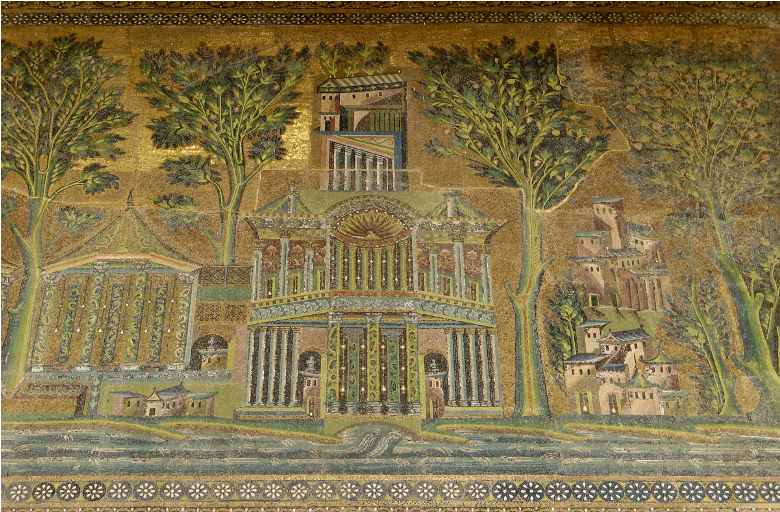

What is this decoration? Where is it? Dates? Commissioner? Architects? Significance (state at least 3 things)?
Façade decoration of the Qasr al-Mshatta, Amman (Jordan), Carved out of limestone, commissioned by al-Walid II. ca. 740. These decorations were basically turrets for decoration which imitated looks of Roman fortresses. “Adopted form w/o the function."


What is this building? Where is it? Dates? Commissioner? Architects? Significance (state at least 3 things)?
Qasr al-Mshatta, Amman (Jordan), 740. Umayyad palaces were “pleasure places,” that were secluded and focused on partying. This palace was never properly finished due to Al-Walid II’s assassination. Very Roman in nature (and thought to be so) due to its’ turreted style.
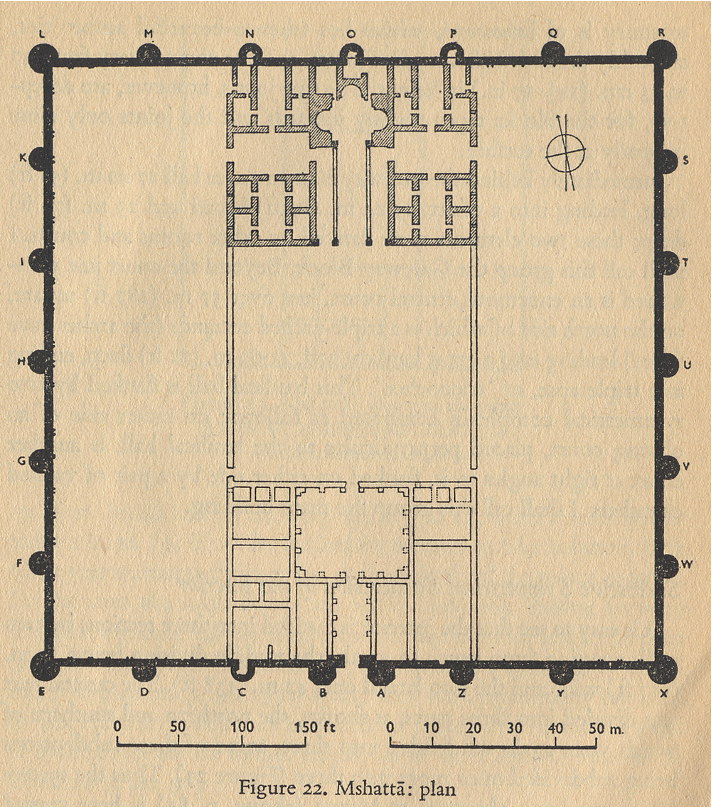

What is this ground plan? Where is it? Dates? Commissioner? Architects? Significance (state at least 3 things)?
Umayyad mansion at Qusayr Amra, built in Jordan, 720s-740s. Its inside frescoes are what make it of note, but it was part of a larger castle complex. Commissioned by Walid ibn Yazid.
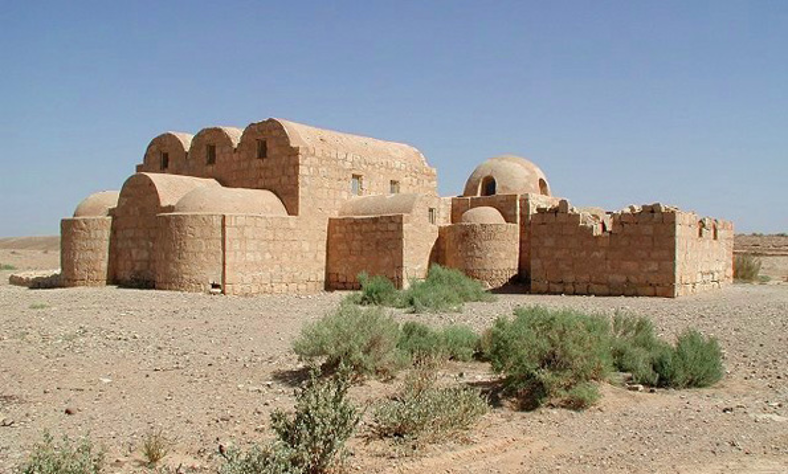

What is this art piece? Where is it? Dates? Commissioner? Architects? Significance (state at least 3 things)?
Wall paintings from the Umayyad mansion at Qusayr Amra, wet fresco, 8th century. These frescoes were significant for their general innovation that was not previously seen in Umayyat art.
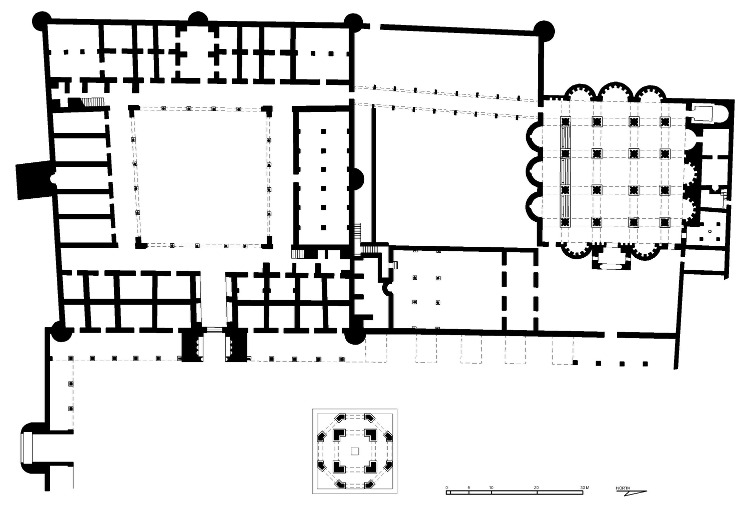
What is this ground plan? Where is it? Dates? Commissioner? Architects? Significance (state at least 3 things)?
Khirbet al-Mafjar, Jerico, 8th century. Very well known for its meticulous floor mosaics.
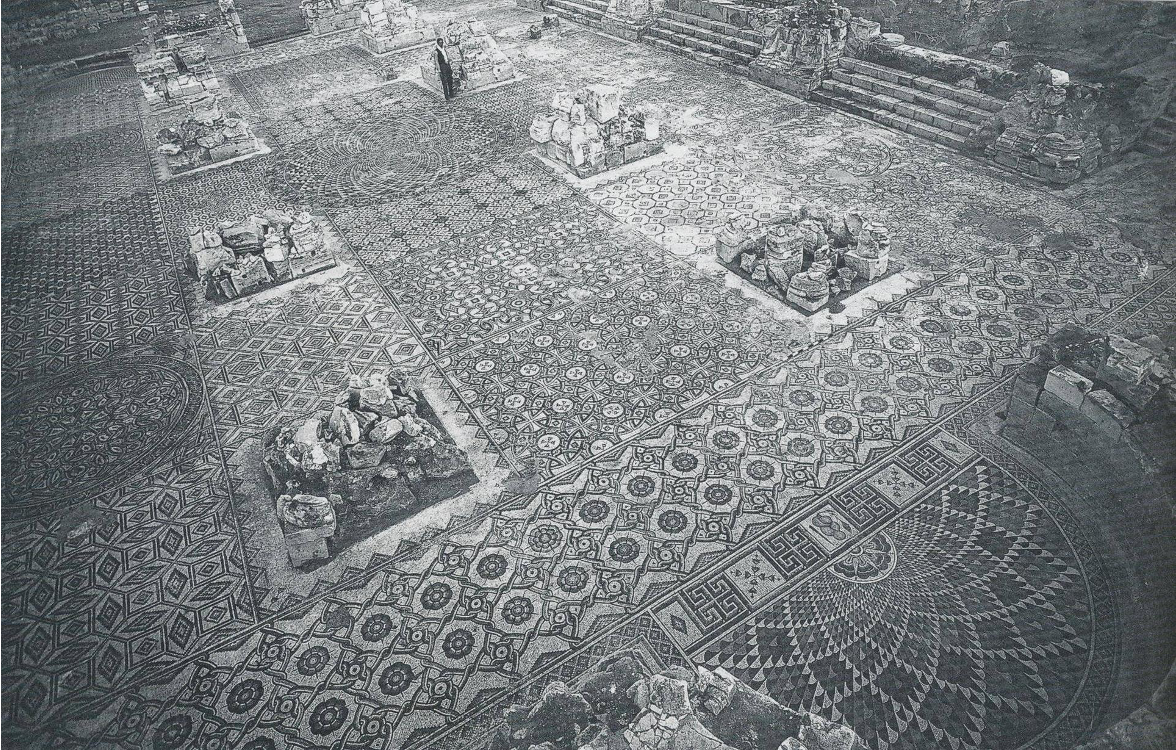
What is this mosaic? Where is it? Dates? Commissioner? Architects? Significance (state at least 3 things)?
Floor Mosaics at Khirbet al-Mafjar, made of colored stone tesserae, ca. 740. As I said, well-known for these details.
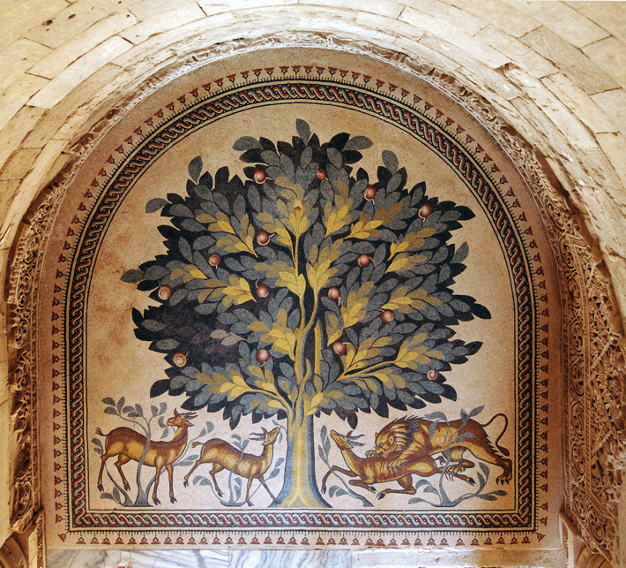

What is this statue? Where is it? Dates? Commissioner? Architects? Significance (state at least 3 things)?
Statue of an Umayyad Caliph, Khirbet al-Mafjar, stucco, 8th century. Sculptures only really exist in the Umayyad period due to Greco-Roman influence,and they died out due to iconophobia. Additionallly, there are very few of these sculptures still preserved and remaining.

What is this manuscript? Where is it? Dates? Commissioner? Architects? Significance (state at least 3 things)?
Qurʾanic palimpsest in Hijazi script, 7th c. Copenhagen, David Collection, 86/2003. George, fig. 4.1. parchment

What is this leaf? Where is it? Dates? Commissioner? Architects? Significance (state at least 3 things)?
Qurʾan leaf in the sloping (māʾil) style, late 8th–first half 9th c. The Met, 1979.201. Schimmel, fig. 3.

What is this leaf? Where is it? Dates? Commissioner? Architects? Significance (state at least 3 things)?
Qurʾan leaf, Egypt(?), 9th c., Q 47:36. Ink, colors, and gold on parchment. The Met, 30.45. Schimmel, fig. 1

What is this leaf? Where is it? Dates? Commissioner? Architects? Significance (state at least 3 things)?
Qurʾan endowed by Amājūr, governor of Syria, 876: three lines on a page about 13 × 20 cm. Cambridge UL, Add. 1116. George, fig. 4.3.

What is this leaf? Where is it? Dates? Commissioner? Architects? Significance (state at least 3 things)?
Qurʾan in the “New Style,” Isfahan, 993. Nasser D. Khalili Collection, KFQ90. George, fig. 4.4.
◆Muslims become the majority in most regions; many are not native Arabic speakers
◆Paper, learned from China after 751, is cheaper than parchment
◆Smaller Qurʾans with more lines; more complete vowel notation
◆Angular “New Style” with sharp thick-and-thin contrast
◆Then round scripts, codified in Baghdad, combine the ease of everyday writing with the elegance of Qurʾanic calligraphy

What is this leaf? Where is it? Dates? Commissioner? Architects? Significance (state at least 3 things)?
Qurʾan leaf in muḥaqqaq with interlinear Persian translation, eastern Islamic lands, 14th c. The Met, 62.152.8. Schimmel, fig. 34
◆Converts mastered Arabic: the first biography of the Prophet by Ibn Isḥāq, grandson of an Iraqi prisoner of war; the first grammar by Sībawayh, a Persian from Balkh (Afghanistan).
◆Fixed early: standardized by the 9th–10th centuries; a reader today can still follow texts twelve hundred years old.
◆Outlived Arab rule: Persian and Turkish became languages of court and state, but Arabic stayed the language of religion, law, and scholarship.
◆Compare: Latin in medieval Europe, or classical Greek and Sanskrit.

What is this hand? Where is it? Dates? Commissioner? Architects? Significance (state at least 3 things)?
Hijazi -
◆Tall letters slant to the right
◆Vertical pages, many lines, like contemporary Bibles
◆Few dots, no vowel signs
◆Each scribe’s hand is different; one codex had five scribes
◆Palaeography and radiocarbon place most of these in the first Islamic century

What is this hand? Where is it? Dates? Commissioner? Architects? Significance (state at least 3 things)?
Kufic - 8-10th century
◆Horizontal pages
◆Few lines, huge letters, wide spacing
◆Long horizontal stretches
◆Parchment, often in 30 volumes
◆a Kufic (10th c.): angular, horizontal, no dots

What is this hand B? Where is it? Dates? Commissioner? Architects? Significance (state at least 3 things)?
◆b naskh (Ibn al-Bawwāb, 1000–01): compact, legible
Compact and legible. Everyday books, small Qurʾans; the model for Arabic printing.

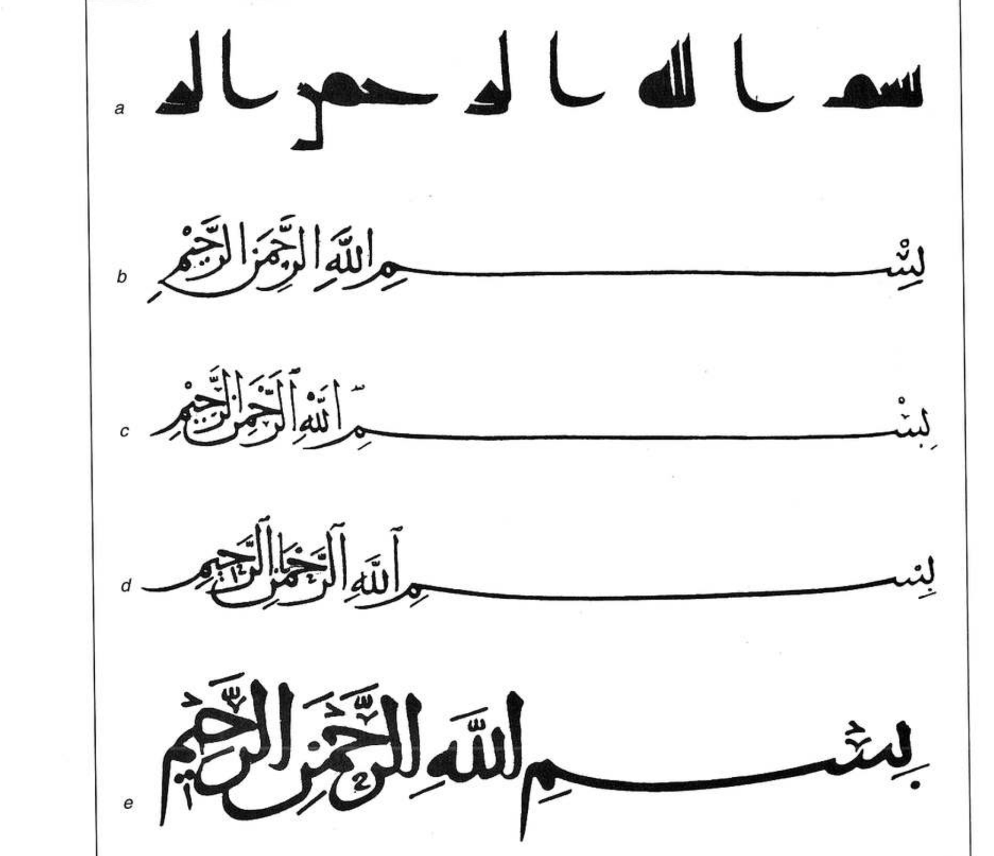
What is this hand C? Where is it? Dates? Commissioner? Architects? Significance (state at least 3 things)?
◆c rayḥān (c. 1335): fine, light, spacious


What is this hand D? Where is it? Dates? Commissioner? Architects? Significance (state at least 3 things)?
◆d muḥaqqaq (Cairo, 1370s): tall, straight, sharp tips
Tall straight shafts, flat sharp endings. Monumental Qurʾans for Mamluk and Ilkhanid patrons.

What is this hand E? Where is it? Dates? Commissioner? Architects? Significance (state at least 3 things)?
◆e thuluth (Cairo, 1304–06): bold curves, stacking
Bold curves, letters stacked. Chapter headings and above all architecture.

What is this page? Where is it? Dates? Commissioner? Architects? Significance (state at least 3 things)?
Naskh Qur’an Page. Qurʾan, 1848. The Met, 1980.603. Schimmel, fig. 27. ◆b naskh (Ibn al-Bawwāb, 1000–01): compact, legible. Compact and legible. Everyday books, small Qurʾans; the model for Arabic printing.

What is this page? Where is it? Dates? Commissioner? Architects? Significance (state at least 3 things)?
Thuluth Qur’an Page. Qurʾan page, Mamluk Egypt, 14th c.: Sura 96 in gold thuluth. The Met, 24.146.1. Schimmel, fig. 29. ◆e thuluth (Cairo, 1304–06): bold curves, stacking, Bold curves, letters stacked. Chapter headings and above all architecture.
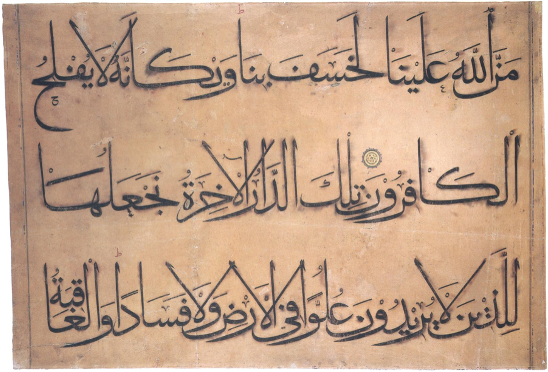
What is this page? Where is it? Dates? Commissioner? Architects? Significance (state at least 3 things)?
Muhaqqaq Quran Page. Fragment of a huge Timurid Qurʾan, 15th c., 72 × 107 cm. The Met, 21.26.12. Schimmel, fig. 21. ◆d muḥaqqaq (Cairo, 1370s): tall, straight, sharp tips, Tall straight shafts, flat sharp endings. Monumental Qurʾans for Mamluk and Ilkhanid patrons.

What is this city? Where is it? Dates? Commissioner? Architects? Significance (state at least 3 things)?
Baghdad (City of Peace) – Foundation in 762 by the Abbasid caliph Al Mansur, built from mud brick, while pieces were taken from Ctesiphon. It was the biggest city at the time with a massive library, and inspired Arabian Nights and later Aladdin. What we know about this city is almost entirely textual, which is insane given how big of a city it was. It was a round city with a palace at the center and an Abbasid Caliph throne at the center of that (which was a departure from Allah being at the center of the universe). Mosque was attached to the palace.


What is this City/Building? Where is it? Dates? Commissioner? Architects? Significance (state at least 3 things)?
Grand Mosque of Al Mutawakkil and its spiral minaret, made of mudbrick, 848-851, Samarra. The largest mosque of the Mideval ages, and could host roughly ~10k people.
Samarra was an adminstrative capital for about 60 (836-892) years following overpopulation of Baghdad, capital of overall Abbasid Empire. Was heavily catered to non-Arab defesnive forces, and very well-preserved.


What is this painting? Where is it? Dates? Commissioner? Architects? Significance (state at least 3 things)?
Abbasid wall paintings from Dar al Khalifa (royal palace) in Samarra, Made with fresco technique, 9th century. This was in the fortress of the Caliph, and seems to be of servants.

What is this ornament? Where is it? Dates? Commissioner? Architects? Significance (state at least 3 things)?
Birth of Islamic Ornament: Samarra Styles. Wall decorations made of molded (and sometimes carved - in case of Style A) clay and stucco. Seen here is Samarra style A and B, All of the Samarra decorations were made with plaster, but the first two generally carved out of the material, whereas the third was typically molded.


What is this ornament? Where is it? Dates? Commissioner? Architects? Significance (state at least 3 things)?
Birth of Islamic Ornament: Samarra Styles
Wall decorations made of molded (and sometimes carved - in case of Style A) clay and stucco. All of the Samarra decorations were made with plaster, but the first two generally carved out of the material, whereas the third was typically molded. This is style C. They likely pressed plaster due to time constraints, and it only took a few days to dry.

What is this bowl? Where is it? Dates? Commissioner? Architects? Significance (state at least 3 things)?
Bowl, earthenware; luster-painted on an opaque white glaze, made in Iraq and found in Nishapur (Iran), 10th century, 3.8 x 11.8cm. The luster technique comes from the Islamic world, and is meant to create a glassy/rainbow look. It is a thin glass-like glaze where you fire the ceramnic twice: first with a glaze and metallic paints, adn then again with metallic mica!

What is this bowl? Where is it? Dates? Commissioner? Architects? Significance (state at least 3 things)?
Fragment of a bowl with a lute player, earthenware painted in luster on opaque white glaze, Egypt, 11th – 12th century, 23.5 x 18.7 x 7.5 cm The luster technique comes from the Islamic world, and is meant to create a glassy/rainbow look. It is a thin glass-like glaze where you fire the ceramnic twice: first with a glaze and metallic paints, adn then again with metallic mica!
Egyptian interpretation is very Greco-Roman based, especially as in 10th century production of ceramic switches from Iraq to Egypt, later exploding in Iran.

What is this bowl? Where is it? Dates? Commissioner? Architects? Significance (state at least 3 things)?
Bowl with inscription, black slip painted on a white slip under a transparent glaze, eastern Iran or Transoxiana, 10th/11th century. Inscription: “[generosity] is a disposition of dwellers of paradise.”

What is this bowl? Where is it? Dates? Commissioner? Architects? Significance (state at least 3 things)?
Bowl with an inscription, black slip painted on a white slip under a transparent glaze, eastern Iran or Transoxiana, 10th century. Inscription: “May you be well rewarded (written twice).”

What is this bowl? Where is it? Dates? Commissioner? Architects? Significance (state at least 3 things)?
Bowl with inscriptions, frit ware painted with luster on an opaque white glaze, 1206, signed by Muhammad ibn Abi al-Hasan al-Muqri. Inscription: “Perpetual glory and increasing prosperity and triumphant victory and constant splendor and good fortune and happiness and well-being and generosity and good fortune and happiness to him.” What does the signing of pottery imply regarding the value of ceramics in the society?
Putting Quranic verses on ceramic is RARE and only for display. Fritware was a powdered quartz mixed with clay and mica to make a stonepapste that creates a whiter surface.

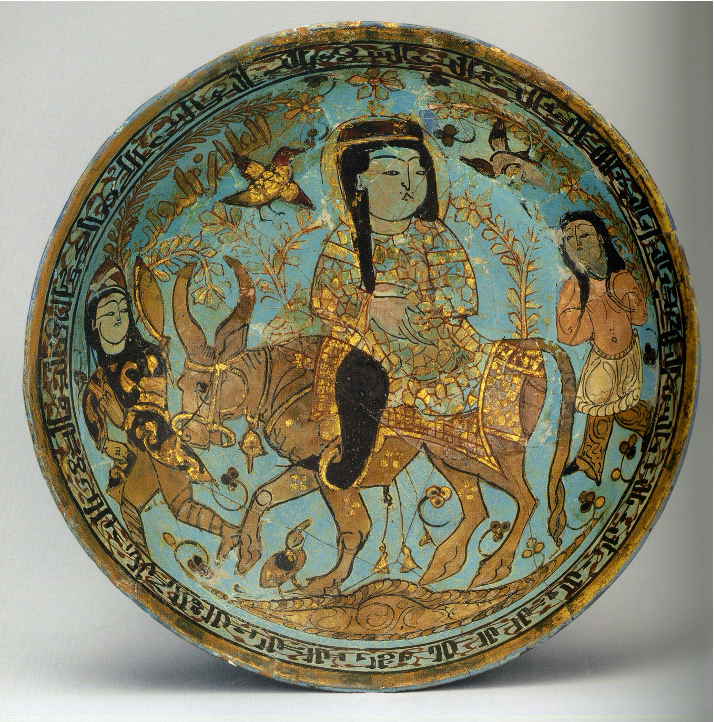
What is this bowl? Where is it? Dates? Commissioner? Architects? Significance (state at least 3 things)?
Bowl with Faridun, Kava, and Zahnak, glazed fritware, late 12th / early 13th century, from Iran. In this technique, frit wares initially fired with an opaque white or turquoise glaze would be fired with an opaque a second time. These were very colorful and were only popular for a short period of time with mica creating a colored surface that melted a lot. These were difficult to make and very delicate.

What is this bowl? Where is it? Dates? Commissioner? Architects? Significance (state at least 3 things)?
Bowl with stylized tree and peacocks, glazed fritware, late 12th/13th century, from Iran. Inscription: “Brilliant [?], happiness." In this technique, frit wares initially fired with an opaque white or turquoise glaze would be fired with an opaque a second time. These were very colorful and were only popular for a short period of time with mica creating a colored surface that melted a lot. These were difficult to make and very delicate.
What is the Umayyad Period? What are the dates? Where was the capital? Characteristics of art?
661-750, where religious and secular office overlap. Came into existence following a religious coo where the Umayyat family took over. Damascus. This was a Sunni Dynasty. So much of the art was experimental, but is a mash of Byzantine and Sassanian work.
What is the Byzantine Period? What are the dates? Where was the capital? Characteristics of art?
395-1453. A bastion of Christianity, where if there was less internal conflict, there would have been less Islamic expansion. These sophisticated visual cultures greatly inspired Islam (i.e. Hagia Sofia). Constantinople was the main city which was the richest city of the Middle Ages, where they were only sacked in the Crusades.
It is figural and iconic, and very much started the concept of the “art of the book.”
What is the Sassanian Period? What are the dates? Where was the capital?
224-651. Polythestic, and focused on Zoroastrianism (Ahura Mazda was the main God). The capital was Ctesiphon but later Baghdad was of importance. Some important pieces of art were coins, reliefs in rocks/caves, stucco designs, silver vessels. Popular motifs included tendrils of vine scrolls.
What is the Abbasid Period? What are the dates? Where was the capital? Art styles?
Lasted from 750-1258, came into power after a coo, as the Umayyat leaders were particularly corrupt and disliked by non-Arabs, who they treated as lesser. Abbasids came into rule under descending from Abbas, who was claimed to be the uncle of Prophet Muhammad. The capital was Baghdad (founded in 762 although Samarra was another important capital for administration. Art in the Abbasid period is generally more Persian/Sassanian in nature than Umayyad art.