Ankle and Foot
 Call Kai
 Learn
 Practice Test
 Spaced Repetition
 Match
 Flashcards
 Knowt Play
1/120

There's no tags or description
Looks like no tags are added yet.
121 Terms
Ottawa ankle rules
pain in malleolar zone AND any of the following
bone tenderness at the distal 6 cm or tip of lateral malleolus
bone tenderness at the distal 6 cm or tip of medial malleolus
inability to bear weight both immediately and in the ED
Ottawa foot rules
pain in midfoot zone AND any of the following
bone tenderness at the base of the 5th met
bone tenderness at the navicular bone
inability to bear weight both immediately and in the ED for 4 steps
what is the MDC for the sports FAAM?
12 pts
what is the MDC for the ADL FAAM?
6 pts
what is the MCID for the FAAM?
8-9 pts
what does a higher score indicate on the FAAM?
more function
Should we recommend the use of prophylactic bracing to reduce the risk of a first-time lateral ankle sprain for those with risk factors or prevent subsequent ankle sprains?
yes
what are risk factors for a lateral ankle sprain?
high risk sports
basketball
soccer
high BMI
poor DF
poor balance
does bracing make your ankle weaker?
no
special tests for acute lateral ankle sprain
anterior drawer test
talar tilt test
reverse anterolateral drawer test
grade 1 sprain
stretching, small tears
grade 2 sprain
larger, but incomplete tear
grade 3 sprain
complete tear
pt position for anterior drawer test
sitting or supine
20 degrees PF
pt position for talar tilt test
foot remains DF
inversion stress added by adducting rear foot
pt position for reverse anterolateral drawer test
10-15 degrees PF
foot in slight wt bearing position
MOI for syndesmotic injury
DF with ER
cutting sports particularly with cleats
special tests for syndesmosis injuries
DF ER stress test
syndesmosis squeeze test
another name for DF ER stress test
Kleiger’s test
landmarks for figure 8 test
start midway between tib anterior and lateral malleolus
medially to just distal to the navicular tuberosity
tape across arch to just proximal 5th met
cross tib ant around ankle just distal to medial malleolus
over Achilles and back to start
what ther-ex should be included in rehab for lateral ankle sprain?
protected AROM
stretching exercises
neuromuscular training
postural re-education
balance training
is manual therapy beneficial for primary outcomes of self-reported or injury recurrence?
unclear
ankle sprain commonly leads to what?
decreased DF ROM
what should we do for chronic ankle instability?
foot, ankle, knee, and hip rehab
proprioceptive and neuromuscular ther-ex
manual therapy
immediately after a lateral ankle sprain what should we do?
restore ankle CKC DF
tubigrip/taping/bracing
balance
as soon as wt bearing, start performance drills walking
test and restore hip strength
benefit of tubigrip
control swelling and increase proprioceptive input
when on unstable surfaces, the body uses proprioceptive from what joint?
hip
if wanting to challenge ankle strategy, what type of surface should we use?
firm surface
after an ACL reconstruction, which strategy does the body switch to?
ankle
how to challenge ankle strategy?
barefoot
turf
velcro
any stable surface with increased sensory input
anterior ankle impingement
spurring on lip of talus or neck of talus
anterior-lateral ankle impingement
build-up of synovitis and/or scar tissue secondary to trauma
posterior ankle impingement
Os Trigonum
common among athletes such as ballet dances
frequent ankle sprains and repeated PF
painful passive PF
sinus tarsus syndrome
pain deep in sinus tarsus
worse with impact and pronation
may be d/t osteophytes, nerve entrapments, or soft tissue impingement
what is the sinus tarsi?
space between the talus and calcaneus
filled with connective and adipose tissue
richly innervated with mechanoreceptors and free nerve endings
important function of sinus tarsi
proprioception
what should we address with sinus tarsus syndrome?
CKC DF
use manual therapy as indicated
try heel lift and/or orthotic
to control pronation
supination vs. supinated vs. supinating
supination
normal
part of gait cycle
supinated
refers to static foot postition
high arch
supinating
could be abnormal if excessive
pronation vs. pronated vs. pronating
pronation
part of gait cycle
normal
pronated
refers to static foot position
flat foot
pronating
could be abnormal if excessive
what motions make up pronation?
ankle DF
subtalar joint eversion
midfoot ABD
purpose of pronation
shock attenuation and terrain adaptation
what does overpronating cause?
results in IR of LE d/t tibial/talar coupling with resulting torque proximally
results in less stable lever at heel off
foot is not supinated so less effect Windlass mechanism
less efficient gait
shortens limb
lengthens foot
what does normal gait look like at subtalar joint?
subtalar movement transitions from supination at heel strike to pronation at foot flat to resupination at heel off
what all allows for a stable midfoot/forefoot lever at push-off?
re-supination
Windlass mechanism of plantar fascia
CKC hip ER
what is normal navicular drop?
5-10 mm
what amount of navicular drop is considered over-supinating?
0-5 mm
what amount of navicular drop is considered over-pronating?
10-15 mm
what amount of navicular drop is considered substantial over-pronating?
>15 mm
what is the problem with over-supinating?
less force absorption
how does your body compensate for lack of CKC DF in gait?
ER of foot and advances tibia by pronating
timeline for tendinitis
2-4 weeks
timeline for tendinopathy
>6 weeks
According to Dr. Katie Whetstone, what is the best “medicine” for tendinopathies?
moderate loading exercises consisting of eccentric, concentric, and isometric exercises
benefits of isometric exercises
analgesic effect for 45 min to 1 hour
gives a window to reload the tissues
what are not recommended for tendinopathies as they may cause further degradation of the tissue?
complete rest
NSAIDs
corticosteroid injections
risk factors for non-insertional tendinopathy
middle age
weekend athlete
missed step
how often should we load the Achilles tendon for tendinopathy?
at least 3x/week
flow of exercises for Achilles tendinopathy
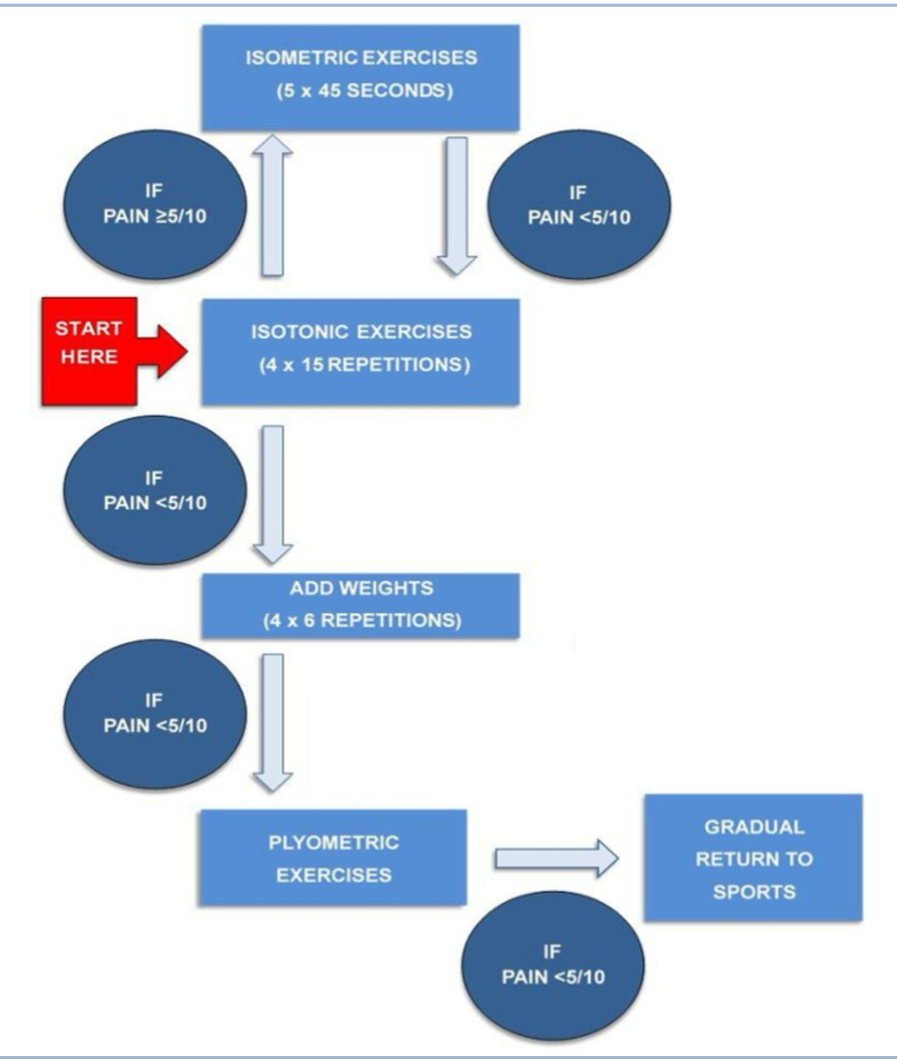
interventions not recommended for Achilles tendinopathy
manual therapy
DN
unless pain is keeping them from doing activity
low-level laser therapy
therapeutic US
should you use heel lifts for midportion Achilles tendinopathy?
yes, to temporarily reduce ankle DF during activity
what is Haglund deformity?
chronic irritation results in chemical erosion/calcium formation
special test for Achilles tendon rupture
Thompsom test
Matles test
pt position for Thompson test
prone with knee extended
pt position for Matles test
prone with knees at 90 degrees
what is peak incidence of plantar fasciitis?
45-65 years old
risk factors of plantar fasciitis
limited DF
increased BMI
standing for long periods of time
how do pts describe plantar fasciitis?
pain, sharpened with first walking in the morning or after long period of rest, but also worse following prolonged weight bearing
when are orthotics best for plantar fasciitis?
when combined with other treatments
how long should pts wear night splints for plantar fasciitis?
1 to 3 months
what should the orthotics for plantar fasciitis include?
support for medial longitudinal arch
cushion the heel in individuals
techniques we should use for plantar fasciitis
manual therapy
plantar fasciitis and gastroc/soleus stretching
foot taping
what is a good home stretch for plantar fasciitis?
figure 4 position with passive great toe extension
what should be the first line of treatment for plantar fasciits?
eccentric calf loading (Alfredson protocol)
with towel roll under great toe
stretching
what area if TTP with medial tibial stress syndrome?
tenderness 5-10 cm proximal to medial malleolus
may be tender proximally along muscle belly
what measures of navicular drop are more prone to medial tibial stress syndrome?
0-5 mm
>10 mm
MOI of medial tibial stress syndrome
compensatory pronation?
poor plyometric and shock absorbing ability
what is compartment syndrome?
condition in which increased compartment pressure within a confined space, comprises the circulation and potentially viability of the tissues within that space
acute compartment syndrome
from trauma
very painful
medical emergency
exercise induced compartment syndrome
commonly seen in distance runners
no pain in the first 10-15 mins of their run
as they continue, have increased cramping and pain
purpose of fibularis longus/brevis
foot ABD
ankle PF
subtalar eversion
stabilizes foot (brings 1st met toward the ground)
increased risk of fibularis longus/brevis tendonitis
cutting maneuvers to medial side
“early season” deconditioned forefoot sports
basketball
racquet sports
dance
treatment of fibularis longus/brevis tendonitis
modalities
progressive strengthening/balance (OKC to CKC)
brace/wedge
slide board
purpose of the tibialis posterior
primary dynamic stabilizer of the medial longitudinal arch
inverter of the midfoot
stage 1 on posterior tibialis tendon dysfunction
medial ankle pain and swelling
stage 2 posterior tibialis tendon dysfunction
weak inversion
poor heel raise
rearfoot valgus
forefoot ABD
stage 3 posterior tibialis tendon dysfunction
deformity is fixed
orthotics/bracing for posterior tibialis tendon dysfunction
early recognition leading to protective support
corrective shoes/insoles
custom, high edged foot orthotics
hinged SMO (frontal plane control)
Arizona brace
ther-ex for pre-treatment phase for PTTD
“sole-to-sole” exercise
25 reps per set
start with 4 sets
build up to 12 sets
then toward 300 consecutive reps per day over the course of 2 weeks
ther-ex for phase 1 PTTD
theraband resisted:
DF
inversion
eversion
build up to 200 reps per day
ther-ex for phase 2 of PTTD
double leg heel rises
progressing to single leg
build up to 50 reps
toe ambulation
working towards 100 yards
Achilles stretch
if muscular tightness is limiting full DF
ther-ex for phase 3 PTTD
progress of phase 2 activities toward target repetitions and distances
what is a sign of PTTD?
rearfoot inversion with heel raise
what is tarsal tunnel syndrome?
compression of posterior tibial n. or one of it’s branches
medial calcaneal n. to the heel
medial and lateral plantar n. to the sole of the foot and toes
burning, numbness, tingling, pain to medial heel and lateral forefoot
special test for tarsal tunnel syndrome
Tinel’s
treatment of tarsal tunnel
correct rearfoot eversion
pad course of nerves
causes/risk factors of tarsal tunnel syndrome
space occupying lesions
repetitive stress
tendon hypertrophy
BMI
RA
traumatic fxs
dislocation
female
repeated ligament sprains
hyperpronation
what is anterior tarsal tunnel?
deep peroneal nerve compression on the dorsal side of foot
inferior extensor retinaculum
causes sensation loss at webpace of 1st and 2nd toes
causes of anterior tarsal tunnel
recurrent sprains
shoes/ski boots too tight
sit up with feet anchored
what is Sever’s disease?
calcaneal apophysitis
risk factors of Sever’s disease
seen in early teens
associated with a rapid growth spurt and running sports
soccer
basketball
gymnastics
track
boys twice as often as girls