English speaking World
 Call Kai
 Learn
 Practice Test
 Spaced Repetition
 Match
 Flashcards
 Knowt Play
1/68

There's no tags or description
Looks like no tags are added yet.
69 Terms
Why is culture difficult to define?
Because culture constantly changes, depends on the viewer, is ubiquitous (present everywhere), and because the boundaries of the “English-Speaking World” (ESW) are difficult to define.
Why is culture much larger than art and literature?
Because culture also includes values, norms, beliefs, traditions, lifestyles, ways of living together, feelings and everyday habits.
What is the UNESCO definition of culture?
Culture is the set of distinctive spiritual, material, intellectual and emotional features of a society or social group. It includes art and literature, lifestyles, ways of living together, value systems, traditions and beliefs.
What is plea bargaining? Why is it so widespread in the US, and what does it show about culture?
It is a negotiation between the prosecutor and the defense counsel to strike a deal on the criminal charges and avoid a trial. It accounts for 90 to 95% of criminal cases in the US. It saves time and money and reduces overcrowded dockets (money is a big motivation in the US). It did not exist in Belgium 20 years ago: it is a consequence of the Americanization of law. Example: Paul Manafort (tax fraud and money laundering). It shows that culture ranges from the ordinary (fries, Abercrombie) to the fundamental.
What are the 8 reasons behind US gun culture?
Remnant of the revolutionary era and the frontier spirit (General Gage confiscated weapons, Paul Revere announced the arrival of British soldiers).
Belief that the right to bear arms is the greatest protection of individual rights and a safeguard of democracy.
Influence of lobbies (the NRA grades politicians; supporting gun control is political suicide).
The weapon as a symbol of power and masculinity.
Loopholes: minimal background checks, and most guns are bought from private sellers with no check.
Availability (even online, on Amazon).
Self-defense is seen as a basic, fundamental right.
Textual reason: a skewed reading of the Second Amendment (the Constitution has only 7 articles and many amendments).
What are the two readings of the Second Amendment, who defends them, and which decisions illustrate them?
Individual right: defended by the majority (Scalia). Heller (District of Columbia, June 2008, 5-4), then McDonald v. Chicago (2010, 5-4, applying to all 50 states).
Collective right tied to the militia: defended by the dissenters (Breyer)
What is the “culture of complaint” in the US? Name areas other than guns.
Major social problems are not solved by Congress (“hot potatoes”) but by the courts: lawsuits make policy. Areas: tobacco (hidden dangers), fast-food (obesity), the opioid crisis, social media (Meta). For guns, cities tried to make manufacturers pay (medical care, policing), but the PLCAA (2005) protects them. This is the dialectical relationship between law and culture.
What are the “culture wars”?
Debates that split society into two camps over value-laden issues: guns, abortion/women’s rights, religion, the death penalty, “wokeism”. The democratic process is taken over by the legal process.
What is “collateral learning” (Steven Johnson)?
popular culture (video games, TV, films, the Internet) increases cognitive skills. It is like learning Latin or algebra at school: not because you will use them later, but to give your brain a workout. You learn not what to think, but how to think.
Does cultural crime exist? Give an example.
Yes. Intentionally destroying cultural heritage is a war crime (Article 8 of the Rome Statute, ICC). Example: Al Mahdi, sentenced to 9 years (2016) for destroying 10 religious and historical buildings in Timbuktu (Mali, 2012), nearly all UNESCO-listed. He pleaded guilty, and reparations were set at €2.7 million. Your notes also mention museums in Ukraine and mosques in Gaza.
Cultural repression in England (Protestant Reformation): what does it say about culture?
Luther denounces Church abuses (nepotism, sale of indulgences). Henry VIII, at first a defender of the Pope (Fidei Defensor, 1521, still on coins), divorces his wife (1533) and is excommunicated. In 1534, Parliament makes the monarch head of the Church. Thomas Cromwell leads the Dissolution of the Monasteries (1538-1541), followed by iconoclasm under Edward VI and the Puritans (Dowsing, 17th century). England loses about 90% of its Christian art.
What it says: culture’s strength (preserving a nation’s values) is also its vulnerability. You attack what has power: it is a “backhanded compliment”.
McCarthyism: origins, methods, consequences.
Origins: the “red scare” (Czechoslovakia and Berlin 1948, Soviet atomic bomb 1949, Communist China, Korean War).
Methods: in February 1950, McCarthy waved a list of Communists in the State Department. A smear campaign (lies without proof) turned into a witch hunt against civil servants, academics, trade unionists and artists (actors, directors, screenwriters, musicians).
HUAC: refusing to appear = “contempt of Congress”; talking about yourself but not others = also “contempt”; invoking the Fifth Amendment = taken as an admission of guilt.
Consequences: a period of heavy cultural repression. Journalist Edward Murrow challenged McCarthy. According to your notes, his strategy was “attack, counter-attack, never apologize”, and he is described as Trump’s mentor.
Why is culture hard to define?
Four reasons: (A) culture changes, (B) it depends on the viewer, (C) it is ubiquitous (everywhere), (D) the “English-speaking world” itself is unclear (only the US? the UK?).
What are the two uses of “culture” according to Alan Bloom?
1) Culture as people or nation (French, German, Iranian culture). (2) Culture as art, music, literature, everything uplifting, as opposed to commerce (the “high-brow” definition). It is too narrow: culture is much larger.
Culture and the viewer: Hogarth vs Gainsborough?
Hogarth (a “man of the people”): satire of urban London (executions, gin, prostitutes), A Rake’s Progress (8 paintings, the downfall of Tom Rakewell). We watch a stage as if in a theatre. This is the chaotic 18th century that the “Age of Reform” had to clean up.
Gainsborough: comfortably-off gentry (Mr and Mrs Robert Andrews), who look back at us, with commerce and imperial expansion in the background. This is the cradle of modernity.
Both visions coexist and each expresses “Englishness”.
Ubiquity: mass culture and the popular dimension?
Walter Benjamin takes the everyday seriously (trash, toys, postcards). Duchamp, then Rauschenberg, blur the line between art and life. High-brow culture is nourished by popular culture (example: Elgar and Land of Hope and Glory).
Which Simpsons examples does the course use?
The Simpsons are an Anglo-American take on existentialism (like Monty Python), with satire as the answer to absurdity (Camus). In “Homer the Heretic”, Homer questions organized religion, not God. Chief Wiggum stands for criminal justice, Lionel Hutz for lawyers (ambulance chaser), Dr. Riviera for health care, Mayor Quimby for politics.
“What they want” vs “what’s good for them”? What does Scruton argue?
Should the public get what it wants (reality TV, talk shows) or be educated (public broadcasting, documentaries)? Scruton argues for serving the culture rather than the child, and fears educational decline. Counter-arguments: many contemporary artists (supply), more books read and museums visited (demand), and the past was not a golden age.
Weather in British culture?
Weather is the first topic of conversation when two English people meet, and it is extremely variable. It has even shaped history: storms against Caesar (55 BC), winds against the Armada (1588), storm against the French fleet (1796), the winter of 1947. In literature: Jane Eyre (“drear November day”, the weather mirrors her emotional state and foreshadows), Dickens (the fog of Bleak House), Turner’s landscapes.
Food and drink in English literature?
Shakespeare: Falstaff, the Prince of Wales’s drinking companion (praise of sherry-sack), dies in a tavern. Dickens uses food as a social marker: Oliver Twist (“please, sir, I want more”), A Christmas Carol (feasts, Scrooge’s turkey).
Gestures and expressions: cultural or universal?
Gestures are cultural: the horns (cuckold) forced Portugal’s minister Pinho to resign (2009), and the American “OK” sign is rude in Germany. But facial expressions are universal (Paul Ekman: 7 emotions: anger, fear, disgust, surprise, sadness, happiness, contempt).
Love, marriage and death across cultures?
Love: Pride and Prejudice (Austen), a “very English” conception: dignity, common sense, distrust of passion (the opposite of Les Liaisons dangereuses).
Marriage: the American wedding is an industry, about $27,000 on average, with “sacred” objects.
Death: The Loved One (Waugh), a satire of Californian funeral practices, death “wrapped up and sold”.
Is there a single “English-speaking” culture?
No. There are misunderstandings even within the English-speaking world (example: Saving Mr Banks, between the uptight P.L. Travers and the informal Walt Disney)
Why is culture important, at three levels?
Personal: homesickness (Proust’s madeleine), etiquette, culture shock. Legal persons also have to adapt (McDonald’s adapts its menus, architecture and brand).
National: citizenship (naturalization ceremonies), funding of culture (BBC, NPR), culture wars.
International: soft power, heritage, sustainable development.
23. What is soft power?
It is a country’s ability to showcase its strength and values and to persuade others without force or coercion. The concept comes from Joseph Nye. Examples: Queen Victoria’s Great Exhibition, James Bond (after the loss of the colonies), jazz stars sent on tour during segregation, Disneyland, the Paris Olympics.
What is the relationship between the US and UNESCO?
UNESCO (Paris, 1946) aims to promote peace through education, science and culture. Its norms are not enforceable. The US withdrew twice: 1983-84 (Reagan, alleged anti-Western bias) and 2019 (recognition of Hebron as a Palestinian site). It had rejoined in 2003. According to your notes, it decided to leave again.
Which UNESCO texts protect cultural heritage?
1972 Convention: world cultural and natural heritage (unbalanced list, Global Strategy of 1994).
2003 Convention: intangible cultural heritage. Belgium has 13 elements (beer culture, processional giants and dragons), France has 18.
Trump’s threats against heritage?
After the killing of General Soleimani (January 2020), Trump threatened to strike 52 Iranian cultural sites, which is illegal (1954 Hague Convention). He also signed an executive order (June 2020) imposing 10 years’ imprisonment on those who deface federal statues, even though this was already a federal crime.
Does culture exist in the animal world (notes)?
Yes: feeding strategies and expressions of grief.
Examples of cultural repression by dictatorships?
Mao: Cultural Revolution (1966-76), Red Guards against “old China”.
Stalin: Prokofiev and Shostakovich criticized (Socialist Realism).
Taliban: destruction of the Bamiyan Buddhas (March 2001).
Timbuktu (2012): mosques, Sufi shrines and manuscripts destroyed by Islamist extremists.
31. What is the Hays Code (1930)?
A voluntary moral code adopted by the studios to avoid federal censorship, after scandals (Fatty Arbuckle, W.D. Taylor, W. Reid). It was seriously enforced only from 1934. Two ideas motivated the censors:
“Imitative behavior”: young people copy what they see;
“Moral compensation”: crime must be punished by the end.
Workarounds: screwball comedy (sex implied) and First Amendment protection.
what does Mutual Film v. Ohio (1915) say
The Supreme Court held that cinema is “a business, pure and simple”, without First Amendment free-speech protection. States could therefore censor films.
What does “significance” of culture mean, and what is its “organic” dimension?
Culture reflects and feeds past and present ideas (values, traditions, beliefs). Its organic dimension can be analysed in three ways: (A) an individual work, (B) a collective phenomenon, (C) geo-strategic considerations. The law–culture relationship is dialectical (law shapes culture and culture shapes law), as with US gun culture: “History is culture’s bloodstream.”
Individual work: how can a single work show a culture?
A painting, novel or play shows features of the civilization it comes from, even if you risk national stereotypes. Examples from the syllabus: Magritte and Rops are quintessentially Belgian, and you cannot imagine a German Puccini or an English Wagner. You can learn about American culture from The Simpsons or R&B. The work can express humor, tragedy or ideology.
Humor: what does Chaucer’s Canterbury Tales show about English humor?
Chaucer was a great English writer (often compared to Shakespeare). He spoke French, English and Italian and was a diplomat.
The tales are told by 29 pilgrims, plus Chaucer as narrator, on the way to Canterbury. They meet at the Tabard Inn, and the host, Harry Bailey, proposes a story contest. The prize is a free supper.
Chaucer, a shy pilgrim, tells the Tale of Sir Topaz. It is so dull that Bailey cuts him off. His next tale (Melibee, in prose) is barely better.
This is the first example in literature of the English taste for self-derision. The great poet presents himself as a bad storyteller.
Who continued this tradition of self-deprecation?
Henry Fielding (Tom Jones, 1749), Laurence Sterne (Tristram Shandy), and Thackeray (Vanity Fair), who mocks himself, his characters and his readers. Modern politics has it too: at the White House Correspondents’ Dinner, presidents joke about themselves (Obama in 2013). It is not exclusive to the English-speaking world (the Japanese artist Hokusai, for example).
Ideology: what was the Beat Generation?
A group of poets and writers (Jack Kerouac, Allen Ginsberg, William Burroughs) based in San Francisco and New York in the 1950s.
“Beat” is disputed: tired or beaten-down, or beatific (blissful).
They reacted against the Eisenhower years, which brought consumerism, McCarthyism, the Cold War and nuclear fear. They were hostile to middle-class values, commercialism and conformity.
They embraced drugs, alcohol, sex, meditation and jazz. They were anti-conformists and echo the Romantics (Byron, Shelley) and Thoreau and Emerson.
Example: Ginsberg’s A Supermarket in California (1955).
How does Harry Potter illustrate “ideology”?
J.K. Rowling’s novels carry values beyond wizardry. According to your notes, they depict capitalism: competition between students and between schools, and the struggle of good against evil. The syllabus calls it “value-pushing” (the fastest-selling books in history).
Collective dimension: is racism innate or culturally acquired?
Racism is the doctrine of the congenital inferiority and worthlessness of a people (a definition from Martin Luther King, per your notes). It is culturally acquired, through:
Beliefs/history: Robert E. Lee, a Confederate general in the Civil War (1861–65), whom some still want to make a hero, which keeps racism acceptable.
Language: the way Trump refers to Obama.
Law: restrictive covenants in Washington, D.C. (you could not sell your house to African Americans) until the 1960s.
Caveat: it sounds fatalistic, but if culture is the product of external conditions, it is also the product of internal choices. We can choose to change it.
Geo-strategic dimension: what are Edward Saïd’s three remarks?
The “ascending” culture drives to dominate. Economic expansion goes together with cultural ideas and ideologies (“an economic system lives not by bread alone, but by beliefs, visions, daydreams”). Today’s examples: Elon Musk, Jeff Bezos, Hollywood.
A recent quantum leap in the diffusion and control of information. You used to need a physical presence. Now international media insinuate themselves below conscious awareness.
This seems inevitable, but resistance is possible.
What are the forms of resistance to cultural domination?
Internal: from within the dominant culture. Example: Mark Twain’s late writings against US foreign policy in the Philippines and Latin America.
External: from the dominated culture. Example: Rabindranath Tagore (Nobel Prize in Literature, 1913), who encouraged writers in the Indian vernaculars rather than the oppressor’s language.
What is high bro culture ?
lan Bloom’s definition is the high-brow one. Culture is “art, music, literature, educational television… everything that is uplifting and edifying, as opposed to commerce.” The syllabus criticizes it because it ignores the popular dimension. Culture is much larger than that.
The boundary is blurry. High-brow culture is nourished by popular culture. For example, Elgar’s Pomp and Circumstance March contains the popular tune “Land of Hope and Glory.” Duchamp and Rauschenberg also blurred the line between art and everyday life.
Steven Johnson argues that “bad” popular culture (video games, TV, The Simpsons) can make us smarter through collateral learning.
Roger Scruton defends high-brow culture. He fears that if people lose dedication to it, it will be degraded or lost, and he argues for “serving the culture, not the child.” The syllabus counters that more books are read and more museums visited than ever, and that the past was no golden age.
What is the Anglo-Saxon period and who were the first people in Britain?
Britain was first Celtic. The Celts were despised by the invaders, who called them “wealas” (which gave “Welsh”). Little Celtic heritage remains.
From 410, when Rome leaves, to about 1060/1066 (the Norman Conquest), Anglo-Saxon England was made of 7 kingdoms.
The invaders were Angles, Saxons and Jutes, from today’s Germany, Netherlands and Denmark. “England” comes from Englalond (land of the Angles).
Is “Anglo-Saxon” a good word for modern Britain?
No, it is a sloppy use of history. Anglo-Saxon refers to a precise moment (after the 5th-century invasions). Modern Britain is no more Anglo-Saxon than Norman, Roman or Celtic. The Financial Times adds that the label hides Britain’s real strength: its openness to foreigners (the City of London is very international).
Who was the Venerable Bede?
A monk (673–735) and specialist of Anglo-Saxon literature. He wrote The Ecclesiastical History of the English Nation (finished in 731). It tells how pagan Anglo-Saxon kings (Ethelbert, Edwin…) converted to Christianity and left their old gods. It revived the Roman influence: the link with Rome lasts until the “submission of the clergy” to Henry VIII (1532) and the Act of Supremacy (1534). From the 7th to the 16th century, England was Catholic.
How did King Edwin of Northumbria convert (Bede)?
The missionary Paulinus told Edwin to leave his old gods. Edwin was willing but wanted to discuss with his counselors. It was not spectacular. Coifi, the high priest, said the old religion had “no virtue”: he served the gods more than anyone, yet others got more favors. If the new doctrine is better, adopt it. Coifi destroyed his own temple. Date: 627.
What is the sparrow metaphor (paragraph 4)?
A noble compares human life to a sparrow flying through a warm hall in winter. It comes from the dark, is safe for a moment, and goes back into the dark. We do not know what is before or after life (we come from the unknown and go back to the unknown). So if the new doctrine is more certain, follow it. In religious terms it is a gambler’s hunch. In literary terms: light and darkness, winter, cold, rain, mist and fog.
What is pragmatism and how does Bede’s text illustrate it?
Pragmatism: ideas are judged only by their practical effects on human interests. Edwin and Coifi do a cost-benefit analysis (as early as 731). Other English examples:
The UK has no written constitution (“we don’t need it”).
Lawyers do not need to study law: Margaret Thatcher studied chemistry and became a barrister.
Solicitors prepare submissions and give advice. Barristers argue cases in court.
What happened in 1066, and how many monarchs since then?
The Norman Conquest (the Bayeux Tapestry). There have been 67 monarchs from 1066 to now. The course focuses on two: Henry V and Queen Victoria.
Who was Henry V before becoming king?
He had a wild youth (partying, drinking with his friend Falstaff) and a terrible reputation. His son turned out a disaster. When he became king (1413), nobody trusted him. The French Dauphin sent him tennis balls as an insult. He then claimed part of France, in the middle of the Hundred Years’ War (1337–1453).
What happened at Agincourt (October 25, 1415)?
Henry landed in France in August 1415, took Harfleur, and marched toward Calais with at most 13,000 soldiers. He met a French army of 50,000 to 60,000 (legend: 5 to 1). The English were tired and sick. They won thanks to longbow archers and cunning tactics, and Henry’s speech. The French still accuse the English of exaggeration and war crimes.
What is the “Crispin Crispian” speech and what does it show?
It is in Shakespeare’s Henry V (Act 4, Scene 3, written in 1599). Key lines: “We few, we happy few, we band of brothers.” Your notes’ analysis:
Anti-conformism (personal and political): he has a bad reputation, speaks first to his brothers then to all soldiers, and goes down to their level.
Rhetoric: heroic but human words.
Valiance against two enemies: the internal one (his reputation and mental state) and the external one (France). The paradox: outnumbered, yet they win through valiance
What does the leek in the helmet mean?
It is the symbol of Wales (Fluellen, the Welsh captain). It shows the whole of Britain (English, Welsh, Scots, Irish) must be united to win.
How does the story of Henry V end?
Peace talks: Henry marries Catherine de Valois, daughter of Charles VI. By the Treaty of Troyes (1420) Henry becomes Charles’s heir, and their son would be king of both countries. But Henry died in 1422, two months before Charles VI, and the baby son was never crowned in Reims. Charles VII became the French king.
Why did Shakespeare write Henry V in 1599?
Queen Elizabeth I (45 years on the throne) had no heir and the Reformation had divided the country. Who would be next? In 1603 the crown went to her Scottish cousin, James VI of Scotland, who became James I of England: the union of the crowns. The play shows that Britain must be united. “Nothing is innocent in these symbols.”
How is Churchill compared to Henry V?
Same pattern: a doubted man who becomes a hero.
Impulsive character: he changed party several times (Conservatives to Liberals and back).
Internal enemies: instability, bipolar disorder and depression (“black dog days”), and the disaster of Gallipoli (1915) that made him resign as head of the Navy.
External enemy: Nazism and the policy of appeasement.
Anti-conformism and valiance: he was almost alone in wanting to resist Hitler. On June 4, 1940, as prime minister, he gave a famous speech against a stronger enemy.
What is appeasement and what was the Munich Accord?
Appeasement (1930s) is granting concessions to an enemy to avoid war. Events: Abyssinia 1935, Rhineland 1936, Spanish Civil War 1936, Czechoslovakia 1938. At Munich (September 1938), Chamberlain (UK), Daladier (France), Hitler and Mussolini agreed. Hitler did not respect it. Churchill said to the government: “You were given the choice between war and dishonour. You chose dishonour and will have war.” Appeasement also appears in the novel The Remains of the Day (syllabus p. 79).
61. How did England flirt with fascism?
Oswald Mosley led the British Union of Fascists (BUF), whose “black-shirts” intimidated people (Battle of Cable Street, October 1936). He became a figure of humor, was jailed in 1940, and the BUF was banned.
Edward VIII abdicated in 1936 before his coronation, to marry the twice-divorced American Wallis Simpson. He was pro-German and close to Hitler. His brother George VI became king.
How is Churchill used in the Brexit debate?
During the campaign, Prime Minister Cameron used a poster of Churchill with the message “Brits don’t quit” to keep the UK in the EU (per your notes).
What are the recurring English traits in this course?
Self-deprecation, pragmatism, anti-conformism and valiance (few against many)
Who was Queen Victoria and what was her goal?
She was 5th in line to the throne and became queen at 18, with the longest reign (63 years, 1837–1901). With Prince Albert (of Saxe-Coburg-Gotha, related to the Belgian monarchy) she created a visible constitutional monarchy to stem the growing republican movement. She was patron of 150 institutions (charities, museums), supported the army and visited industrial towns. “The Firm”: the family works for society and is useful.
65. The Great Exhibition (1851): what does it show?
It was held at the Crystal Palace. A prime example of soft power: Britain shows its prosperity, intelligence and power without coercion. It also showed the monarchy had a practical value (a sense of duty).
Why is Victoria called the first “media monarch”?
After Albert died of typhoid (she was 35), she mourned for about 10 years in Balmoral and disappeared from public life. Rumors spread about her friendship with the servant John Brown (“Mrs Brown”), at the same time as the development of the press, photography and the telegraph. With republicanism rising, Prime Minister Disraeli persuaded her to return (1871). In 1877 she became Empress of India.
🎯 What do Queen Victoria and Queen Elizabeth II have in common?
Soft power: the Great Exhibition (1851) and the London Olympic Games (2012).
Sense of duty: after Diana’s death (1997), Elizabeth, like Victoria, withdrew to Scotland. Prime Minister Blair told her to speak to the nation. The motto: “never complain, never explain, do your duty.”
Media monarchs: Victoria and the Brown rumors with the new press. Elizabeth and Diana, a media figure followed everywhere, in the age of the Internet and social media.
What are the main UK parties (know the parties, not the numbers)?
Labour: long linked to trade unions, in power since July 2024 (leader in your notes: Andy Burnham since July 2026).
Conservatives (Tories): Eurosceptic, organized the Brexit referendum (Kemi Badenoch).
Lib Dems: openly pro-European (Ed Davey).
Reform UK: former “Brexit Party”, rampant Euroscepticism, the “three Bs” (bullying, boozing, blokemanship), Nigel Farage. Few MPs but a lot of media attention, plus a scandal over its funding.Politics is not always serious: Count Binface is a joke candidate.
What is the British constitution?
The UK (Great Britain and Northern Ireland since 1922, 4 nations) is a constitutional monarchy with no single written constitution. It is unwritten but exists, made of: statutes (Magna Carta 1215, Parliament Acts 1911 and 1949, Human Rights Act 1998), judicial precedents (Entick v. Carrington, which protects against searches and inspired the US 4th Amendment) and conventions (hard to enforce). Only Israel and New Zealand are in the same situation. The explanation is pragmatism and gradual growth.
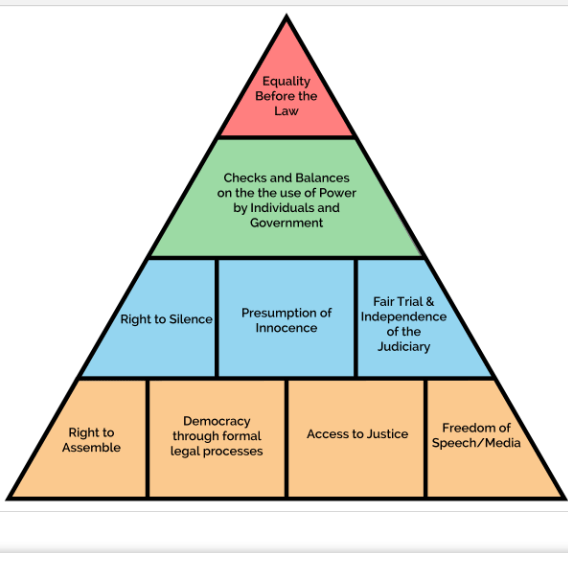
🎯 What is parliamentary sovereignty?
One of the two constitutional pillars, with the rule of law.
Parliament can make, amend or repeal any law.
No one can override or set aside its legislation, and there is no control of the constitutionality of laws.
No parliament can bind a future parliament: nothing is carved in stone.
72. What are the current strains on the constitution?
EU membership: EU law was supreme, which clashes with the sovereignty of Parliament.
Council of Europe (46 countries) and the European Convention on Human Rights.
Devolution: powers given to Scotland, Wales and Northern Ireland.