CLST 24 EXAM - updated
 Call Kai
 Learn
 Practice Test
 Spaced Repetition
 Match
 Flashcards
 Knowt Play
1/439

There's no tags or description
Looks like no tags are added yet.
440 Terms

Harbor Temples at Pyrgi
Temple A: early 5th century, Temple B: mid 6th century
Pyrgi = port of Caere
religion as a mediator at boundary spaces
cultural translation for safe travel
Temple B has Greek influence, Temple A Italic influence
writing, inscriptions, etc.
Tablets found between

Golden Tablets at Pyrgi
Etruscan & Phoenician
6th century BCE
cultural translation for safe travel,
religion at boundary spaces
writing, inscriptions, etc.

Sarcophagus
Archaic Period
Differences in funerary architecture reflects socioeconomic distinctions

What is this a picture of? What social phenomenon is this evidence of?
Tomb of the Shields and the Chairs
early 6th century
Caere
Social stratification
development of funerary architecture
development of domestic architecture

Grave goods
treasure hunting for museums has removed a lot of them
differences reflect family and socioeconomic distrinctions

Terracotta hut urn
Early Iron Age
usually belonged to the wealthy = social stratification
Depicts domestic architecture
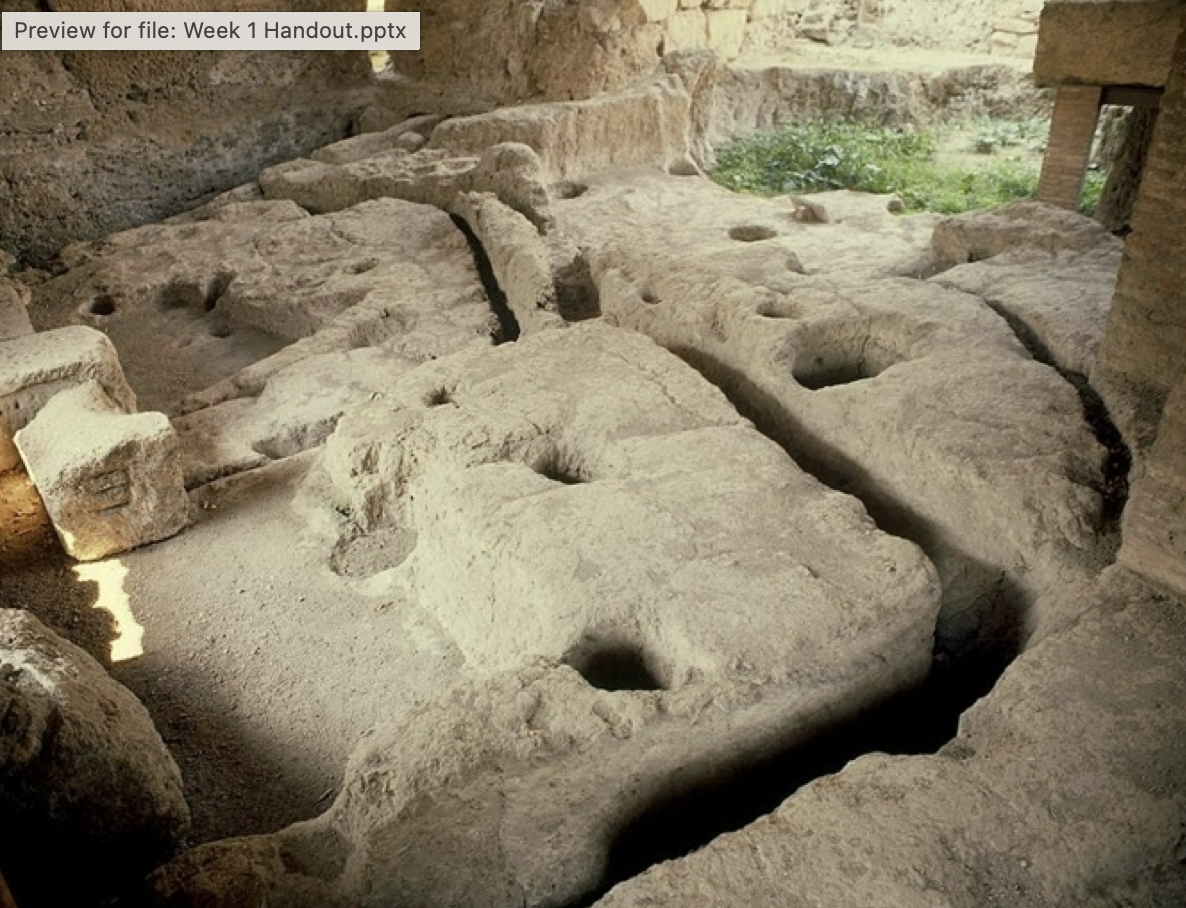
Post holes and drainage canals
Bronze Age and Early Iron Age
only evidence for domestic architecture in this point (rest made of biodegradable wood and straw)
some early drainage architecture

Terracotta hut urn of mud brick hut
architecture until the 7th century
depiction of domestic architecture
found away from settlement = burial sites separate
found in wealthier tombs = social stratification
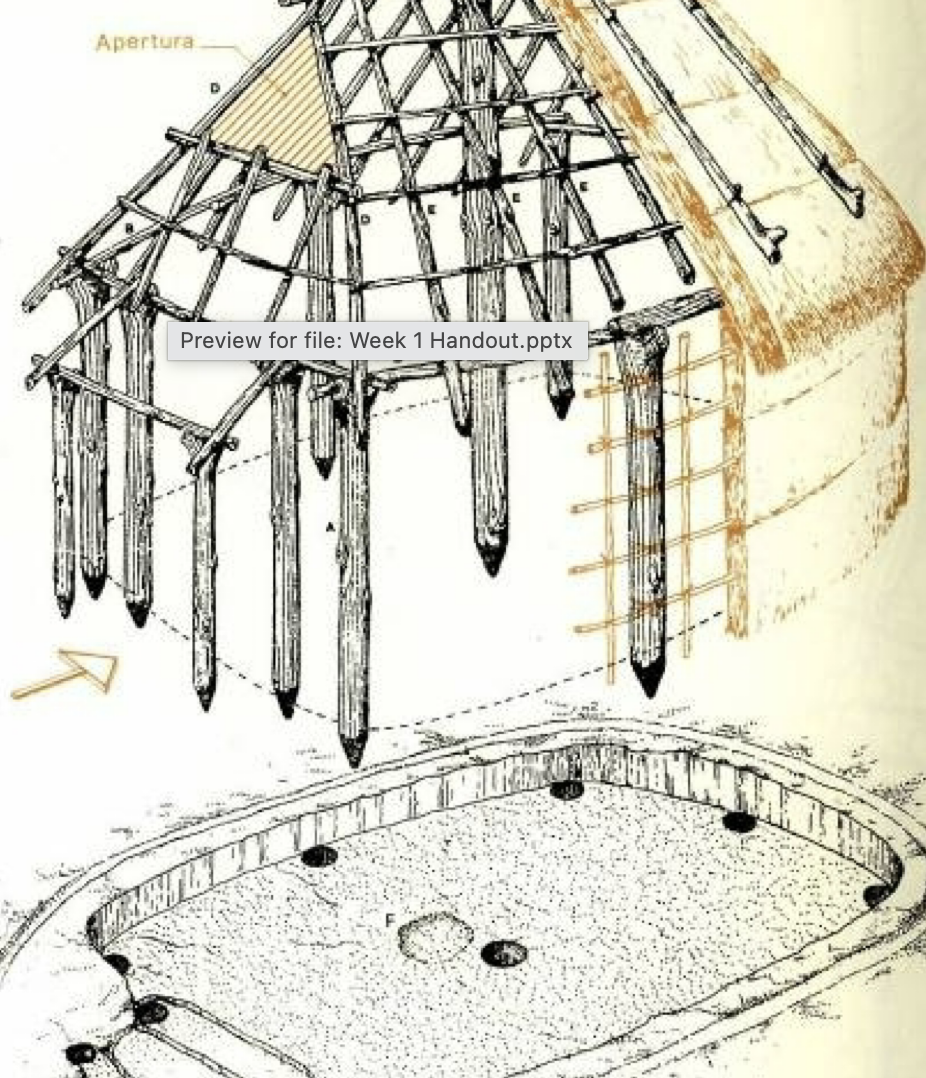
Wattle and daub/mud brick hut
main architecture of the Bronze Age and the Early Iron Age
made of biodegradable things = does not survive

Terracotta roof decoration
end of 7th century onwards
development of tile production (kilns, deforestation)
more permanent settlements

Early depiction of Medusa made of terracotta
evidence for early religion
terracotta production - deforestation, kilns
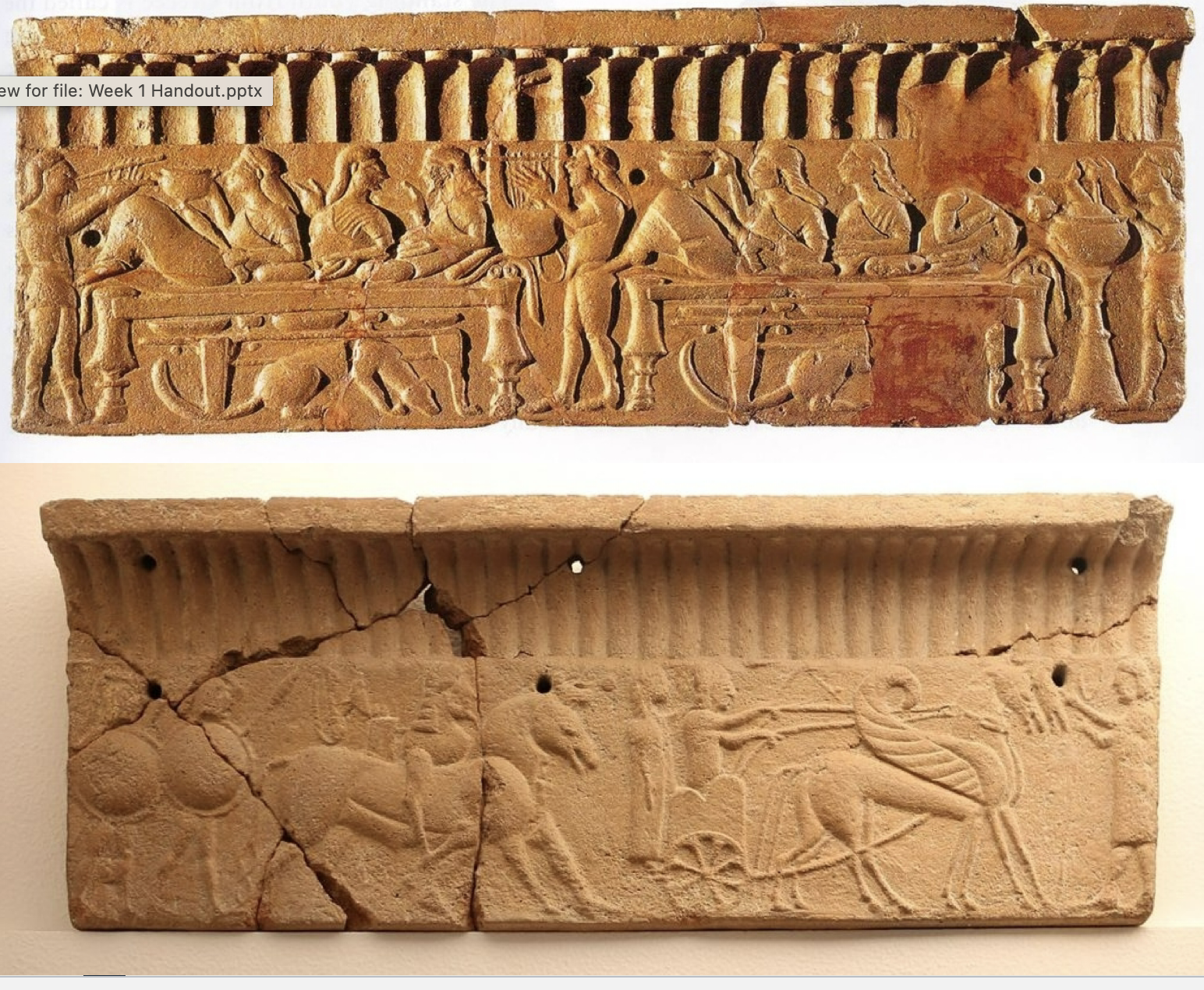
Terra cotta roof tiles and/or pediments
7th century onwards
more permanent domestic and religious architecture
myths show religion (e.g. chariot scene here)
terracotta production - deforestation, kilns

Terracotta sculpture pieces
Sant Omobono Temple - Rome
6th century
terracotta production - deforestation, kilns
religious architecture built with sculptures (religion)

Hercules and Athena
Sant Omobono - first temple built in Rome
6th century
Religion, importance of Hercules
terracotta production - deforestation, kilns
Building religious architecture

What is this a reconstruction of?
Terra cotta reconstruction of temple
6th century?
Frontal, platform = Italic style (people not going inside)
acroteria sculpture on the roof - terracotta production

Temple plans
circles = timber columns
became more visible in the 6th and 7th century because of terracotta
some Greek style (peripteral), others Italic style (frontal)
construction of monumental architecture

Cappelaccio (volcanic stone/tuff)
quarried from the Capitoline in the Archaic period to build monumental architecture
not the most high quality, but this was THE building material

Bucchero
common among the Etruscans

Latium burial practices
cremations in hut urns with miniature burial grades
Early Iron Age (ca. 900 BCE)

What style of pot is this? This style of pot is more common in…? Time Period?
Etruscan burial practices
Biconical urns with full-size burial goods
Early Iron Age (circa 900 BCE)
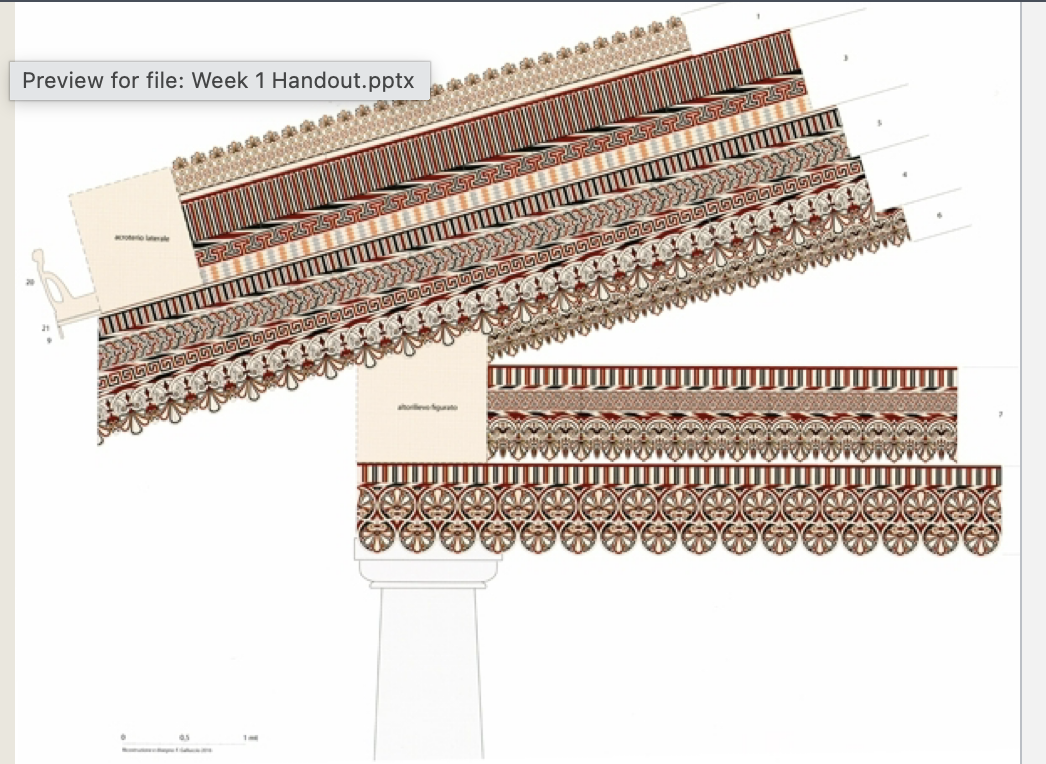
Terracotta Roof Tiles
7th century onwards
tile production - deforestation, kilns
development of permanent domestic and religious architecture
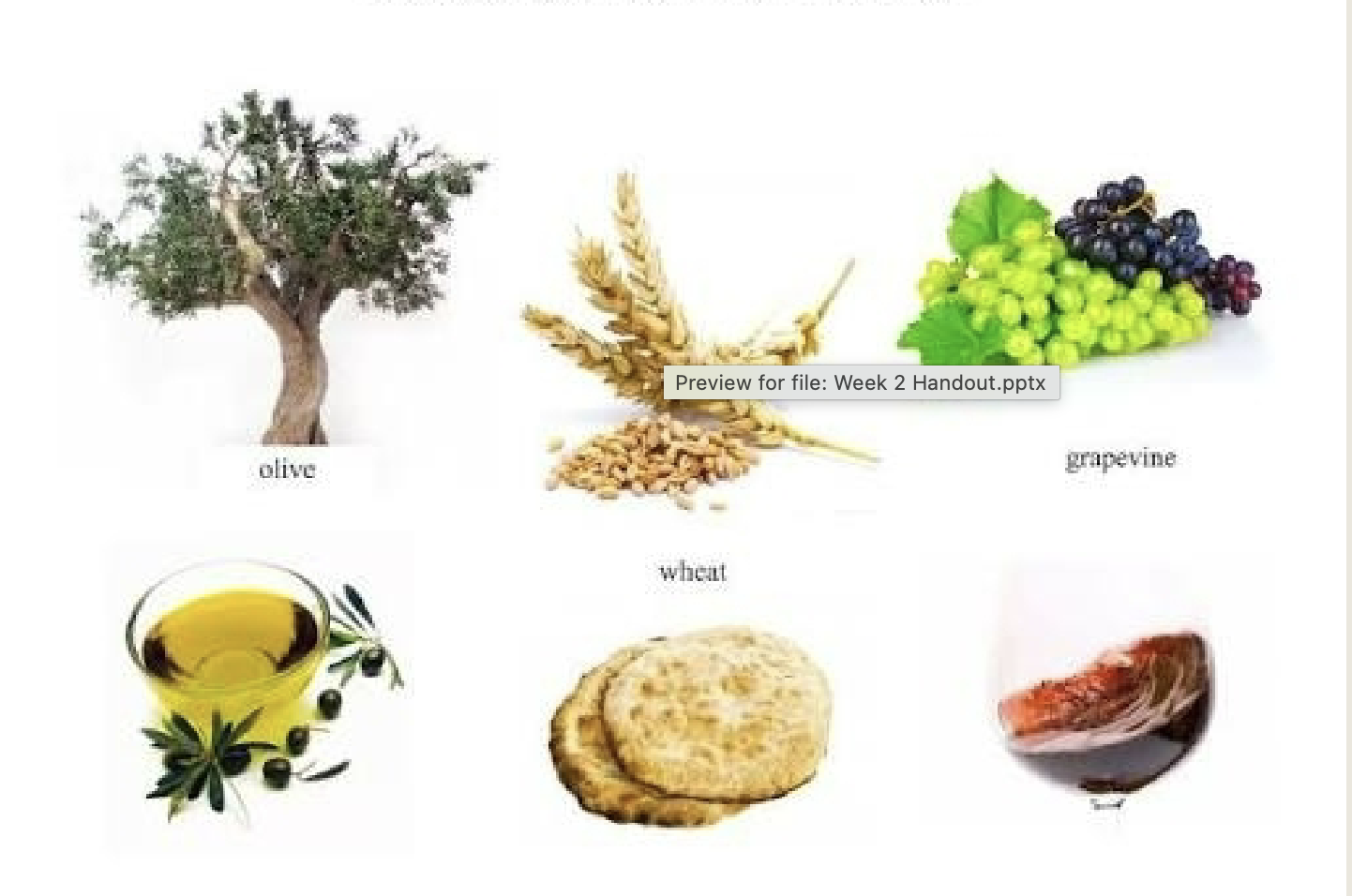
The Mediterranean triad

Nuraghae
Sardinia
Bronze Age
confusing - unclear what their purpose was
but some evidence of permanent architecture
built of stone, isolated
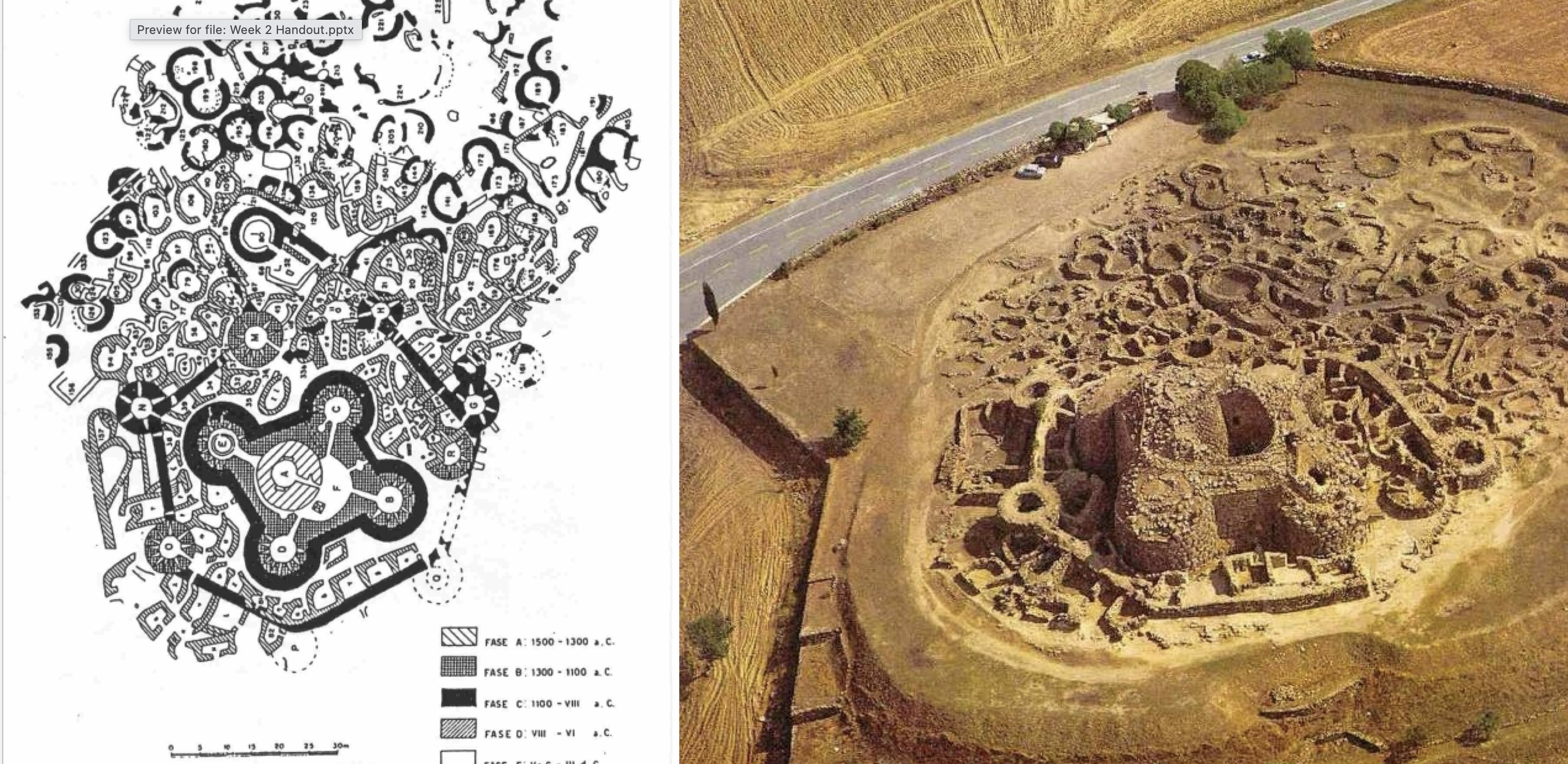
Nuraghae
Sardinia
Bronze Age
confusing - unclear what their purpose was
but some evidence of permanent architecture
built of stone, isolated

Bronze Age settlements
more dispersed, no nucleation yet
mid 2nd millennium - 900 BCE ish
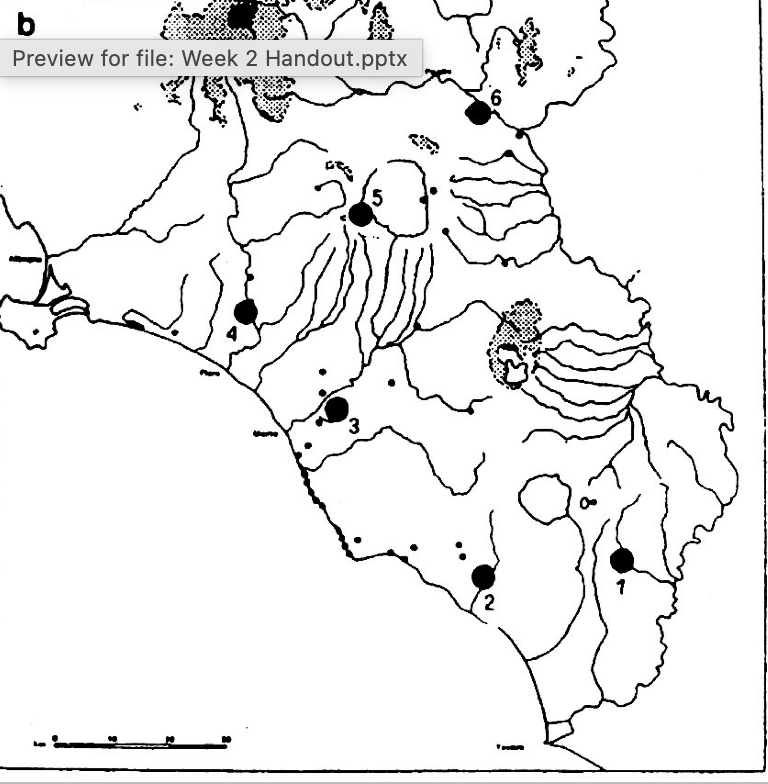
Iron Age
Veii
Caere
Tarquinia
Vulci
Bizenzio
more clustered settlements, nucleation, protourbanization
900ish to 600

Bodies of water in Central Italy
abundance of water, access to natural resources
made Central Italy an appealing place to live and eventually urbanize

Topography of central Tyrrhenian Italy
lots of ecological diversity, complementary zones
Access to coastal, lowland, highland made Rome and other sites in central Italy well located

Various natural resources in central Tyrrhenian Italy
salt very important for daily life and economy
preferable situation for central Italian sites.
development of metal goods - specialization

What does this picture illustrate
Various natural resources in central Tyrrhenian Italy
salt very important for daily life and economy
preferable situation for central Italian sites.
development of metal goods - specialization

Chigi Vase
made in Corinth, deposited in a tomb in Veii
c.a. 630 BCE
hoplite warfare (one of first representations)
Greek influence
citizen soldiers reflective of democracy

Strait of Bonifacio between Corsica and Sardinia
Sailors liked to sail near land and Med currents brought ships straight to Central Italy
development of the Tyrrhenian before the Adriatic

Fasto Antiates Maiores
late Republican period
days for commercial activity, festival, agriculture (fas vs nefas days)
probably also had this in EIA and Archaic periods
connecting people over religion - common knowledge and action
gods sent omens on certain days - earthquake, floods, solar eclipses
Pontifex Maximus - recorded and interpreted these omens

Festivals of the calendar reflected the main seasonal surplus of each season
Religion is an important aspect of society
Agricultural calendar is central to their lives
Evidence for agricultural production based on sound ecological assumptions

Romulus and Remus being nursed by a she-wolf
753 BCE
teleological assumptions of Rome’s origin story
no evidence for Romulus
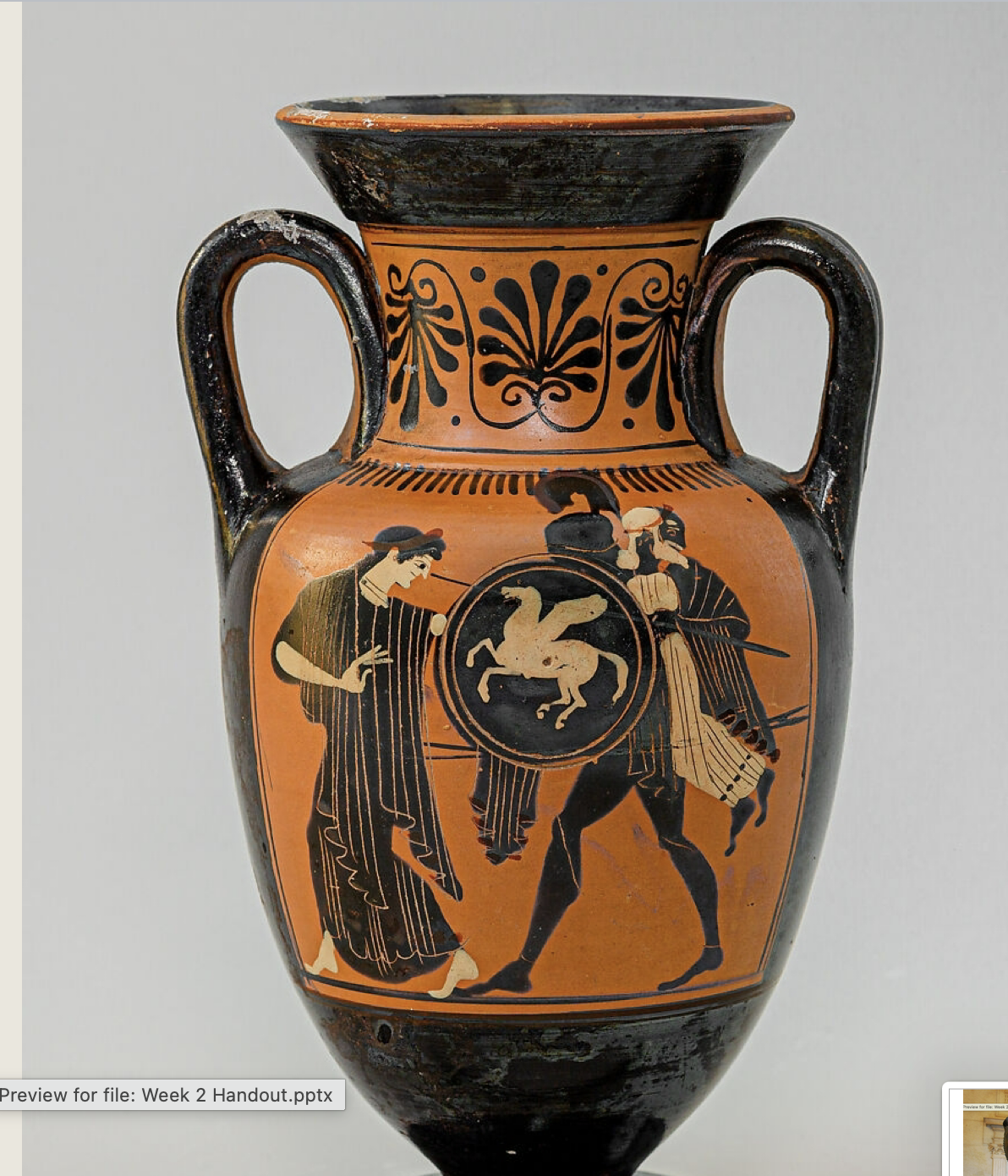
Aeneas leaving Troy with his father on his back
Black Figure pottery
teleological assumptions

Chigi Vase
made in Corinth, deposited in a tomb in Veii
c.a. 630 BCE
hoplite warfare (one of first representations)
Greek influence
citizen soldiers reflective of democracy

Currents of air in the Mediterranean that guided where sailors went
guided sailors to the Tyrrhenian coast (Western Italy developed before Eastern Italy)
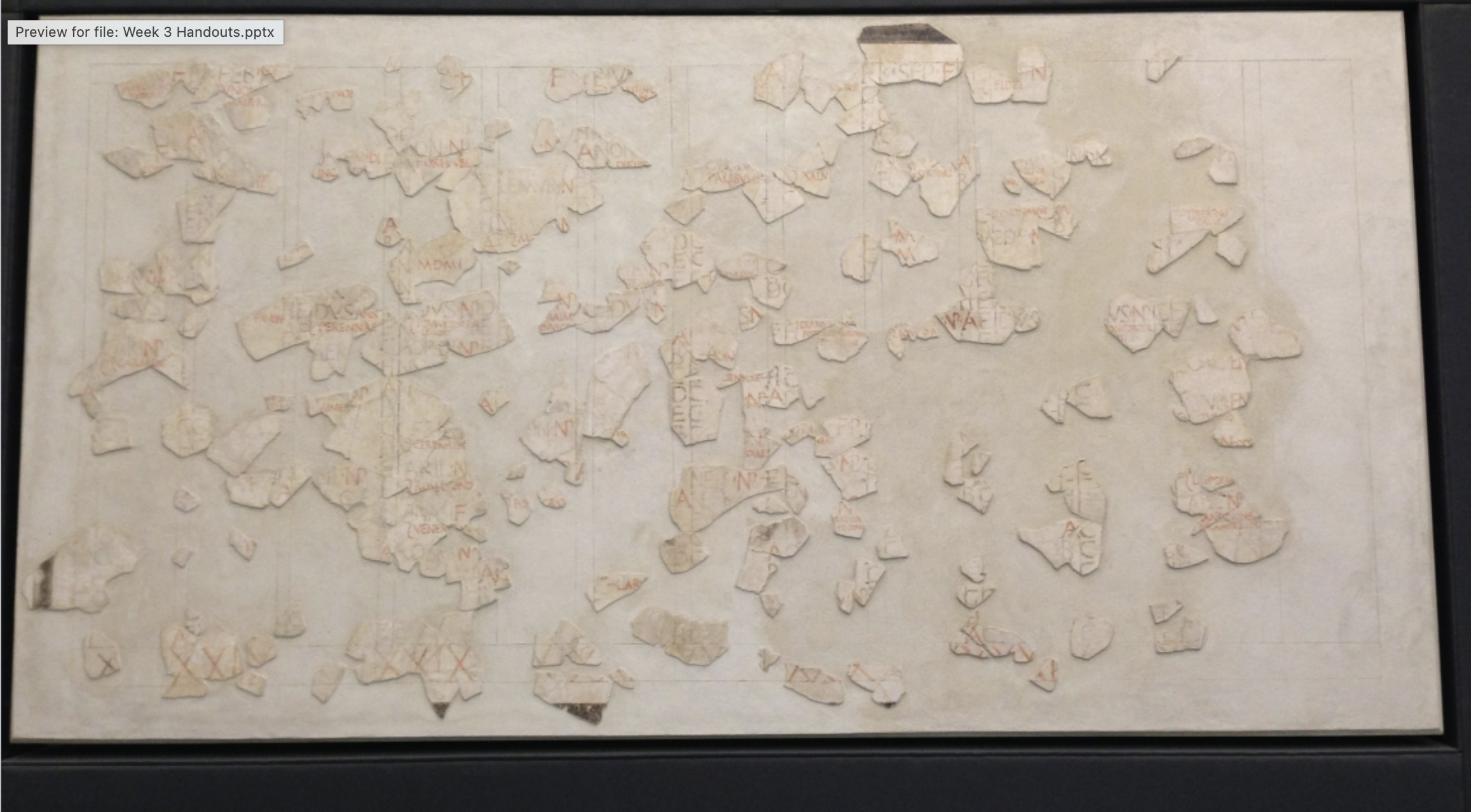
Fasto Antiates Maiores
84-55 BCE
Antium
days for commercial activity, festival, agriculture (fas vs nefas days)
probably also had this in EIA and Archaic periods
connecting people over religion - common knowledge and action
gods sent omens on certain days - earthquake, floods, solar eclipses
Pontifex Maximus - recorded and interpreted these omens

Harbor Temples at Pyrgi
Temple A: early 5th century, Temple B: mid 6th century
Pyrgi = port of Caere
religion as a mediator at boundary spaces
cultural translation for safe travel
Temple B has Greek influence, Temple A Italic influence
writing, inscriptions, etc.
Tablets found between

Anchor inscribed with Greek writing
Gravisca (port of Tarquinia)
end of 6th century
religious activity at meeting places
maybe used, but definitely votive
Greek influence
Sostratus (craftsman) - mentioned in Herodotus 4.152 as from island of Aegina

The Pyrgi tablets
Etruscan & Phoenician
Archaic Period
religion as a mediator at boundary spaces
cultural translation between languages and groups
desire for protection over sea travel

The Pyrgi tablets
Etruscan & Phoenician
Archaic Period
religion as a mediator at boundary spaces
cultural translation between languages and groups
desire for protection over sea travel

Areas of Greek settlement
very diverse, lots of colonization
Come to Western Italy in the 8th century BCE
Greek influence mixed with indigenous culture

Sant’Omobono Sanctuary
Forum Boarium
560 BCE
first temple built in Rome
Rome as a meeting/trading place
Development of religious architecture and permanent buildings
designated as a religious space - keep building up

Archaic Temple at Sant’Omobono Sanctuary
Forum Boarium
560 BCE
first temple built in Rome
Rome as a meeting/trading place
Development of religious architecture and permanent buildings
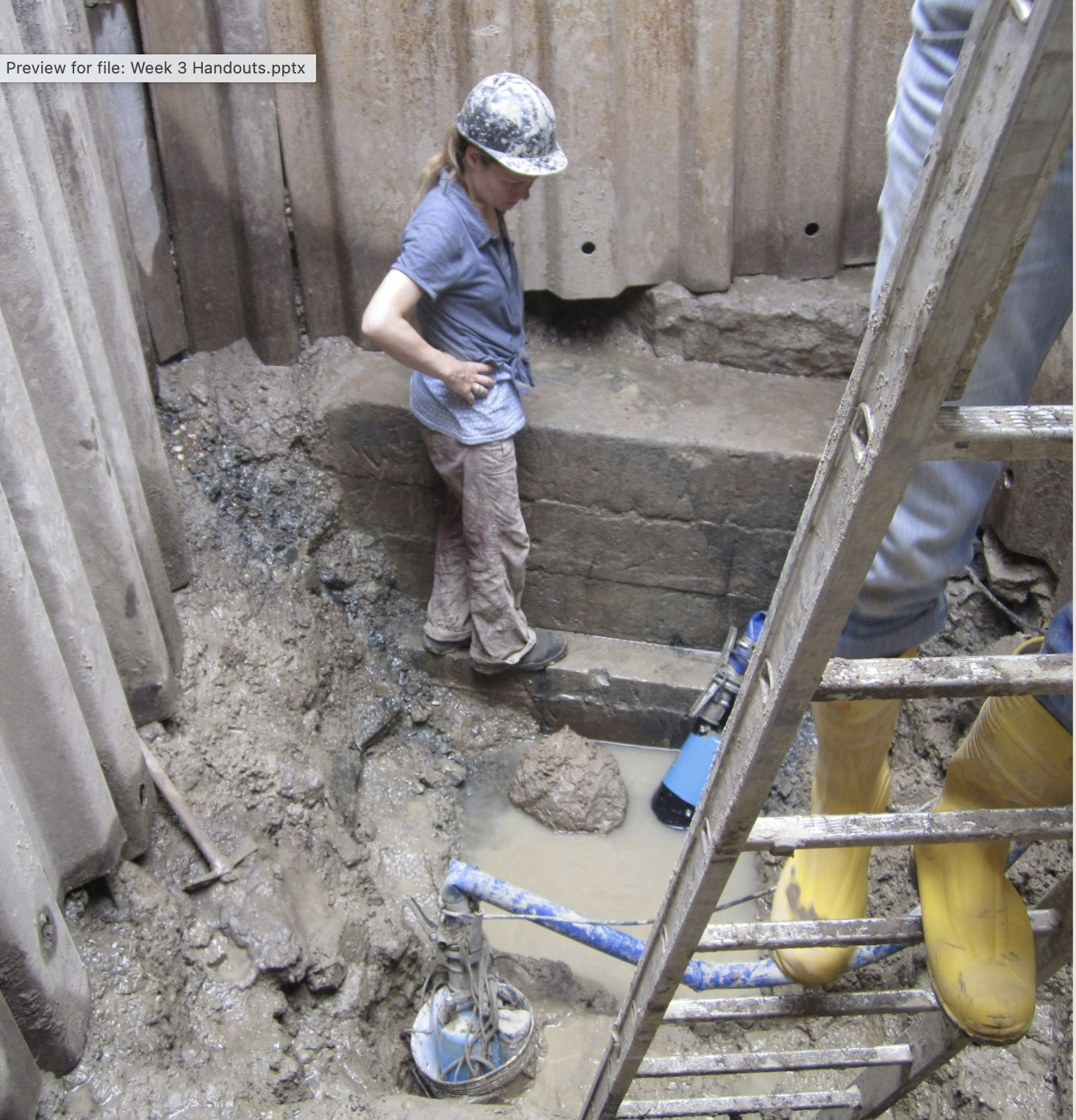
Archaic Temple at Sant’Omobono Sanctuary
Forum Boarium
560 BCE
first temple built in Rome
Rome as a meeting/trading place
Development of religious architecture and permanent buildings

Capitoline Museum
pieces of the cats on the original phase of the Sant’Omobono sanctuary
Terracotta production - deforestation, kilns
Etruscan influence on Roman architecture
Permanent construction with terracotta

First phase of the Sant’Omobono sanctuary
Forum Boarium
560 BCE
first temple built in Rome
Rome as a meeting/trading place
Development of religious architecture and permanent buildings

What is this a picture/reconstruction of?
Pediment on first phase of Sant’Omobono sanctuary
darker pieces are the terracotta remains
Etruscan influence
Terracotta production and more permanent construction
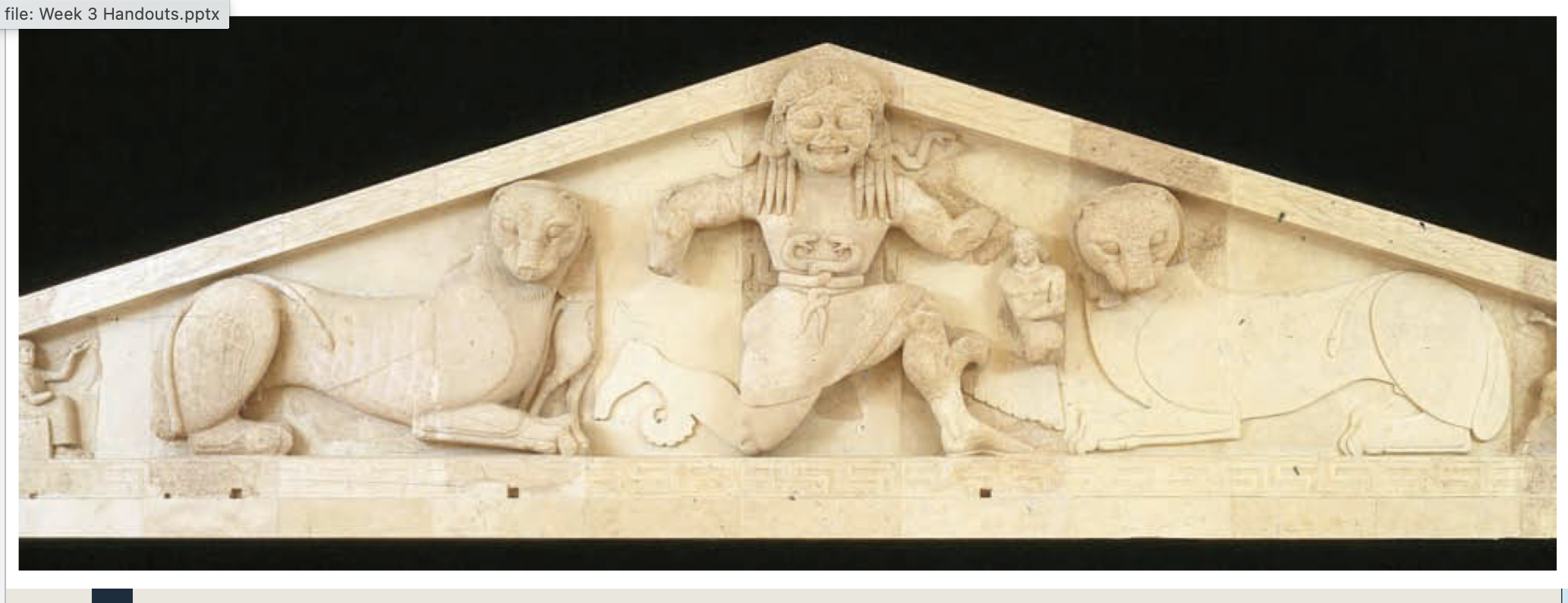
What is this a picture of? Where was it found? Time period? What does this represent in relation to Central Italy?
Pediment of the Gorgon from the Temple of Artemis
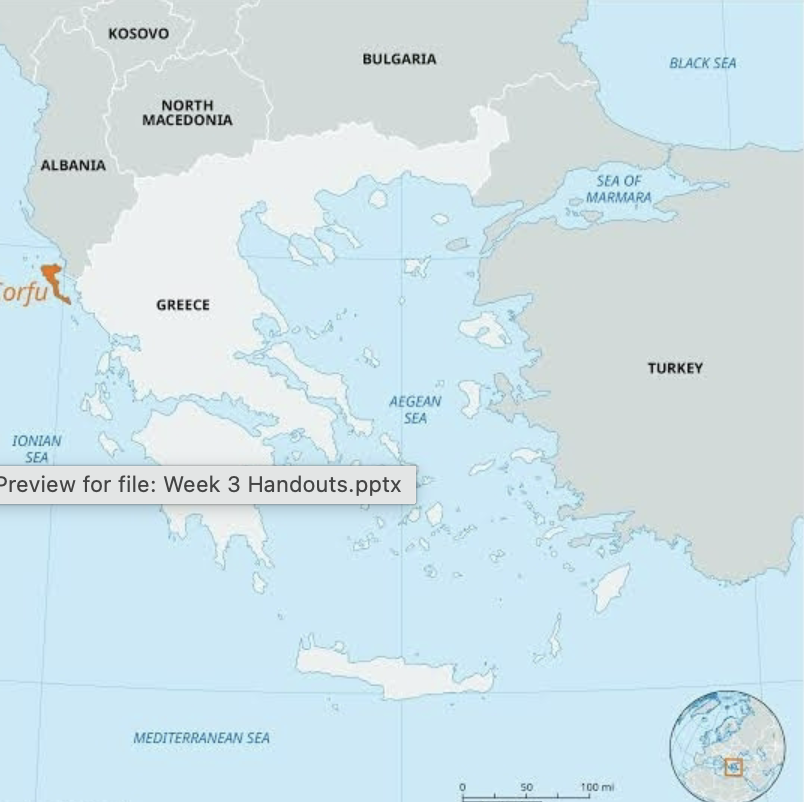
Corcyra, Corfu; 6th c. BCE
visual connection between Greece and Central Italy
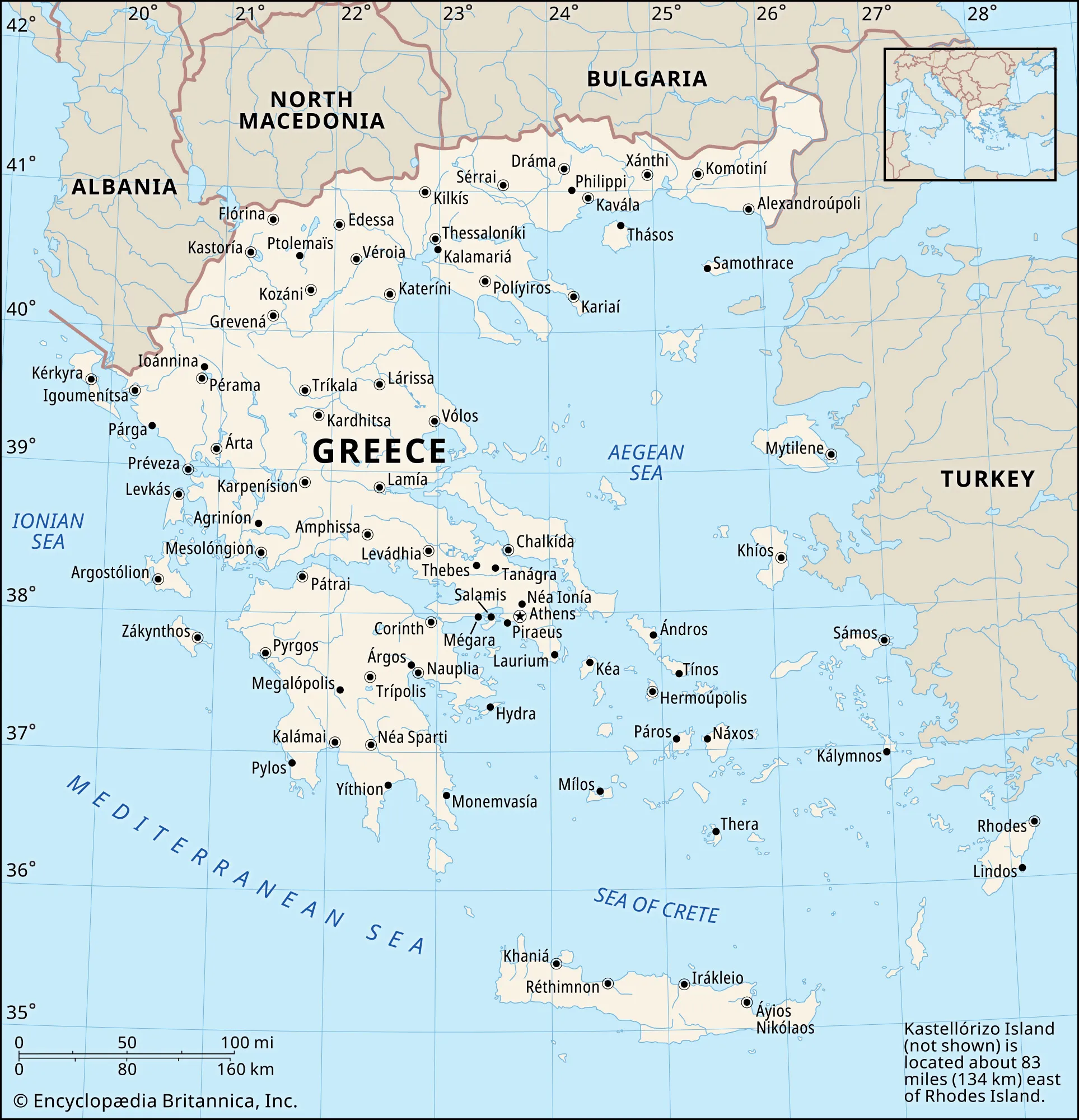
Where is Corfu?
←

Later phase of the Sant’Omobono Sanctuary
early 5th century BCE
first temple built in Rome
Rome as a meeting/trading place
Development of religious architecture and permanent buildings
Doubling down - this is an important space to them and they want to keep the temple here

Sant’Omobono Sanctuary
Hercules and a goddess
Importance of Hercules to Rome
similarities to other statues around central Italy
generally, development of religious permanent architecture with elaborate sculpture
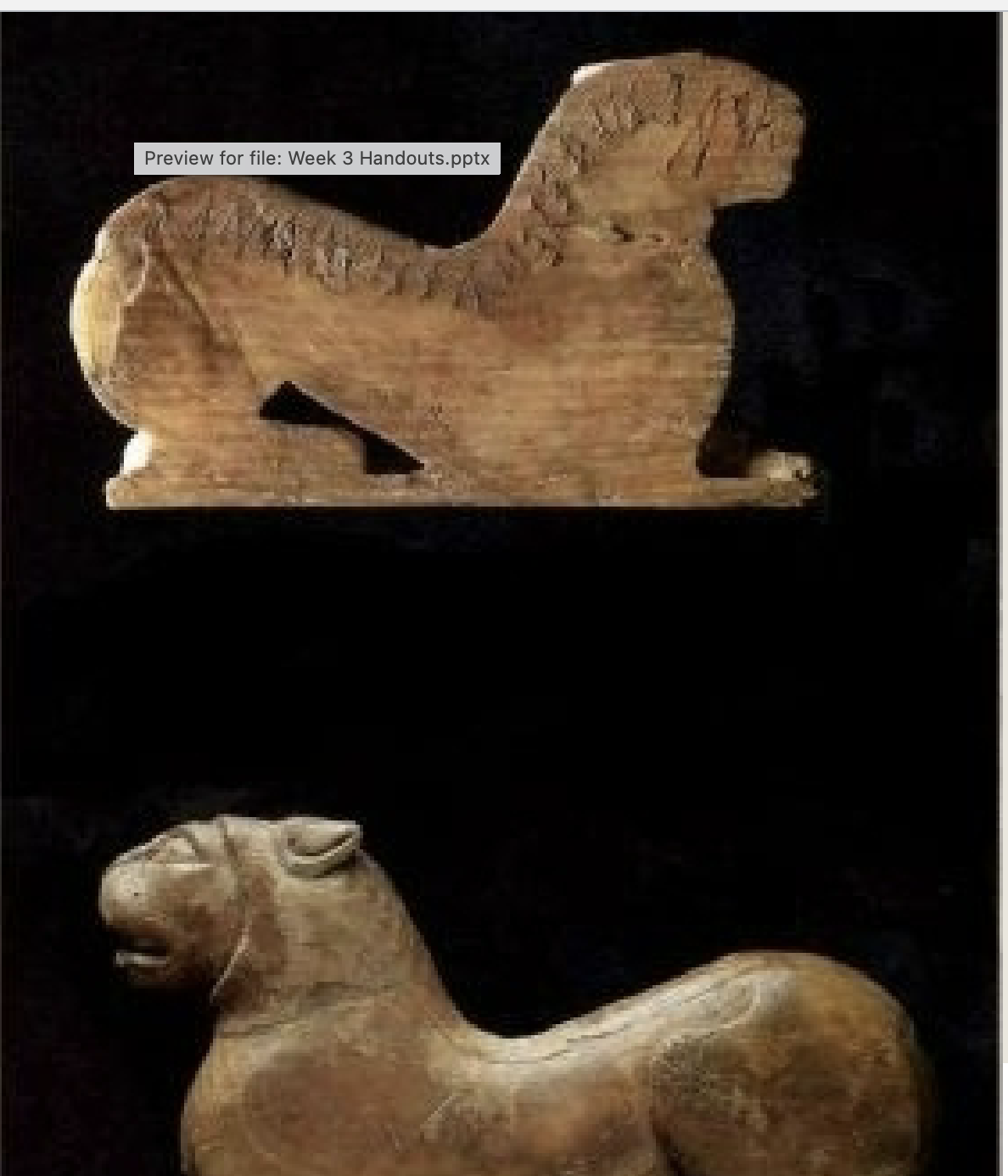
What is this? Where was it found?
Ivory Lion with Etruscan inscription
Sant’Omobono Sanctuary
Etruscan influence, cultural translation
Development of temples with sculpture in the Archaic period

What is this? Where was it found?
Ivory Lion with Etruscan inscription
Sant’Omobono Sanctuary
Etruscan influence, cultural translation
Development of temples with sculpture in the Archaic period

location of Lucus Feroniae;
a position favorable for contact between Etruscans, Latins, Sabines, and Faliscans
boundary space - gods act as mediators
convergence of roads and presence of Tiber
near modern Capena

Lucus Feroniae sanctuary
volcanic tuff - natural stone resources
High podium - Italic style temple

Left
Temple A
Italic - peripteral sine postico (columns only on 3 sides)
early 5th century
Religious spaces at boundaries
Protection over sea travel
development of an Italic style of temple.

Right
Temple B
Greek - peripteral (columns all around)
mid 6th century
Religious spaces at boundaries
Protection over sea travel
Greek influence, cultural translation

Where was this found? Where specifically within this site was it found? What is it made of? What is the time period? What myth does it depict?
Pediment of Temple A
Pyrgi
Terracotta
470-460 BCE
Seven against Thebes
Greek sculpture inside an Italic temple - cultural blending of indigenous and outsider
Development of terracotta sculpture - one of the most complete we have
Myth and religion

Portanaccio Temple
Veii
late 6th century
Italic (high podium; peripteral sine postico)
very roof focused construction
development of religious, permanent architecture around Central Italy
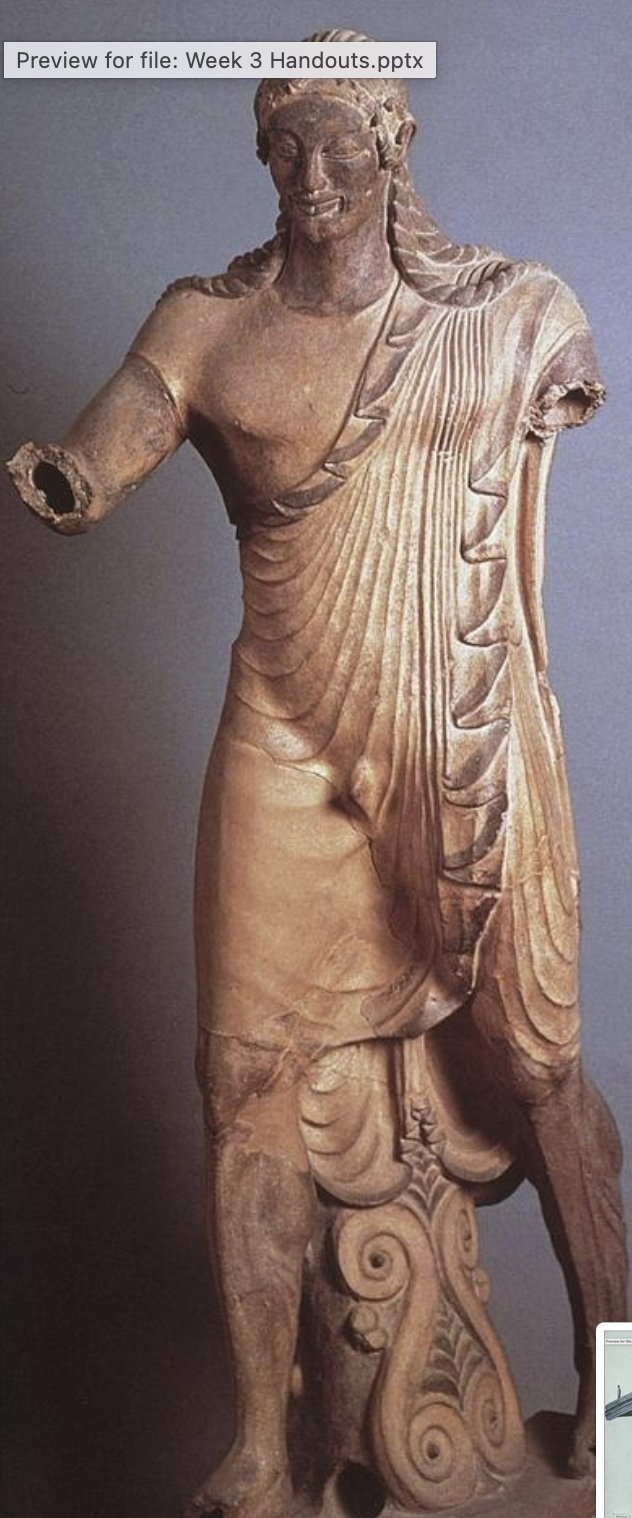
Portonaccio Temple
Veii
late 6th century
very Etruscan looking - blending of indigenous and outsider culture
Development of terracotta sculpture throughout temples in central Italy

Temple to Mater Matuta
Satricum in Latium, SE of Rome
Poliadic Cult
protection of seafaring
mother of Portunus, protector of harbors
religion at boundary spaces
development of a Roman identity with a poliadic cult

Excavations at Satricum
late 9th - early 5th century
Town setup was changing, might have influenced changes in temple

BLACK OUTLINE
Satricum
Iron Age huts
late 9th century BCE
may have been a temple but also could have been for domestic or economic activity

BROWN OUTLINE
Satricum
Structure that seems to be replacing pre-existing hut
late 7th century BCE
unclear whether a religious site

RED OUTLINE
Satricum Temple
6th century BCE
Votive deposit from this phase
Steps, cella, podium make clear it is a temple
peripteral sine postico (columns all around, except on back side) - Italic

BLUE OUTLINE
Final phase of the temple
Early 5th century BCE
Peripteral (columns all around) - Greek

(put colors in order)
Satricum; Black, brown, red (+green), blue

Satricum
late 7th century BCE (= brown outline)
development of religious architecture from huts to monumental temples

Satricum
later phase, around 500 BCE
more orthogonal
development of religious architecture from huts to monumental temples

Capitoline Temple = Temple of Jupiter Optiumus Maximus
late 6th century
Monumental religious architecture in Archaic period
Labor, organization, maintenance - indicative of state formation
development of a poliadic cult - distinctive Roman identity
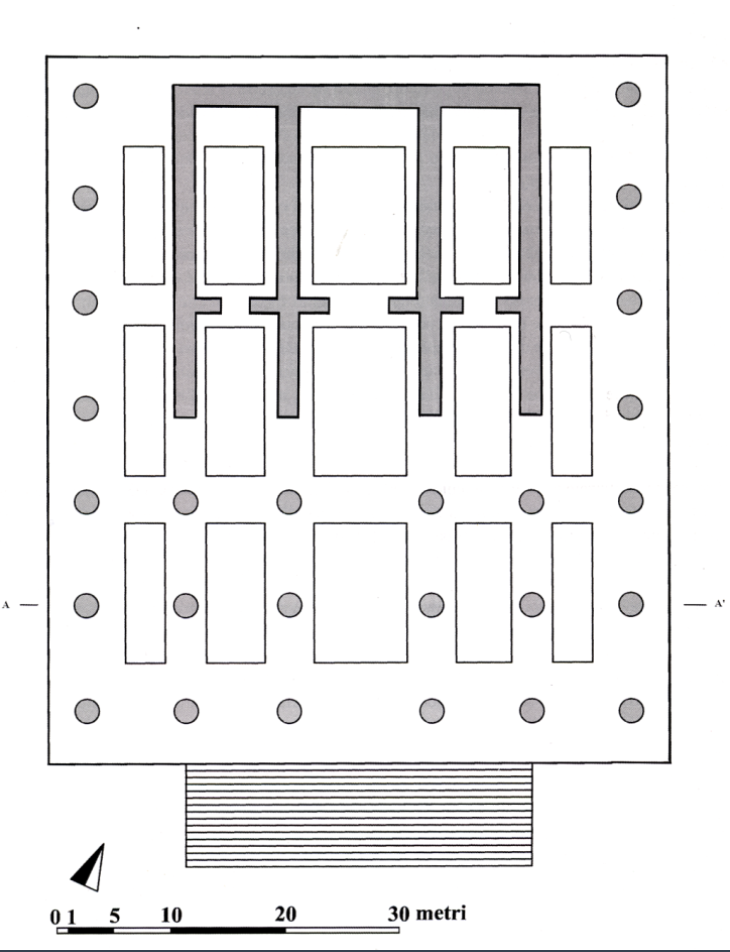
Capitoline Temple
late 6th century
Jupiter Optimus Maximus, Juno, Minerva
Monumental religious architecture in Archaic period
Labor, organization, maintenance - indicative of state formation
foundation = advanced building techniques
development of a poliadic cult - distinctive Roman identity
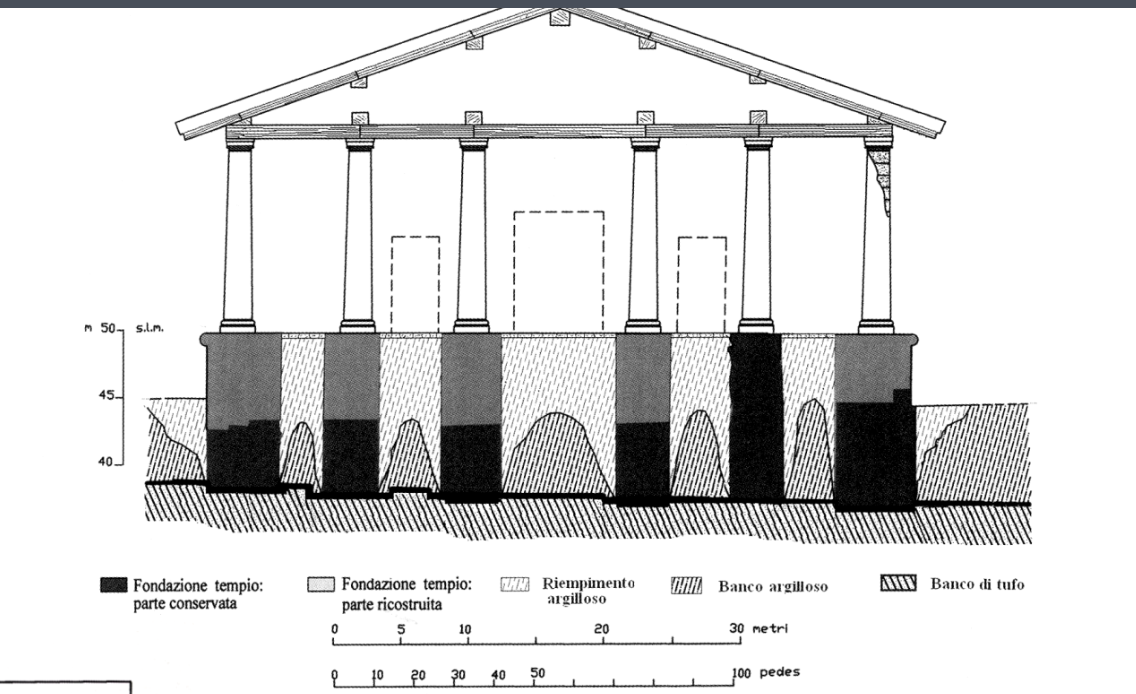
Capitoline Temple = Temple of Jupiter Optiumus Maximus; late 6th century
Monumental religious architecture in Archaic period
Labor, organization, maintenance - indicative of state formation
foundation = advanced building techniques
development of a poliadic cult - distinctive Roman identity

What is this a rendering of?
Capitoline Temple
Monumental religious architecture in Archaic period
Labor, organization, maintenance - indicative of state formation
development of a poliadic cult - distinctive Roman identity

What does this show?
Foundation of Capitoline Temple, a notable feature of Italic-style temples
6th century
foundation = advanced building techniques, organization, labor

What does this show?
Foundation of Capitoline Temple, a notable feature of Italic-style temples
6th century
foundation = advanced building techniques, organization, labor

Which temples are peripteral (#s)?
10, 11, 12, 13
sign of Greek influence
development of architecture with columns, foundations, etc.

Which temples are peripteral sine postico (#s)?
7, 9
development of Italic style architecture - frontal, podiums, steps
columns, foundations, etc - requires advanced building techniques and organization

Which # is the Capitoline Temple? Which is Temple A at Pyrgi? Which is Satricum II? Which is Temple B at Pyrgi?
9, 17, 8, 10
Monumental architecture across central Italy, with a variety of Italic and Greek styles

Fissure in volcanic tufo
Tarquinia’s plateau
votive offerings placed in the fissure
late 10th century
early religious practices - natural events tied heavily with the gods (omens)
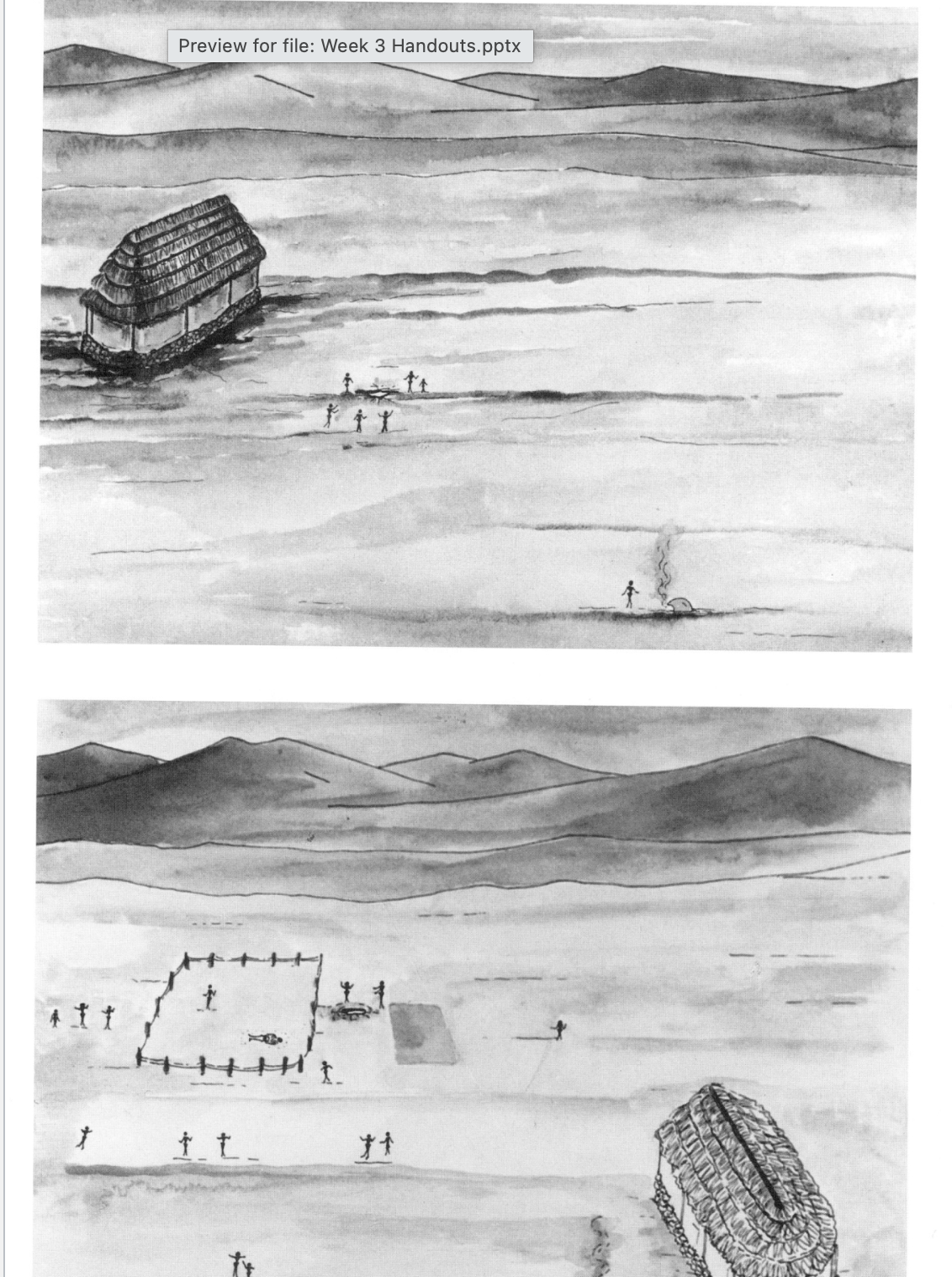
Tarquinia
Fence enclosed burial next to fissure
buried teenager with abnormal skull, maybe epileptic
9th century
still see natural spaces as associated with the gods, but sacrifice starting to occur

What are these reconstructions of? Time period? What do these indicate?
Developments at Tarquinia
6th century
some cult activity but not obviously a temple
some development in religious architecture from previous iterations

What is this an image of? What would this be used for/by whom would it be used?
A liver with regions corresponding to different omens
divination by haruspex - this might have been a training tool
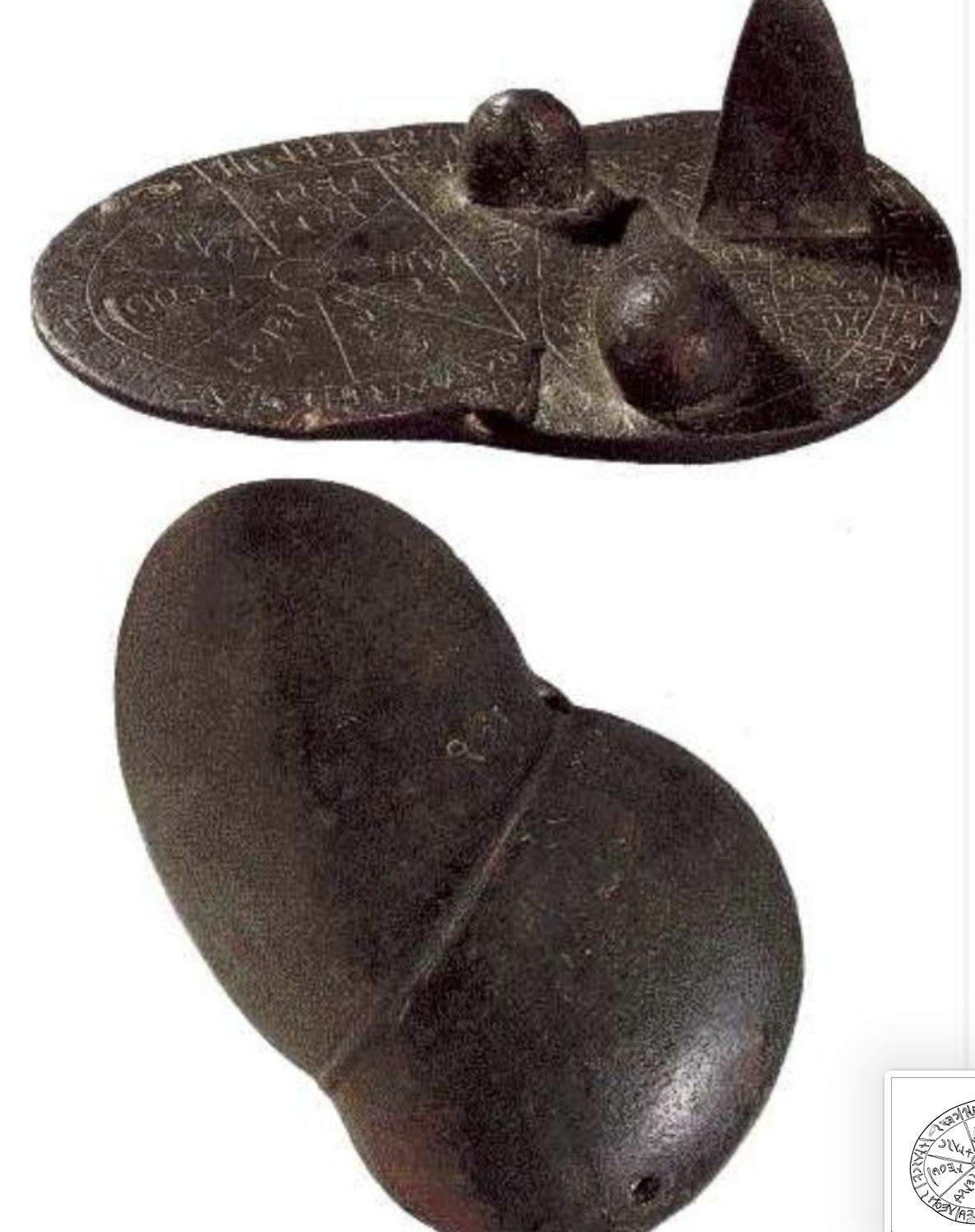
What is this? Time period?
Piacenza Liver - bronze depiction of a sheep’s liver
100 BCE
used by priests for omens (blood clots, scars)- lots of omens in animals, natural events, etc etc.

What is this? Where was it found? Time period? Language? # of readable words?
Terracotta tile with a calendar starting in March
Capua
ca 500 BCE
Etruscan
300 readable words
development of some inscription\
maybe hung up
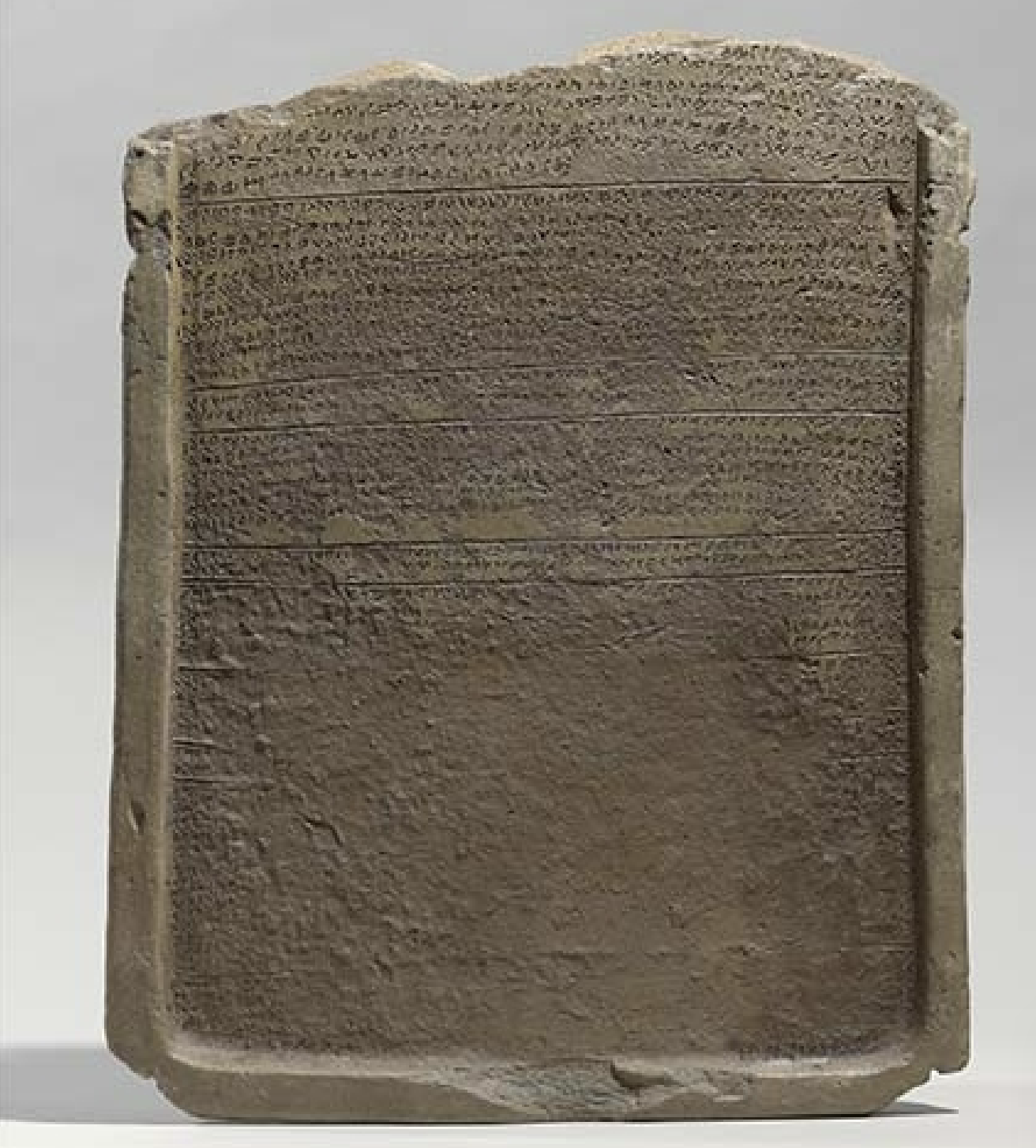
What is this? Where was it found? Time period? Language? What do the nail holes on it suggest?
Terracotta tile with a calendar starting in March
Capua
ca 500 BCE
Etruscan
300 readable words
development of some inscription\
maybe hung up

What does this depict? Time period?
Major population groups of Italy in third century BCE
development of more defined ethnic, cultural groups and cities
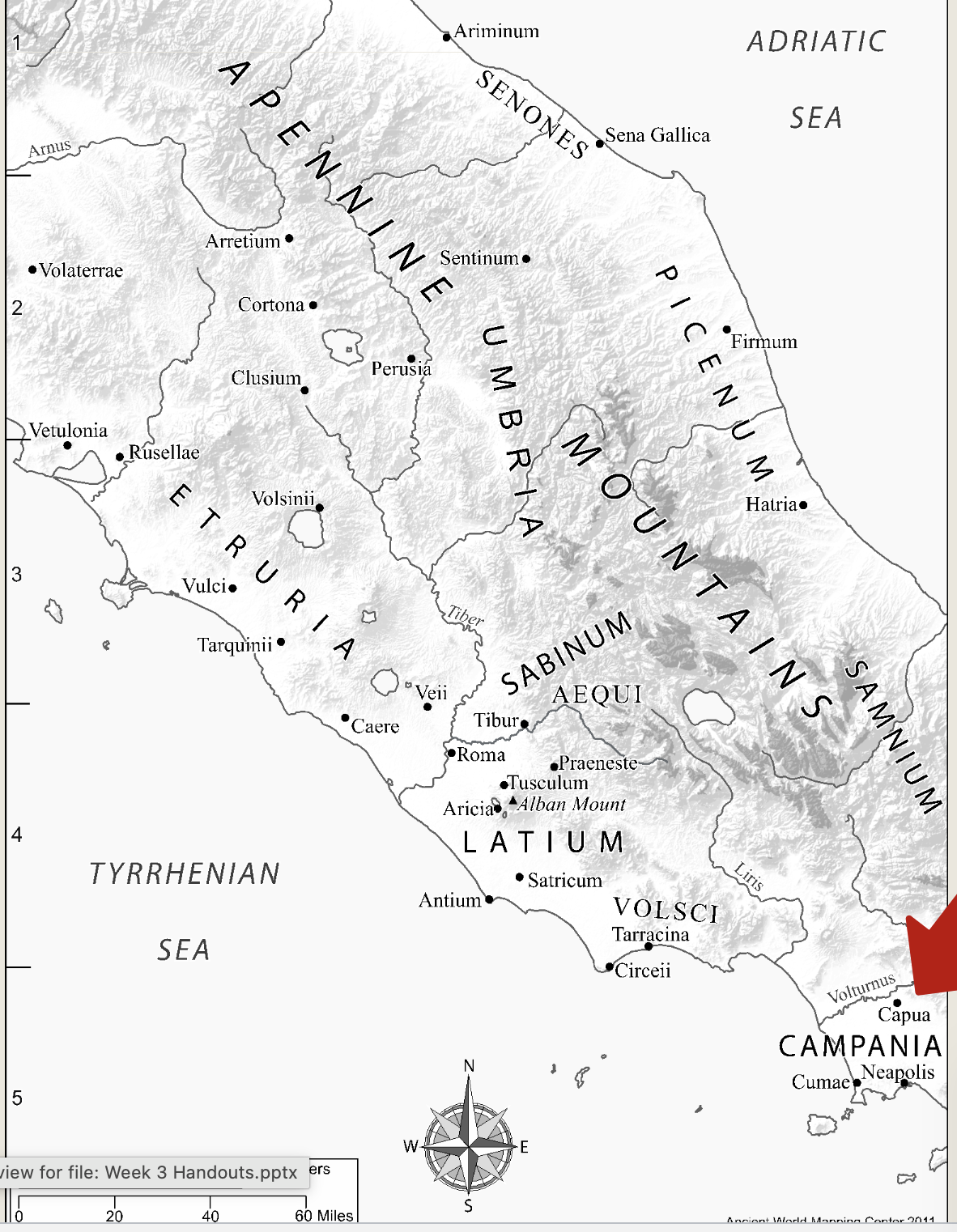
What is the significance of this place?
Capua = place where terracotta roof tile with Etruscan calendar was found, which was evidence for Greek influence

Left green arrow - What is this site? When was it settled? By whom was it settled?
Pithekoussai on island of Ischia in Bay of Naples
8th c. BCE
Euboean Greeks
where the Nestor’s Cup was found

Right green arrow - What is this site? What is its significance in relation to the left green arrow?
Euboea
where the Nestor’s Cup was made and sent to Pithekoussai
settled at Pithekoussai in 8th century BCE
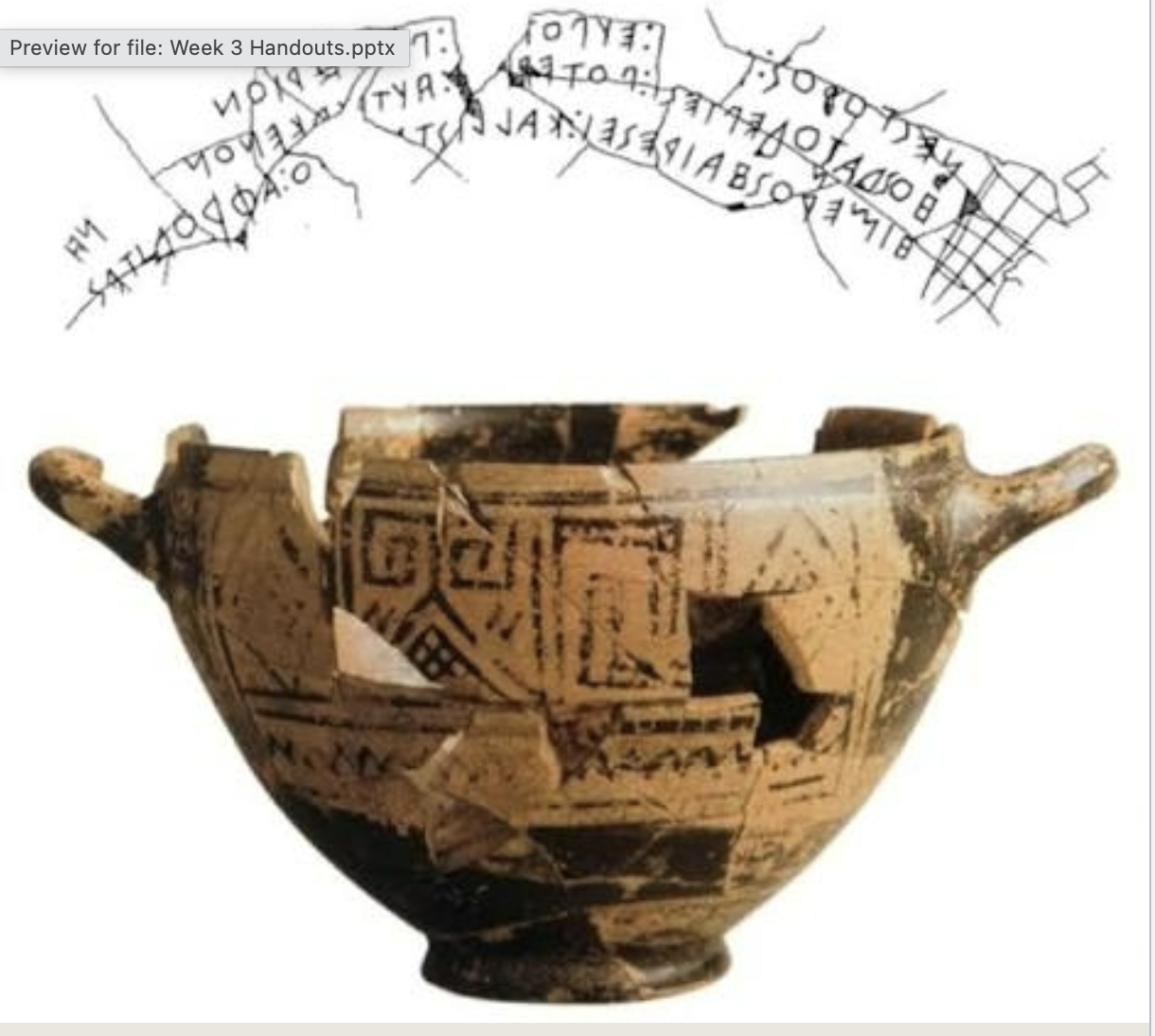
Nestor’s Cup
Geometric Period; 750-700 BCE
Pithekoussai
earliest known inscription using the Greek alphabet and evidence of technology and cultural transfer
early reference to Homer

What are the spots on these called? What do they represent? Time period?
Leopard spots; clustered settlements in early Iron Age
Blake 2014
Hard to classify ethnic groups in central Tyrrhenian Italy in BRONZE AGE, more networks of interconnected people
Stoddart 2015 (A)
Material culture develops from Bronze Age to Iron Age in Etruria, indicative of sociopolitical development; more tools, weapons, grave goods
Stoddart 2015 (B)
Geography of central Italy is diverse, with volcanic plateaus and rich valleys
Cifani Chapter 5, 2021
Rome’s economic development was powered by increased land control, control over trade (incl. Salt pans), craft specialization, exploitation of minerals, and a rise in literacy and numeracy
Cifani Chapter 12, 2021
The early calendar shows how daily life and religion was heavily based on agricultural cycles; 2021