🤷♀️ Why Do We Feed Animals?
 Call Kai
 Learn
Learn Practice Test
 Spaced Repetition
 Match
Match Flashcards
 Knowt Play
1/30

There's no tags or description
Looks like no tags are added yet.
Name | Mastery | Learn | Test | Matching | Spaced | Call with Kai | Chat |
|---|
No analytics yet
Send a link to your students to track their progress
31 Terms
Why Do We Feed Animals?
Moral and Ethical Reasons
Animal welfare → meet animals’ nutritional needs and support well-being
Food Security Reasons
Food security → provide sufficient animal-derived food for human populations
Economic Reasons
Economic → support efficient and profitable animal production
Product Quality Reasons
Composition → affects nutritional composition of animal products
Food safety → helps produce safe food
Organoleptic → affects sensory qualities such as taste, smell, and texture
Health benefits → can influence health-promoting qualities of animal products
Human Well-being and Hedonistic Reasons
Human well-being → animal products contribute to human nutrition and well-being
Hedonistic → animals may be fed to produce desirable foods and experiences

Moral & Ethical Reasons
Animal Welfare
Animals are kept in captivity for a variety of reasons
#1 concern → keeping animals healthy and “well”

Moral & Ethical Reasons
Food Availability
Environment → cannot always provide enough food for animals
Animals in captivity → cannot escape to seek food sources elsewhere
Sometimes the environment is not productive enough → insufficient nourishment

Ethical Responsibility
Nourishment
We are ethically bound to provide a source of nourishment
Applies to the animals we keep

Extensive Grazing – Northern Australia
Environment
Weather → tropical wet + dry seasons
Environment may not always provide enough nourishment
Nutritional Supplement
Nutritional supplement available → animals can receive additional nourishment
Un-supplemented → animals rely on available environmental food sources
Ethical Consideration
Question: Is this ethical?
Major logistical challenges in the outback:
Huge area
Very low animal density
These challenges make providing supplements to animals more difficult

Signs of Nutritional Deficiencies in Salmon
Screamer’s Disease
Screamer’s disease → sign of a nutritional deficiency in salmon
Cataract → a visible sign of the deficiency
Solution
Feed nutritionally adequate diets
Provide diets in appropriate quantities

Too Much Nourishment Can Also Be a Real Problem
Question
What are some potential health problems associated with too much nourishment
Potential Health Problems
1.
2.
3.
4.

Melamine Contamination and Feed Safety
Food Product Safety
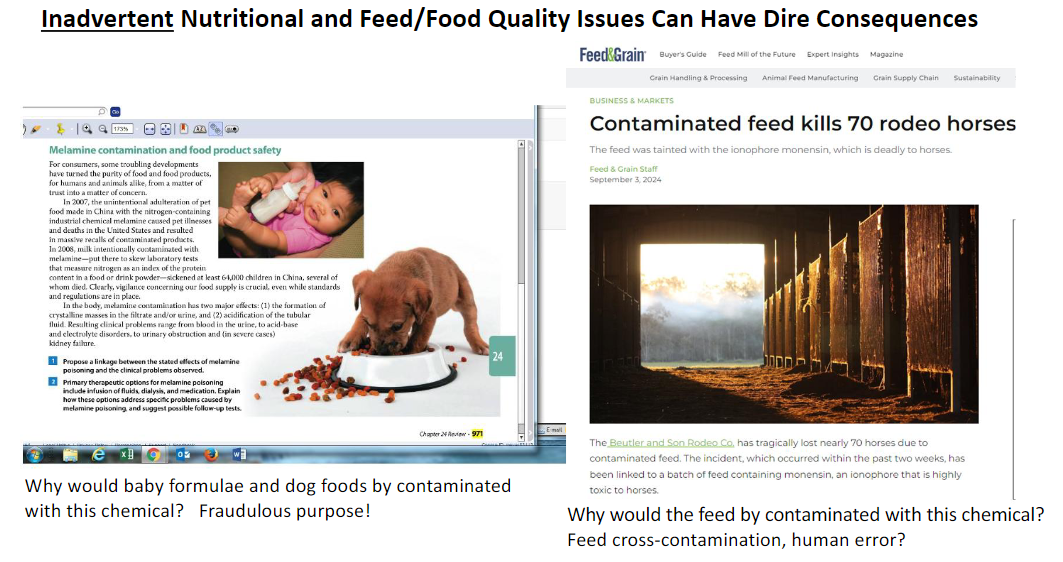
Melamine contamination → serious food safety issue
Baby formula + dog food → contaminated with melamine
Fraudulent purpose → melamine was added for economic gain
Contaminated feed → killed 70 rodeo horses
How Contamination Occurs
Feed cross-contamination
Human error
Animals as a Source of Food Security
Why Humans Keep Animals
Humans keep animals for food, fibre, labour, protection + companionship
Animals are often a major source of food for humans
Using Resources
Animals can use resources humans cannot consume or digest
Ruminants → convert forages → milk + meat
Food Reserve
Animals can act as a reserve of food during shortages
Animals can be:
Kept alive → milked for a regular food supply
Slaughtered → when food is needed
Meat does not need to be preserved beforehand
Increasing Consumption
Humans generally have an appetite for animal products
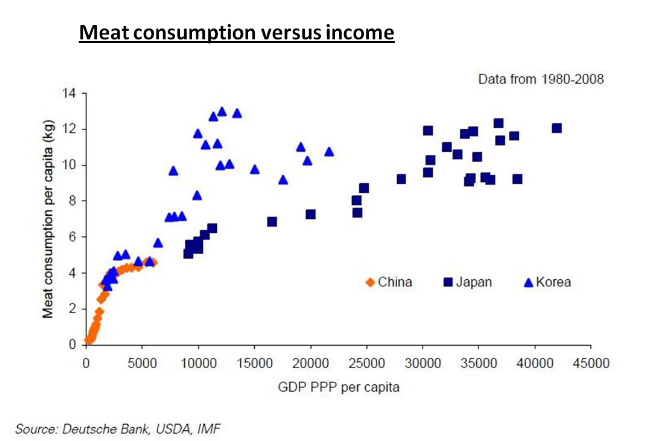
Economic power increases → consumption of animal products tends to increase

Henri IV and Food Security
Henri IV
Henri IV → also known as Henri le Grand and Henri de Navarre
Quote recorded by Hardouin de Péréfixe (1661) in Histoire d’Henri le Grand
“A hen in his cooking pot” → symbolized having enough food to live well
Meaning in France
Symbolizes social equity
Adequate reward for one’s work → people should be able to afford basic food through their own work

The 1791 Lower Canada Alimony Agreement
Land in Exchange for Support
Lower Canada, 1791
Joseph Blanchard → promised his parents annual support (alimony) in exchange for their land
Food Provided
30 bushels of flour
200 onions
1 fat sheep
1 cow
6 hens + 1 rooster
91 kg pork
100 heads of cabbage
11 kg maple sugar
2 bushels peas
4.5 kg butter
1 bushel salt
1 lb pepper
Drinks + Other Goods
3 jars rum
3 jars wine
14 kg tobacco
1 kg tea
Household Supplies
1.5 kg wool
5 kg candles
3 pots lamp oil
4 wool shirts
1 set of clothes
Bed sheets + shoes as required
25 cords firewood
Every 3 Years
1 set of Sunday clothes

Economic Growth and Animal Food Consumption
Economic Status
Improved economic status → significant increase in consumption of animal food products
Increased demand → increased production of animal food products

Meat Consumption vs. Income
Relationship
Income increases → meat consumption increases
Higher economic status → greater consumption of animal products
Economic Importance of Animal Production
Animals as an Income Source
Animals provide meat, milk, fibre (wool, fur) for dietary and daily needs
Animal products are also a source of income
Productivity and Efficiency
Goal → improve productivity + efficiency of food animal production
Genetic selection → animals with high potential for:
Growth → meat production
Milk production
Egg production
Nutrition and Production
Animals need to be well fed to:
Stay healthy
Express their production potential
Produce desired products → meat, milk, eggs, wool, etc.
Costs and Profitability
Different ways of feeding + managing animals → different costs + profitability
Intensification → generally increases profitability, but not always
Profitability depends on the relative value of the final products
Agricultural Enterprises
Productivity + profitability → very important to agricultural enterprises
No profits → no future for the business

Genetic Improvement in Broiler Chickens
Genetic Potential
Genetic selection → increases the genetic potential of broiler chickens
Selection focuses on traits that improve growth + meat production

Declining Relative Cost of Animal Foods
Lower Food Costs
Relative cost of animal foods → decreased over the past 50 years
If prices had followed inflation → many people could not afford these foods
Animal production industry → became increasingly efficient
Reasons for Lower Costs
Genetic selection → improved animal productivity
Nutrition → improved feeding and nutrient use
Production practices → increased efficiency
Agronomic improvements → improved crop/feed production
Feed Costs
Price of feed ingredients → has not increased very much
Agricultural practices + genetic improvements → helped keep feed ingredient costs lower

Measures of Productive and Economic Efficiency
Weight Gain
Weight gain → measure of productive efficiency
Average daily weight gain (ADG) → commonly used
ADG → measured in g/day or kg/day
Feed Conversion Ratio
Feed Conversion Ratio (FCR) = Feed consumed ÷ Weight gain
Lower FCR → better
Higher FCR → worse
Feed Efficiency
Feed Efficiency (FE) / Feed Efficiency Ratio (FER) = Weight gain ÷ Feed intake
Higher FE → better
Lower FE → worse
Feed and Feeding Cost
Feed cost → $ per kg of feed
Feeding cost → $ per kg of growth, L of milk, kg of wool, etc.
Memory Trick
FCR = Feed ÷ Gain → lower is better
FE = Gain ÷ Feed → higher is better

Feed Cost in Broiler Production
Production Costs
Feed cost / feeding cost → major part of production cost
In many animal production systems → feed represents ≥50% of production cost
Can reach as high as 90% of production cost

Feed Cost vs. Total Production Cost
Relative Contribution
Feed cost % = Feed cost ÷ Total production cost
A higher % feed cost does not necessarily mean higher feed cost (/kg)</strong>or<strong>productioncost(/kg product sold)
The percentage shows the relative contribution of feed to total production cost, not the actual dollar cost
Canadian Poultry Producers
Feed costs can represent different percentages of total production costs
Example values shown → 51.1% and 69.6%
Memory Trick
% feed cost ≠ actual feed cost
Percentage = relative share, not $/kg

Feed Cost and Productivity
Importance of Feed Cost
Feed cost → one cost among many production costs
Generally the most important cost
Feed Quality
Different feed quality → can support different growth + productivity
What we choose to feed animals → has important economic consequences

Managing Feed Costs and Quality
Feed Price Variation
Feed ingredients → prices are highly variable
Feed prices → must also vary because manufacturers cannot absorb all cost variation
Production cost → is not constant in animal production
Role of Animal Nutritionists
Manage feed costs
Source the most cost-effective ingredients
Ensure feeds have stable nutritional quality

Product Quality and Market Value
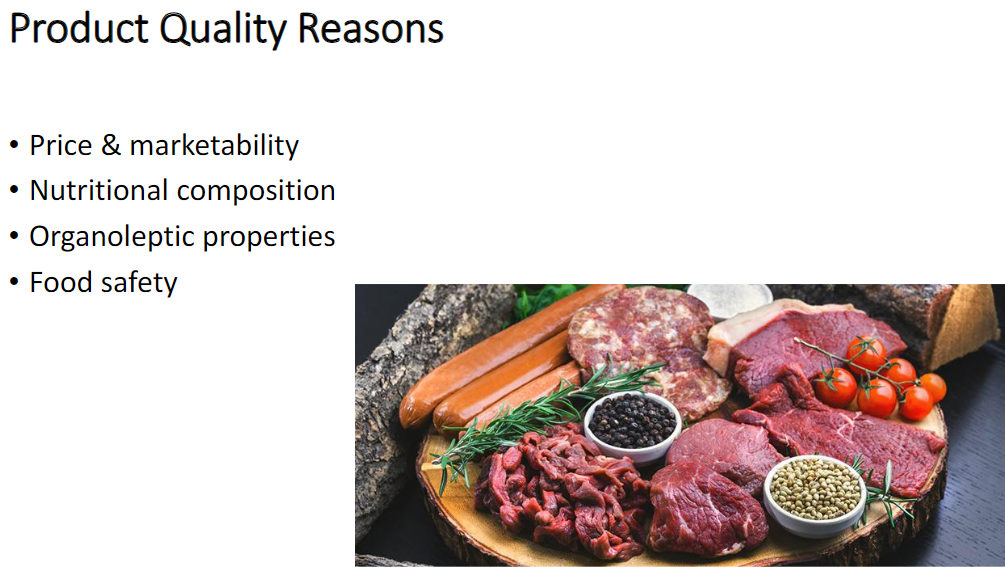
Product Quality Factors
Price & marketability → affects how easily the product can be sold
Nutritional composition → affects the nutritional value of the product
Organoleptic properties → affects sensory qualities such as taste, smell, texture
Food safety → ensures products are safe for consumption
Nutrient Composition of Cooked Lean Meat

Nutrient-Enriched Animal Food Products
How Are They Produced?
Nutrient-enriched foods → produced by changing the composition of the feed given to animals
Secret → the feed composition
Feed composition → influences the nutrient composition of animal products
Examples
Milk
Eggs
Butter

Quality of Animal Food Products
Importance of Quality
Quality → very important for many different animal food products
Includes:
Colour
Texture
Taste
etc.

Wagyu Beef Marbling Score
Marbling
Marbling → amount and distribution of intramuscular fat in beef
Wagyu beef → known for high levels of marbling
Higher marbling score → more visible fat within the muscle
Quality
Marbling affects tenderness, juiciness, and flavour
Higher marbling → generally considered higher beef quality

Canadian Pork Color Standard
Fresh Pork Color
Canadian Pork Color Standard → subjective scoring method used to evaluate fresh pork colour
Uses a visual chart with 7 colours representing 7 scores
Score range → 0–6
Colour Scale
0 → extremely pale colour
6 → extremely dark red colour
Higher score → darker red pork

Organoleptic Testing of Aquaculture Products
APOTEC in Vietnam
Organoleptic testing → evaluates the sensory qualities of aquaculture products
Uses human senses to assess characteristics such as:
Colour
Texture
Taste
Smell

Food Safety Considerations
Animal Feed → Food Safety
Animal feed can affect the safety of animal food products
Food safety depends on:
Duration of exposure to contaminants
Type + concentration of contaminants
Contaminant Processes
Colonization → contaminants establish and grow in the animal/environment
Bioaccumulation → contaminants build up in an organism over time
Biomagnification → contaminant concentrations increase higher in the food chain
Biotransfer → contaminants move from feed → animal → animal product
Human Health
Unsafe food consumption → can result from contaminated animal products
Safe animal feed → safe food → safeguards human health

Heavy Metals in Animal Feed
EU Regulations
Heavy metals → regulated in animal feed products
Maximum allowed concentrations → set by EU regulations
Limits help prevent harmful levels of contaminants from entering the food chain
Food Safety
Feed contamination → can transfer to animals + animal products
Maximum concentrations → help protect animal health + human health

Human Well-Being and Hedonistic Reasons
Why Humans Keep Animals
Emotional attachment → animals provide companionship and emotional connection
Service → animals can provide assistance to humans
Entertainment → animals provide enjoyment and recreation
Cultural/religious significance → animals can have important cultural or religious roles
Hobby + sport → animals may be kept for recreation, hobbies, or sports
