Biology Review 5: Fungi and Protists and you
 Call Kai
 Learn
Learn Practice Test
 Spaced Repetition
 Match
Match Flashcards
 Knowt Play
1/15

Earn XP
Description and Tags
Midterm 1
Name | Mastery | Learn | Test | Matching | Spaced | Call with Kai | Chat |
|---|
No analytics yet
Send a link to your students to track their progress
16 Terms
Protists
Eukaryotes that are not animals, plants, or fungi. Can be unicellular or multicellular. Extremely diverse
Eating Protists:
Kelp, a brown Algae (not a plant), forms vast underwater forests that provide the basis of many coastal ecosystems. Used in dashi for miso soup. Pyropia: red algae becomes seaweed

Disease from Protists
Plasmmodium: a single cell protist, responsible for one of the worst diseases in human history: Bubonic
Big three diseases
Malaria (protist): Spread through mosquitoes, responsible for about 500,000 deaths per year. (mostly in sub saharan Africa)
Tuberculosis: bacteria
HIV: Virus
Sickle Cell Anemia
A mutation that turns red blood cells from round to sickly shaped, dosen’t carry oxygen well, causes extreme pain, causes massive damage to almost all major organs without proper healthcare.
The come from Sub Saharan Africa. Sickle cell are resistant to Malaria infection. Some have a mix of sickle and normal cells. Linked to decreased mortality
Amoebas
●Single-celled protists
●Most are harmless
●Naegleria
○Can be harmless
○If it gets up your nose, it will eat your brain until you die
○Always sanitize water (boil usually) before using nettiepots

Fungi
Groups that include mold, mushrooms, and yeasts.
They are spore producing eukaryotic organisms with a chitin based cell wall.
Spore: Microscopic cell that can grow into a new organism without combining with another cell
Chitin is a structural carbohydrate
Can eat stuff like safe mushroom, mold cheese,

Morphology
●Mushroom = fruiting body
○Small fraction of the actual size of the fungi
○What we eat
●Most of the fungi is underneath the soil
○Mycelium
Fairy Rings
●Mycelium grow in a circle/oval
●Causes mushrooms to grow above the soil in a circle
Reproduction of Fungi
●Spores = reproductive unit capable of giving rise to a new individual without sexual fusion
●Complex sexual reproduction
○Alternation of generations
Reproduction Of Fungi
Budding, common in yeast. Asexual.
Decomposer
= An organism that breaks down and consumes dead organic material
Fungi are often the main decomposers in most ecosystems
Along with bacteria
Crucial for all ecosystems
Puts nutrients back into the environment
Alcohol Fermentation
Done in conjunction with yeast and bacteria (SCOBY). Makes ethanol.
●Another chemical reaction used by early civilizations
●Yeasts are found naturally on grains and fruit
●Oldest brewery was dated to be around 13,000 years old
●Wine was important throughout history, especially in Rome
Yeast
●Single-celled fungi
●Used extensively in fermentation and baking
●Take in carbohydrates and produces:
○CO2 -> allows baked goods to rise (proofing)
○Alcohol -> produces the alcohol in wine, beer, mead, etc.
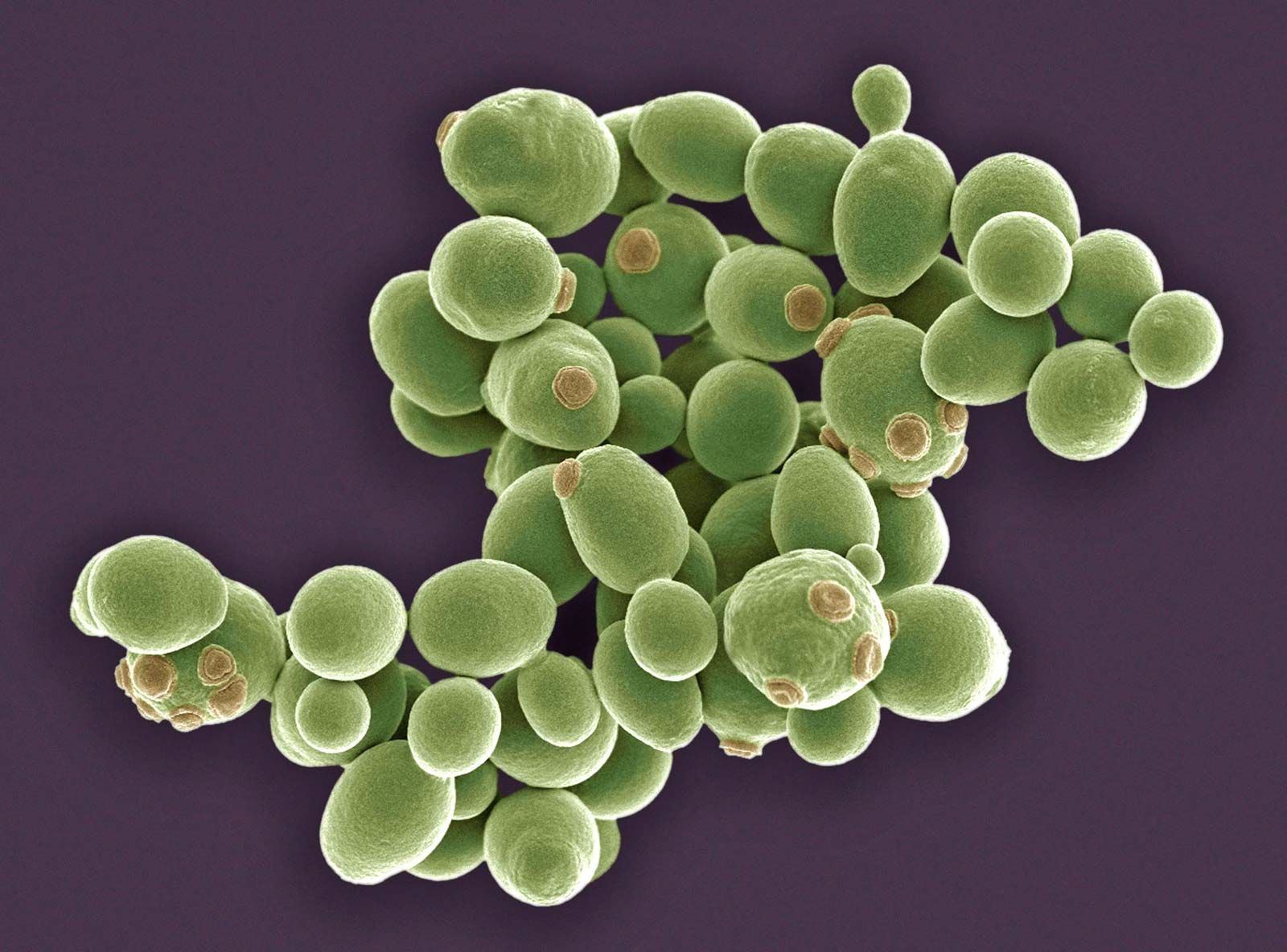
Production of Alcohol Fermentation
●Breads that use yeast (i.e., sourdough focaccia)
●Beer
●Kombucha
●Wine
●Mead (which I make)
●Rum
Sake
Fungi As Disease
●Mycosis = fungal disease
○Thrush
■Common in immunocompromised individuals
○Yeast infections
○Athlete’s foot
Fungi As Medicine
●Produce diverse compounds
●The mold Penicillium
○Penicillin
●Psilocybin mushrooms
○Psilocybin, which in the body produces psychoactive effects
○Promising in the treatment of PTSD