physics exam 2
 Call Kai
 Learn
Learn Practice Test
 Spaced Repetition
 Match
Match Flashcards
 Knowt Play
1/33

There's no tags or description
Looks like no tags are added yet.
Name | Mastery | Learn | Test | Matching | Spaced | Call with Kai | Chat |
|---|
No analytics yet
Send a link to your students to track their progress
34 Terms
a proton is how much heavier than an electron
2000
what is a nucleon?
protons and neutrons
what is the most powerful force?
strong nuclear
Mass of an intact nucleus is always ___ than the sum of the
masses of its individual free protons and neutrons
less
Strong nuclear force holds _____ together
nucleons
___ Z nuclei tend to have equal number of protons and neutrons
Low
Key causes of nuclear instability:
Imbalanced neutron-to-proton ratio
If an atom has too many or too few neutrons relative to its protons, the balance fails.
Excessive atomic size
Large nuclei (Z>83)
Odd nucleon numbers
How unstable nuclei fix themselves?
To gain stability, an unstable nucleus spontaneously emit energy or particles (radiation)
Beta Particles

Positive Beta Particles

Alpha Particles

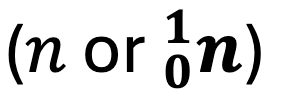
Neutrons
Decay Law
The change in the number of atoms per unit time (∆ N/∆ T) is
proportional to the number of radioactive atoms ( N) present:

What is the SI unit of activity?
Becquerel or Curie
Parent & Daughter Nuclei
An Unstable Nucleus (PARENT) —→ undergoes spontaneous emission of Energy
to become —→ A More Stable Nucleus (DAUGHTER)
Transient Equilibrium:
The half-life of the parent nuclide is only slightly greater than the half-life of the daughter nuclide
The activity of the daughter nuclide increases as the parent nuclide decays
After a certain point, the activity of the daughter nuclide matchesSecular Equilibrium: the rate of decay of the parent nuclide

Secular Equilibrium:
The half-life of the parent nuclide is MUCH GREATER than the half-life of the daughter nuclide
The activity of the daughter nuclide increases as the parent nuclide decays
The daughter nuclide eventually reaches a state of EQUAL ACTIVITY equilibrium with the parent nuclide

Beta-minus ( B−) Decay
Undergone by radionuclides with an excess of neutrons (“neutron-rich”)
i.e. n/p ratio is too large for stability
A neutron is lost & a proton is gained
Beta-plus ( B+) Decay
Undergone by radionuclides with an excess of protons (“proton-rich”)
i.e. n/p ratio is too small for stability
A proton is lost & a neutron is gained
What is emitted in beta minus decay?
electron and antineutrino
what is emitted in beta plus decay?
positron and neutrino
Electron Capture competes with:
Beta plus decay
Electron Capture vs. Beta Plus Decay
• Proton-rich nuclides (i.e. nuclides with an excess of protons)
• Want to improve stability by lowering their n/p ratio
• Electron Capture (EC) & Beta-plus decay are both decay modes that accomplish this
Electron Capture (EC):
• An orbital electron is captured by the nucleus
• The electron combines with a proton within the nucleus —> the pair becomes a neutron
• The nucleus gains a neutron & loses a proton
The minimum threshold energy for Beta plus decay to occur =
1.022 MeV
What are the two unique outcomes after electron capture?
• Fluorescence (Characteristic X-rays (photons)
• Auger Electrons
Characteristic X-rays: Key Idea
• Binding energy levels for each electron shell: discrete & unique to each atom
• The energies of the emitted photons from electrons transitioning to fill lower shell vacancies are unique to each atom
Auger Electrons
• characteristic x-ray does not leave the atom
• photon crashes into an outer shell electron
• The photon gives up all its energy
• The electron is freed from the atom
• The photon is entirely gone
Electromagnetic (EM) Decay:
is a means of an excited nuclide decaying to its ground state
3 Types of EM Decay:
Gamma decay (Nuclear de-excitation)
Internal Conversion (IC)
Isomeric transition
Gamma decay (Nuclear de-excitation):
• Transition from excited state to ground state —→ emission of a gamma ray
• The nuclide does NOT change ——> A & Z values stay the same
Internal Conversion
• The energy is transferred directly from the excited nucleus to an orbiting electron
• Usually a K-shell electron, though L & M are both possible
• The electron leaves the atom —→ vacancy must be filled —→ fluorescence or Auger electrons
• Competes with Gamma Decay
Isomeric Transition
• Eventually, the excited nuclear isomer will emit a gamma & decay to its ground state
• Isomeric Transition is different from Gamma Emission because the excited state nuclide can exist for longer than a small fraction of a second
Nuclear Isomer:
a nucleus that got “stuck” in a metastable state, & has not decayed to its ground state