Gait Analysis Exam 2
 Call Kai
 Learn
 Practice Test
 Spaced Repetition
 Match
 Flashcards
 Knowt Play
1/32

Earn XP
Description and Tags
CP Study Guide
33 Terms
Define cerebral palsy
“a group of conditions with variable severity with developmental features in common”; result of brain injury/malformation during fetal or neonatal development
Describe how cerebral palsy occurs
result of brain injury/malformation during fetal or neonatal development; risk factors include preterm birth, slow growth in-utero, and inflammation shortly after birth
Describe symptoms of cerebral palsy
presentation and severity is variable, some impairments include:
neural
muscular
communication
cognitive
abnormal skeletal development
Identify muscular vs neurological vs skeletal impairment
Muscular
weaker muscles due to smaller diameter of muscle fibers
fewer sarcomeres (contribute to contractures); cannot add, so originals must lengthen
shorter muscles
greater EC matrix = more passive stiffness
fewer satellite cells = impaired growth
Neural
depends on location of brain injury + developmental age
earlier = more severe
hemiplegia = unilateral impairment, brain bleed in one hemisphere
ataxia = coordination impairment, generally cerebellar injury/malformation
motor development impaired
selective motor control
mirrored movements, involuntary movements, activation when there should not be
inability to initiate specific movements
spasticity
dystonia
Skeletal
bones do not remodel properly as a child ages bc thee is non-typical muscle actions and loading
acetabulum depth/orientation not formed for ‘proper’ walking
long bones do not grow orientated w/ gravity
muscle attachment points are not developed correctly
atypical orientation + underdeveloped joint stability
Explain the difference in GMFCS levels
I: independent home + community walking, stair without railing, running, jumping
II: independent home + community walking in short distances, stairs with railing, assistive devices for long distance (maybe), limited running and jumping
III: assistive device needed, stairs are a maybe, wheeled mobility for most situations in the outdoor and for long distances
IV: significant assistance (limited walking), wheelchair to get around
Describe physical therapy and surgical management strategies for CP
Identify the sociodemographic factors that affect CP prevalence in the US
decreased risk of CP with increased maternal education, decreased “deprivation index”
increased risk with lower family income
non-white americans more likely to be high risk SES
minority groups have increased chance of lower level of care, race can be a predictor
Define dystonia
overactive/excessive muscle activity
contractions, both sustained/intermittent
receptive movements
alter posture
Define spasticity
overactive/excessive muscle activity
contraction in response to (rapid) stretch
excessive stretch reflex
muscles can relax
both passive (externally initiated; PT testing ROM) or active (internally initiated; walking)
evaluated with EMG
define contracture
permanently shortened muscles
altered muscle growth and improper/excessive activation can cause contractures
define hemiplegia
one half of the body
define diplegia
symmetrical, both sides of body
describe typical gait of general pattern of sagittal hip
starts at 30 degrees (flexion)
comes down to -10 degrees (extension)
range is 40 degrees

describe typical gait of knee ankle angles
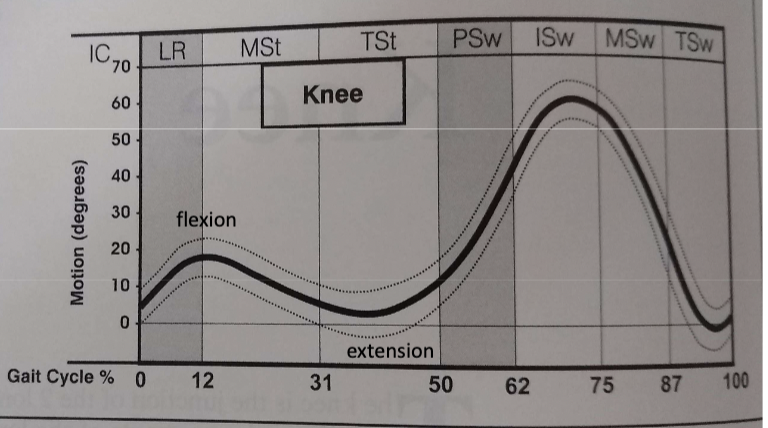

describe typical stance vs swing %
stance: when the foot is in contact with the ground, it is about 60% of gait
starts at heel strike, ends at toe off
swing: when the foot is in the air, about 40% of gait
describe typical times when major muscle groups are typically active or silent
activity comes slightly before motion
in swing, dorsiflexor EMG will light up before the individual dorsiflexes to lift the toes
quads activate before stance so knee extensors are ready
understand stability in stance
stability is how the body maintains alignment, adjusts for balance, holds itself upright
understand clearance in swing
lowest point of swing foot and ground, the minimum amount of lift needed to clear the ground and not ‘scuff’ the floor
need ankle dorsiflexion, knee flexion, hip flexion, pelvis alignment
understand adequate step length
heel strike of one foot and heel strike of opposite foot
fall risk
energy cost
understand appropriate foot pre-positioning
preparing to lift foot and preparing to place it down
body weight shift
heel-foot-heel lift (toe off)
In other card
understand energy conservation
more energy is used when muscles are activated all the time;
greater than typical muscle activation
increased energy consumption
greater fatigue
less endurance
Describe how energy cost during walking differs between typically developing children and children with CP. Identify reasons for this difference.
those with CP use more energy
overactive muscles, co-activation
more effort required to move the same difference
low gait efficiency - more energy used, ‘extra work’
maintaining stability
describe the key feature of crouch gait and equinus gait
equinus:
greater plantar flexion due to spasticity in plantar flexors (gastrocnemii - ENG has overactive gastroc)
individuals generally land on toes in plantar flexion
explain how equinus and crouch gait affect the prerequisites of gait
Typical: late swing is for adequate step length (flexed hip, extended knee, neutral ankle)
equinus: shorter step length
Crouch: shorter step length
Typical: midstance is for stabilizing and conserving energy (neutral hip, extended knee, neutral ankle)
equinus: heel off ground or knee hypertension lead to lack of stability
Crouch: hip and knee flexion moments are large, so there is reduced energy conservation
typical:mid-late stance is to achieve foot clearance and pre-position the foot for initial contact (flexed hip, flexed knee, dorsiflexed ankle)
equinus:plantar flexion and compensations make foot clearance more difficult and lead to inappropriate pre-positioning
Crouch: flexion leads to shorter step length and inappropriate pre-positioning
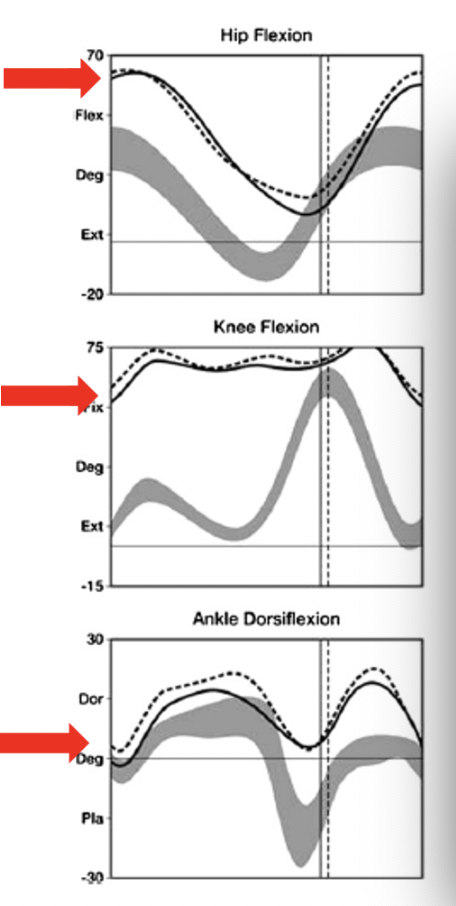
Identify equinus, apparent equinus, and crouch gait given sagittal plane kinematic curves

Match the appropriate clinical management to common CP gait patterns
Explain the rationale for choosing different treatment options: botulinum toxin injections, selective dorsal rhizotomy, muscle lengthening/tendon transfer, bony surgery/osteotomy
PT
CP can lead to lower opportunity for motor learning
upper extremity with functional activity most effective
body-weight support makes lower extremity more difficult
exercise and strength training
Botox
temporary, localized, non-invasive
Bracing
support joints
realign joints
best when ROM is not significantly limited
can help with foot clearance when plantar flexion; also low knee and hip extension and GRF, excessive ankle motion, foot alignment
SDR
with spasticity (overactive stretch response)
determine which ascending pathway is causing it, cut the nerve rootlet
permanent and needs extensive rehab
muscle tendon lengthening/transfer
lengthening: cut and re-tether or fractionally lengthening
transfer: remove tendon from insertion, reattach proximal to joint (two-joint muscles)
can lead to weakness (can change gait, also hard to determine (functionally short not structurally short)
extension osteotomy
modify bone so joint is brought out of flexion (does not weaken muscles)
cut bone and rotate it, pin it back together
Describe the potential negative consequences of performing an incorrect surgical procedure on a child with cerebral palsy (e.g., lengthening a muscle too much)
overcorrect and push someone into a different type of gait
sometimes there is no ‘fixing’ what was done
Describe the importance of gait analysis with PT evaluation, motion capture and EMG for treatment planning in CP
need all the pieces to have a full understanding of what is happening and what someone needs
without looking at everything, you could rule out the correct treatment or overlook something and make the gait worse

true equinus
increased plantar flexion

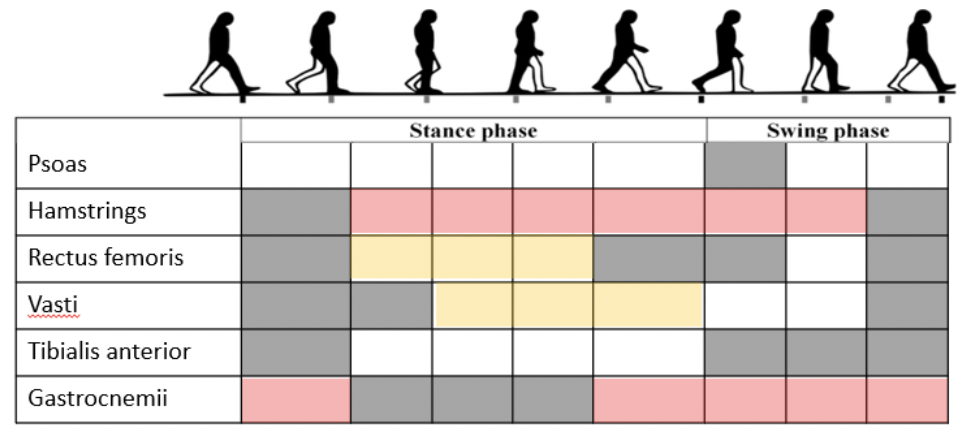
jump knee equinus
greater knee flexion
overactive hamstrings


apparent equinus gait
toe walking but no excessive plantar flexion
hamstring spasticity, not plantar flexors

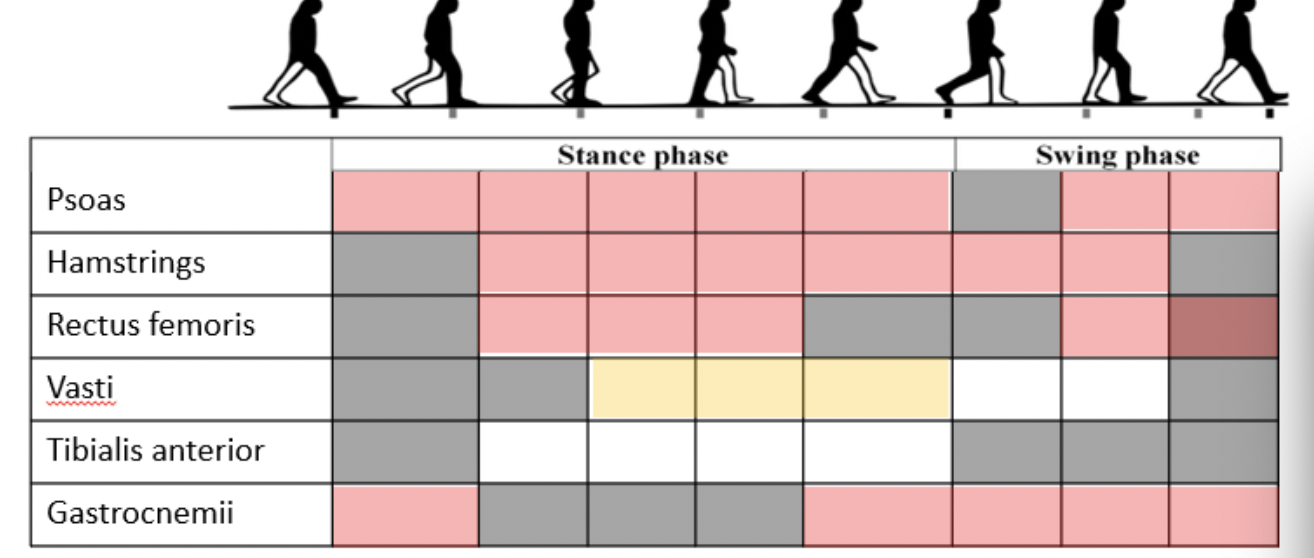
crouch gait
greater than normal flexion at joints (flexion, dorsiflexion)
can develop from equinus as child grows